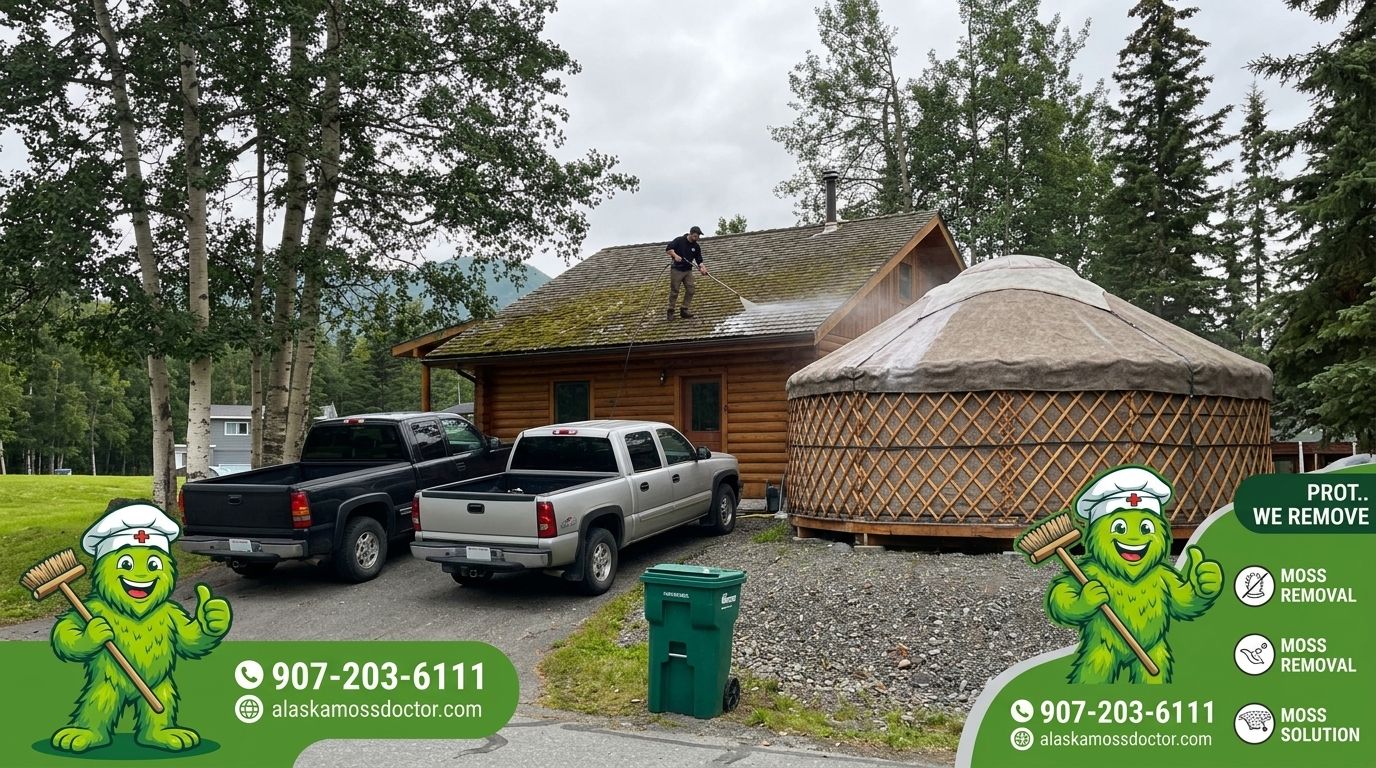
Soft wash cleaning for yurts and cabin additions uses low-pressure, biocide-based rinses instead of a pressure washer to strip moss and algae without tearing canvas, cracking cedar shake, or stripping the coating off a metal-topped addition. Alaska yurts and the cabin additions built onto them combine fabric walls, tensioned domes, and mixed roofing materials that a standard power wash will damage in one pass.
- Soft wash cleaning for yurts and cabin additions relies on under-500-PSI rinses and biocide, never a pressure washer, to protect canvas and cedar.
- Spruce- and birch-shaded yurts in the Mat-Su Valley regrow moss faster than open-sun properties and need earlier spring treatment.
- Remote or seasonal cabin additions should get a soft wash before ice dam season and again after spring melt in 2026.
- Metal-topped yurt domes and A-frame additions need the same delicate-siding pressure setting as cedar shake, not a driveway-strength rinse.
- Alaska Moss Doctor treats canvas seams, skylight domes, and flashing separately from asphalt or metal sections on the same structure.
Why soft wash cleaning matters for yurt and cabin addition owners
A yurt's canvas or vinyl-topped shell behaves nothing like asphalt shingle. It flexes, it has seams, and it can't take a jet of water at 2,000+ PSI without seam failure. Cabin additions built alongside a yurt frequently mix materials — cedar shake on one slope, standing-seam metal on another, a skylight dome tying the two together — which means a single cleaning pass has to switch technique mid-roof.
Alaska's climate compounds the problem. Spruce and birch canopy over most Mat-Su Valley cabin lots drops needles and pollen onto damp fabric and shingle year-round, and moss takes hold in that shaded moisture faster than it does on an open-sun property. For remote Alaska cabin roof cleaning, access itself is a factor — a lot of yurt sites sit at the end of an unplowed driveway or a boat launch, so scheduling has to account for the season, not just the moss.
Soft wash cleaning for yurts and cabin additions is the only method that removes moss and algae without shortening the life of canvas, cedar, or coated metal — a pressure washer strips all three.
Update your inspection before booking a clean
Walk the property before scheduling anything. A yurt roof, a cabin addition roof, and any connecting flashing all age differently, and treating them the same way wastes money or damages material.
- Check canvas or vinyl seams for moss creeping into stitching, not just staining on the surface
- Look at the cabin addition's roofline for black streaks, which are algae (gloeocapsa magma), not moss
- Inspect skylight domes and vent boots for lichen, which needs different scraping than moss or algae
- Note which sections sit under spruce or birch canopy — those need earlier, more frequent attention
- Photograph flashing and fastener points for rust before the wash, so post-clean condition is easy to compare
Choose soft wash over pressure washing every time
A gas pressure washer set for a driveway will force water under shingles, split canvas seams, and blast the protective coating off metal roofing. Soft washing uses low pressure — generally under 500 PSI — paired with a biocide solution that kills moss and algae at the root instead of blasting it off the surface.
- Use a pump sprayer or soft wash system rated for under 500 PSI on any fabric, cedar, or coated metal surface
- Mix a sodium hypochlorite or biodegradable biocide solution rather than relying on water pressure alone
- Let the solution dwell 10-15 minutes before a low-pressure rinse — dwell time does the work, not force
- Rinse from the ridge or peak downward on cabin additions to avoid pushing moss under shingles
- Skip bleach-only mixes on canvas; check soft wash pressure settings for delicate siding before applying anything to fabric walls
Time the clean around Alaska's freeze-thaw calendar
Wasilla and the wider Mat-Su Valley get a narrow clean-and-dry window most years. Cleaning too late in fall leaves moisture trapped before freeze; cleaning too early in spring means treating a roof still shedding snowmelt.
- Target late spring, once snow load is gone and the roof has had a few dry days
- Book a fall pass before the first hard freeze if the property saw heavy moss growth over summer
- Avoid washing during active thaw cycles — trapped water under canvas seams freezes and expands
- Absentee or seasonal cabin owners should schedule around their travel dates, not the calendar alone
- Pair the wash with a gutter check, since moss debris clogs gutters on additions faster than on open-sun homes
Protect skylights, canvas seams, and flashing during the wash
The places a yurt-cabin combination fails first are the connection points — where canvas meets wood framing, where a skylight dome meets shingle, where flashing meets a chimney or vent stack.
- Tape or shield seams before applying biocide, since chemical pooling in stitching accelerates fabric breakdown
- Clean skylight domes with a soft brush pass, not a sprayer alone, to avoid streaking
- Check flashing and fasteners for rust after the rinse — rust stains on flashing and fasteners need a separate treatment, not more biocide
- Cover any exposed wiring or vent fans before the low-pressure rinse
- Rinse thoroughly after biocide dwell time — residue left on canvas degrades UV coating faster than moss would
Treat spruce- and birch-shaded sections first
A yurt or cabin addition tucked under mature spruce or birch regrows moss within a season if the shaded section isn't treated as its own zone. Sun-exposed slopes on the same roof might not need attention for two years.
- Map the roof by sun exposure before quoting the job — shaded sections need a heavier biocide concentration
- Trim overhanging branches back where possible to cut regrowth speed, not just clean the existing moss
- Apply a longer biocide dwell time on north-facing or canopy-covered sections
- Revisit shaded zones on a shorter cycle than the rest of the property — often twice the frequency
- Compare against log cabin algae removal practices if the addition uses log siding under the same canopy
Rinse and neutralize before any repainting or resealing
If the cabin addition is due for a repaint or the canvas needs UV resealing, the soft wash has to finish with a full neutralizing rinse. Leftover biocide residue interferes with paint and sealant adhesion.
- Neutralize with a clean water rinse after the biocide dwell time, especially before painted wood siding
- Wait 24-48 hours of dry weather before applying any sealant or paint
- Test a small section for residue with a white cloth wipe before committing to a full repaint
- Flag any bleach-based cleaning to the painter or sealant crew — some coatings react poorly with residual chlorine
Get a soft wash quote for your cabin
Alaska Moss Doctor scopes yurts, additions, and mixed roofing before quoting.
Schedule a maintenance pass for absentee cabin owners
A large share of Mat-Su Valley yurt and cabin addition owners aren't on-site year-round. Moss doesn't wait for a vacation schedule, and a property left untreated over a full Alaska summer often needs a heavier, more expensive clean the following year.
- Set a standing spring or fall appointment rather than reacting to visible moss on arrival
- Ask for photo documentation before and after each visit if you're managing the property remotely
- Bundle the soft wash with a gutter and skylight check on the same visit to reduce trips
- Coordinate access with a caretaker or neighbor if the property sits off a seasonal road
Soft wash options for yurts and cabin additions compared
| Option | Best For | Key Limitation |
|---|---|---|
| DIY garden hose and brush | Light surface dust on open-sun sections | Doesn't reach seams or kill moss at the root; regrowth is fast |
| Rented pressure washer | Concrete pads, driveways near the cabin | Too aggressive for canvas, cedar shake, or coated metal domes |
| General handyman pressure wash | Simple single-material roofs | Rarely trained on soft wash pressure settings for fabric or shake |
| Professional soft wash service (Alaska Moss Doctor) | Mixed-material yurt and cabin addition roofs | Requires scheduling around Alaska's short dry-weather windows |
Alaska Moss Doctor's soft wash approach is built for the mixed materials on a yurt-cabin combination — canvas, cedar, and metal in one job — which is the exact setup a generic pressure wash crew isn't equipped to handle.
Common mistakes yurt and cabin addition owners make
- Treating the whole roof as one material. A yurt dome, a cedar-shake addition, and a metal flashing strip all need different pressure and dwell times — one setting damages at least one of them.
- Waiting until moss is visible from the ground. By the time moss shows from the driveway, it's already working into canvas seams or under shingle tabs on the addition.
- Using a rented pressure washer to save a trip. It's the single fastest way to split a canvas seam or blow the coating off a metal-topped dome.
- Skipping the neutralizing rinse before repainting. Paint and sealant applied over biocide residue fails early, and the repaint gets blamed instead of the prep.
- Ignoring shaded, spruce-covered sections on the pricing quote. A flat per-square-foot quote that doesn't account for canopy shade underestimates the regrowth speed on that section.
“Soft washing stays under 500 PSI on purpose — push higher on canvas or cedar and you're not cleaning, you're damaging.”
FAQ
What's the best way to clean moss off a yurt roof?
Soft wash cleaning with a low-pressure sprayer under 500 PSI and a biocide solution is the safest method for a yurt roof in 2026. A standard pressure washer forces water into canvas seams and accelerates fabric breakdown.
Is soft washing better than pressure washing for a cabin addition?
Yes, for cedar shake, canvas, and coated metal sections, soft washing is better because it kills moss and algae at the root without stripping surface coatings. Pressure washing works on concrete but damages softer roofing and siding materials.
How often should a yurt or cabin addition get a soft wash in Alaska?
Spruce- or birch-shaded properties in the Mat-Su Valley generally need a soft wash twice a year, in spring and fall. Open-sun sections on the same property can often go longer between cleanings.
Can soft washing damage canvas or vinyl yurt walls?
Soft washing is safe for canvas and vinyl when the pressure stays low and the biocide is fully rinsed off after the dwell period. Damage typically comes from using too much pressure or skipping the neutralizing rinse, not from the method itself.
What time of year is best for cleaning a cabin addition roof in Alaska?
Late spring after snow load clears and early fall before the first hard freeze are the two best windows. Washing during an active thaw traps moisture that can freeze and expand under seams and shingles.
Do skylight domes need separate treatment during a soft wash?
Yes, skylight domes on a yurt-cabin combination need a soft brush pass in addition to the sprayer to avoid streaking. They're also a common spot for lichen buildup, which needs manual removal rather than chemical treatment alone.
Should absentee cabin owners set a standing cleaning schedule?
A standing spring or fall appointment is more cost-effective than reacting after a season of unmanaged moss growth. Remote or seasonal owners who wait until their next visit often face a heavier, more expensive clean.
Does soft washing work on mixed-material roofs with metal and shingle sections?
Yes, a soft wash crew adjusts pressure and dwell time per material on the same job, which is necessary on a yurt-cabin combination with metal, canvas, and shake or shingle sections.
One last thing
The seam where canvas meets a cabin addition's wood framing is the single most overlooked spot on the whole structure — it traps moisture longer than any open roof surface, and it's usually the first place moss returns after a wash that skipped it.