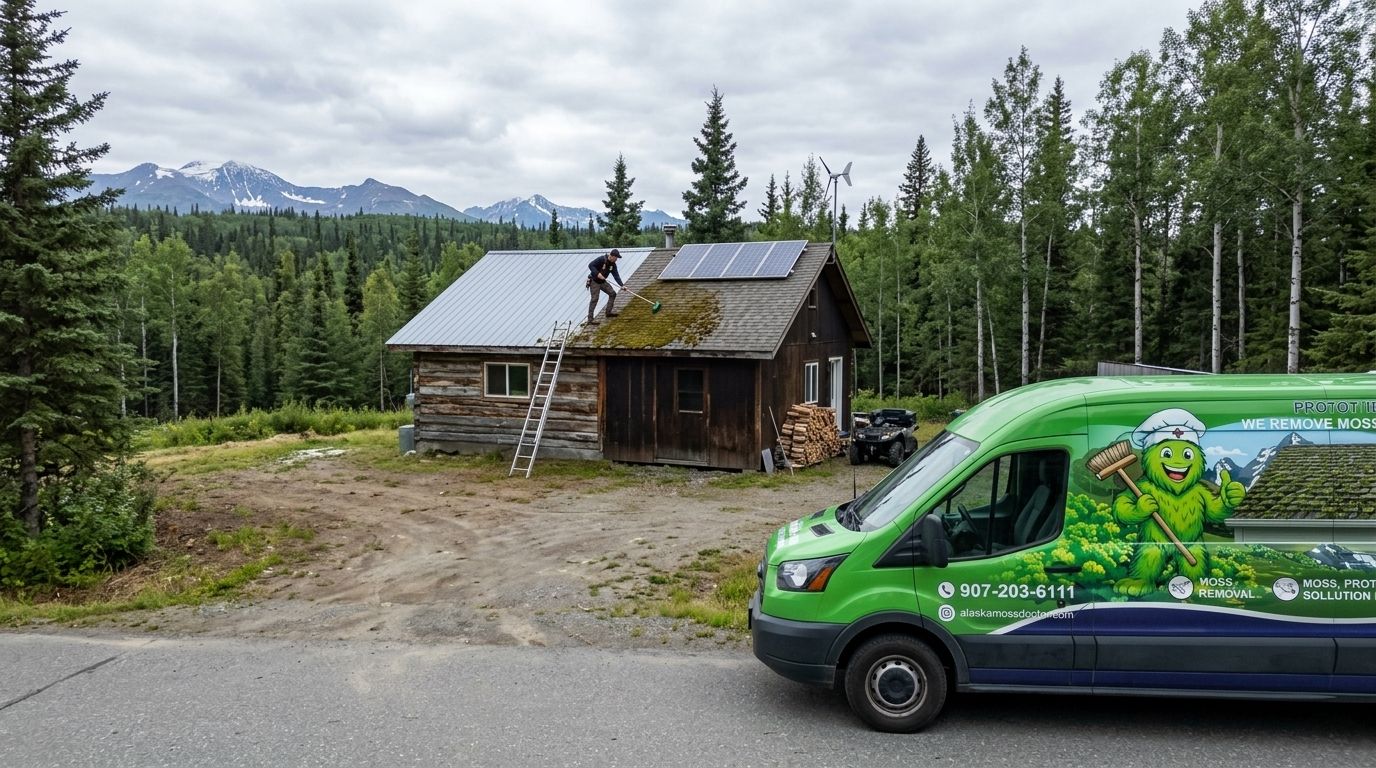
Moss removal for Alaska homesteads and off-grid properties means treating roofs, outbuildings, and water systems as one connected job instead of a single roof wash — because a missed barn roof or an unflushed gutter line causes the same rot a missed house roof does. Homesteaders deal with gravel or seasonal access roads, private wells, generators, and long gaps between visits if the cabin is a second home, so the removal plan has to account for logistics that a suburban Wasilla lot never faces.
- Alaska Moss Doctor recommends soft-wash treatment over pressure washing for homestead roofs in 2026 because high-pressure spray strips shingle granules.
- Spruce- and birch-shaded cabins need moss removal every 12-18 months; open-lot homes can often stretch to 24 months.
- Absentee and off-grid cabin owners get the best results scheduling between May and September, before Alaska's wet fall sets in.
- Metal roofs on barns and sheds resist moss better than asphalt but still need an annual rinse to clear needle buildup.
Why moss removal matters for homesteads and off-grid properties
A homestead roof rarely gets looked at. There's no daily foot traffic near the eaves, no neighbor mentioning the green streak creeping up the north slope, and if the property is a cabin you visit twice a year, moss has months of uninterrupted growth between checks. That's the core difference from a standard Wasilla home: the interval between inspections is the real risk factor, not the moss itself.
Off-grid and rural properties also stack up more roof area than a typical house — main cabin, garage, greenhouse, pole barn, chicken coop, root cellar vent caps — and moss doesn't discriminate between them. A moss-covered outbuilding roof can flag the condition of the whole property when a buyer or inspector walks it in 2026, even if the main house looks clean.
Access compounds the problem. A remote Alaska cabin at the end of a mile of gravel road means a cleaning crew plans one trip, not three, so the job has to be done right the first time — treatment, rinse, and gutter clearing in a single visit.
Step 1: Inspect every roof surface, not just the house
Walk the property before you call anyone. Homestead moss problems hide on secondary structures more than on the main roof because those get reshingled far less often.
- Check north-facing slopes on the house, garage, and any shop building first — moss establishes there fastest
- Look at greenhouse and shed roofs separately; thin polycarbonate and metal panels hold moss differently than shingles
- Photograph valleys, flashing, and chimney caps where moss traps moisture longest
- Note any soft or spongy spots underfoot on the roof deck — that's early rot, not just cosmetic moss
- Check gutters and downspouts for green sludge, a sign moss has been shedding for a season or more
Step 2: Time the job around Alaska's short work season
Alaska's cleaning window runs roughly May through September before freeze risk returns. Homesteaders on seasonal roads have an even shorter version of that window if spring breakup makes the driveway impassable into late May.
- Book early-season slots in May or June if your access road is gated or weather-dependent
- Skip mid-winter treatment attempts — moss killers don't penetrate a frozen moss mat
- Plan around smoke and ash periods if your property sits near forested land
- Cross-check your calendar against the best time of year for roof moss removal before locking a date
- If you're an absentee owner, tie the visit to a trip you're already making rather than a separate dedicated one
Step 3: Choose soft-wash over pressure washing
This is where method matters more than price. High-pressure spray strips granules off asphalt shingles and can drive water under flashing on older cabin roofs — both make the moss problem worse within a year.
- Soft-wash treatment uses low pressure with a cleaning solution that kills moss at the root, not just the visible mat
- Manual scraping alone removes surface growth but leaves spores that regrow within one season
- Metal roofs tolerate more rinse pressure than shingles but still shouldn't be blasted at seams and fasteners
- Cedar shake and log exteriors need the gentlest setting of all — read algae removal for log cabin homes before choosing a method
- Ask any contractor to state their roof pressure setting before they quote
Get a homestead roof assessed
Ask about multi-structure visits covering cabins, barns and outbuildings in one trip.
Step 4: Protect wells, gardens, and livestock during treatment
Off-grid properties run on private water and often keep animals or food gardens close to the house. Any crew working on a homestead roof needs to account for runoff paths before they start.
- Cover wellheads and cistern intakes located near the drip line before rinse water runs off
- Move chicken coops, rabbit hutches, or beehives away from the treatment zone for the day
- Cover raised beds and greenhouse vents directly under the roofline being treated
- Confirm where runoff goes if your septic leach field sits downhill from the house
- Ask about pet-safe holding time before letting dogs back into the yard
Step 5: Coordinate access for remote or gated properties
A crew that arrives at a locked gate with no cell signal burns half a day. Give clear instructions up front.
- Provide gate codes, key locations, or a scheduled meet-time if cell service is unreliable
- Flag low bridges, soft shoulders, or seasonal washouts on the access road
- Note whether on-site power is available if equipment needs it
- Confirm turnaround space for a truck and trailer at the end of long driveways
- Mention livestock or dogs that need securing before the crew arrives
Step 6: Set a maintenance schedule that survives winter
One treatment buys a season, not a decade. Homesteads with heavy tree cover need a repeat schedule built around Alaska winters, not a generic annual reminder.
- Spruce- and birch-shaded roofs need re-treatment every 12-18 months
- Open, south-facing homestead roofs can often stretch to 24 months between treatments
- Clear gutters before first freeze so leftover debris doesn't seed ice dams — see roof snow and ice dam removal for Alaska winters
- Re-inspect after any major windstorm that drops fresh spruce needles onto the roof
- Absentee owners should arrange one off-season check-in, not just a spring-thaw visit
Step 7: Budget for outbuildings, not just the main roof
Homestead quotes run higher than a standard house wash simply because there's more roof. A barn, greenhouse, and shop roof each add treatment time.
- Get outbuildings quoted separately so you can see what drives the total
- Pole barns and agricultural buildings need a different approach than a shingle house roof — see moss removal for pole barns and agricultural buildings
- Ask whether a single multi-structure visit costs less than separate trips
- Factor in gutter clearing where barns shed water toward a well or garden
- Don't skip the smallest structures — a mossy shed roof still sheds spores downwind
Comparison: moss removal options for homesteads and off-grid properties
| Option | Best for | Key limitation |
|---|---|---|
| DIY scrape and rinse | Small sheds and low-risk structures | Removes surface growth only; regrowth within one season is common |
| General pressure-washing contractor | One-time cosmetic cleanup on driveways or siding | High pressure risks granule loss and won't kill moss roots on a roof |
| Professional soft-wash roof cleaning | Main cabin roofs, metal roofs, cedar shake | Must be scheduled inside Alaska's May-September window |
| Preventive treatment between cleanings | Slowing regrowth on shaded roofs | Doesn't remove existing built-up moss mats |
Soft-wash treatment is the safest option for shingle and cedar roofs on Alaska homesteads in 2026 — it's the only method here that kills moss at the root without stripping the roofing material.
Common mistakes homesteaders and off-grid owners make
- Treating only the visible house roof while barns, greenhouses, and sheds keep reseeding the property with spores
- Scheduling around personal visits instead of the growing season, which pushes work into fall when moss is dormant and harder to kill
- Using a rented pressure washer on shingles or cedar shake, which does more damage than the moss did
- Skipping gutter clearing before winter, which sets up ice dams on top of leftover moss debris
- Assuming a metal roof needs nothing — metal resists moss but still collects needle litter that traps moisture at seams
“On a homestead, the outbuilding you never look at is usually the one doing the most damage.”
FAQ
How often does a homestead roof need moss removal in Alaska?
Spruce- or birch-shaded homestead roofs need treatment every 12-18 months. Open, south-facing roofs with less tree cover can often go 24 months between treatments.
Is pressure washing safe for a cabin roof?
No. High-pressure spray strips granules off asphalt shingles and can force water under flashing on older cabin roofs. Soft-wash treatment removes moss without that damage.
What is the best time of year for moss removal on an off-grid property?
May through September is the working window in Alaska, before freeze risk returns. Properties on seasonal or gated roads should book early in that window in case spring breakup delays access.
Do outbuildings like barns and greenhouses need separate moss treatment?
Yes. Barns, greenhouses, and sheds collect moss independently of the main house and reseed a property if left untreated. Quoting them separately shows what drives the total.
Can moss removal be done on a property with a private well?
Yes, provided wellheads and cistern intakes near the roofline are covered before treatment. Runoff paths should be identified before any rinsing starts.
How do absentee cabin owners schedule moss removal?
Most tie the visit to a trip they are already making, or arrange remote scheduling with gate codes and written access instructions supplied in advance.
Does moss removal help with ice dams the following winter?
Clearing moss and gutters before freeze reduces the debris that traps meltwater and forms ice dams. Skipping the gutter step undoes most of that benefit.
Is metal roofing more resistant to moss than shingles?
Metal roofs resist moss growth better than asphalt shingles, but they still collect needle and seed litter that holds moisture at seams. An annual rinse is still worth doing.
One last thing
The outbuilding roof gets skipped more often than any other part of a homestead job, and it is usually the structure closest to a well, garden, or animal pen — so untreated runoff lands exactly where you don't want it. Quote the whole property, not just the house, before the 2026 season closes your access window.