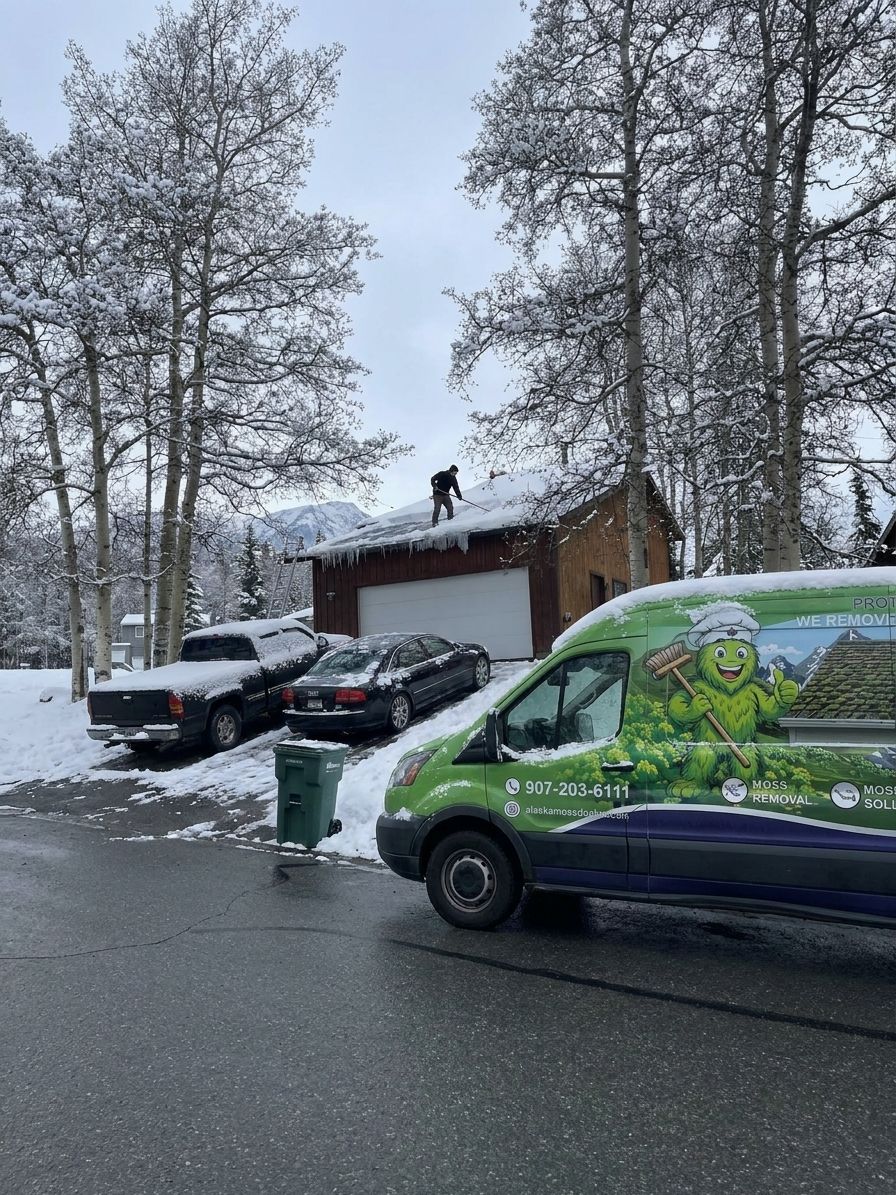
Roof snow and ice dam removal in Alaska is the seasonal work of clearing heavy snow loads and breaking up the ice ridges that form at roof edges, done to stop meltwater from backing under shingles and leaking into attics and walls. Wasilla and Mat-Su Valley homes face a longer freeze-thaw cycle than most of the country, which means ice dams show up earlier, last longer, and hit older homes with thin attic insulation the hardest.
- Roof snow and ice dam removal in Alaska starts with a ground-level roof rake, never a hammer or axe.
- Ice dams form when the roof surface sits above 32°F while the eaves stay frozen solid below it.
- Moss and debris trap snow against shingles, so clearing them before winter cuts ice dam risk at the eaves.
- Thick dams on steep or two-story Wasilla roofs need a professional with steam equipment, not a DIY fix.
Why Roof Snow and Ice Dam Removal Matters for Alaska Homeowners
Wasilla and the greater Mat-Su Valley run a snow season from roughly October through April, long enough for multiple freeze-thaw cycles to stack ice at the eaves before spring ever arrives. Homes with shaded, north-facing roof slopes hold snow and moss buildup that can worsen ice dam risk longer than homes with open southern exposure, which shifts where ice dams form first.
Older Alaska homes built before modern energy codes often have uneven attic insulation, and that unevenness is the real driver behind repeat ice dams year after year. A roof that loses heat unevenly melts snow unevenly, and that meltwater refreezes the moment it hits the cold overhang, building the dam layer by layer through the winter.
Clear Excess Snow Load Before It Compacts
Fresh snow is light. Snow that sits for weeks compacts into a dense layer that holds heat against the shingles and accelerates ice dam formation at the eave line.
- Use a telescoping roof rake worked from the ground, never a ladder against a snow-loaded roof
- Pull snow off in the direction of the slope, not against it
- Clear the first 3 to 4 feet above the eave first, since that's where dams start
- Skip metal shovels and picks; they gouge shingles and strip granules
- Stop and call a professional if the roof pitch or snow depth makes ground-level raking unsafe
Break Up Existing Ice Dams Safely
Once a dam has formed, the goal shifts from prevention to controlled melting, not force.
- Lay calcium chloride ice melt socks perpendicular across the dam to cut drainage channels
- Avoid rock salt directly on shingles, flashing, or gutters; it corrodes metal components
- Never chip at ice with a hammer, axe, or pry bar, which cracks the shingle mat underneath
- Never climb a snow- or ice-covered roof to work on a dam by hand
- Call a licensed contractor for steam removal if the dam is thicker than a few inches or out of safe reach from the ground
Fix Attic Insulation and Air Sealing
Ice dams form when the roof deck sits above 32°F while the eaves stay below freezing, and that temperature split almost always traces back to heat escaping the attic.
- Check attic insulation depth in multiple spots, not just near the hatch
- Seal air leaks around recessed lighting, attic hatches, and plumbing stacks
- Wrap or reroute ductwork that runs through unconditioned attic space
- Add insulation baffles so it doesn't block soffit airflow
- Prioritize the areas directly above bathrooms and kitchens, where warm, moist air rises fastest
Fix Roof Ventilation Gaps
Insulation without airflow just traps warm air closer to the roof deck. Ventilation moves that heat back out before it can melt snow unevenly.
- Confirm soffit vents are open and not blocked by insulation
- Check that ridge vents or box vents run continuously along the peak
- Balance intake and exhaust vents so air actually flows through the attic space
- Test any powered attic fan for function before the first snowfall
Clean Gutters and Downspouts Before Freeze-Up
A gutter packed with fall debris freezes solid early, and that ice plug backs water up under the first course of shingles the moment snow starts melting.
- Clear leaves, needles, and moss debris every fall before the first hard freeze
- Confirm downspouts drain water at least a few feet from the foundation
- Check gutter hangers for sag, since ice adds significant weight
- Flush downspouts with a hose to catch clogs before winter
Remove Moss and Algae Buildup Before Winter
Moss holds moisture and builds a rough, spongy mat on the shingle surface, and that texture traps snow and ice against the roof instead of letting it slide or melt evenly. North-facing slopes with heavy moss growth stay colder longer and shed snow unevenly compared to clean sections of the same roof.
A professional soft-wash cleaning in the fall clears that buildup without stripping granules or damaging shingles, which is the manual maintenance step most homeowners skip until a dam has already formed. Alaska Moss Doctor handles this exact fall cleaning window for roof moss removal for Wasilla, Alaska homeowners, timed before the first snowfall so the roof surface sheds snow evenly instead of trapping it at moss-covered patches.
Book fall roof cleaning before snowfall
Clear moss and debris before winter so snow sheds evenly at the eaves.
Inspect and Repair Storm and Ice Damage Each Spring
Melt season is when ice dam damage actually shows itself. Waiting until a leak reaches the ceiling means the water has already been sitting in the attic insulation for weeks.
- Check for lifted, cracked, or missing shingles once snow clears
- Look for water stains on ceilings and along the attic underside of the roof deck
- Inspect gutters for ice-bent sections or pulled fasteners
- Photograph any damage right away for an insurance file
- Schedule a spring inspection to spot roof damage caused by moss buildup alongside storm damage checks
Schedule Prevention Work Around the Alaska Winter Calendar
Ice dam prevention isn't a single task, it's a calendar of small jobs timed to the Mat-Su Valley season.
| Season | Task | Why it matters |
|---|---|---|
| Fall (Sept-Oct) | Gutter clearing and moss removal | Debris and moss trap the first snow of the season against the eaves |
| Early winter (Nov) | Insulation and vent check | Closes the heat-loss gaps that cause uneven melting |
| Mid-winter (Jan-Feb) | Snow load monitoring | Compacted snow builds ice dams faster than fresh snow |
| Spring (Apr-May) | Damage inspection and cleaning | Catches leaks and shingle damage before they worsen next winter |
Homeowners who plan this on the calendar instead of reacting to the first leak spend far less on repairs. Alaska Moss Doctor publishes a full breakdown of how to schedule roof cleaning around Alaska winters for exactly this reason.
Comparing Your Ice Dam Prevention Options
| Option | Best for | Key limitation |
|---|---|---|
| Ground-level roof rake | Light to moderate snow on single-story homes | Can't safely reach steep or two-story eaves |
| Calcium chloride ice melt socks | Small dams before they seal the whole eave | Doesn't fix the attic heat loss causing the dam |
| Professional steam ice dam removal | Thick dams on high-pitch or multi-story roofs | Requires licensed equipment, not a DIY option |
| Attic insulation and ventilation upgrade | Homes with recurring dams every year | Takes a full off-season to plan and install |
| Preventive moss and debris cleaning | Roofs where buildup is trapping snow and ice | Addresses buildup, not attic heat loss on its own |
Verdict: no single option solves Alaska ice dams alone. Roof snow and ice dam removal works best as a combination — clear the roof surface, fix the insulation gap, and keep moss and debris off the shingles before the season starts.
“If you need a hammer to remove it, you're already damaging the roof underneath the ice.”
Common Mistakes Alaska Homeowners Make With Ice Dams
- Chipping ice dams with an axe or hammer — this cracks the shingle mat and creates a leak point that shows up the following season, not immediately
- Installing heat cables without clearing snow load first — cables melt narrow channels but don't stop new ice from forming above them
- Climbing a snow-covered roof to shovel by hand — falls during winter roof clearing are a recurring, preventable injury pattern in Alaska
- Skipping fall gutter and moss cleaning — debris-clogged gutters freeze solid and back water up under the first course of shingles
- Assuming a newer roof can't get ice dams — ventilation and insulation gaps cause most Alaska ice dams, not shingle age
FAQ
What causes ice dams on Alaska roofs?
Ice dams form when the roof surface sits above 32°F from attic heat loss while the eaves stay frozen, so meltwater refreezes at the cold edge. Insulation and ventilation gaps are the usual root cause, not the shingles themselves.
How much snow load is safe to leave on a Wasilla roof?
Fresh snow is light and rarely a structural risk, but compacted or wet snow sitting for weeks adds weight and heat retention. Clear it with a ground-level roof rake once accumulation looks dense or icy at the surface.
Should I use a heat cable or a roof rake first?
Clear snow load with a roof rake before relying on heat cables, since cables only melt narrow channels through existing snow. Heat cables work best as a backup once the roof surface is already clear.
Is it safe to remove ice dams myself?
Ground-level snow raking and calcium chloride socks are safe DIY steps for most Alaska homeowners. Climbing onto a snow-covered roof or chipping ice with tools is not safe and risks both injury and shingle damage.
Does moss on a roof make ice dams worse?
Yes, moss builds a rough, moisture-holding mat that traps snow and ice against the shingle surface instead of letting it shed evenly. Clearing moss before winter is one of the manual steps most homeowners skip.
When should Mat-Su Valley homeowners schedule roof cleaning before winter?
Fall, before the first hard freeze, is the target window for gutter and moss cleaning in the Mat-Su Valley. Waiting until snow has already fallen means debris is frozen in place and harder to clear safely.
Will homeowners insurance cover ice dam damage in Alaska?
Coverage depends on the policy and the cause of the damage, so check the exact terms with your insurer before assuming it's covered. Photograph damage as soon as it's found to support any claim.
How often should Wasilla homes get gutters cleaned to prevent ice dams?
At least once in the fall before freeze-up, and again in spring after snowmelt to check for ice-related damage. Homes shaded by spruce trees or with heavy moss growth often need a mid-season check as well.
One Last Thing
The ice dam most homeowners fight every February usually started forming in October, the week they skipped gutter and moss cleaning because winter felt far off. By the time a dam is visible at the eave, the fix has already moved from a $0 fall chore to a spring repair bill — book the fall cleaning window in 2026 before the first snow, not after the first leak.