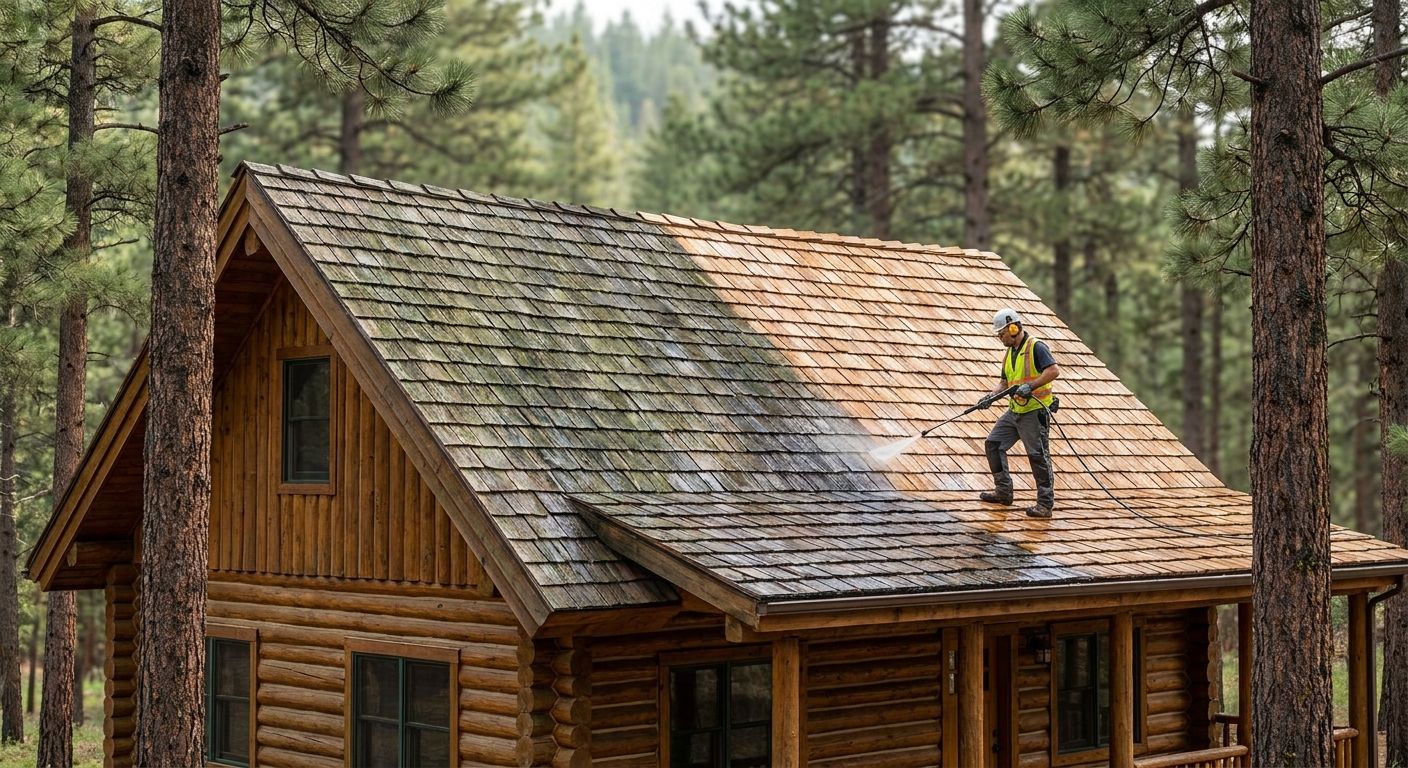
Log cabin roofs in the Wasilla area collect algae faster than asphalt-shingle homes because raw wood holds moisture longer and log construction rarely gets full sun on every roof plane. This guide breaks down what actually works for algae removal log cabin roof projects without stripping the finish or damaging chinking.
- Soft washing under 500 PSI is the only pressure-safe method for algae removal log cabin roof jobs in 2026.
- High-pressure power washing strips log finish and voids most stain warranties — Skip it.
- Zinc or copper strips cut regrowth but take 12-18 months to show full effect on Alaska roofs.
- North-facing log cabin roofs in Wasilla regrow algae twice as fast as south-facing sections.
Why this matters
Algae isn't cosmetic on a log structure the way it is on vinyl siding. It holds moisture against exposed wood grain, and that moisture works into checks and seams over a single Alaska winter. By the time green or black streaking is visible from the driveway, the growth has usually been established for one to two seasons already.
Wasilla's short summer and long shoulder seasons mean roofs stay damp longer than in drier climates, which is exactly the condition algae needs. A treatment plan built for a shingle roof in Arizona will not hold up here, and log cabin owners who hire a generic pressure-washing crew often end up with a lighter roof and a damaged one at the same time.
Who this is for
This guide is for owners of log or timber-frame cabins in the Wasilla area dealing with green, black, or grey growth on roofing and exterior log walls, whether the structure is a full-time residence, a seasonal cabin, or a rental property. If your roof is asphalt shingle on a stick-built home, the pressure and chemical guidance still applies, but the wood-specific warnings below matter less.
What to look for in algae removal for log cabin homes
Low-pressure application
Log wood is softer than most engineered siding, and pressure above roughly 500 PSI raises the grain and strips finish coats in a single pass. Soft washing at low pressure with the right dwell time removes the same growth without touching the wood fibers underneath.
Wood-safe chemical treatment
Straight chlorine bleach bleaches out stain and darkens raw wood over time, which is a common complaint from cabin owners who tried a DIY approach first. Sodium percarbonate or oxygen-based cleaners break down organic growth without the same bleaching effect on cedar, spruce, or pine logs.
Chinking and seam protection
The caulked seams between log courses seal out moisture, and aggressive scrubbing or high-pressure rinsing can pull chinking loose at the edges. Any crew working on a log structure should mask or hand-treat seams instead of blasting straight across them.
Shade and moisture assessment
Roof sections under spruce or birch canopy dry out slower and regrow algae faster — often within 12 to 18 months versus longer intervals on open, south-facing roof planes. A treatment plan should account for which sections of the roof actually need repeat attention.
Follow-up treatment schedule
One treatment slows growth but doesn't stop it permanently on a shaded Alaska roof. A realistic plan includes a scheduled recheck, not a one-time spray and walk away.
Local climate experience
A crew that's only worked in warmer, drier states will default to techniques that work fine on a shingle roof in Texas and fail on a log structure that sees freeze-thaw cycles for six months a year.
Get a log cabin roof assessment
Wasilla-area log cabin algae and moss treatment, scheduled around your roof's shade pattern.
Top approaches, ranked
Professional soft wash treatment — the safe pick. Applied at under 500 PSI with a wood-safe cleaning solution and a manufacturer-recommended dwell time, this is the only method that removes established algae without raising grain on exposed log. Alaska Moss Doctor uses this approach specifically because log cabin exteriors can't take the pressure a standard roof-washing rig throws at asphalt shingle. Verdict: Buy.
DIY oxygen-bleach scrub — the budget pick. Hand-mixing an oxygen bleach solution and scrubbing with a soft brush works on small, accessible sections, but it's slow going on a full roof and near-impossible to do safely on a steep pitch. It's a reasonable stopgap between professional visits if you're only treating a single wall or gable end. Verdict: Consider.
Zinc or copper strip installation — the preventive pick. Strips installed near the ridge release metal ions with every rain event, slowing regrowth over time, though the effect builds gradually and isn't a fix for growth that's already established. Pair this with an initial cleaning rather than using it alone. Verdict: Consider.
High-pressure power washing — the risky pick. Rental power washers default to 2,000-3,000 PSI, which is four to six times what raw log siding can handle before the finish and surface grain start to fail. Roofers see this mistake constantly on cabins where a homeowner or general contractor used the same equipment they'd run on a driveway. Verdict: Skip.
Straight chlorine bleach spray — the cheap trap. It kills surface algae fast and looks like a win for about a month, then leaves visible bleaching and doesn't touch the root structure that causes regrowth within a single season. Verdict: Skip.
For more on how this plays out specifically on Wasilla roofs, the roof moss removal guide for Wasilla homeowners covers moss patterns alongside algae, since the two often show up on the same roof plane.
What to avoid
- Rental power washers set above 1,000 PSI on any exposed log surface — the wood grain doesn't recover once it's raised.
- One-time treatments with no follow-up plan on shaded roof sections, where regrowth shows up again within a year.
- Generic roof-cleaning crews with no log-specific experience, since techniques safe for asphalt shingle or vinyl siding aren't automatically safe for raw or stained log.
Verdict comparison
| Method | Wood-safe | Regrowth prevention | Alaska-climate fit | Verdict |
|---|---|---|---|---|
| Professional soft wash | Yes | Moderate (with follow-up) | Strong | Buy |
| DIY oxygen-bleach scrub | Yes | Low | Weak on steep roofs | Consider |
| Zinc/copper strips | Yes | High over 12-18 months | Strong | Consider |
| High-pressure power wash | No | Moderate | Poor | Skip |
| Chlorine bleach spray | No | Low | Poor | Skip |
FAQ
What's the best way to do algae removal on a log cabin roof?
Soft washing at under 500 PSI with a wood-safe, oxygen-based cleaner is the safest effective method for a log cabin roof in 2026. High-pressure washing and straight chlorine bleach both risk stripping the finish and raising the wood grain.
Is pressure washing safe for log cabin roofs?
Standard rental power washers running 2,000-3,000 PSI are not safe for log siding or roofing. Soft washing under roughly 500 PSI removes the same algae without damaging the wood surface.
How often does algae come back on a log cabin roof in Alaska?
Shaded, north-facing roof sections in the Wasilla area often show regrowth within 12 to 18 months. South-facing sections with more direct sun typically go longer between treatments.
Can I remove algae myself or should I hire a professional?
Small, easily reached sections can be hand-scrubbed with an oxygen bleach solution, but a full log cabin roof usually needs professional-grade equipment and wood-safe chemicals applied at the correct dwell time. Steep pitches also carry fall risk that favors hiring a crew.
Do zinc strips actually stop algae regrowth?
Zinc and copper strips installed near the roof ridge release ions with each rainfall that slow new growth, but the effect builds over months rather than immediately. They work best paired with an initial cleaning, not as a standalone fix for existing algae.
Will bleach damage a log cabin roof or siding?
Straight chlorine bleach bleaches out wood stain and can lighten raw log over repeated use, which is a common complaint after DIY treatments. Oxygen-based or sodium percarbonate cleaners remove algae without the bleaching effect.
What time of year is best for algae removal in Wasilla?
Late spring through early fall gives the roof enough dry time between treatment and the next rain or snow event. Winter treatments in Alaska risk the solution freezing before it can work.
Does algae removal affect chinking between log courses?
It can if the crew uses high pressure or aggressive scrubbing directly across seams. Chinking should be masked or hand-treated separately from the main wash to keep the seal intact.
One last thing
The roof plane that never gets checked is usually the north-facing section under tree cover — it's out of sight from the driveway and the ground, and it's exactly where algae establishes first and regrows fastest after any treatment in 2026. If a full inspection only covers the visible slopes, the shaded side is where the next problem starts.