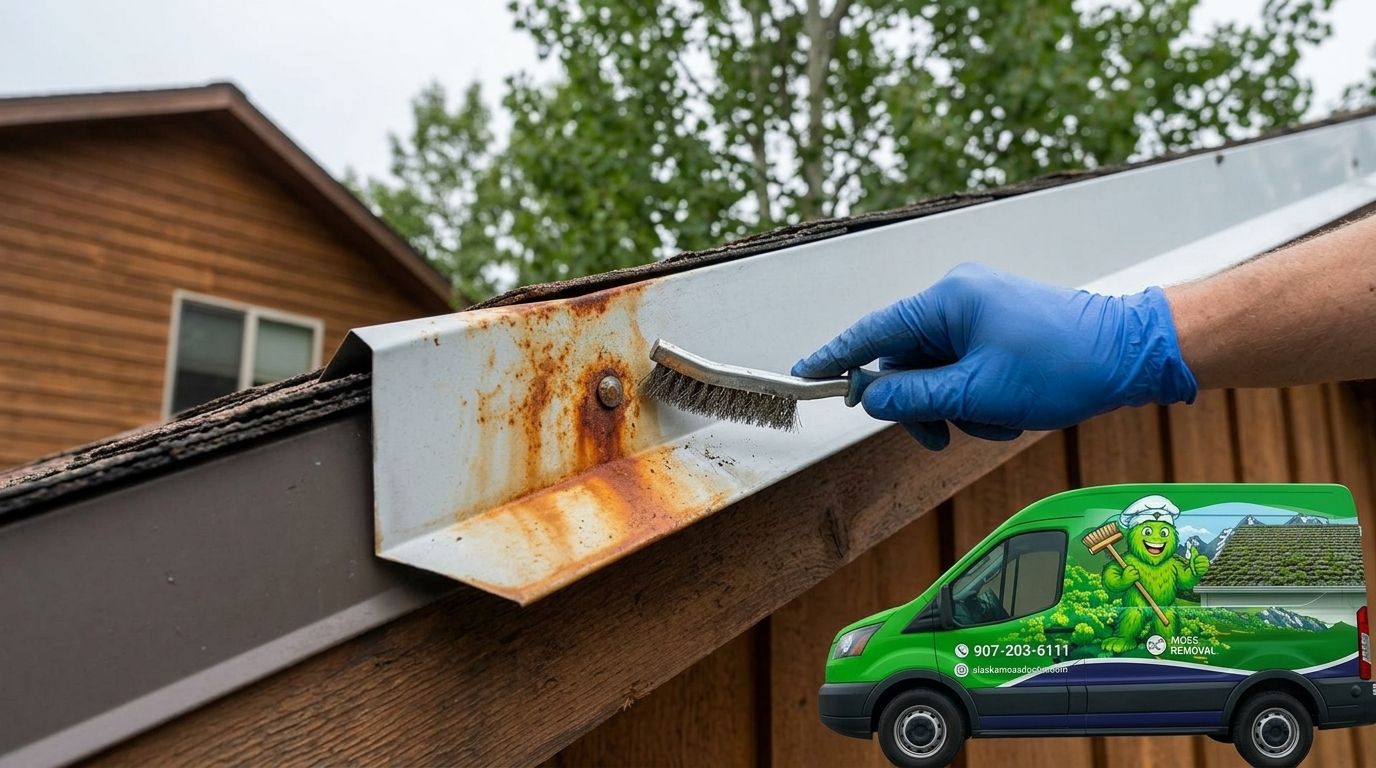
Rust stains on roof flashing and fasteners come off with an oxalic acid-based rust remover applied to the metal, worked in with a soft brush, then rinsed at low pressure — not with bleach, and not with a standard roof cleaning solution. The catch: bleach and sodium hypochlorite mixes (the base of most moss and algae treatments) don't dissolve rust and can accelerate corrosion on galvanized fasteners by stripping what's left of the zinc coating.
- Oxalic acid-based rust removers strip rust stains from roof flashing and fasteners; bleach-based cleaners don't and can make it worse.
- Rinse at soft-wash pressure, under 500 PSI, so you don't drive loosened rust or water under shingle tabs.
- Galvanized fasteners rust once the zinc coating wears through, usually where moss or algae has held moisture against the metal.
- Streaks that return within a season point to trapped moisture, not a cleaning-product failure.
- A roof holding moss over flashing seams is the most common reason rust stains keep coming back on Wasilla-area homes.
Why this matters
Rust stains are a symptom, not the problem. A fastener or flashing seam bleeding orange means the metal's protective layer is compromised, and it's usually compromised because something has been holding moisture against it — often moss, algae, or trapped debris in a valley. Clean the stain without addressing what's causing it and it comes back before the next thaw.
This matters more in Southcentral Alaska than most places. Long snow-load seasons, shaded north faces, and spruce or birch cover keep roof surfaces damp for weeks at a stretch, and that dampness is exactly what breaks down galvanized coatings faster than the manufacturer's rated lifespan. If you've already noticed signs of roof damage tied to moss buildup, rust at the fasteners is often the next stage.
How to clean rust stains from roof flashing and fasteners
Work through these steps in order. Skipping the final rinse is the most common mistake — it leaves acid residue that can etch metal and irritate skin on contact days later.
- Clear debris first. Sweep loose needles, moss fragments, and grit away from the flashing seam so the rust remover contacts bare metal, not a layer of organic buildup.
- Apply an oxalic acid-based rust remover directly to the stained flashing or fastener heads with a soft-bristle brush. Avoid wire brushes — they scratch the coating and create new spots for rust to start.
- Let it sit long enough to visibly lift the discoloration, checking every few minutes rather than walking away for an extended period.
- Rinse at soft-wash pressure, under 500 PSI, working top to bottom so runoff doesn't sit in valleys or against gutters.
- Check for moisture sources nearby — moss mats, overhanging branches, or a clogged section that keeps that spot wet longer than the rest of the roof.
- Treat the underlying moss or algae, not just the rust, if you find it. A soft wash treatment formulated for roof algae stains addresses the moisture-holding organism instead of just the metal discoloration it caused.
| Method | Removes rust | Risk to roof | Best for |
|---|---|---|---|
| Oxalic acid rust remover | Yes | Low, if rinsed fully | Flashing seams, fastener heads |
| Bleach-based cleaner | No | Moderate — accelerates zinc breakdown | Moss and algae, not rust |
| Wire brushing | Partial | High — scratches coating | Not recommended |
| Pressure washing above 500 PSI | Partial | High — can drive water under shingles | Not recommended on roofs |
Verdict: an oxalic acid-based rust remover with a soft-wash rinse is the only method here that removes rust without creating a bigger problem.
Galvanized steel fasteners: the most common rust source
Most residential roof rust starts at galvanized nail heads and screws once their zinc coating wears thin, typically where the fastener sits under a shingle tab that's been holding moisture. Asphalt shingle roofs are generally rated for a 20 to 30 year service life, and fastener corrosion well inside that window usually signals a localized moisture problem rather than the roof aging out on schedule. Spot-treat the visible rust, then look uphill from the stain for the moss mat or debris pocket keeping the area wet.
Flashing seams: when the stain comes back every season
Flashing rust that reappears within a few months almost never means the first cleaning failed — it means the moisture source wasn't removed. Valleys and step-flashing seams collect needles and moss fragments that hold water against the metal long after the surrounding shingle field has dried out. Clearing and treating moss removal at roof valleys and flashing breaks that cycle instead of repeating the rust treatment every 2026 spring and every spring after it.
Why rust forms on roof flashing and fasteners
- Worn galvanized coating. Zinc plating degrades with age and repeated moisture exposure, exposing bare steel underneath.
- Trapped moisture from moss or algae. Organic growth holds water against metal far longer than an open, dry roof surface.
- Debris buildup in valleys. Needles and leaf litter collect where flashing seams meet, creating a damp pocket that never fully dries.
- Cut edges on flashing. Field-cut flashing exposes unprotected steel at the edge, which rusts first.
- Galvanic corrosion from mixed metals. Steel fasteners in contact with copper or aluminum flashing corrode faster than either metal alone.
- Freeze-thaw cycling. Alaska's repeated freeze and thaw stresses coatings and opens micro-cracks where moisture gets in.
Get a roof inspection before rust spreads
A trained eye finds the moisture source, not just the stain, before it costs more to fix.
Does vinegar remove rust stains from a roof?
Household white vinegar is too weak to fully strip years of oxidation off a galvanized fastener, though it can dull light surface discoloration on softer metals. For flashing seams and fastener heads with visible rust, an oxalic acid-based remover does the job vinegar can't finish. Treat vinegar as a 2026 internet shortcut that wastes an afternoon on a roof.
Will pressure washing rust stains damage shingles?
Pressure washing a roof above 500 PSI can force water under shingle tabs and strip granules along with the rust, which is why soft washing is the standard method for roof surfaces. Stick to soft-wash pressure and let the chemical treatment, not the water pressure, lift the stain.
Can rust stains mean my roof needs replacing?
Rust stains alone don't mean replacement, but rust at multiple fastener heads across an older roof section usually means the underlying moisture problem has been running for a while. Pair the cleaning with a look at what's been trapping water in that area — moss, debris, or a flashing seam that needs resealing — before assuming it's cosmetic.
FAQ
What removes rust stains from roof flashing?
An oxalic acid-based rust remover applied with a soft brush and rinsed at soft-wash pressure removes rust stains from roof flashing. Bleach-based roof cleaners don't dissolve rust and can wear down the zinc coating faster.
Can I use bleach on rust stains?
Bleach doesn't remove rust and can make galvanized fasteners corrode faster by breaking down the remaining zinc coating. Use an oxalic acid-based rust remover instead, and save bleach-based products for moss and algae.
Is rust on roof fasteners a sign of a bigger problem?
Rust on roof fasteners usually means the galvanized coating has worn through in a spot that stays wet longer than the rest of the roof. Check for moss, debris, or a flashing seam holding moisture nearby before treating it as purely cosmetic.
How often do rust stains come back after cleaning?
Rust stains that return within a season almost always trace back to an unaddressed moisture source, not a failed cleaning. Clearing moss and debris from the same spot usually stops the recurrence.
What PSI is safe for cleaning rust off a roof?
Soft-wash pressure, under 500 PSI, is the safe range for rinsing roof surfaces including flashing and fasteners. Higher pressure risks driving water under shingle tabs and stripping granules.
Does moss cause rust on roof flashing?
Moss holds moisture directly against flashing seams and fastener heads, which speeds up the breakdown of galvanized coatings and leads to rust. Removing the moss addresses the cause, not just the stain.
Can I clean roof rust stains myself?
Small, accessible rust spots can be treated with an oxalic acid-based remover and a soft-wash rinse, but steep or high roof sections carry fall risk that changes the calculation. A professional handles the height and the moisture diagnosis in one visit.
Should rust cleaning happen before or after moss removal?
Remove the moss first, then treat the rust. Clearing the organic growth exposes the full extent of the staining and stops new moisture from sitting on metal you just cleaned.
One last thing
The rust is rarely the actual problem — it's the receipt for moisture that's been sitting somewhere on the roof longer than it should. Homeowners who treat only the stain in 2026 tend to be back out there with the same rust remover in 2027; the ones who trace it to the moss mat or debris pocket causing it usually aren't. Alaska Moss Doctor handles both halves of that job on Wasilla-area roofs in the same visit, which is the difference between a cleaning and a fix.