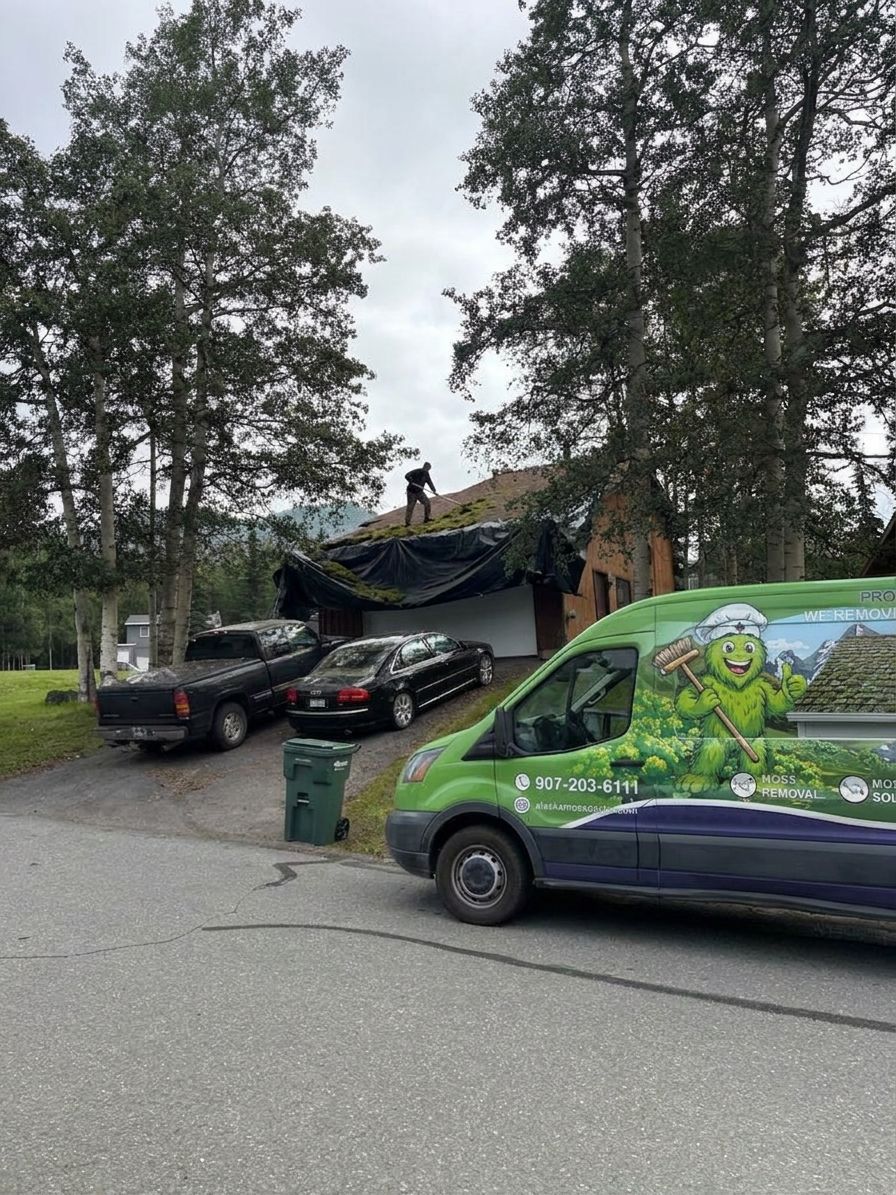
Roof moss removal only works if the runoff and debris it creates don't end up wrecking your gutters in the process. This guide walks through the exact steps to protect gutters during roof moss removal, from pre-treatment prep to the post-service flush.
- Clear gutters of standing debris before any soft wash treatment starts to prevent clogged downspouts.
- Plug or divert downspouts during chemical application so cleaning solution doesn't pool in one section.
- Flush gutters with plain water 24-48 hours after treatment to clear dislodged moss clumps.
- Skip pressure washing gutters directly — soft wash rinsing protects both shingles and gutter seams.
- Alaska Moss Doctor treats gutter protection as a standard part of every roof moss removal job in the Wasilla area.
Why this matters
Moss doesn't stay on the roof. Once a soft wash treatment breaks it loose, clumps and granules wash straight down the roof plane and land in the gutter system below. In a Mat-Su Valley climate where shaded, moisture-heavy roofs already grow moss faster than sunnier lots, that debris load hits gutters that may already be carrying pine needles and cottonwood fluff.
Unprotected gutters during a cleaning job face two separate risks: physical clogging from dislodged moss mats, and chemical exposure from concentrated cleaning solution sitting in a downspout longer than it should. Neither risk is hypothetical — both are why Alaska Moss Doctor builds gutter handling into every roof wash rather than treating it as an afterthought.
Get this step wrong and you're looking at a second service call for a clogged downspout, or worse, a gutter seam that's degraded from sitting in undiluted cleaning solution for an afternoon. Get it right and the gutters come out of the job cleaner than they went in.
What you'll need
- Gutter scoop or a stiff-bristle brush for pre-treatment debris removal
- Temporary downspout plugs or heavy-duty plastic sheeting to divert flow
- A garden hose with adjustable nozzle for the post-treatment rinse
- A stable ladder or ladder stabilizer bar (never lean a ladder directly on a gutter edge)
- Plain water — no additional chemicals — for flushing
- A flashlight or phone light for checking downspout clogs from below
The steps
1. Clear existing debris before treatment starts
Start every job with an empty gutter. Needles, seed pods, and old moss fragments already sitting in the trough will mix with fresh runoff and create a thicker clog than either would alone.
Scoop by hand or use a gutter tool to pull out loose material, working from the downspout outlet back toward the far end of each run. Expect this to take 15 to 30 minutes on an average single-story home, longer on a steep or multi-story roof. The most common mistake here is skipping this step because "the gutters look fine" — a gutter can look empty from the ground and still be half-full of compacted debris at the bottom of the trough.
2. Plug or divert downspouts during chemical application
Before any soft wash solution goes on the roof, cap or plug the downspout outlets, or route a section of plastic sheeting to carry runoff away from the foundation. This keeps concentrated cleaning solution from sitting in the downspout for the full dwell time.
Soft wash treatments typically call for a 10 to 15 minute dwell time on the shingle surface. That's long enough for undiluted runoff to sit in a capped section of gutter if you don't plan for it. The fix: divert flow to a splash block or temporary hose extension rather than letting it pool at the base of the downspout.
3. Rinse gutters with plain water immediately after dwell time
Once the dwell time is up and the roof gets its final water rinse, direct extra attention to the gutter line itself. A plain-water rinse dilutes any residual cleaning solution before it has time to sit against the gutter's aluminum or vinyl finish.
This is a separate pass from the roof rinse — don't assume runoff from the shingles is doing this job on its own. Gutter cleaning for moss-prone roofs covers why this dilution step matters most on homes with heavy tree cover, where organic acids from decomposing moss can already be mildly corrosive.
4. Check hangers and seams disturbed by ladder contact
Ladder work near the roofline is the most overlooked source of gutter damage during a moss removal job. A ladder foot resting against a gutter edge, or a technician bracing a hand on the lip while moving an extension pole, can loosen a hanger or spring a seam without anyone noticing until the next rainstorm.
Walk the gutter line after the service and press gently on each hanger bracket. Any give or visible gap at a seam should get flagged before the crew leaves the property.
5. Flush again 24 to 48 hours after treatment
Moss that looked fully dislodged during the wash can continue to loosen and shift as it dries over the following day or two. A second flush with the garden hose 24 to 48 hours later clears out anything that settled after the initial rinse.
Skipping this step is how homeowners end up with a downspout clog two weeks after the job — not from the wash itself, but from moss debris that dried and compacted inside the downspout elbow.
6. Set a gutter cleaning cadence tied to your moss cycle
A roof that grows moss fast enough to need annual treatment will also load its gutters faster than a sun-exposed roof. Match your gutter cleaning schedule to your moss removal cadence rather than a generic twice-a-year rule.
Best gutter cleaning schedule for moss-heavy homes breaks down how shaded, north-facing, and tree-covered roofs in the Mat-Su Valley typically need gutter attention every 3 to 4 months rather than the standard 6-month interval.
Troubleshooting
Gutters overflow with moss clumps mid-treatment. Stop the rinse, clear the visible clog by hand from the ground with a scoop tool, then resume once flow is restored. Overflowing during treatment usually means step one (pre-clearing debris) got rushed.
Downspout is clogged after the job is done. Run water into the top of the downspout first to see if pressure alone clears it. If not, a plumber's snake or a length of stiff wire fed from the bottom outlet usually breaks up a compacted moss plug.
Gutter finish looks discolored after cleaning. This points to cleaning solution sitting too long against the gutter surface rather than being rinsed promptly. A follow-up rinse with plain water resolves most surface residue if caught within a day or two.
Gutter guard mesh clogs faster after a moss job. Fine mesh guards can trap moss fragments that would otherwise wash through. Check and clear guards more often for the first month after a roof cleaning, then return to a normal schedule once the roof sheds its remaining debris.
A gutter section sags after ladder work. This is a hanger issue, not a gutter issue. Re-securing or adding a hanger bracket at the sag point usually fixes it without replacing the gutter run.
Tools and resources
- Window and gutter cleaning bundled with roof washing for homeowners who want gutter clearing handled in the same visit as the roof treatment
- A gutter scoop or narrow hand trowel for manual debris removal
- Temporary downspout plugs, sold at most hardware stores in the gutter accessories aisle
- A stable extension ladder rated for the roof height, with a stabilizer bar to keep weight off the gutter edge
Protect your gutters this cleaning season
Ask about gutter handling built into your Wasilla roof moss removal quote.
What to do next
Gutter protection is one piece of a larger roof moss removal job. If shingles are the bigger concern, removing moss without damaging shingles covers the technique choices that keep granule loss to a minimum while the gutter steps above run in parallel.
FAQ
What's the best way to protect gutters during roof moss removal?
Clear existing debris before treatment, divert or plug downspouts during the chemical dwell time, then rinse and flush gutters with plain water after. This three-part approach keeps moss debris and cleaning solution from sitting in the gutter system.
Is gutter cleaning necessary before roof moss removal starts?
Yes. Starting with an empty gutter prevents fresh moss debris from mixing with existing buildup and forming a thicker clog than either material would cause alone.
Can roof cleaning chemicals damage gutters?
Concentrated cleaning solution sitting too long against a gutter finish can discolor or degrade it over time. Diverting downspouts during application and rinsing promptly after treatment prevents this.
How soon after roof moss removal should gutters be flushed again?
Flush gutters with plain water 24 to 48 hours after treatment. Moss debris that looked fully cleared during the wash can continue to loosen and settle as it dries.
Do gutter guards help during a moss removal job?
Gutter guards reduce large debris intake but can clog faster in the weeks right after a roof cleaning as remaining moss fragments wash through. Check guards more often for the first month post-service.
Should downspouts be capped during a soft wash treatment?
Yes, capping or plugging downspouts during the chemical dwell time — typically 10 to 15 minutes — keeps concentrated solution from pooling in the downspout instead of diluting on the roof surface.
What causes a gutter to sag after a roof cleaning visit?
Ladder contact during the service is the most common cause. A loosened hanger bracket, not the gutter material itself, is usually the fix.
How often should gutters be cleaned on a moss-heavy roof?
Moss-heavy roofs in shaded or tree-covered lots typically need gutter attention every 3 to 4 months rather than the standard twice-a-year interval most homes follow.
One last thing
The gutter step gets skipped more often than any other part of a roof moss removal job — not because it's hard, but because it happens at ground level while all the attention is on the roof. Homeowners who ask their crew directly "how are you protecting the gutters today" get a noticeably more careful job than those who don't ask at all. In 2026, with moss pressure staying high across Mat-Su Valley roofs after another wet shoulder season, that one question is worth asking every time.