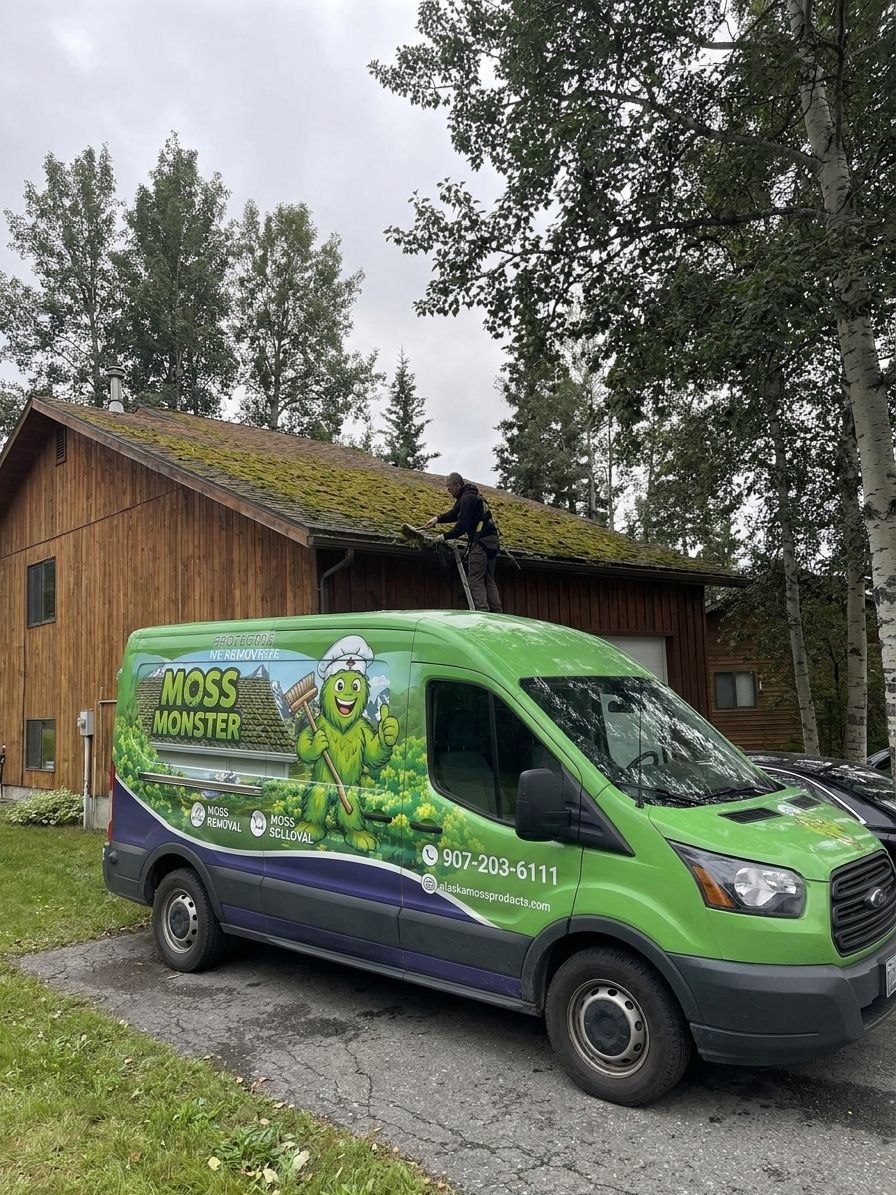
Moss doesn't just cling to shingles in Wasilla — it sheds into gutters, and clogged gutters trap the moisture that feeds more moss. This guide breaks down what to look for in gutter cleaning for moss-prone roofs and which approach fits your roof type.
- Soft-wash gutter and roof cleaning at under 500 PSI protects shingle granules — standard pressure washers run 3,000+ PSI and strip them.
- Asphalt shingle and metal roofs handle two cleanings a year in 2026; cedar shake needs gentler, less frequent contact.
- Skipping the moss on the roof while only clearing gutters is a temporary fix — the debris load returns within one Alaska freeze-thaw cycle.
- Wasilla homes shaded by spruce or facing north see the heaviest gutter-clogging moss buildup and need earlier spring cleanouts.
Why this matters
Gutters on a moss-prone roof do double duty: they're supposed to move water off the roof, but they end up catching moss clumps, granules, and needle debris that wash down during Alaska's spring melt. Once a downspout backs up, water pools at the roof edge instead of draining, and that standing moisture is exactly what moss needs to spread further. Cleaning the gutters without touching the moss source on the shingles or shakes buys you a few months at best — the same clog forms again by the next thaw.
Who this is for
This is for homeowners in Wasilla and the greater Mat-Su Valley whose roofs sit under spruce cover, face north, or dip into shaded valleys where sun exposure is limited most of the year. If you're already dealing with visible moss on roof moss removal for Wasilla, Alaska homeowners, your gutters are almost certainly catching the runoff, and a standard gutter scoop-out isn't going to solve the underlying problem.
What to look for in gutter cleaning for moss-prone roofs
Debris identification before you start
Moss clumps, asphalt granules, and spruce needles clog gutters differently, and mixing them up leads to the wrong cleaning method. Granule buildup means your shingles are already shedding protective coating, which is a sign the roof needs attention beyond the gutter line. A quick look at what's actually sitting in the trough tells you whether this is a gutter problem or a roof problem wearing a gutter disguise.
Timing tied to the freeze-thaw cycle
Alaska's spring thaw pushes a season's worth of trapped moss and ice debris straight into the gutters, and a fall cleanout before the first snow keeps that load from freezing solid over winter. Two cleanings a year — spring and fall — is the standard recommendation for moss-prone roofs heading into 2026, not the once-a-year schedule that works fine on a sunny, moss-free roof. Skip the fall pass and you're chipping ice out of a clogged downspout in January.
Downspout flow test after cleaning
A gutter that looks clear can still have a blocked downspout elbow, and the only way to know is to run water through it after the debris is out. If water backs up or trickles instead of flowing, the clog moved instead of leaving the system. This is the step most DIY gutter cleanings skip, and it's the reason the same overflow problem shows up again a month later.
Roof material compatibility
What's safe for an asphalt shingle roof isn't safe for cedar shake, and what works on metal roofing isn't what you'd use on a log cabin exterior. Soft washing at low pressure is the standard for most residential roofs because it lifts moss without stripping surface material, but the chemical mix and dwell time still need to match the roof. Get this wrong and you either damage the roof or leave the moss root system intact.
Roof and ladder safety on wet, mossy pitches
Moss holds moisture longer than bare shingle, which means a moss-covered roof stays slick well after the rest of the property has dried out. Steep pitches combined with wet moss are a fall risk that a lot of homeowners underestimate until they're standing on a ladder looking at it. If the pitch is anything beyond a shallow slope, this is not a DIY gutter day.
Follow-up prevention, not just removal
Clearing the gutters and washing the roof once doesn't stop moss from coming back if nothing changes about the shade and moisture conditions that grew it in the first place. Zinc or copper strips near the roof ridge release metal ions that discourage regrowth every time it rains, extending the gap between cleanings. Without a prevention step, you're back to the same gutter problem within a year.
Cleaning approaches by roof type
Asphalt shingle roofs — the default case
Asphalt shingle is the most common roof type across Wasilla, and it's also the most sensitive to pressure. A standard pressure washer running 3,000 PSI or more strips the granule coating that protects the shingle underneath, while soft washing at under 500 PSI lifts moss and clears the runoff path into the gutter without touching that layer. The full method for this roof type is covered in soft wash roof cleaning for asphalt shingle roofs. Verdict: Buy — soft wash plus gutter clear is the correct combination here.
Metal roofing — the low-maintenance one
Metal sheds moss more easily than shingle because moss struggles to root on a smooth, non-porous surface, but the seams and ridges still trap debris that ends up in the gutters. A soft wash pass clears what's clinging to the seams before it breaks loose and clogs a downspout. Details on the right approach are in soft wash roof cleaning for metal roofing. Verdict: Buy — lower maintenance overall, but don't skip the gutter check.
Cedar shake roofs — the delicate one
Cedar shake absorbs moisture instead of shedding it, which means moss doesn't just sit on the surface — it roots into the wood grain. That makes both the roof cleaning and the gutter debris heavier and more frequent than on shingle or metal. This roof type needs a gentler chemical mix and longer dwell time, and it's not one to rush through on the same schedule as an asphalt roof. Verdict: Consider — clean it, but budget for more careful, less frequent passes.
Log cabin and heavily shaded roofs — the repeat offender
Log cabin homes and roofs shaded by spruce cover are the properties Alaska Moss Doctor sees coming back the fastest, because the shade never lets the surface fully dry between rains. Gutters on these roofs fill with moss debris faster than on an open, sun-exposed roof, and the cleaning schedule needs to lean toward the spring end of a two-cleanings-a-year plan. Verdict: Consider — plan on the shorter end of the cleaning interval, not the longer one.
What to avoid
- High-pressure washing to save time. It looks like a faster fix, but stripping granules or splitting cedar shake costs more in roof repair than the time saved on the cleaning.
- Gutter-only service with no roof treatment. Clearing the trough while leaving moss on the shingles or shakes just refills the gutter by the next rain cycle.
- DIY ladder work on a steep, wet, mossy pitch. The debris looks manageable from the ground; the footing on a moss-covered slope is not.
Get your gutters and roof checked
Moss-prone roofs in Wasilla need a matched roof-and-gutter plan, not a one-off scoop-out.
Verdict comparison
| Roof Type | Cleaning Method | Gutter Clog Risk | Verdict |
|---|---|---|---|
| Asphalt shingle | Soft wash, under 500 PSI | Moderate — granule + moss mix | Buy |
| Metal roofing | Soft wash on seams and ridges | Lower — smooth surface sheds moss | Buy |
| Cedar shake | Gentle soft wash, longer dwell time | High — moss roots into wood grain | Consider |
| Log cabin / heavily shaded | Soft wash, spring-weighted schedule | Highest — limited sun exposure | Consider |
FAQ
What's the best way to do gutter cleaning for a moss-prone roof?
Pair gutter clearing with a soft wash of the roof itself at under 500 PSI, then run a downspout flow test. Cleaning gutters alone leaves the moss source intact and the clog returns within a season.
How often should gutters be cleaned on a moss-prone roof in Alaska?
Twice a year — once in spring after the thaw and once in fall before the first snow — is the standard recommendation for 2026. Shaded or north-facing roofs may need the spring cleanout earlier.
Is pressure washing safe for gutters on an asphalt shingle roof?
Standard pressure washers running 3,000 PSI or higher strip the granule coating on asphalt shingles. Soft washing at under 500 PSI clears moss and gutter debris without that damage.
Can moss near the gutters damage the roof edge?
Yes — moss holds moisture against the roof edge and fascia, and trapped water accelerates rot and material breakdown over time. Clearing gutters and treating moss together prevents this.
Does cedar shake need different gutter cleaning than asphalt shingle?
Yes — cedar shake absorbs moisture and moss roots into the wood grain, so it needs a gentler chemical mix and longer dwell time than shingle. Gutter debris also tends to be heavier on shake roofs.
How much does professional gutter and roof moss cleaning cost in Wasilla?
Cost varies by roof size, pitch, and material, so check current pricing directly with a local provider. Get a property-specific estimate rather than relying on a flat regional average.
Should gutters be cleaned before or after roof moss treatment?
Clear the gutters first so runoff from the roof treatment has somewhere to drain, then confirm the downspouts are flowing after the wash. Treating the roof with clogged gutters just redirects the mess.
Can moss buildup in gutters be prevented year to year?
Zinc or copper strips near the roof ridge slow regrowth by releasing ions with every rain, extending the gap between cleanings. Combined with a twice-yearly schedule, this cuts down repeat gutter clogging.
One last thing
The detail most homeowners miss: gutters on a moss-prone roof usually clog from the top down, not the bottom up. Debris caught higher on the roof slope breaks loose during the thaw and lands in the gutter all at once, which is why a single fall cleanout often isn't enough heading into an Alaska winter — the spring pass catches what the roof itself sheds before it ever reaches the trough.