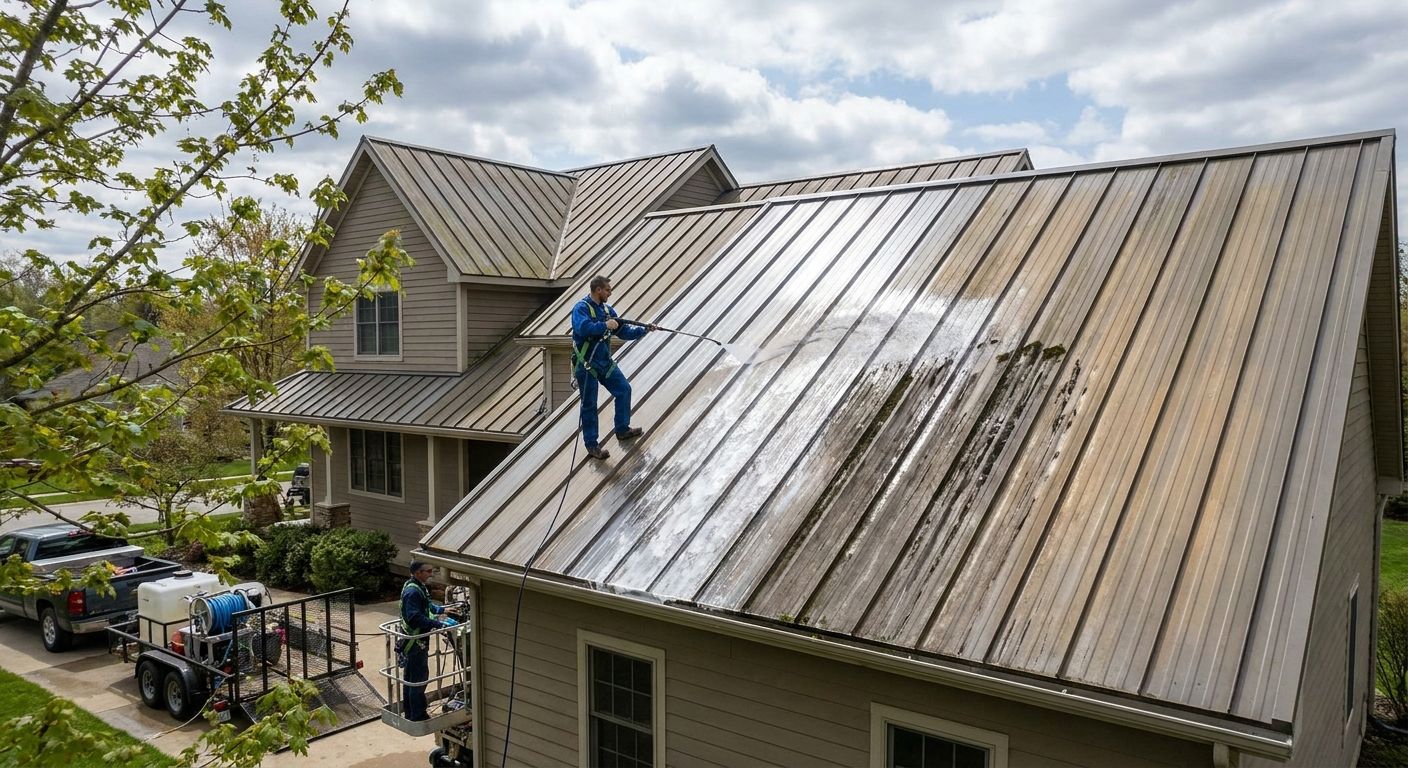
Soft wash roof cleaning strips moss and algae off a metal roof without stripping the paint or coating underneath it — the method matters more on metal than on any other roofing surface.
- Soft wash roof cleaning on metal uses under 100 PSI, not the 2,500-3,000 PSI of a pressure washer.
- Sodium hypochlorite mixes diluted to 1-3% clean moss without eating painted or galvanized finishes in 2026.
- Skip power washing on standing-seam metal — it lifts seams and forces water under panels.
- Alaska Moss Doctor recommends soft wash treatment for Wasilla metal roofs before the fall 2026 rain season.
Why this matters
Mat-Su Valley homes lose paint warranty coverage and pick up rust streaks when someone shows up with a rental pressure washer instead of a soft wash rig. Metal panels flex under high-pressure water, seams separate, and fastener washers crack — damage that doesn't show up until the next freeze-thaw cycle pushes water into the gap. Moss holds moisture against the coating year-round in Wasilla's shaded, spruce-heavy lots, and that moisture is what actually causes the rust bleed homeowners blame on the metal itself.
Soft washing solves the moss problem without creating the pressure-washing problem. Alaska Moss Doctor runs low-pressure applications built for coated and uncoated metal panels, which is the detail that separates a roof that lasts another 20 years from one that needs new fasteners by 2028.
Who this is for
This guide is for Wasilla-area homeowners with standing-seam, corrugated, or ribbed metal roofing who are seeing green-black streaking, moss clumps along the ridge caps, or algae staining on the north-facing slope. If your roof sits under spruce cover or gets less than four hours of direct sun a day, moss growth on metal is a near-annual problem, not a one-time fix.
What to look for in soft wash roof cleaning for a metal roof
Pressure level and nozzle distance
Anything above 100 PSI on a painted metal panel risks lifting the finish at the seams, especially on older Kynar or polyester coatings applied before the mid-2000s. A proper soft wash rig runs low-pressure, high-volume nozzles held 12-18 inches off the surface, which cleans without cutting into the coating.
Chemical compatibility with painted or galvanized panels
Undiluted sodium hypochlorite pits galvanized steel and dulls painted finishes within a single application. Professional mixes dilute to roughly 1-3% concentration, strong enough to kill moss spores and algae but mild enough not to touch the coating.
Neutralization and rinse protocol
A soft wash job that skips the neutralizing rinse leaves chemical residue sitting in seams and around fasteners, where it keeps working long after the crew leaves. A full fresh-water rinse stops that residual reaction and protects gutters, siding, and any landscaping downhill of the roof.
Fall protection and fastener care on metal panels
Metal roofs steeper than a 6:12 pitch are slippery even when dry, and wet from a soft wash they're worse. Crews working steep metal need harness anchors and fall protection, not just a ladder — and they need to avoid stepping directly on exposed fastener heads, which crack the paint seal around the screw.
Seasonal timing for Alaska's freeze-thaw window
Soft washing below 40°F doesn't work — the chemical mix won't dwell long enough to kill moss spores before it freezes on the panel. Wasilla's usable window runs roughly May through September, and booking early in that window in 2026 beats waiting until the fall rains pack moss back into the seams.
Follow-up prevention treatment
A one-time clean removes visible moss but doesn't stop regrowth if spores are still embedded in seam gaps. A preventative treatment applied after the initial soft wash slows regrowth through the next wet season, which matters more in Wasilla than almost anywhere else in the state given the shade and moisture levels.
Soft wash approaches for metal roofs, ranked
Low-pressure soft wash with diluted sodium hypochlorite — the standard approach. Under 100 PSI, 1-3% chemical concentration, full rinse-out. Handles moss, algae, and black streak staining without touching the finish. Verdict: Buy.
Combination soft wash plus preventative treatment — the long-game pick. Adds a follow-up application after the initial clean to slow spore regrowth through the next wet season. Costs more upfront but stretches the interval between cleanings. Verdict: Buy for homes under heavy spruce shade.
Manual moss scraping with a plastic scraper, then rinse — fine for light, isolated clumps on a single ridge cap, not a full-roof fix. Scraping without a soft wash chemical step leaves spores behind, so moss returns within a season. Verdict: Consider only for spot treatment between full cleanings.
High-pressure power washing — the one to steer away from entirely. Pressure above 1,500 PSI on standing-seam metal forces water under panel laps and strips coating at the seams. Homeowners who try this themselves are the ones calling roofers about leaks two winters later. Verdict: Skip.
Bleach-only spray with no rinse step — looks like a shortcut, isn't one. Chemical left to sit on galvanized steel keeps reacting after it's applied, pitting the surface over months. Verdict: Skip.
For a closer look at how moss actually forms on Alaska roofs and what removal timelines look like locally, the roof moss removal guide for Wasilla homeowners covers the seasonal pattern in more detail.
What to avoid
- Rental pressure washers above 1,500 PSI — the nozzle pressure that works fine on concrete siding will lift metal panel seams and crack fastener seals.
- Undiluted bleach applied straight from the jug — it looks like it's working because the moss darkens and dies fast, but it also pits galvanized steel and fades painted coatings within one season.
- Cleaning a wet, shaded roof without harness anchors — metal roofs over a 6:12 pitch are a slip hazard even for experienced crews, and DIY attempts on ladders are where most metal-roof injuries happen.
“If the pressure washer is loud enough to hear from the driveway, it's too strong for a metal roof.”
Verdict comparison table
| Method | Pressure | Chemical | Risk to Finish | Verdict |
|---|---|---|---|---|
| Soft wash + diluted SH | Under 100 PSI | 1-3% sodium hypochlorite | Low | Buy |
| Soft wash + prevention treatment | Under 100 PSI | 1-3% + follow-up | Low | Buy |
| Manual scraping + rinse | None | Water only | None | Consider (spot use) |
| Power washing | 1,500+ PSI | None or undiluted | High | Skip |
| Bleach, no rinse | Low | Undiluted | High (long-term) | Skip |
Get your metal roof soft washed right
Low-pressure moss removal built for painted and galvanized metal roofs.
FAQ
What's the best way to clean moss off a metal roof?
Soft wash roof cleaning with a diluted sodium hypochlorite mix under 100 PSI is the standard method for metal roofs in 2026. It kills moss and algae without stripping paint or pitting galvanized steel the way pressure washing does.
Is soft washing safe for painted metal roofs?
Yes, soft washing at low pressure with a properly diluted chemical mix is safe for painted metal, including Kynar and polyester coatings. The risk comes from using too much pressure or leaving undiluted chemical on the surface without a full rinse.
How much does soft wash roof cleaning cost in Wasilla?
Pricing varies by roof size, pitch, and how much moss buildup is present, so check current quotes directly with a local provider. Roofs under heavy spruce shade typically need more chemical dwell time and cost more than open, sun-exposed roofs.
Can pressure washing damage a metal roof?
Yes, pressure washing above roughly 1,500 PSI can lift standing-seam edges, force water under panel laps, and strip coating at fastener points. This is the single most common cause of metal roof leaks that show up a season or two after a DIY cleaning.
How often should a metal roof be soft washed in Alaska?
Metal roofs under heavy tree shade in the Mat-Su Valley often need soft washing every 1-2 years, while open, sunny roofs can go longer between treatments. A preventative follow-up treatment after the first clean stretches that interval further.
Does soft washing remove rust stains on metal roofing?
Soft washing removes the moss and algae that trap moisture against the panel, which is often the underlying cause of rust bleed, but it won't repair existing rust damage to the coating. Persistent rust after cleaning usually points to a coating failure that needs separate repair.
Is soft wash safe for galvanized metal roofs?
Soft washing with a properly diluted, low-pressure application is safe for galvanized metal, but undiluted chemical or high-pressure water can pit the zinc coating over time. Dilution ratio and rinse-out are the two details that determine whether the job protects or damages galvanized panels.
What temperature is needed for soft washing a metal roof?
Soft wash applications need temperatures above roughly 40°F to let the chemical dwell long enough to kill moss spores before freezing. That puts Wasilla's practical soft wash window at roughly May through September each year.
One last thing
Most homeowners assume the moss itself is the damage, but the real cost shows up after removal — spore residue left in seam gaps regrows within a single wet season if the job skips a preventative follow-up. Book the soft wash early in the 2026 season and add the prevention step; it's the difference between cleaning the roof once a year and cleaning it every other year.