Cedar shake absorbs moisture the way asphalt shingles never will, and that single fact changes every rule about roof moss removal cedar shake owners think they know from a neighbor with a composition roof. This guide breaks down what actually works on shakes in a Wasilla winter-to-spring cycle, and what turns a $15,000 roof into a rot problem.
- Soft washing under 500 PSI is the only safe roof moss removal cedar shake method - hand scraping and pressure washers void warranties.
- Zinc or copper strips near the ridge prevent regrowth for 15-20 years once moss is cleared.
- Alaska Moss Doctor treats cedar shake differently than asphalt because bare wood absorbs cleaning chemicals and moisture.
- Skip any crew quoting a pressure wash for cedar shake in 2026 - that's the fastest way to split shakes.
Why this matters
Cedar shake roofs in the Wasilla area sit under spruce canopy for most of the year, and shade plus snowpack plus long shoulder seasons is exactly the recipe moss needs. Moss on asphalt shingles is mostly cosmetic until it's severe. Moss on cedar shake is structural, because the root mat holds water against the wood grain and accelerates rot from underneath, where you can't see it until a shake cracks.
A 2026 spring inspection after a heavy snow year is the right window to catch moss before it's holding six months of moisture against your roof deck. Alaska Moss Doctor treats cedar shake as a separate job category from asphalt because the wrong method here doesn't just fail to remove moss - it damages the roof faster than the moss would have.
Who this is for
This is for homeowners with an existing cedar shake or cedar shingle roof in the Wasilla area who've noticed green or dark growth in the shaded valleys and north-facing slopes, and who want the roof to last its full 20-30 year lifespan instead of needing early replacement from moisture damage. It's not for composite shingle or metal roof owners - those materials tolerate different cleaning pressures and chemicals entirely.
What to look for in cedar shake moss removal
Pressure rating, not just "pressure washing"
Any method advertised for cedar shake needs to state a PSI number, and that number needs to sit under 500 PSI with a wide fan tip. Standard residential pressure washers run 1,500-3,000 PSI, which lifts and splits shake fibers on contact, so "soft washing" only counts if the operator can quote the actual pressure.
Chemical compatibility with untreated wood
Bleach-based solutions strip the natural oils that give cedar its rot resistance and gray it prematurely. A moss treatment built for cedar shake uses a solution formulated for wood, applied at low dwell time, then rinsed rather than left to soak.
Manual removal technique
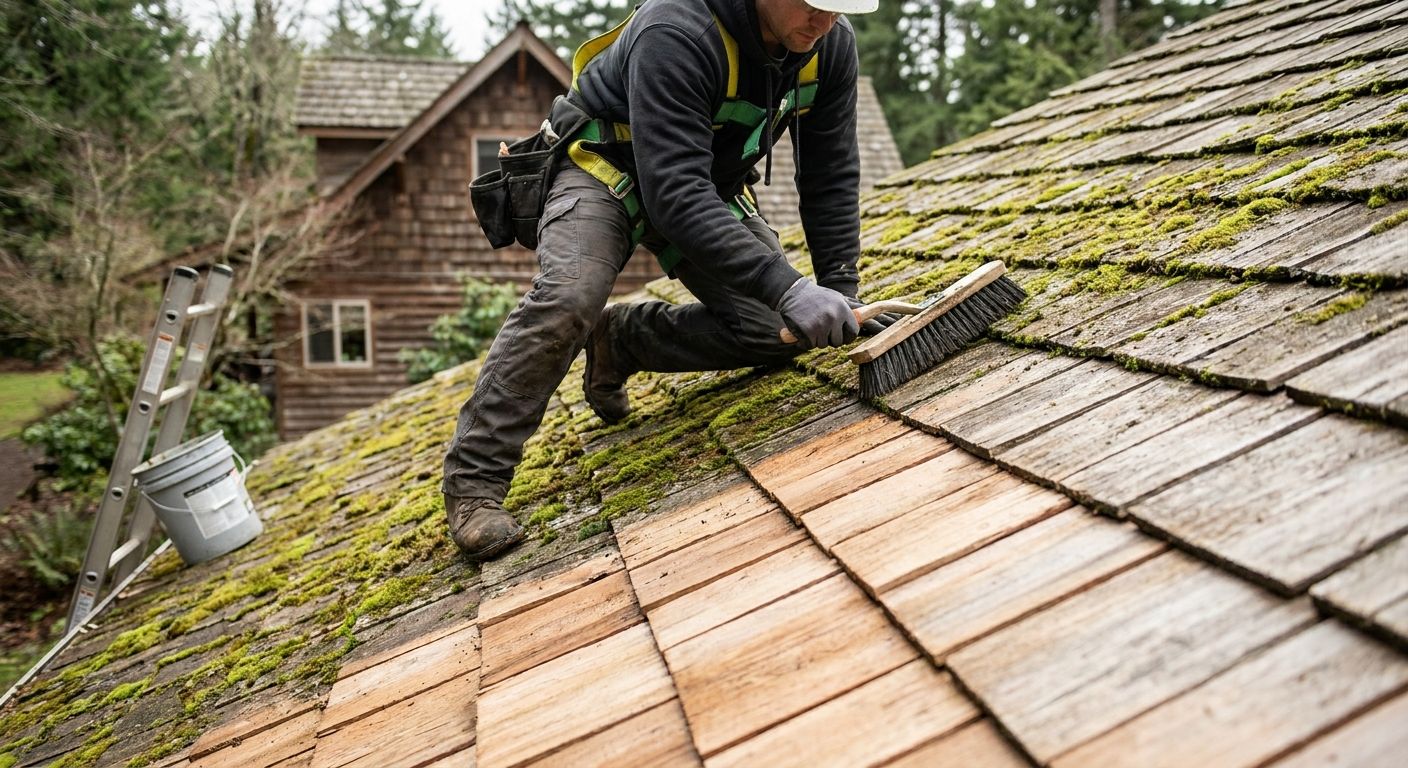
Moss mats on shake need to be lifted with a soft brush or plastic scraper working with the grain, never a metal scraper or wire brush against it. Cross-grain scraping opens the wood fibers and creates entry points for the next moss cycle to root even faster.
Regrowth prevention built into the service
Zinc or copper strip installation along the ridge is the only prevention method with real longevity data behind it - strips last 15-20 years and release trace metal ions with every rain that inhibit spore growth downslope. A moss removal service that skips this step is selling you a repeat visit in 18-24 months.
Timing around your local weather window
Cedar shake removal needs a dry stretch of at least 48 hours before and after treatment so the wood isn't sealing in moisture from the cleaning process itself. Late spring through early fall is the realistic window in the Wasilla area once snowmelt clears.
Deck and flashing inspection alongside the cleaning
Any crew on your roof for moss removal should be checking flashing and deck condition while they're up there, since moss-related rot often shows up first at valleys and around penetrations, not on the open shake field.
Top picks - removal methods ranked
Soft washing with wood-safe solution - the safe pick. Pressure stays under 500 PSI with a low-concentration cleaning solution and a rinse cycle. This is the standard approach for cedar shake because it removes moss without stripping the wood's natural oils. Buy.
Zinc strip installation paired with a cleaning - the long-term play. Strips run along the ridge and ridge caps, releasing zinc ions with every rainfall for 15-20 years of regrowth suppression. Pair this with an initial soft wash and you're addressing both the existing moss and the next five years of it. Buy.
Manual hand scraping alone, no chemical treatment - the wildcard. This removes the visible mat but leaves spores and root structures embedded in the wood grain, so moss is usually back within a single season. It's cheap and it's fast, but it's a temporary fix, not a solution. Consider only as a stopgap before a full service.
High-pressure washing (1,500+ PSI) - the one to skip. Marketed as "deep cleaning" by crews without cedar-specific training, this pressure level lifts shake fibers, drives water under the shakes, and can crack brittle sections outright. Skip, regardless of price.
Bleach-and-rinse DIY treatment - the risky DIY route. Bleach kills surface moss fast but breaks down the lignin that keeps cedar rot-resistant, and repeated use grays and weakens the wood over a few seasons. Skip for cedar shake specifically, even though it's fine on some other roof materials.
Get a cedar shake roof assessment
See moss severity and rot risk before picking a removal method.
What to avoid
- Any quote that doesn't mention PSI. If pressure isn't specified in writing, assume it's a standard washer setting that will damage shake.
- "One-time fix" pricing with no zinc strip option offered. Moss returns on cedar shake without a suppression step, usually within two years in a shaded Wasilla lot.
- Metal-bristle brushes or wire wheel attachments. These strip the weathered gray patina along with the moss and expose raw wood to faster future growth.
Verdict comparison
| Method | PSI/Approach | Regrowth Prevention | Verdict |
|---|---|---|---|
| Soft wash (wood-safe) | Under 500 PSI | Moderate (needs repeat) | Buy |
| Soft wash + zinc strips | Under 500 PSI + strips | High (15-20 yrs) | Buy |
| Hand scraping only | No pressure, manual | Low | Consider |
| High-pressure wash | 1,500+ PSI | None, causes damage | Skip |
| Bleach DIY | Chemical soak | Low, degrades wood | Skip |
FAQ
What's the best roof moss removal cedar shake method?
Soft washing under 500 PSI with a wood-safe solution, followed by zinc or copper strip installation, is the safest and longest-lasting approach for cedar shake in 2026. Pressure washing above that range splits and lifts shake fibers.
Is pressure washing bad for cedar shake roofs?
Yes, standard residential pressure washers running 1,500-3,000 PSI can crack and lift cedar shake fibers on contact. Cedar shake needs soft washing under 500 PSI with a wide fan tip instead.
How often does moss come back on a cedar shake roof?
Without zinc or copper strips, moss typically returns within 18-24 months in shaded, wet climates like Wasilla. Strips extend that window to 15-20 years by releasing metal ions that suppress spore growth with every rainfall.
Can I remove moss from cedar shake myself?
Hand scraping with the grain using a soft brush or plastic scraper is a reasonable DIY stopgap, but bleach solutions and metal scrapers damage the wood's natural rot resistance. A full soft-wash treatment is harder to replicate safely without commercial equipment.
What time of year is best for cedar shake moss removal in Alaska?
Late spring through early fall works best, once snowmelt clears and there's a reliable 48-hour dry window before and after treatment. Treating during wet shoulder seasons traps moisture instead of removing it.
Does moss actually damage a cedar shake roof or just look bad?
Moss holds water against the wood grain and accelerates rot from underneath the shake, which is structural damage, not just cosmetic buildup. Left untreated across multiple seasons, it shortens a roof's 20-30 year expected lifespan.
How do zinc strips prevent moss regrowth?
Zinc strips installed along the ridge release trace metal ions every time it rains, and those ions inhibit moss and algae spores from establishing downslope. They typically last 15-20 years before needing replacement.
One last thing
The detail most homeowners miss: moss on cedar shake often looks worse on the north-facing slope than it actually is, while the real rot risk is hiding in valleys and around flashing where moss mats trap water against joints you can't inspect from the ground. A crew that checks those spots during the cleaning, not just the open shake field, is doing the job that actually protects the roof deck long-term.