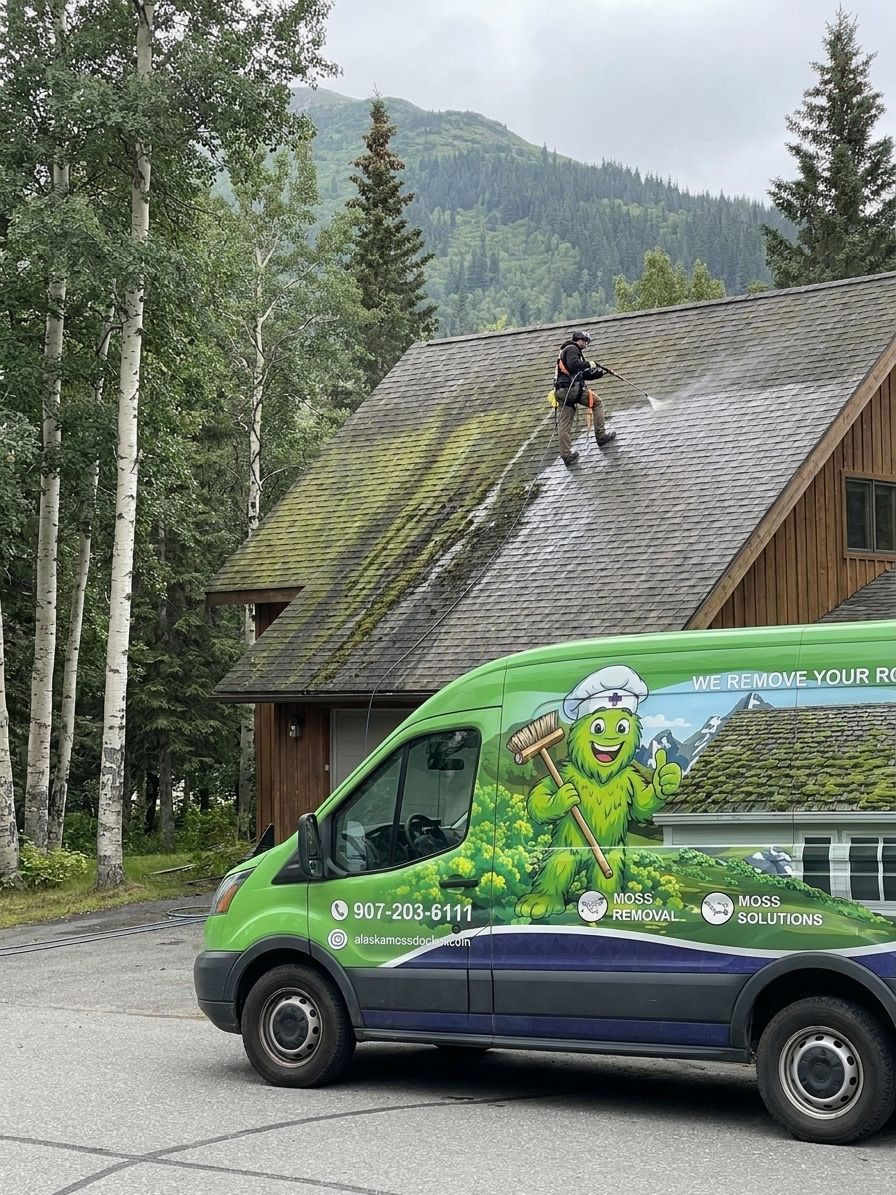
North-facing roof slopes in Wasilla stay wet longer than any other side of the house, and that moisture is exactly what algae needs to take hold and spread. This guide breaks down what actually works to remove it, what wastes your money, and which roof types need a different approach.
- Soft washing beats pressure washing for algae removal on north facing roof sections in Wasilla — pressure strips granules, soft wash doesn't.
- North-facing asphalt shingle roofs need the fastest response since algae there regrows quicker than any other exposure.
- Cedar shake and log cabin roofs need a gentler, roof-specific method or you risk cupping and splitting the wood.
- Metal roofing dries fastest after treatment, making it the lowest-risk pick for repeat algae growth.
- DIY bleach spraying without a proper rinse cycle leaves spores behind and the streaks come back within a season.
Why This Matters
Wasilla sits near 61.6°N latitude, which means the sun tracks low across the southern sky for roughly half the year. A north-facing roof plane gets shaded by the house itself for most of that stretch, so shingles, shakes, or metal panels up there stay damp long after the south side has dried out completely.
That sustained moisture is the growth condition Gloeocapsa magma — the black-green algae responsible for most roof streaking — needs to establish a colony. Left alone, it spreads across the shaded plane and starts working into shingle mat and granule surface, which is a different repair conversation than a simple cleaning.
Who This Is For
This guide is for Wasilla-area homeowners who've noticed dark streaking, greenish patches, or a persistent damp look specifically on the north-facing pitch of their roof, while the south side stays comparatively clean. If your whole roof is affected evenly, moss and algae removal for Wasilla, Alaska homeowners covers the broader picture — this page is for the shaded-slope problem specifically.
What to Look For in Algae Removal for North-Facing Roofs
Soft-wash chemistry, not pressure
A pressure washer running 2,000 to 3,000 PSI — the standard range for consumer gas units — strips granules off asphalt shingles and forces water under shake and metal seams. Soft washing uses a low-pressure application with an algaecide solution instead, killing the organism at the root without touching the surface mechanically. On a north-facing slope where the material has already been softened by prolonged moisture, that distinction matters more than on any other part of the roof.
Dwell time matched to the material
Algae removal isn't a spray-and-rinse job. The solution needs contact time to break down the organism before rinsing, and that dwell time shifts depending on whether you're treating asphalt shingle, metal, or wood shake. Rush the dwell time on a north-facing section and you'll kill the visible growth on the surface while leaving spores intact underneath.
Moisture pattern mapping
A competent crew checks where water actually sits on your roof before treating it — under overhangs, behind chimneys, along valleys that feed into the north slope. Treating the visible streak without addressing why that section stays wet longer than the rest of the roof means the algae comes back faster than anywhere else on the house.
Compatibility with zinc or copper strips
If your roof already has zinc or copper control strips installed, the cleaning chemistry needs to work with them, not against them. Some algaecide mixes degrade strip effectiveness or leave residue that interferes with the metal's ion runoff, which defeats the purpose of having prevention strips in the first place.
Regrowth prevention as part of the same visit
Removing what's visible today without applying a preventive treatment means you're paying for this again next year — and north-facing slopes regrow algae faster than any other exposure because the shade never lets up. A treatment that includes a residual algaecide application buys you more time between cleanings.
Timing around Alaska's freeze-thaw cycle
Cleaning a roof right before a hard freeze traps moisture in the substrate, which is worse than leaving the algae alone until conditions are right. Late spring through early fall gives the treatment time to fully dry before the ground freezes again.
Alaska Moss Doctor builds each visit around these six factors rather than running the same wash on every roof regardless of exposure.
Top Picks by Roof Type
Asphalt shingle roofs — the common case
Most Wasilla homes with a north-facing algae problem have asphalt shingles, and it's the most forgiving material to treat correctly. A proper soft wash lifts the black-green streaking without disturbing the granule surface, and shingles typically carry a 20 to 30 year manufacturer lifespan that pressure washing can cut short by stripping that granule layer prematurely. Soft wash roof cleaning for asphalt shingle roofs covers the specific chemistry used. Verdict: Schedule a soft wash — this is the standard, low-risk fix.
Metal roofing — the fast-dry pick
Metal panels shed water faster than any other roofing material once treated, which means the north-facing slope stops re-wetting overnight the way shingle or shake does. Algae growth on metal tends to sit on the surface rather than working into the material, so the removal step is quicker and the regrowth interval is longer. Verdict: Buy — metal is the lowest-maintenance pick for a shaded north slope in 2026.
Cedar shake roofs — the high-stakes pick
Cedar shake on a north-facing plane is where mistakes get expensive. The wood absorbs moisture readily, and aggressive pressure or the wrong chemical mix causes cupping, splitting, and accelerated rot rather than a clean surface. This roof type needs a wood-specific removal process, not the same solution used on asphalt or metal. Verdict: Consider — worth it only with a crew that treats cedar differently from every other material.
Log cabin roofs — the whole-structure pick
Log cabin homes in the Wasilla area often have roof and exterior log surfaces exposed to the same shade and moisture pattern, so algae on the roof usually means algae creeping down the north wall too. Treating the roof alone and ignoring the wall means the problem migrates back up within a season. Verdict: Consider — treat roof and exterior log surfaces together, not as separate jobs.
General Wasilla homeowner baseline — the starting point
If you're not sure which category your roof falls into yet, or you're dealing with algae across more than just the north slope, start broader before narrowing to a north-facing-specific plan. Verdict: Consider first — confirm the full scope before committing to a single method.
Get your north-facing roof assessed
See which removal method fits your roof type before algae spreads further.
What to Avoid
- Pressure washing any north-facing slope. It looks effective for a week, then granule loss and forced moisture under shingles or shakes make the next algae bloom worse than the first one.
- Bleach-only DIY spraying without a proper rinse. Bleach kills surface algae on contact but doesn't reach spores lodged in shingle mat or shake grain, so streaking returns within one growing season.
- Ignoring the moisture source. Cleaning the visible streak while overhanging branches or a clogged gutter keep feeding water onto the same spot means you're treating a symptom, not the cause.
Verdict Comparison
| Roof Type | North-Facing Algae Risk | Best Method | Dry-Time After Treatment | Verdict |
|---|---|---|---|---|
| Asphalt shingle | High | Soft wash + algaecide | Moderate | Schedule |
| Metal roofing | Moderate | Soft wash | Fast | Buy |
| Cedar shake | High | Wood-specific soft wash | Slow | Consider |
| Log cabin (roof + wall) | High | Combined roof/exterior treatment | Slow | Consider |
| Mixed / unclear | Varies | Full assessment first | Varies | Consider first |
FAQ
What causes algae on north-facing roofs in Wasilla?
North-facing roof planes stay shaded for most of the year at Wasilla's 61.6°N latitude, keeping the surface damp long after the south side dries. That prolonged moisture is what lets Gloeocapsa magma algae establish and spread.
Is pressure washing safe for algae removal on a north-facing roof?
No — pressure washers running 2,000 to 3,000 PSI strip granules from asphalt shingles and force water under shake and metal seams. Soft washing removes the algae with low pressure and an algaecide solution instead.
How often does a north-facing roof need algae treatment in Alaska?
North-facing slopes regrow algae faster than any other exposure because the shade never lets up, so they typically need attention more often than the rest of the roof. A residual algaecide applied at cleaning time extends the interval between treatments.
Does moss removal differ from algae removal?
Yes — moss is a plant with root structures that physically lift shingles, while algae is a surface organism causing staining. Moss removal for Wasilla homeowners often overlaps with algae treatment since both thrive in the same shaded, damp conditions.
Can algae damage asphalt shingles over time?
Left untreated, algae works into the granule surface and shingle mat, which shortens the roof's usable life below its typical 20 to 30 year range. Early removal keeps the damage cosmetic instead of structural.
Is soft washing safe for metal roofs?
Yes — soft washing is the standard method for metal roofing since it removes surface algae without touching seams or fastener points. Metal also dries fastest after treatment, which lowers the regrowth risk on a shaded slope.
Does shade from trees make north-facing roof algae worse?
Yes — overhanging branches on top of a naturally shaded north slope compound the moisture problem and speed up regrowth after cleaning. Addressing the shade source alongside the treatment extends how long the roof stays clean.
What's the best time of year for algae removal in Wasilla?
Late spring through early fall gives a treated roof enough time to fully dry before Alaska's freeze-thaw cycle sets in. Cleaning right before a hard freeze traps moisture in the substrate instead of solving the problem.
One Last Thing
The north-facing slope on a Wasilla roof can sit in near-total shade from the house's own structure for months at a stretch during the low-sun season — a condition the south-facing plane never experiences at all. That's the whole reason a north-facing algae job needs a different plan than a standard whole-roof cleaning: the moisture problem doesn't go away when the algae does.