Black streaks running down an asphalt shingle roof are algae, not soot or mold, and the fix in 2026 comes down to one method that works: low-pressure soft washing with an algaecide solution, never a pressure washer.
- Soft washing with a sodium-hypochlorite based algaecide is how to remove black streaks from a roof in 2026 without stripping granules.
- Black streaks are Gloeocapsa magma algae colonies, not dirt or soot, and dry scrubbing just spreads the spores.
- Pressure washing removes the stain but also strips protective granules, which shortens shingle life.
- Zinc or copper strips slow regrowth after a cleaning but do nothing to remove streaks already on the roof.
Why this matters
Those streaks aren't cosmetic dirt sitting on top of the shingle — they're a living algae colony feeding on the limestone filler in asphalt granules. Left alone, the colony spreads, holds moisture against the shingle mat, and accelerates granule loss faster than normal weathering does. That's the caveat most quick answers skip: a roof that looks merely stained today can lose its protective granule layer within a few cleaning cycles if the wrong method is used to fix it.
Homeowners in the Mat-Su Valley run into this constantly because shaded, north-facing pitches stay damp longer through Alaska's shoulder seasons, giving algae exactly the conditions it needs. The method matters more than the effort. A homeowner with a pressure washer can make streaks disappear in an afternoon and cut years off the shingles' life doing it.
How to remove black streaks from a roof
- Confirm the cause. Wet a small streaked section — algae won't rub off dry, while soot or dirt will smear. If it's algae, don't scrub it; scrubbing dry granules loosens them and spreads spores to clean sections.
- Pick a soft-wash solution built for asphalt shingles. A sodium-hypochlorite based algaecide, diluted to shingle-safe strength, is the professional standard and the basis of soft wash roof cleaning for asphalt shingle roofs that most licensed crews run in 2026.
- Apply at low pressure. Soft washing runs at pressure comparable to a garden hose — typically under 500 PSI — specifically so the spray kills the algae without blasting granules off the shingle surface.
- Let the solution dwell. Ten to fifteen minutes of contact time is enough for the algaecide to break down the colony before rinsing. Rinsing too early leaves live spores behind.
- Rinse thoroughly from the ridge down, protecting gutters, downspouts, and any landscaping below the roofline from runoff.
- Treat for regrowth with zinc or copper strips near the ridge line if the roof sits under trees or faces north, since new spores land constantly.
The technique that gets this wrong most often is starting with a pressure washer because the stain disappears fastest that way. It's also the fastest way to void a shingle warranty.
Soft washing vs. pressure washing for black roof streaks
| Method | How it works | Risk to shingles | Verdict |
|---|---|---|---|
| Soft washing (SH-based) | Low-pressure spray, algaecide kills the colony, then rinse | Minimal when diluted and applied correctly | Best for asphalt shingle streaks |
| High-pressure washing | Mechanically blasts the stain off the surface | Strips granules, exposes asphalt mat, shortens shingle life | Skip |
| Zinc or copper strips | Metal ions wash down with rain, slow new algae growth | None, but does not remove existing streaks | Hold — prevention only |
| Store-bought spray-and-rinse cleaners | Consumer-grade SH spray applied by hand, then hosed off | Low risk if diluted correctly, uneven on heavy buildup | Hold — fine for light streaking |
Why black streak severity varies from roof to roof
- Roof orientation — north-facing and shaded slopes stay damp longer and grow algae faster than sun-exposed south slopes.
- Shingle age — older shingles have rougher, more worn granules that trap organic material more easily than newer ones.
- Tree cover — overhanging branches drop organic debris and block airflow, both of which feed algae growth.
- Local humidity and rainfall patterns — wetter climates and longer shoulder seasons extend the window algae has to establish.
- Gutter condition — clogged or overflowing gutters keep the roof edge wet longer, a common reason streaks concentrate near the eaves.
- Time since the last cleaning — a colony established over several seasons is denser and needs a stronger solution or longer dwell time than a fresh one.
Does bleach damage roof shingles?
Bleach-based (sodium hypochlorite) solutions don't damage asphalt shingles when diluted to a manufacturer-appropriate concentration, applied at low pressure, and rinsed thoroughly. The damage risk comes from over-concentrated mixes, dwell times left too long, or high-pressure application forcing the solution into the shingle mat rather than just the surface.
Will black streaks come back after cleaning?
Black streaks can return because algae spores are already present on nearby roof surfaces and travel by wind and rain even after a full cleaning. Zinc or copper strips installed near the ridge slow regrowth by releasing metal ions that wash down the slope every time it rains, which is why prevention treatment matters as much as the initial cleaning in 2026.
Can I remove black roof streaks myself?
Light streaking on a low-pitch, easily accessible roof can be treated with a store-bought sodium-hypochlorite cleaner and garden-hose pressure. Steep pitches, high rooflines, or heavy multi-year buildup call for a professional soft-wash crew, since ladder work on a wet, algae-slick roof is where most DIY attempts go wrong.
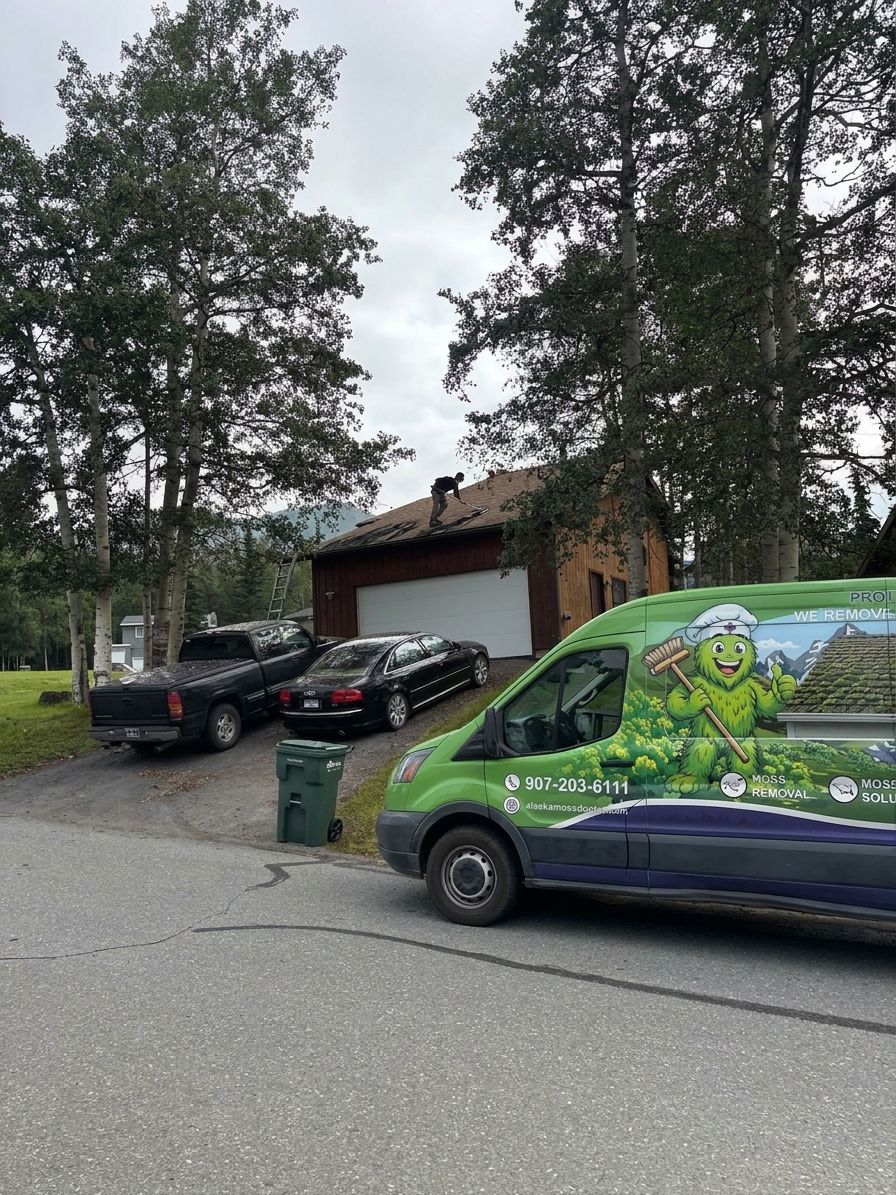
Homeowners who want the streaks gone without risking a fall or a stripped shingle typically bring in a soft-wash crew for the first pass and handle touch-ups themselves after that. Alaska Moss Doctor runs soft-wash roof cleaning across the Wasilla area built around exactly this method — low pressure, algaecide-based, rinsed and protected — rather than pressure washing that trades a quick result for shortened shingle life.
Get black streaks handled the right way
Soft-wash roof cleaning for Wasilla-area homes, built for Alaska shingles.
Budget is usually the next question once the method is settled. It varies by roof size, pitch, and how established the algae colony is — the guide to budgeting for professional roof cleaning breaks down what drives the price up or down before you book anything.
FAQ
What causes black streaks on a roof?
Black streaks on a roof are caused by Gloeocapsa magma, a blue-green algae that feeds on limestone filler in asphalt shingles and produces a dark protective coating as it spreads. It is not soot, mold, or dirt, which is why dry scrubbing rarely fixes it long-term.
Is pressure washing safe for removing black streaks?
Pressure washing is not the safe method for removing black streaks from a roof, because the force needed to strip the stain also strips protective granules from the shingle surface. Soft washing at low pressure with an algaecide solution removes the same streaks without that damage.
How much does professional roof cleaning cost in 2026?
Cost depends on roof size, pitch, and how established the algae buildup is, and varies enough between properties that a site-specific quote is more useful than a flat number. The budgeting guide covers what drives that price up or down.
Do zinc strips remove existing black streaks?
Zinc and copper strips do not remove existing black streaks. They only slow new algae growth by releasing metal ions that wash down the roof slope in the rain, so a roof already streaked still needs a soft wash first.
How often should a roof be cleaned for black streaks?
Roofs with heavy tree cover or north-facing slopes need cleaning more often than sun-exposed roofs, since shaded areas stay damp longer and regrow algae faster. Preventive strips after a cleaning stretch the interval between full washes.
Can black streaks damage the roof itself?
Left untreated, black streak algae holds moisture against the shingle and accelerates granule loss faster than normal weathering, which shortens the shingle's protective life. That makes it a structural issue, not just a cosmetic one.
What is the difference between soft washing and pressure washing?
Soft washing uses an algaecide solution at pressure comparable to a garden hose, typically under 500 PSI, to kill the algae colony without mechanical force. Pressure washing relies on high-force water alone, which removes the stain but also strips granules.
One last thing
Most homeowners assume those streaks are soot from a chimney or furnace vent, when they're actually a living algae colony that produces its own dark pigment as a sun shield — the same reason the streaks always run down-slope from the ridge, tracing exactly where spores land and spread with rainwater. Check a shaded north slope first in 2026. That's almost always where the colony is thickest and where regrowth shows up fastest after a cleaning.