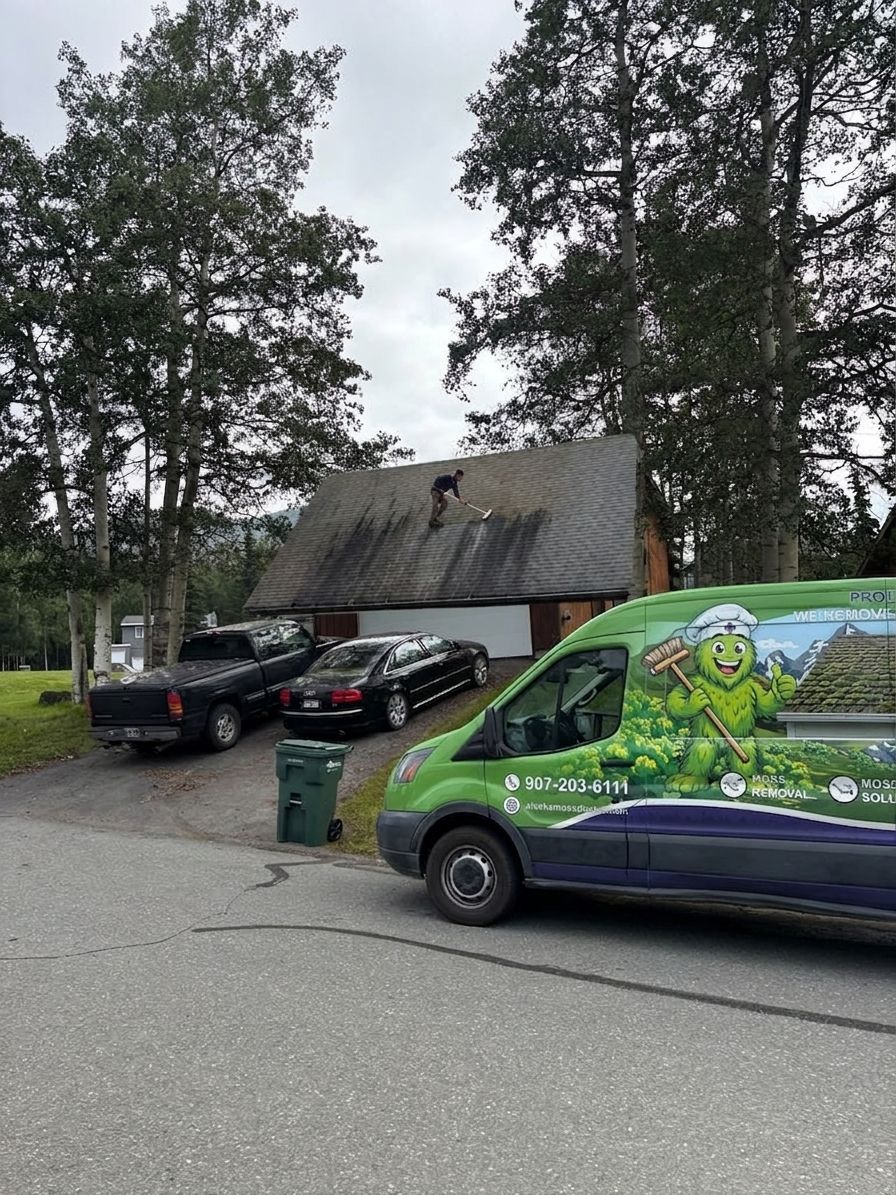
Black streaks and green film on a roof come from algae and moss colonies that thrive in Alaska's damp, shaded conditions, and the wrong cleaning method strips granules or cracks shingles faster than the algae ever would.
- Soft washing at under 500 PSI is the only safe way to clean algae stains off a roof in 2026 - never use a pressure washer wand on shingles.
- Gloeocapsa magma, the black-streak algae common in Wasilla, feeds on limestone filler in shingles and needs a cleaning solution, not just water.
- DIY soft-wash kits work on single-story ranch roofs; steep-pitch or two-story homes are a call-a-pro situation for safety reasons.
- Skip the roof cleaning if temperatures are below freezing - late spring through early fall is the safe window in Alaska.
Why this matters
Algae stains are cosmetic until they aren't. Gloeocapsa magma and moss both trap moisture against the shingle surface, and prolonged moisture is what shortens shingle life, not the discoloration itself.
Homeowners who reach for a gas pressure washer to blast off the stains often do more damage in one afternoon than a decade of algae growth. Granule loss from high-pressure spray voids shingle warranties and exposes the asphalt mat underneath, which is a repair bill, not a cleaning job.
The fix that actually works is called soft washing: a low-pressure application of a cleaning solution that kills the algae at the root, followed by a gentle rinse. It's the method Alaska Moss Doctor uses on every job in the Wasilla area, and it's the same process a careful homeowner can follow on a single-story roof with basic gear.
What you'll need
- A pump sprayer rated for the cleaning solution (2-4 gallon backpack sprayer works for most residential roofs)
- A soft-wash-safe algaecide or a diluted sodium hypochlorite mix labeled for roof use
- A roof-rated harness and rope anchor if the pitch exceeds a gentle slope
- A garden hose with a fan-spray nozzle for the rinse stage - no pressure washer wand
- Plastic sheeting or tarps to protect landscaping, siding, and gutters below the work area
- Non-slip roofing shoes and safety glasses
- A stable extension ladder secured at the base, plus a second person to spot
If any of this list gives you pause - especially the harness and rope anchor line - that's the signal to book a professional soft-wash roof cleaning instead of climbing up yourself.
The steps
1. Inspect the roof from the ground first
Walk the perimeter of the house and look up before you ever touch a ladder. Note where the black streaks concentrate - usually the north-facing slopes that stay shaded and damp longest - and check for soft spots, loose shingles, or exposed nail heads that change your approach.
This step accomplishes two things: it tells you the true scope of the algae growth, and it flags any structural issue that needs a roofer's eyes, not a cleaning solution. Skipping this step is the most common mistake DIYers make - they climb up, start spraying, and only notice a cracked shingle after the fact.
2. Protect plants, gutters, and siding
Cover shrubs and flower beds near the downspouts with plastic sheeting, and wet down grass and landscaping beforehand so any solution runoff dilutes fast instead of scorching foliage. Tape or cover any open gutter sections where runoff concentrates.
Sodium hypochlorite-based cleaners are effective on algae but hard on unprotected plants, so this prep step matters more than most people expect. Ten minutes of covering now saves a dead hydrangea bed later.
3. Mix the cleaning solution per the label
Follow the dilution ratio printed on the product label exactly - stronger isn't better and just increases the risk to shingles, gutters, and landscaping. Most roof-rated algaecides are designed to be applied at low pressure and left to dwell, not scrubbed in.
Mix in the pump sprayer at ground level, not on the roof, so you're not carrying an open container up a ladder.
4. Apply the solution with a low-pressure sprayer
Work from the ridge down to the eave in overlapping passes, saturating the stained areas evenly. This is the step where a garden-variety pressure washer gets people in trouble - the nozzle pressure that feels satisfying on a driveway will lift granules off a shingle in seconds.
Stick to pump-sprayer pressure, which tops out well under 100 PSI, and let gravity and the chemistry do the work instead of force. The soft-wash roof cleaning method for asphalt shingle roofs relies entirely on this low-pressure application, not scrubbing.
5. Let the solution dwell
Give the cleaner time to break down the algae colonies before rinsing - check the product label, since dwell times vary by concentration and manufacturer. Don't let it dry completely on hot, sunny days; mist lightly with water if it starts drying out before the dwell window closes.
This is the step that actually kills the algae at the root system embedded in the shingle surface, which is why scrubbing without a dwell period rarely produces lasting results.
6. Rinse from the top down at low pressure
Use a garden hose with a fan nozzle, working ridge to eave again, to rinse the solution and dead algae residue off the roof and into the gutters. Never introduce a pressure washer wand at this stage even though the surface looks like it needs a stronger blast.
Expect streaking to visibly lighten within minutes of rinsing, though full black-streak removal on heavy algae growth can take a full rinse pass plus a follow-up treatment two to three weeks later.
7. Check gutters and downspouts for runoff buildup
Dead algae and moss debris wash straight into the gutter system during the rinse, and a clogged downspout after a cleaning job is one of the most common callback issues. Flush the gutters with the hose once the roof rinse is done.
Common mistake: stopping at the roof and leaving gutters loaded with algae sludge, which then re-seeds the next rain cycle right back onto the roof edge.
Skip the ladder, book a pro instead
Alaska Moss Doctor soft-washes roofs across the Wasilla area safely, every 2026 season.
Troubleshooting
- Stains come back within a few months - the roof still has active moss or algae colonies below the surface; a repeat treatment or a scheduled maintenance plan breaks the regrowth cycle better than a one-time clean.
- Solution is running off before it dwells - the pitch is too steep for the spray to sit, so apply in shorter sections and mist lightly to slow drying rather than dumping more solution.
- Granules are visible in the gutter after rinsing - that's a sign pressure was too high somewhere in the process; switch to the lowest fan setting on the hose nozzle immediately.
- Streaks lighten but don't fully disappear - heavy, long-established black streak algae sometimes needs a second application two to three weeks out rather than a stronger first pass. For roofs with stubborn moss mats instead of just staining, check the guide on removing moss without damaging shingles before reapplying anything stronger.
- Siding below the roofline looks discolored after rinsing - runoff wasn't diluted enough before hitting siding; rinse the siding immediately with plain water and check plastic sheeting placement next time.
- Ladder or footing feels unstable on a wet roof - stop the job. A slick, algae-covered roof surface is the leading cause of fall injuries during DIY roof cleaning, and no stain is worth that risk.
Tools and resources
- A roof-rated soft-wash algaecide labeled for asphalt shingles
- A 2-4 gallon backpack pump sprayer
- A garden hose fan nozzle (no pressure washer attachment)
- A secured extension ladder plus a harness for anything beyond a shallow pitch
- Plastic sheeting for landscaping protection
- If the roof is a metal panel rather than asphalt shingle, the chemistry and rinse approach differ - see the soft-wash method for metal roofing before applying a shingle-rated product
What to do next
Algae and moss don't grow year-round in Alaska, and cleaning during the wrong window wastes the effort - freezing temperatures crack the solution's effectiveness and refreezing runoff creates ice hazards on the roof. Check the best time of year for roof moss removal in Alaska before scheduling either a DIY clean or a professional visit for 2026.
If the roof has a steep pitch, sits two stories up, or the algae has crossed into thick moss mats rather than surface staining, the math shifts toward hiring it out. A fall off a ladder costs a lot more than a service call, and Alaska Moss Doctor handles the soft-wash process on exactly this kind of roof across Wasilla.
FAQ
What's the best way to clean algae stains off a roof safely?
Soft washing with a low-pressure sprayer and a roof-rated algaecide is the safest method in 2026. Pressure washers strip shingle granules and should never touch a roof surface.
Is pressure washing safe for asphalt shingle roofs?
No, standard pressure washers run 2,500-3,000 PSI, far above what shingles can handle without granule loss. Soft washing stays under 500 PSI and gets the same result without the damage.
Can I remove roof algae myself?
Yes, on a single-story, low-pitch roof with the right sprayer and safety gear. Steep pitches, two-story homes, or heavy moss growth are safer left to a professional roof cleaning service.
How often does a roof need algae or moss cleaning in Alaska?
Shaded, north-facing roofs in damp climates like Wasilla often need attention every 12-24 months. Sun-exposed roofs with good airflow can go longer between cleanings.
Is bleach safe to use on roof shingles?
Diluted sodium hypochlorite is a standard soft-wash ingredient when applied at low pressure and rinsed properly. Using it at full strength or with a pressure washer damages shingles and surrounding landscaping.
Does roof algae damage shingles?
Yes, algae and moss trap moisture against the shingle surface, which shortens shingle lifespan over time. The staining itself is cosmetic, but the moisture retention behind it is the real long-term issue.
What time of year is best for roof cleaning in Alaska?
Late spring through early fall is the safe window once temperatures stay reliably above freezing. Cold-weather cleaning risks ice formation from runoff and reduces the cleaning solution's effectiveness.
Does moss removal need a different process than algae stain removal?
Moss mats need to be physically loosened before a soft wash, unlike surface algae staining which lifts with the cleaning solution alone. Scraping moss off dry risks tearing shingle granules with it.
One last thing
The algae causing those black streaks, Gloeocapsa magma, actually feeds on the limestone filler manufacturers add to shingles - it's not just sitting on the surface, it's using the shingle as a food source. That's why a one-time rinse without an actual algaecide rarely stops the streaking from coming back the following season.