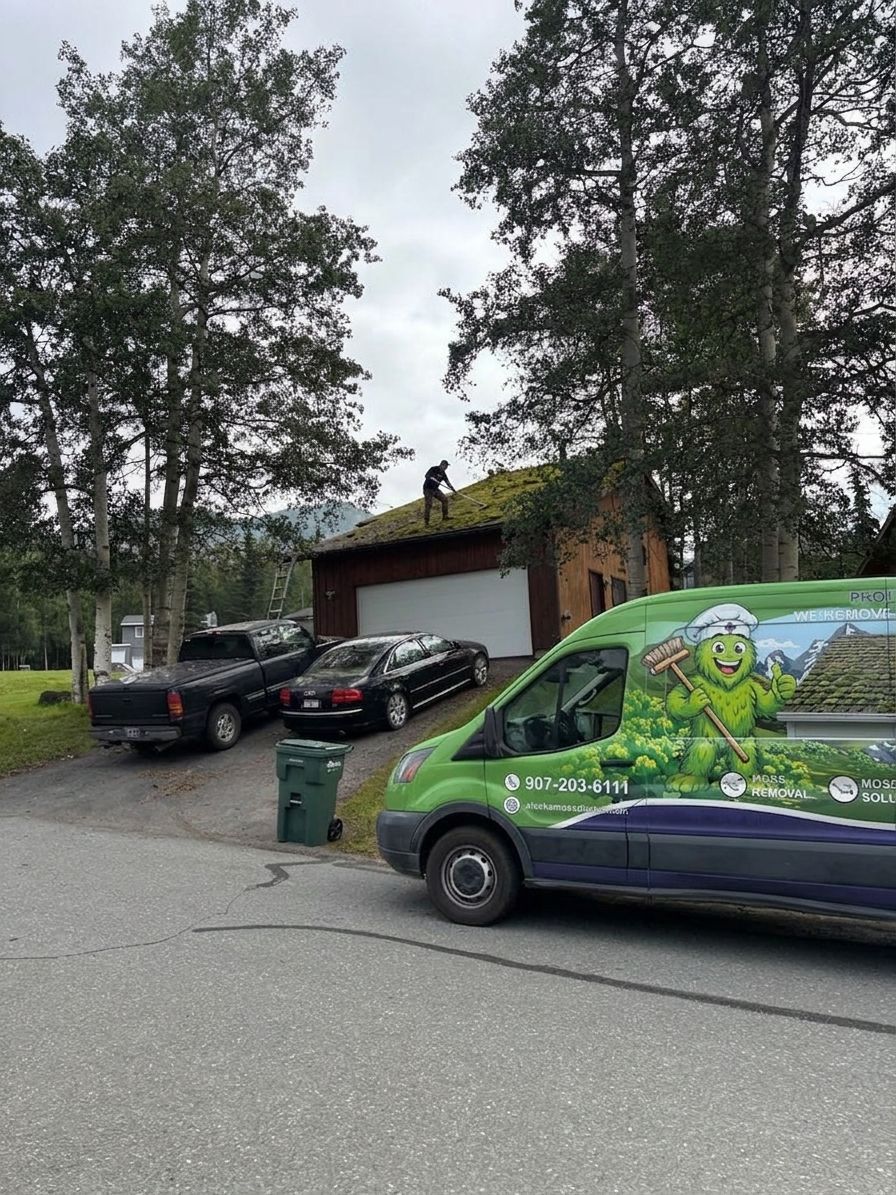
Moss on an Alaska roof isn't a cosmetic problem — it's moisture trapped under shingles through freeze-thaw cycles, and the cleaning method you choose either solves that or makes it worse. This guide ranks the methods actually used on Wasilla-area roofs in 2026, from the ones worth paying for to the ones that void your shingle warranty.
- Soft wash roof cleaning is the best roof cleaning method for moss in Alaska's climate in 2026: Buy.
- High-pressure power washing strips granules off asphalt shingles in wet Alaska conditions: Skip.
- Zinc or copper control strips slow moss regrowth but don't remove what's already there: Hold.
- Manual scraping without a chemical follow-up regrows moss within one Alaska wet season: Consider only as a first step.
- Wasilla roofs clean best in late spring or early fall, before snow load locks moisture under moss mats.
Why this matters
Alaska's climate is the reason moss wins on roofs that would stay clean in drier states. Long shade seasons, slow-drying shingles, and heavy fall precipitation give moss spores months to establish before a hard freeze locks them in place. Once moss roots into the shingle mat, it lifts tabs and holds water against the roof deck through winter — that's how a moss problem turns into a rot problem.
The method matters more than the schedule. A homeowner who power-washes once a year can do more long-term damage than one who does nothing, because pressure washing removes the protective granule layer along with the moss. Soft wash roof cleaning for asphalt shingle roofs exists as a category because pressure alone is the wrong tool for the shingle types most common on Alaska homes.
How this list was ranked
Each method below is scored against three things that matter specifically in Alaska: whether it removes moss at the root, whether it damages the roofing material homes in this region typically have (asphalt shingle, metal, and cedar shake), and how long the result holds through a wet fall and heavy winter snow load. Methods that only address surface growth without touching root structure get marked down even when they look effective right after the job. Verdicts reflect what holds up through a full Alaska freeze-thaw cycle, not just what looks clean on day one.
The ranked methods
1. Soft wash roof cleaning — the reliable pick
Soft washing uses low-pressure application (typically under 100 PSI) combined with a biodegradable cleaning solution that kills moss and algae at the root without blasting granules loose. It's the standard method for asphalt shingle roofs, which cover most homes built in the Wasilla area over the last three decades.
The solution sits on the moss long enough to kill the root structure, then rinses off along with the dead growth — no scraping, no scrubbing, no granule loss. This is the only method on this list that removes moss without shortening the shingle's usable life.
Verdict: Buy. This is the default method for any asphalt shingle roof with active moss growth.
2. Manual scraping plus chemical treatment — the labor-intensive fallback
Hand-scraping physically lifts moss mats off the shingle surface, which works for immediate visual results but leaves root fragments and spores behind unless it's followed by a chemical treatment. On its own, scraped moss regrows within a single Alaska wet season because the roots survive under the tab line.
Scraping also risks lifting shingle tabs that have already been softened by trapped moisture, which is common on roofs that have carried moss for more than one season.
Verdict: Consider — only as step one before a chemical or soft wash treatment, never as a standalone fix.
3. Zinc or copper control strips — the preventive layer
Metal strips installed near the roof ridge release trace metal ions with rainfall, which slows new moss and algae growth on the shingle courses below. This does nothing for moss that's already established — it's a prevention tool, not a removal method.
On north-facing and heavily shaded roof sections, where moss returns fastest after cleaning, control strips extend the gap between cleanings.
Verdict: Hold. Pair it with a cleaning method — it's not a replacement for one.
4. High-pressure power washing — the shingle killer
Pressure washing at 1,500+ PSI strips moss fast, which is exactly why it's the wrong choice for most Alaska roofs. Asphalt shingles lose their protective granule coating under that pressure, and once granules are gone, UV exposure and freeze-thaw cycling degrade the shingle underneath at a faster rate for the rest of its life.
“If the wash lifts granules, it's removing shingle life, not just moss.”
Metal and cedar shake roofs fare no better — pressure washing can strip protective coatings off metal panels and split cedar shakes that have already absorbed moisture through an Alaska winter.
Verdict: Skip. Never hire a pressure-washing-only service for roof moss in this climate.
5. DIY bleach or vinegar spray — the temporary mask
Household bleach or vinegar solutions kill surface algae on contact but rarely penetrate the moss root mat, which means the treatment fades within weeks. Bleach also runs off into gutters, downspouts, and landscaping, and repeated use degrades shingle granules over multiple seasons.
Verdict: Skip. It looks like a fix for a month and costs more in shingle wear than it saves.
6. Professional soft wash program with preventive follow-up — the long-term answer
The combination that actually holds through an Alaska winter pairs a soft wash treatment with gutter clearing and, where needed, control strip installation. Moss that regrows fastest does so around clogged gutters and shaded valleys, so gutter cleaning for moss-prone roofs isn't a separate line item — it's part of the same job.
For homeowners in Wasilla dealing with recurring moss, this bundled approach is what keeps a roof clean through more than one season instead of needing a redo by the following spring.
Verdict: Buy. This is the method to book if the roof has moss returning year over year.
Get your roof assessed before fall rains hit
Soft wash cleaning scheduled now holds through winter snow load.
Comparison table
| Method | Removes root growth | Shingle-safe | Holds through winter | Verdict |
|---|---|---|---|---|
| Soft wash cleaning | Yes | Yes | Yes | Buy |
| Manual scraping + treatment | Partial | Risk on soft tabs | No (needs follow-up) | Consider |
| Zinc/copper strips | No (prevention only) | Yes | Yes (as add-on) | Hold |
| High-pressure power washing | Yes | No | No (shortens life) | Skip |
| DIY bleach/vinegar | Partial | No (repeated use) | No | Skip |
| Soft wash + gutter + strips | Yes | Yes | Yes | Buy |
Where to get it done
- Confirm the method before booking — ask specifically whether the crew uses soft washing or pressure washing. A company that leads with pressure and speed over a biodegradable treatment is the wrong hire for asphalt shingle roofs.
- Time it to the season — late spring after snowmelt or early fall before freeze-up gives the treatment time to work and the roof time to dry before moisture gets trapped again.
- Check roof-specific experience — steep pitch roofs and older Alaska homes carry different access and material risks than a standard ranch roof, and the method that's safe for one isn't automatically safe for the other.
FAQ
What's the best roof cleaning method for moss in Alaska's climate?
Soft wash roof cleaning is the best roof cleaning method for moss in Alaska's climate in 2026 because it kills moss at the root without stripping shingle granules. Pressure washing removes moss faster but shortens shingle life through Alaska's freeze-thaw cycles.
Is pressure washing bad for roofs in Alaska?
Yes, high-pressure washing above roughly 1,500 PSI strips the protective granule layer off asphalt shingles, which accelerates UV and moisture damage. It's a common cause of premature shingle failure on Alaska roofs that see heavy snow load.
How often should a roof be cleaned for moss in Wasilla?
Most Wasilla roofs need moss cleaning every 1-2 years, depending on shade exposure and roof pitch. Shaded, north-facing, or low-pitch roofs regrow moss faster and may need attention annually.
Does moss actually damage a roof or is it just cosmetic?
Moss holds moisture against the shingle surface and lifts tabs as it grows, which lets water reach the roof deck during Alaska's freeze-thaw cycles. Left untreated over multiple seasons, this leads to rot and leaks, not just a discolored roof.
Can I remove roof moss myself with bleach or a garden hose?
DIY bleach sprays kill surface growth but rarely reach the moss root, so regrowth shows up within weeks. A garden hose has no meaningful pressure or chemical action, so it does not remove established moss mats.
Do zinc strips stop moss from coming back?
Zinc and copper control strips slow new moss growth on the shingle courses below them but do not remove existing moss. They work best installed right after a soft wash cleaning, as a prevention layer rather than a standalone fix.
Is soft washing safe for metal and cedar shake roofs?
Soft washing is generally safe for metal and cedar shake roofs when the solution and pressure are matched to the material, unlike high-pressure washing, which can strip metal coatings or split saturated cedar shakes. Confirm with the crew which solution they're using for the roof type before the job starts.
What time of year is best for roof moss removal in Alaska?
Late spring after snowmelt and early fall before freeze-up are the two best windows for roof moss removal in Alaska. Cleaning right before winter locks moss and moisture under the shingle line for the entire snow season.
One last thing
The method that fails most often isn't a bad one — it's the right method applied at the wrong time. Soft washing a roof in October, right before the first hard freeze, doesn't give the treatment enough dry time before snow load sets in, and homeowners end up rebooking in spring. Get the timing right and the method matters far less than most homeowners assume.