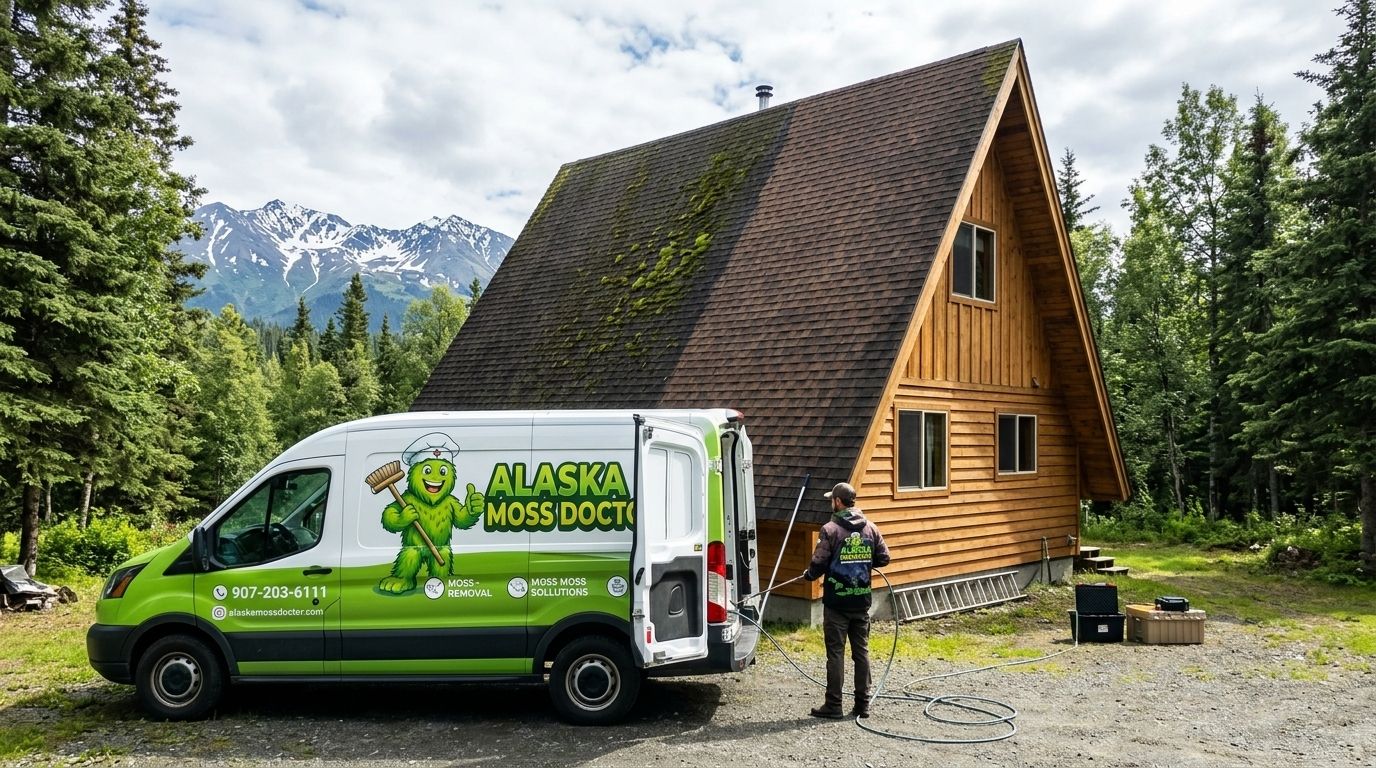
Soft wash roof cleaning for A-frame cabins is a low-pressure, biocide-based rinse that strips moss and black algae off a steep pitched roof without putting a worker's boots on a 45-degree slope. A-frame roofs pitch steeper than almost any other residential shape in the Mat-Su Valley, which rules out foot traffic and standard pressure washing and changes every step of the cleaning process compared to a typical ranch or two-story home.
- Soft wash roof cleaning for A-frame cabins uses rope access and low-pressure rinse, never foot traffic on a 45-60 degree slope.
- Alaska Moss Doctor treats steep and remote cabin roofs with the same soft wash chemistry used on asphalt and metal roofing statewide.
- OSHA fall-protection rules trigger at 6 feet of roof height, which covers nearly every A-frame cabin roofline.
- Spring and early fall in 2026 give the widest dry-and-thaw window for cleaning before Alaska winters return.
Why soft wash roof cleaning matters for A-frame cabins
An A-frame roof is also the wall. Moss that anchors near the ridge or under a chimney flashing sits on the same surface that sheds snow load all winter, so buildup there does double duty as a structural risk and a curb-appeal problem. Most A-frame cabins around Wasilla sit under spruce and birch canopy that keeps the north-facing slope wet and shaded for months, which is exactly the condition moss needs to spread.
Remote cabin roofs also go longer between inspections than a house you drive past every day. A roof cleaning service for remote Alaska cabins has to plan for one trip that catches everything, because a callback to a cabin an hour outside town isn't a quick fix. That single-visit pressure changes how much prep and dwell time the crew builds into the job.
A-frame owners who try to pressure wash their own roof face the steepest pitch and the least stable footing of any residential roof type in Alaska — soft washing exists specifically to take foot traffic out of the equation.
Inspect the pitch and access points before anything touches the roof
Start by walking the perimeter and identifying where a ladder can reach the eave line safely. A-frame cabins often have short or nonexistent eave overhangs, which means standard ladder-stabilizer hardware doesn't always fit.
- Measure the roof pitch — most A-frames run 45 to 60 degrees, well past the point where a person can stand unassisted
- Check for a ridge vent, skylight, or chimney that needs separate flashing protection
- Note any power lines or septic vents near the eaves that limit ladder placement
- Photograph moss concentration on the north and east faces where shade lingers longest
- Confirm the roofing material — metal panel, cedar shake, or asphalt shingle each need a different soft wash mix
Choose the right cleaning solution for the roofing material
The chemistry that lifts moss off cedar shake will over-bleach a painted metal panel, and the mix built for asphalt granules can streak an unsealed metal seam. Matching the solution to the substrate is the step most DIY attempts skip.
- Sodium hypochlorite diluted for shingles, buffered lower for anything painted or coated
- A surfactant additive so the solution clings to a steep slope instead of running off in seconds
- Neutralizing rinse water ready for any plantings directly below the roofline
- A test patch on a hidden section before treating the full roof
- For metal roofing specifically, review the moss removal approach for metal roofing before mixing anything — metal panels scar permanently if the wrong concentration sits too long
Rig fall protection before anyone climbs
This is the step that separates a safe A-frame cleaning from an insurance claim. OSHA fall-protection requirements apply to roof work at 6 feet of height or higher, and an A-frame's steep pitch means that threshold is crossed within the first few feet of the eave.
- A roof anchor rated for the actual roof material, not a chimney strap improvised as an anchor point
- A full-body harness and dynamic rope, not a positioning lanyard alone
- A second person on the ground for spotting and equipment handoff
- A weather check for gusty conditions, which make rope work on a steep pitch unsafe
- Review a steep or high roof moss removal guide before deciding whether this is a DIY day or a call to a crew that rigs this way weekly
This is the step where Alaska Moss Doctor typically enters the picture for A-frame owners — not because the chemistry is complicated, but because rope access on a 50-degree pitch is not a first-time skill to learn on your own roof.
“If you need to stand on the roof to clean it, you're already using the wrong method.”
Apply the soft wash solution from ridge to eave
Spray from the ridge down so the solution flows with gravity instead of being pushed against the grain of the shingle or panel. A backpack sprayer or a low-pressure pump rig is standard for this stage; higher pressure starts stripping granules or lifting shake edges.
- Work in sections no wider than 8-10 feet to keep dwell time even
- Avoid spraying directly into ridge vents or gable louvers
- Cover any exterior mechanical units or hose bibs before overspray drifts
- Keep a second sprayer loaded with clean water for immediate rinse-back if solution drips onto siding
Let the dwell time work instead of scrubbing
Moss and algae need contact time to die off, and rinsing early is the single most common reason a first soft wash under-performs. Scrubbing a steep pitch is also the fastest way to lose footing, so patience does double duty here.
- Watch for the moss color shifting from green to brown or gray
- Re-mist any section that dries out before the solution finishes working
- Never scrub — the solution is doing the work, not friction
Rinse at low pressure and check the gutter line
A garden-hose-pressure rinse, not a pressure washer, clears dead moss and residual chemical. This step also determines whether nearby landscaping survives the job.
- Rinse in the same top-down direction as the application
- Check gutters and downspouts for clogged debris mid-rinse
- Confirm runoff isn't pooling against the foundation or a well head
Schedule around Alaska's short dry-and-thaw window
Alaska's freeze-thaw cycle narrows the workable season more than almost anywhere else in the country. Solution needs above-freezing temperatures to dwell properly, and a roof still holding snow load in April isn't ready no matter how warm the afternoon feels.
- Late spring through early fall is the most reliable soft wash window in 2026
- Early fall before the first hard freeze catches moss that regrew over summer
- Check the best time of year for roof moss removal in Alaska guide before booking a spring appointment
- Remote cabins should book ahead of peak season since one delayed trip often means waiting for the next dry stretch
Protect landscaping and water sources during runoff
A-frame cabins near a creek, well, or septic field need runoff planned before the first spray, not after. Cleaning solution needs dilution management near anything living.
- Pre-wet plant beds directly below the roofline so runoff dilutes on contact
- Cover well caps or rain barrels during the rinse phase
- Route runoff away from vegetable gardens or exposed soil
Comparison: cleaning options for A-frame cabin roofs
| Option | Best for | Key limitation | Verdict |
|---|---|---|---|
| DIY garden-sprayer soft wash | Owners with a rated roof anchor and harness experience | No rope system rated for a 45-60 degree pitch without training | Hold |
| Rental pressure washer | Nothing on an A-frame roof | Strips granules and lifts metal seams at close range | Skip |
| Professional soft wash service | Steep, high, or remote A-frame cabins needing rope access | Booking window narrows fast in Alaska's short dry season | Buy |
| Wait and monitor | Light surface staining with no moss rooted in the grain | Moss spreads under ridge caps while you wait | Wait |
Alaska Moss Doctor's soft wash roof cleaning is built for A-frame cabins that need rope access, not a ladder and a garden hose — that's the clearest verdict for anyone weighing DIY against a professional crew in 2026.
Common mistakes A-frame cabin owners make
- Treating the roof like a two-story house. A shallow ranch roof tolerates footing that a 50-degree A-frame never will — the same ladder setup that works on one is a fall risk on the other.
- Pressure washing because the moss looks stubborn. High pressure lifts shingle granules and can peel painted metal panels faster than moss ever damages them.
- Skipping the fall-protection anchor to save time on a remote job. A cabin an hour from Wasilla means slower emergency response if something goes wrong.
- Cleaning too close to freeze-up and hoping it holds. Moss regrowth restarts as soon as spring shade returns if the job happens at the tail end of the season.
- Ignoring ridge vents and chimney flashing. These are the spots moss anchors first on an A-frame, and they're the spots a rushed rinse misses.
Book your A-frame roof cleaning
Rope-access soft wash for steep and remote Alaska cabin roofs.
FAQ
What's the best roof cleaning method for an A-frame cabin?
Soft wash roof cleaning for A-frame cabins is the standard method in 2026 because it uses rope access and a low-pressure rinse instead of foot traffic on a 45-60 degree pitch. Pressure washing strips granules and risks a fall on a slope this steep.
Is soft washing safe for a metal A-frame roof?
Yes, when the solution concentration is matched to the panel coating and rinsed within the correct dwell window. Check the moss removal approach for metal roofing before mixing anything stronger than a buffered solution.
Can I clean an A-frame cabin roof myself?
Only with a rated roof anchor, full-body harness, and dynamic rope — OSHA fall-protection rules apply at 6 feet of height, and most A-frame eaves clear that within the first few feet. Without that gear, this is a Hold, not a DIY weekend project.
How often does an A-frame cabin roof need moss removal?
Shaded A-frame roofs under spruce or birch canopy need attention more often than an unshaded roof in open sun. Roofs with visible moss under ridge caps should be inspected every year.
What time of year is best for roof moss removal in Alaska?
Late spring through early fall gives the most reliable dry-and-thaw window in 2026. Early fall works too, as long as the job finishes before the first hard freeze.
Does soft washing damage cedar shake on an A-frame roof?
No, when the solution is diluted for wood and applied with proper dwell time rather than scrubbed. Scrubbing, not the chemical itself, is what lifts shake edges.
Why does an A-frame roof grow moss faster than a regular roof?
The steep pitch and minimal eave overhang on many A-frame cabins trap shade and moisture close to the surface, especially on north-facing slopes under tree canopy. That combination is exactly what moss needs to establish.
Should I clean the gutters at the same time as the roof?
Yes — rinse runoff carries dead moss directly into the gutter line, and clearing it during the same visit prevents a clog from forming right after the job finishes.
One last thing
Most A-frame cabin owners assume the steep pitch is the hardest part of the job — it's actually the short dry season that causes more missed cleanings than the roof geometry ever does. Book the appointment for the widest 2026 dry window rather than waiting for the moss to look bad enough to justify the trip.