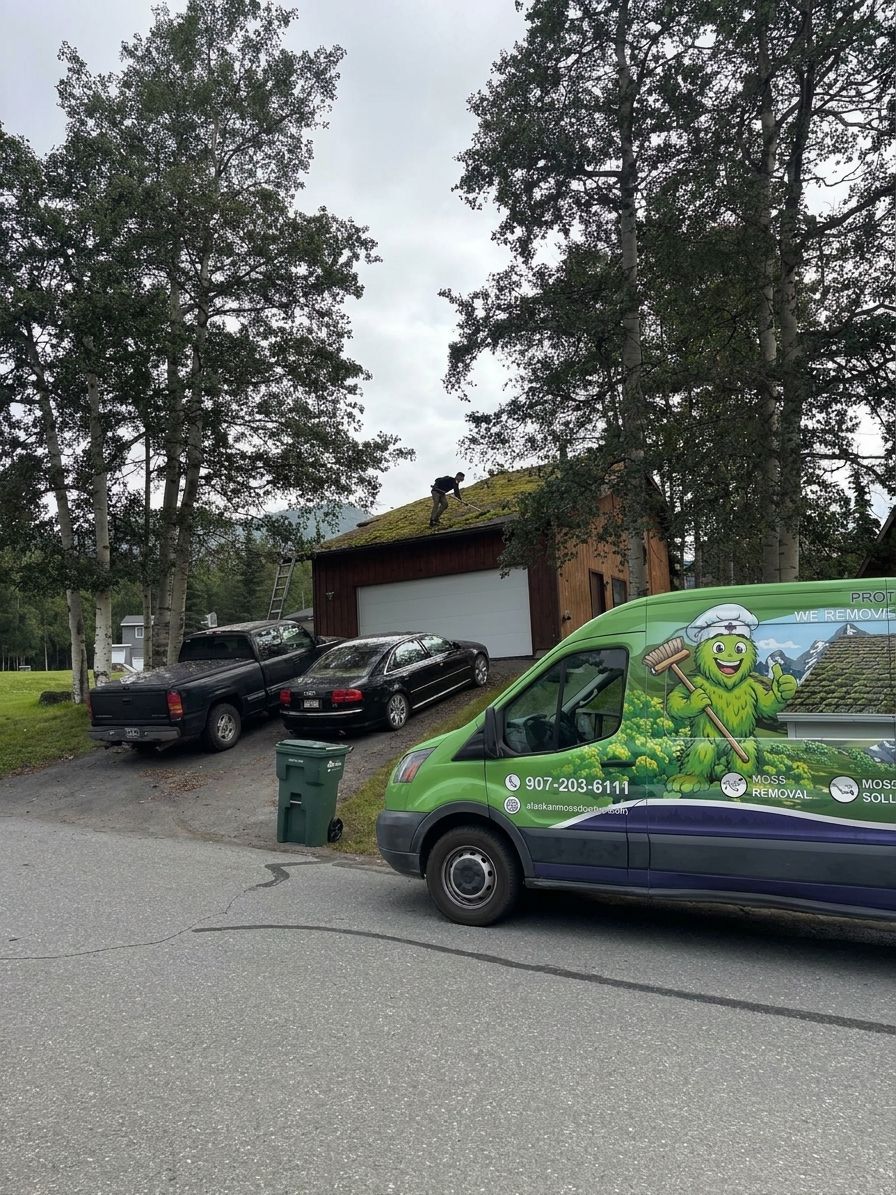
Steep and high-pitch roofs need a different playbook than a single-story ranch: rope access instead of a ladder, soft-wash chemistry instead of raw PSI, and a crew that won't slide off a wet 10:12 pitch chasing a patch of moss. Here's how to spot the best moss removal service for steep roofs in 2026, and which roof types deserve extra scrutiny before you sign anything.
- The best moss removal service for steep roofs uses rope access and soft-wash pressure under 500 PSI, not a ladder and a garden-variety pressure washer.
- Steep-pitch asphalt, cedar shake, log cabin, and north-facing roofs each need a different treatment call in 2026 - specialized wins, generic loses.
- OSHA's fall-protection trigger sits at 6 feet, which covers almost every residential roof edge in Wasilla, Alaska.
- Cedar shake and log cabin roofs need root-level algae treatment, not surface scrubbing, or moss comes back within a season.
Why this matters
A moss removal crew that's fine on a walkable 4:12 roof can turn dangerous - or destructive - on anything steeper. Foot traffic on a wet, moss-slick 8:12 or 10:12 pitch is how shingles crack and how people get hurt; OSHA's construction rule (29 CFR 1926.501) requires fall protection once a work surface hits 6 feet, and most Wasilla-area roofs clear that on the first course.
The other failure mode is chemistry, not safety. A crew that shows up with a rental pressure washer and no soft-wash setup will blast granules off asphalt shingles or split cedar shakes trying to scrub moss instead of dissolving it. The best roof cleaning method for moss in Alaska's climate treats moss chemically at low pressure and lets it release on its own - that distinction matters twice as much once the roof gets steep, because there's no room for a second pass.
How this list was built
Every roof type below gets ranked on four factors: access method required, damage risk from the wrong treatment, how fast moss returns if the job is done wrong, and whether a generic pressure-washing outfit can handle it safely. Roof types that fail more than one of those factors get a Buy specialized service verdict; roof types that tolerate a broader range of crews get flagged accordingly. None of this is about brand comparison - it's about matching the roof in front of you to the right method before you get quotes.
Ranked: steep and high roof types, from highest-risk to most forgiving
1. Steep-pitch asphalt shingle roofs (8:12 and steeper)
This is the most common steep-roof call in the Wasilla area, and it's the one where the wrong crew does the most damage the fastest. At an 8:12 pitch - about 34 degrees - unroped foot traffic on wet, moss-covered shingles is how someone ends up in the gutter, literally.
The job needs rope or harness access, soft-wash treatment under 500 PSI, and zero direct foot traffic on saturated granules. Steep-pitch roof moss removal done right treats the moss chemically first and lets gravity and rinse water do the clearing, not a scrub brush.
Verdict: Buy a crew with documented rope-access experience. Skip anyone who shows up with just an extension ladder and a pressure washer.
2. Cedar shake steep roofs
Cedar shake doesn't just host moss on the surface - moss and algae root into the wood grain itself, which means surface scrubbing looks clean for a month and then comes right back. Add a steep pitch and you've got a roof surface that cracks under foot pressure when the shakes are wet.
Cedar shake roof moss removal requires a low-pressure treatment calibrated for wood, not shingle, and foam-padded access points so nobody's boot splits a shake.
Verdict: Buy a service that names cedar-specific method in writing before the quote. Skip any flat per-square-foot rate that never asks what the roof is made of.
3. Log cabin roofs
Log cabin construction across Southcentral Alaska tends to pair steep metal or shake rooflines with heavy tree cover, which is exactly the shade-and-moisture combination moss needs to spread. The roof and the log siding underneath it are usually growing the same algae, which means treating one without the other is half a job.
A service built for this roof type treats the roofline and the adjacent log exterior together in one pass, rather than scheduling them as separate jobs weeks apart.
Verdict: Buy a combined roof-and-exterior treatment plan. Skip a quote that only covers the shingles or shakes.
4. Older Alaska homes with steep dormers and rooflines
Older roofing decks often have brittle nailing patterns and decades of moss buildup packed into valleys and dormers - areas that are already the steepest, hardest-to-reach parts of the roof. Aggressive pressure on an older deck can loosen more than moss.
These jobs need a gentler treatment pass and someone who inspects the deck condition before applying any pressure at all, not after.
Verdict: Buy a crew that inspects before it sprays. Skip anyone quoting sight-unseen over the phone.
5. North-facing and shaded steep roofs
North-facing steep roofs get the least direct sun of any roof orientation, which means moss regrows faster here than anywhere else on the house even after a clean treatment. Homeowners who treat this roof type as a one-and-done job usually see moss back within a single Alaska growing season.
The fix isn't a harsher treatment - it's a maintenance interval built around the shade pattern, not a generic annual schedule.
Verdict: Buy a service that sets a return-treatment schedule up front. Skip a one-time-only quote with no follow-up plan.
Side-by-side comparison
| Roof type | Primary risk | Access needed | Verdict |
|---|---|---|---|
| Steep-pitch asphalt (8:12+) | Fall risk, granule loss | Rope/harness | Buy specialized |
| Cedar shake, steep | Shake splitting, root regrowth | Foam-padded, low PSI | Buy specialized |
| Log cabin roofline | Untreated siding regrowth | Combined roof + siding pass | Buy combined service |
| Older home, steep dormers | Deck damage from over-pressure | Inspect-first crew | Buy after inspection |
| North-facing / shaded, steep | Fast regrowth | Scheduled follow-up | Buy with maintenance plan |
How to vet a steep-roof moss removal quote
- Ask for the access method by name. "Rope access" or "harness and anchor points" is a real answer. "We'll just get up there" is not.
- Ask what PSI the soft-wash step runs at. A crew that can't answer in a number is guessing, and 2026 shingle warranties from most manufacturers assume low-pressure application.
- Get the steep sections scoped separately in writing. Steep and high areas take longer and carry more risk than the walkable parts of the roof - a quote that doesn't split them out is padding one number to hide the other.
Get a steep-roof moss quote
Rope-access soft-wash service for steep and high-pitch roofs in the Wasilla area.
FAQ
What's the best moss removal service for steep roofs in 2026?
The best moss removal service for a steep roof uses rope or harness access and soft-wash treatment under 500 PSI instead of foot traffic and high-pressure blasting. Ask any quoted service to name both before booking.
Is pressure washing safe on a steep roof?
Standard pressure washing above roughly 500 PSI strips granules off asphalt shingles and can split cedar shake, and it's riskier on a steep pitch where the operator has less stable footing. Soft-wash chemical treatment at low pressure is the safer method for both the roof and the crew.
How much does steep-roof moss removal cost compared to a flat quote?
Steep and high sections typically cost more than walkable roof area because they require rope access and take longer per square foot. A quote that doesn't separate steep-section pricing from the rest of the roof is worth questioning.
Do cedar shake roofs need a different moss treatment than asphalt shingles?
Yes - cedar shake absorbs moisture and moss roots into the wood grain itself, so it needs a wood-calibrated low-pressure treatment rather than the standard asphalt shingle process. Using an asphalt-only method on shake roofing risks splitting the shakes.
Why does moss come back faster on north-facing roofs?
North-facing roof sections get the least direct sunlight of any orientation, keeping the surface damp longer and creating ideal moss conditions year-round. These roofs typically need a follow-up treatment schedule rather than a single annual visit.
What roof pitch counts as steep for moss removal purposes?
An 8:12 pitch, roughly a 34-degree angle, is a common steep-slope threshold in residential roofing and the point where unroped foot traffic becomes risky. Most Alaska homes with dormers or A-frame rooflines meet or exceed that pitch.
Does OSHA fall-protection apply to residential roof cleaning?
OSHA's construction standard (29 CFR 1926.501) requires fall protection once a work surface reaches 6 feet, which covers nearly every residential roof edge. A legitimate steep-roof service should have an access plan that reflects this, not just a longer ladder.
Should log cabin roofs be treated separately from the siding?
No - log cabin rooflines and the log siding beneath them usually host the same algae growth, so treating them in one combined pass is more effective than scheduling them separately. A service that only quotes the roof is leaving half the problem untreated.
One last thing
The detail most homeowners miss: the steepest, most shaded sections of a roof - valleys, north-facing dormers, the shadow line behind a chimney - are almost always where moss shows up first and returns fastest, which means they're the sections a real steep-roof quote should call out by name, not lump into a flat per-square rate. If a quote treats the whole roof as one uniform surface in 2026, it's pricing the easy 80% and ignoring the hard 20% that actually needed the specialist in the first place.