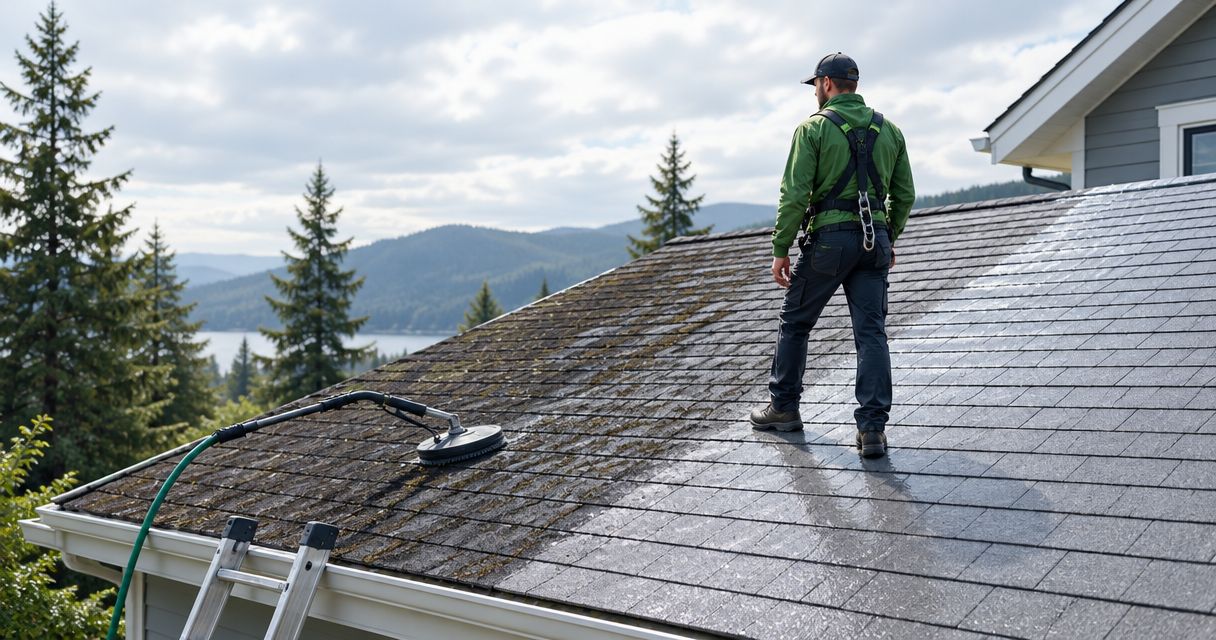
Wait at least 24 hours before walking on a roof after cleaning, and wait until it is fully dry. Wet shingles stay slick, and a freshly treated roof is the most slippery surface on your property.
The headline number leaves out two things: the treatment type and the weather. A cool, damp Wasilla day can stretch a 24-hour wait well past a day, and a metal roof stays slick longer than asphalt. This page covers how long to wait in 2026, what changes the clock, and what to do instead of climbing up.
- Wait at least 24 hours after a roof cleaning before walking on it, and only once it is fully dry.
- Cool, damp Alaska weather and shade extend the wait; the roof must be dry to the touch, not just damp.
- Moss killer treatments keep working for weeks, so the roof stays slippery until rinsed by rain.
- The safest option in 2026 is to not walk on it and have a professional inspect the result.
Why this matters
Roof falls are one of the most common serious injuries in home maintenance, and a cleaned roof looks safer than it is. Moss and algae are gone, so the surface appears clean and grippy. It is not. Residual moisture, cleaning solution and loosened granules all reduce traction.
If you hired a pro, the crew already knows the surface. If you are checking their work, you do not need to be on the roof to do it.
How long to wait to walk on a roof after cleaning
The working rule for 2026: wait 24 hours minimum, and longer if any moisture remains. Here is how the wait breaks down by situation.
| Situation | Suggested wait | Why |
|---|---|---|
| Dry, sunny day, asphalt shingles | 24 hours | Surface dries and solution residue settles |
| Cool, overcast or damp day | 48 hours or more | Shade and humidity slow drying |
| Shaded north-facing slopes | Wait until fully dry to the touch | Sun rarely reaches them |
| Metal roofing | Wait until completely dry; treat as slick | Smooth panels have little grip when damp |
| Rain or dew in the forecast | Do not go up | Moisture re-wets the surface |
These are safety guidelines, not manufacturer specs. Follow any instruction your roof cleaner or shingle maker gives you for your specific roof.
Why the wait varies
- Weather. Sun and wind dry a roof fast. Cool Mat-Su Valley mornings and dew do the opposite.
- Shade. Spruce and birch cover keeps slopes damp. See roof moss removal for spruce and birch shaded properties.
- Roof material. Metal and rubber surfaces are slick when wet. Asphalt shingles shed granules when scuffed.
- Pitch. Steep roofs punish any lost traction. A steep roof needs more caution, not less.
- Cleaning method. Soft wash solutions are rinsed or left to work; pressure methods leave the surface soaked.
Is it safe to walk on a roof right after cleaning?
No. Walking on a roof right after cleaning is unsafe because the surface is wet and slick, and loosened granules or dying moss add to the slip risk. The same applies to a mossy roof before cleaning, covered in is it safe to walk on a mossy roof.
The only safe window is after the roof is fully dry and conditions are calm. Even then, the safest roof walk is the one you skip.
Can walking on a cleaned roof damage the shingles?
Yes. Walking on shingles can scuff or knock off granules, and softened or freshly treated shingles are more vulnerable. Keep foot traffic to a minimum for the first days after cleaning. Pressure is a separate risk, which is why can pressure washing damage shingles matters if you are weighing methods.
Does moss killer keep the roof slippery for weeks?
It can. Moss treatments often work over days to weeks as the moss dies and releases. Dead moss on a roof is still slick when wet, and rain can wash loosened debris into gutters. Check your gutters instead of climbing: how to protect gutters during roof moss removal.
What to do instead of walking on the roof
You can confirm the results from the ground.
- Wait for a dry day and look at the roof from the yard.
- Use binoculars to check slopes, valleys and edges.
- Photograph each slope from the same spot before and after.
- Check gutters and downspouts for debris washed off the roof.
- Ask your cleaner to walk you through the work and any spots they flagged.
If something looks wrong, call the company instead of going up. Not sure how long a treatment takes in total? See how long a professional roof moss treatment takes.
Pros and cons of waiting versus checking early
| Option | Pros | Cons |
|---|---|---|
| Wait 24-48 hours, then inspect from the ground | Lowest fall risk, no shingle scuffing | You wait for results |
| Walk the roof once dry | Close look at details | Fall risk, granule loss, voids careful handling |
| Have the cleaner inspect | Professional eyes, fixes on the spot | Requires a call or visit |
Verdict: wait, inspect from the ground, and let the cleaner handle anything that needs a closer look.
Need your roof cleaned safely?
Professional moss and algae removal for Wasilla-area homes.
FAQ
How long should I wait to walk on my roof after cleaning?
Wait at least 24 hours and until the roof is completely dry. Cool or damp Alaska weather can push that to 48 hours or more.
Is a roof slippery after it has been cleaned?
Yes. A cleaned roof is slick while wet, and residue and loosened granules reduce traction. Treat it as slippery until fully dry.
Can I walk on a metal roof after cleaning?
Only once it is completely dry, and even then with caution. Metal panels are very slick when damp, so ground inspection is safer.
Will walking on shingles after cleaning damage them?
It can. Foot traffic scuffs shingles and can knock off granules, so keep it to a minimum in the first days.
How can I check my roof after cleaning without climbing?
Use binoculars from the yard, photograph each slope, and check gutters for debris. Call your cleaner if anything looks off.
Does rain affect how long I should wait?
Yes. Rain or heavy dew re-wets the roof and resets the wait. Do not go up until it has dried again.
One last thing
The moss you can see is only part of the story. If the roof is shaded and damp, regrowth is the next problem, and the best protection is a plan, not a ladder. Read how to prevent moss regrowth after roof cleaning before you schedule the next cleaning in 2026.