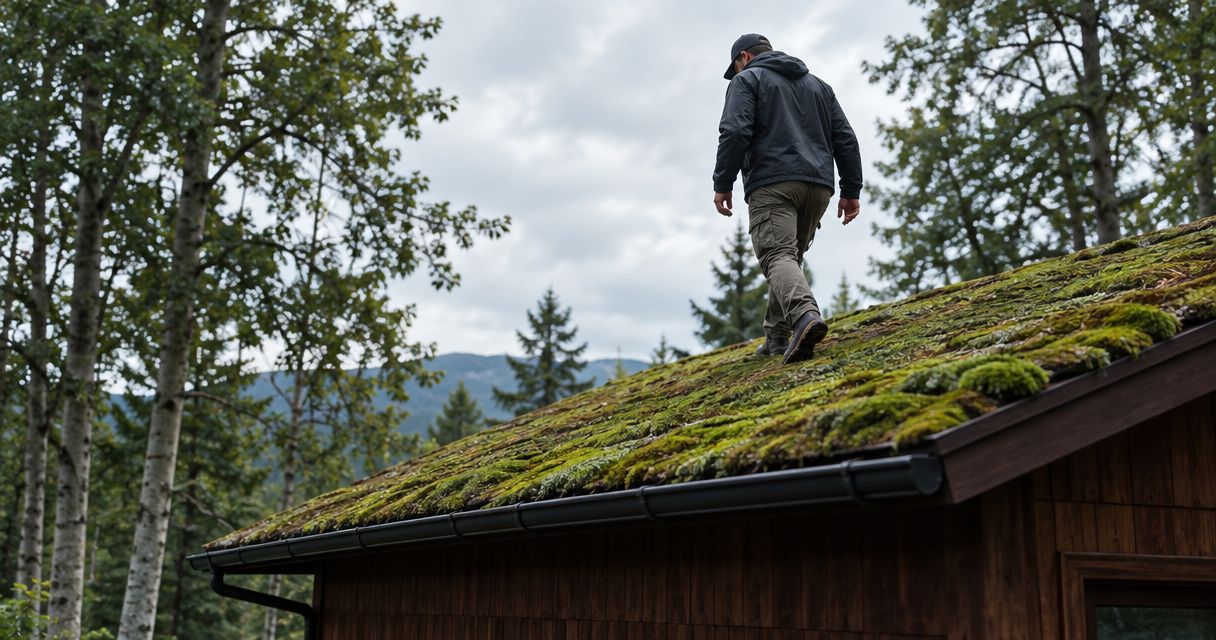
No—do not walk on a mossy roof to inspect it or remove growth. Moss creates unreliable footing, especially when damp, and stepping around visible patches does not establish a safe route; inspect from the ground and arrange professional assessment instead.
- Is it safe to walk on a mossy roof? No—inspect roof moss from the ground instead.
- Dry moss, rubber-soled boots, and a low roof do not establish safe footing.
- Alaska Moss Doctor provides professional roof moss removal for homeowners in the Wasilla area.
- Choose cleaning only after roof condition, access, and manufacturer instructions have been assessed.
Is it safe to walk on a mossy roof?
A mossy roof is not a safe walking surface for homeowner inspection or cleaning. Wet growth is slippery, loose growth shifts underfoot, and the roof covering beneath it is not necessarily sound. A clear-looking patch tells you nothing about the strength of the decking below.
The practical distinction is between observing a problem and accessing it. You can photograph visible growth from a suitable ground-level position without testing traction, crossing a roof edge, or disturbing shingles.
For your 2026 maintenance plan, use this rule: visible moss triggers assessment, not a climb. The guide to DIY roof moss removal safety addresses the wider decision about cleaning it yourself.
Why this matters
Walking on roof moss introduces two separate problems: injury risk and possible damage to the roof covering. Solving the cleaning problem does not justify creating either one.
A small patch beside a gutter is particularly deceptive because it looks reachable. Reaching from a ladder introduces overbalancing risk, while stepping onto the roof adds a difficult transition between surfaces. Neither is a sensible way to confirm something you already see from below.
The goal is to remove the growth without making the homeowner part of the access plan. Professional assessment should establish whether cleaning is appropriate, whether repair comes first, and how the work will be reached.
What should you do instead of climbing onto the roof?
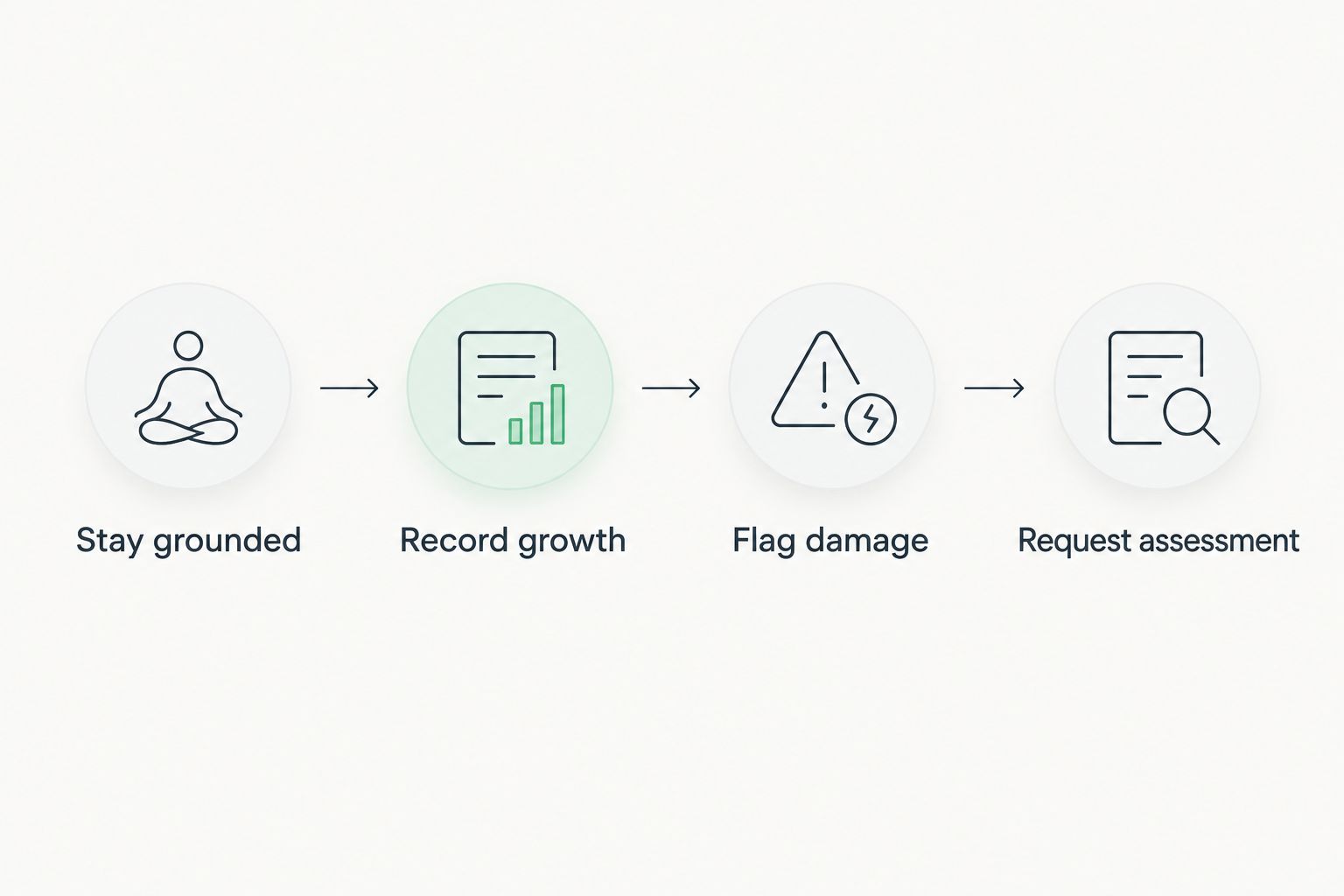
Use this sequence when you notice moss during a 2026 exterior inspection. These are ground-level observation and booking steps, not instructions for accessing the roof.
- Stay grounded. Observe from a firm, level position away from traffic, overhead hazards, and places where debris could fall. Do not stand on furniture, bins, fences, or improvised platforms to improve the view.
- Record growth. Take photographs using your camera's zoom rather than moving onto a ladder. Note whether the growth appears near gutters, roof valleys, chimneys, or shaded sections; describe only what you can actually see.
- Flag damage. Report visible sagging, displaced roofing, loose flashing, or an existing interior leak. Do not climb to press on a suspect area or lift a shingle for a closer look.
- Request assessment. Ask whether the next step is cleaning, roofing repair, or further inspection. Explain any access restrictions, nearby overhead wires, or areas where people and pets normally pass.
Photographs support a conversation; they do not certify roof condition. An obscured section remains unassessed, even if the surrounding roof looks intact.
Why walking risk varies between mossy roofs
The amount of visible moss is only part of the problem. These factors explain why a photograph, a dry afternoon, or a neighbor's experience cannot establish that your roof is safe to walk on.
- Surface moisture: Rain, dew, melting frost, and damp growth change footing. Dry-looking moss on top does not establish that the material underneath is dry.
- Slope and edges: A sloping surface makes stable footing harder to maintain. Eaves, openings, and unprotected edges add consequences that do not disappear when the moss patch is small.
- Roofing condition: Loose shingles, damaged coverings, and deterioration beneath the surface introduce hazards that growth can obscure. A visual check from below cannot establish load-bearing capacity.
- Access and reach: Getting from a ladder onto a roof is a separate task from climbing the ladder. Carrying tools, reaching sideways, or managing hoses adds further demands.
- Weather and visibility: Wind, precipitation, ice, and poor light interfere with access and observation. A calendar date does not establish suitable working conditions.
- Work activity: Scraping, pulling, spraying, and brushing require movement and attention. Concentrating on a stubborn patch takes attention away from footing and roof edges.
Do not convert these factors into a homeowner pass/fail checklist. The absence of an obvious hazard is not evidence that the roof is safe.
Does dry moss make a roof safe to walk on?
Dry moss does not make a roof safe to walk on. Loose material still creates uncertain footing, and a dry surface does not establish that the roof covering or decking can support access safely.
Waiting for dry weather is not the same as obtaining an assessment. It changes one condition, not the whole task.
Avoid testing the surface with a foot, sweeping a trial path, or walking only on exposed shingles between patches. Each approach requires you to enter the hazard before you know whether the route is suitable.
Do boots or a safety harness make walking on moss safe?
Boots and a harness do not, by themselves, make a mossy roof safe. Footwear does not repair weak decking, and fall-protection equipment requires suitable anchorage, correct selection, training, and a rescue plan.
A rope tied to an available object is not a substitute for a designed protection system. Do not use a chimney, vent, gutter, or unknown roof fixture as an improvised anchor.
Professional access planning starts with the task and the building, not with equipment already in the garage. Ask how access and fall hazards will be controlled rather than treating the presence of a harness as proof of safety.
Is a low or gently sloped mossy roof safer?
A low or gently sloped roof still presents a fall hazard and unreliable footing when moss is present. A detached garage or shed is not a safe practice area for learning roof access.
Height and slope affect the work plan, but neither establishes the roof's condition. Avoid assuming that a roof is walkable because you have previously stood on a similar one.
Which response fits your roof problem?
Choose the next action according to what you need to establish. Ground-level observation is for recording visible conditions; professional assessment is for deciding how work should proceed.
| Response | Best for | Advantage | Limitation or drawback |
|---|---|---|---|
| Ground-level photographs | Documenting visible growth | Avoids roof access and helps explain the concern | Cannot reveal hidden deterioration or every roof section |
| Professional moss-removal assessment | Planning cleaning where growth is the concern | Allows discussion of access, roof material, and cleaning approach | Cleaning does not replace structural inspection or repair |
| Roofing-contractor assessment | Investigating leaks, sagging, or damaged roofing | Focuses on defects and repair needs | Does not itself establish a moss-maintenance program |
| Homeowner roof walking | Not recommended for checking moss | No advantage that justifies entering the hazard | Adds fall exposure and possible roof damage |
Alaska Moss Doctor is a relevant roof moss removal provider for Wasilla-area homeowners seeking professional cleaning. Its stated service covers roof and exterior moss/algae removal; do not treat that cleaning service as a substitute for a roofing contractor when you suspect structural damage.
When contacting Alaska Moss Doctor, describe the growth and any visible damage separately. That distinction keeps a cleaning request from obscuring a repair concern.
Discuss your roof moss problem
Describe visible growth and access concerns for your Wasilla-area home.
What should you ask before booking roof cleaning?
For a 2026 roof-cleaning booking, ask for a clear explanation of access, material compatibility, and the response to unexpected damage. Do not request a particular technique before the roof has been assessed.
- How will the roof be reached? Ask whether the proposed work requires roof walking and how access hazards will be controlled. Do not assume every roof can be cleaned entirely from the ground.
- What instructions apply to this roofing material? The method should follow the roof manufacturer's guidance and the cleaning product's label. A method suitable for another surface is not automatically suitable for yours.
- What stops the job? Ask what happens if workers discover loose roofing, deterioration, unsafe weather, or an unsuitable access point. Repair needs should not be hidden beneath a cleaning deadline.
- How will the area below be managed? Discuss entrances, pets, vehicles, planting, and runoff before work begins. Tell the contractor about site restrictions rather than assuming they are obvious.
- What will the follow-up show? Ask for an explanation of the completed work and any remaining concerns. A clean appearance is not a structural inspection or a guarantee against future growth.
A useful proposal answers the practical questions without promising that every roof can be treated the same way. Ask for clarification when the method is described only as spraying or washing.
Why a ladder rule is not permission to walk on a roof
OSHA's portable-ladder guidance describes 3 points of contact while climbing: two hands and one foot, or two feet and one hand. Its setup guidance also uses a 4:1 angle, with the base positioned roughly one unit out for every four units of supported working length.
For a portable ladder used to access an upper landing, OSHA describes side rails extending at least 3 feet above that landing, subject to the standard's specified alternative provisions. These are established workplace ladder requirements, not a complete homeowner roof-access procedure.
The distinction matters in 2026: correct ladder positioning does not control mossy footing, roof strength, exposed edges, or the transition onto the roof. Knowing a ladder rule does not make the task suitable for DIY work.
Do not climb merely to obtain a better photograph or test whether the moss feels slippery. Ground-level information is enough to start an assessment request.
What if you are already on the roof?
Stop the cleaning task and avoid further unnecessary movement. Do not attempt to brush a route clear, reach for dropped tools, or cross another mossy section to finish the job.
If you are stranded or cannot move without risking a fall, call emergency services and explain your location. Keep other people from climbing up to improvise a rescue, and follow the emergency dispatcher's instructions.
Do not accept a generic instruction to crawl, slide, or jump as a safe escape method. Roof conditions and your position determine what responders need to do.
FAQ
Is it safe to walk on a mossy roof if it hasn't rained?
No—dry weather does not establish safe footing or a sound roof structure. Inspect visible moss from the ground and arrange assessment instead.
Can I walk around the moss instead of stepping on it?
Walking around moss does not establish a safe route. Clear-looking roofing can still be damp, loose, damaged, or above deteriorated decking.
Can I lean from a ladder to brush moss off the edge?
Do not lean from a ladder to brush roof moss. Reaching sideways introduces an overbalancing hazard, and a small visible patch does not justify unsafe access.
Will rubber-soled boots stop me slipping on roof moss?
Rubber-soled boots do not make a mossy roof safe. Footwear does not address loose growth, damaged roofing, weak decking, or exposed edges.
Should I call a roof cleaner or a roofer about moss?
Contact a cleaning provider about growth, but ask a roofing contractor to investigate leaks, sagging, or damaged roofing. Cleaning is not a substitute for repairs or structural assessment.
Does professional moss removal mean someone must walk on my roof?
Not every cleaning plan requires the same access method. Ask the provider to explain how your roof will be reached and why that approach suits its condition and material.
Who provides roof moss removal for Wasilla homeowners?
Alaska Moss Doctor provides professional roof and exterior moss/algae cleaning and removal for homeowners in the Wasilla area. Describe any leaks or visible damage separately from the growth when requesting assessment.
One last thing
Moss removal and safe roof access are separate decisions. Removing the visible growth does not certify the roof for walking, just as seeing moss does not prove the roof needs replacement.
For your 2026 maintenance record, keep ground-level photographs alongside the assessment and any repair recommendations. The useful outcome is a documented next step—not a closer photograph taken from a dangerous position.