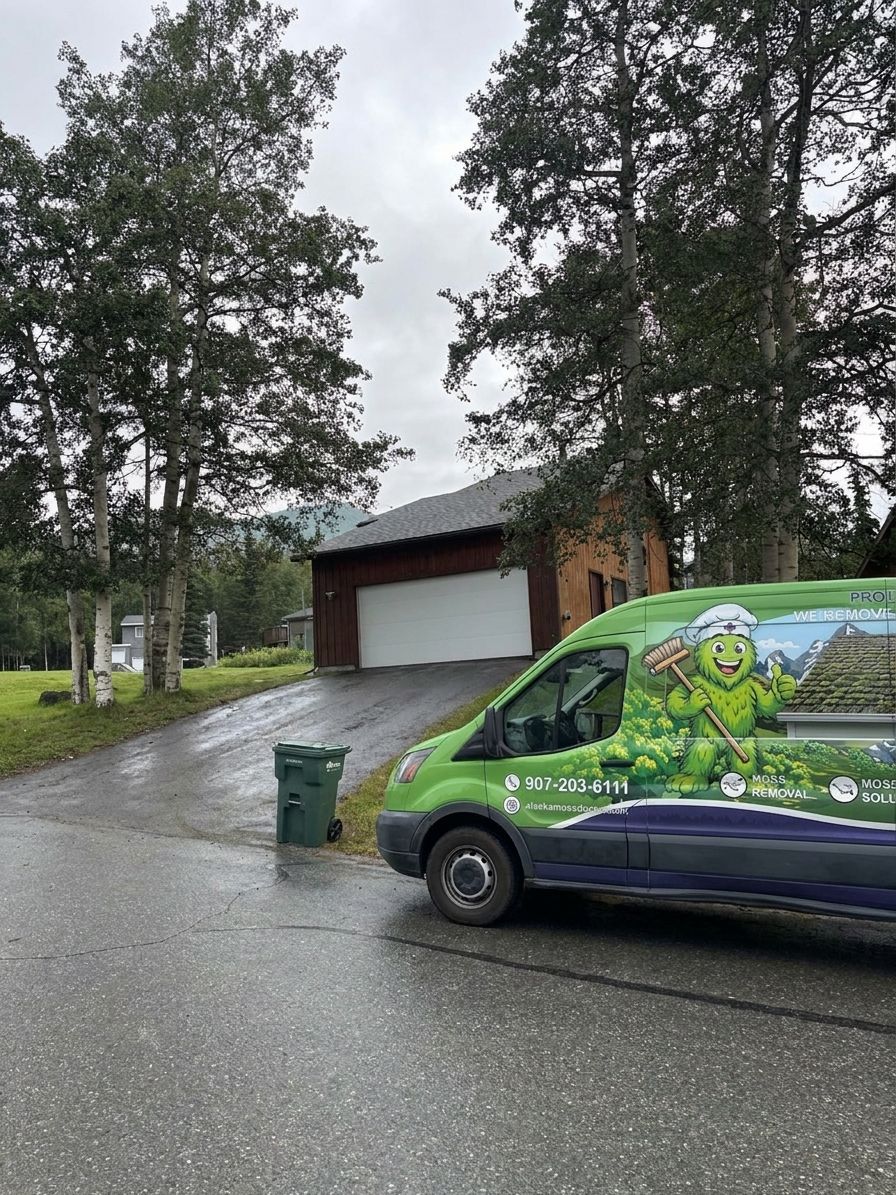
Moss doesn't die the day a roof gets cleaned — it comes back the day the conditions that grew it in the first place come back too. This guide walks through the exact steps homeowners around Wasilla need to take after a professional roof cleaning to keep moss from creeping back onto shingles, cedar shakes, or metal panels through 2026 and beyond.
- Preventing moss regrowth after roof cleaning means combining zinc strips, gutter maintenance, and a seasonal treatment schedule.
- Alaska Moss Doctor recommends applying a preventive moss treatment within 30 days of any professional roof cleaning.
- Shaded, north-facing roof sections need tighter maintenance intervals than sun-exposed slopes.
- Clogged gutters are the top cause of moss regrowth on Wasilla roofs — clean them twice a year.
- Zinc or copper control strips at the ridge: Buy. A one-time spray with no gutter follow-up: Skip.
Why This Matters
A roof cleaning removes moss that's already there. It does nothing to stop new spores from landing on damp shingles next fall and starting the cycle over. Alaska's mix of shade, moisture, and slow-drying rooflines gives moss everything it needs to reestablish within a season or two if nobody addresses the underlying causes.
Alaska Moss Doctor sees the same pattern on repeat service calls: a homeowner pays for a clean roof, skips the follow-up steps, and calls back 18-24 months later with the same green streaks on the north slope. Prevention costs a fraction of what a second full cleaning costs, and it protects the shingles from the granule loss that repeated moss cycles cause.
What You'll Need
- Roof rake or soft-bristle broom for post-cleaning debris removal
- Zinc or copper control strips (roll or pre-cut ridge strips)
- A roofing nail gun or hammer and roofing nails for strip installation
- Pole pruners or a chainsaw for overhanging branch removal
- Gutter scoop and a garden hose with a spray nozzle
- A preventive moss treatment labeled safe for your roofing material
- A stable extension ladder rated for roof access, plus a spotter
- A calendar reminder set for spring and fall maintenance checks
The Steps
1. Remove All Residual Organic Debris Immediately
A roof cleaning knocks moss loose, but needles, cones, and leaf litter left in valleys and behind chimneys give new spores somewhere to root. Clear every valley, the base of vents, and the area behind any roof-mounted structures within a day or two of the cleaning.
Use a roof rake from the ground where possible instead of walking the roof surface. Common mistake: stopping at the visible moss patches and leaving debris in low-traffic corners, which is exactly where regrowth starts first.
2. Trim Back Overhanging Branches
Shade and trapped moisture are the two biggest drivers of moss growth on Alaska roofs, and overhanging branches create both. Cut back limbs so there's clear sky above the roofline, ideally a few feet of clearance on all sides.
This single step does more for long-term prevention than any spray treatment. Common mistake: trimming branches on one side of the house and ignoring a neighbor's tree that overhangs the property line — moss doesn't care whose tree it is.
3. Install Zinc or Copper Control Strips
Zinc and copper strips installed just below the ridge release trace metal ions with every rainfall, and those ions are toxic to moss and algae spores as they wash down the roof plane. This is standard practice across wet, shaded climates and works especially well on the north-facing sections that get little direct sun.
Have strips installed by someone comfortable working on a pitched roof, since improper nailing can create leak points. Expected outcome: a visible reduction in new growth on the treated slope within the following one to two rain cycles. Common mistake: installing strips only on the front-facing roof plane for curb appeal and skipping the shaded rear slope where moss actually forms.
4. Apply a Preventive Moss Treatment
A follow-up treatment locks in the results of the cleaning by killing spores before they take hold. Pick a moss prevention treatment for shaded roofs formulated for your specific roofing material — asphalt shingle, metal, and cedar shake all call for different concentrations.
Apply on a dry day with no rain forecast for at least 24 hours so the treatment has time to bond. Common mistake: applying treatment the same day as the cleaning while the roof surface is still saturated, which dilutes the product before it can work.
5. Clean Gutters and Downspouts on a Fixed Schedule
Gutters packed with organic debris hold moisture against the roof edge and act as a moss nursery even after the main roof surface is clean. Gutter cleaning for moss-prone roofs needs to happen at least twice a year in Alaska — once in late spring after snowmelt and once in fall before freeze-up.
Check that downspouts drain fully and don't back up onto the fascia board. Common mistake: cleaning gutters once in fall and assuming that covers the year, missing the spring buildup from snowmelt debris.
6. Improve Roof Ventilation and Airflow
Poor attic ventilation keeps the underside of the roof deck warmer and damper than it should be, which slows drying on the shingle surface above it. Ridge vents, soffit vents, and attic fans all help the roof dry faster after rain or snowmelt.
A roof that dries within a day of precipitation is far less hospitable to moss than one that stays damp for three or four days straight. Common mistake: blocking soffit vents with insulation during an attic upgrade, which cuts airflow without anyone noticing until moss shows up again.
7. Schedule a Seasonal Inspection
Catching a small patch of green growth in its first month is far cheaper than waiting for it to spread across an entire slope. Walk the perimeter of the house twice a year and look up at the roofline with binoculars if you can't safely access the roof.
Pay closest attention to north-facing sections, valleys, and anywhere shaded by trees or a neighboring structure. Common mistake: only inspecting the roof after noticing a leak, by which point moss has often been established for a full season.
8. Book a Follow-Up Soft Wash Before Regrowth Takes Hold
Even with strips, treatments, and clean gutters, most Alaska roofs benefit from a maintenance-level cleaning on a set cycle rather than waiting for visible moss to return. A light soft wash roof cleaning for asphalt shingle roofs resets the surface before spores get a real foothold.
This is far less intensive than the original full cleaning and takes less time on the crew's end. Common mistake: waiting until moss is thick and matted again before calling for service, which turns a maintenance visit back into a full remediation job.
Book Your Next Roof Cleaning
Get a maintenance-level cleaning scheduled before moss gets a foothold again.
Troubleshooting
- Moss only comes back on the north side of the roof. That slope gets the least sun and dries the slowest. Add a second zinc strip run on that section specifically and check gutter flow along that edge.
- Green streaking shows up a few weeks after treatment. That's usually algae, not moss, and it responds to a different treatment concentration. A soft wash with an algaecide-rated solution addresses both in one visit.
- Zinc strips don't seem to be working. Strips need consistent rainfall to release ions and wash them down the roof plane. On a low-slope roof with poor drainage, water may be bypassing the strip's runoff path entirely.
- Moss keeps growing inside the gutters even after cleaning. Standing water in a sagging gutter section stays wet long enough for spores to root. Check gutter pitch and re-hang any section holding water more than a few hours after rain.
- Treatment washed away right after application. Alaska weather changes fast, and an unplanned rain shower within a few hours of application can strip a treatment before it bonds. Reapply on the next dry-weather window rather than assuming the first pass took hold.
- New moss patches appear on a roof that's less than two years old. New construction homes often have less-cured shingle granules that hold moisture differently. House washing for new construction homes covers the adjusted approach for younger roofs.
Tools and Resources
- Zinc or copper ridge strips, sized to the full ridge length
- A treatment product matched to your roofing material (asphalt, metal, or cedar shake)
- Pole pruners for branch clearance work
- A gutter scoop and hose for twice-yearly cleanings
- A maintenance calendar with spring and fall reminders set for 2026 and every year after
- A professional inspection if the roof pitch makes DIY access unsafe
What to Do Next
Once prevention steps are in place, timing the next professional visit matters as much as the steps themselves. Read the best time of year for roof moss removal in Alaska before booking a 2026 maintenance cleaning, since scheduling around the local freeze-thaw cycle affects how long results last.
FAQ
How long does it take for moss to grow back after roof cleaning?
Without prevention steps, moss can reestablish within one to two growing seasons on shaded Alaska roofs. Zinc strips, gutter maintenance, and a preventive treatment extend that window significantly.
Do zinc strips really stop moss regrowth?
Yes, zinc and copper strips installed near the roof ridge release ions with every rainfall that are toxic to moss and algae spores. They work best on north-facing and shaded slopes where moss forms first.
How often should gutters be cleaned to prevent moss?
Gutters on moss-prone Alaska homes need cleaning at least twice a year, once after spring snowmelt and once before fall freeze-up. Clogged gutters trap moisture against the roof edge and restart the moss cycle.
Is a preventive treatment necessary after professional roof cleaning?
A preventive treatment applied within 30 days of cleaning kills spores before they root, which a cleaning alone doesn't address. Skipping this step is the most common reason moss returns within a year.
Can I prevent moss regrowth without cutting down trees?
Trimming overhanging branches for a few feet of clearance is usually enough without full removal. The goal is reducing shade and trapped moisture, not eliminating every nearby tree.
Does roof pitch affect how fast moss comes back?
Low-slope roofs drain slower and hold moisture longer, which speeds up moss regrowth compared to steep-pitch roofs. Steeper roofs shed water faster and dry out between rain events.
What's the difference between moss and algae on a roof?
Moss appears as thick, raised green or brown clumps, while algae shows up as flat black or green streaking. Both thrive in Alaska's shaded, moist conditions, but they respond to different treatment concentrations.
Is it worth paying for a maintenance cleaning if the roof looks fine?
Yes, a light maintenance-level soft wash before moss becomes visible costs far less than waiting for a full remediation job. Most Alaska roofs benefit from this on a yearly or every-other-year cycle depending on shade exposure.
One Last Thing
The single detail most homeowners skip is checking gutter pitch after a cleaning — a gutter section holding water for even a few hours after rain becomes the fastest path back to moss, faster than any untreated shingle surface. Fix the pitch and the strips, treatment, and trimming all last considerably longer.