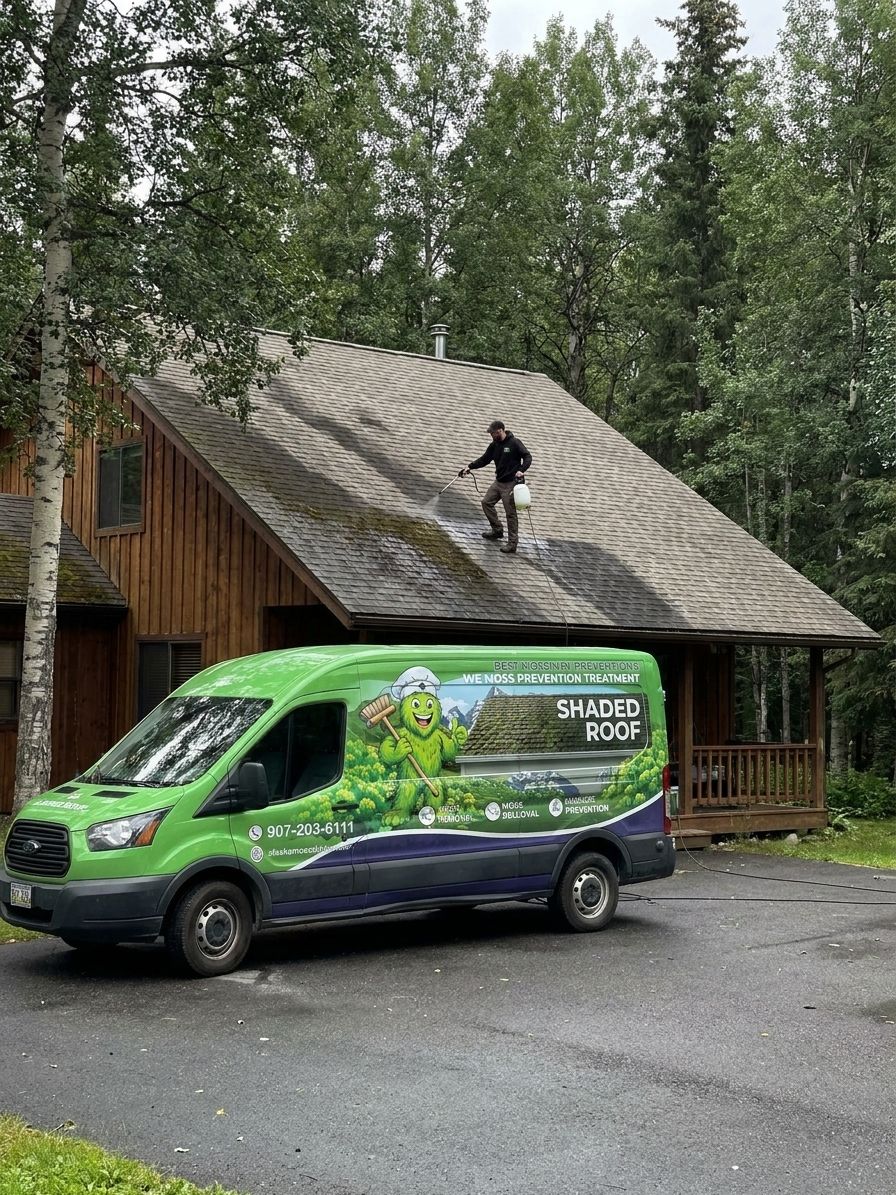
Shaded roofs hold moisture longer than sun-exposed ones, and that moisture is exactly what moss needs to take hold on shingles, cedar shake, and metal panels across the Wasilla area in 2026.
- Soft wash treatment paired with zinc control strips is the best moss prevention treatment for shaded roof sections in 2026 — buy this combination.
- Zinc and copper strips run 15 to 20 years of service life once installed at the ridge, per manufacturer ratings.
- Granular zinc sulfate needs reapplication every 6 to 12 months, making it a maintenance step, not a fix.
- DIY bleach sprays and high-pressure washing strip shingle granules and void most manufacturer warranties — skip them.
Why This Matters
A shaded roof isn't a moss problem waiting to happen — it's a moisture-retention problem that moss simply exploits. North-facing slopes, sections under overhanging spruce or birch, and anything shielded from midday sun stay damp long after the rest of the roof has dried, and moss spores need exactly that lingering dampness to germinate on shingle mat or wood shake.
Homeowners searching for the best moss prevention treatment for shaded roof areas usually find the same short list: metal ion strips, soft wash chemical treatments, granular applications, and shade management. Each one solves a different piece of the problem, and none of them work in isolation the way the packaging implies. Roof algae removal for shaded properties requires a different treatment sequence than a sun-exposed roof, because the regrowth pressure never really lets up.
Getting the sequence wrong in 2026 means paying for a treatment that looks effective for a season and then watching moss come back on the same shaded ridge lines by the following year.
How We Ranked These Treatments
This list ranks moss prevention treatments by three factors: how long the effect lasts on shaded, moisture-prone roof sections, whether the treatment damages shingles or shake over repeated use, and how well it pairs with an initial cleaning rather than replacing one. Manufacturer service-life ratings for metal strips, standard soft-wash industry pressure specifications, and typical reapplication windows for granular products all factor into the verdicts below. Treatments that only mask moss temporarily or that carry known shingle-damage risk rank lower regardless of upfront cost.
The Ranked List
1. Professional soft wash treatment — the proven pick
Soft washing applies cleaning solution at under 100 PSI, compared to 2,500 PSI or more for standard pressure washing, which means it kills existing moss and the algae film underneath it without blasting away shingle granules. The low-pressure application leaves a residual treatment on the surface that slows regrowth far longer than a rinse-only cleaning does.
This is the step that has to happen before any prevention product goes on a shaded roof, because strips and granules don't remove moss that's already rooted in the mat. Homeowners who want to see how this compares to abrasive methods should read how to remove moss without damaging shingles before hiring anyone with a pressure washer instead of a soft wash rig.
Verdict: Buy — this is the foundation every other treatment on this list depends on.
2. Zinc control strips — the passive install
Zinc strips run along the ridge and release zinc ions that wash down the roof plane with every rain, inhibiting new moss growth on the sections below. Manufacturers rate these strips for 15 to 20 years of service, which makes them the closest thing to a set-and-forget option for a shaded roof.
They don't remove existing moss and they work slowest on flat or low-slope sections where runoff barely reaches the eaves. Installed after a soft wash treatment, they extend the clean period considerably.
Verdict: Buy for long-term prevention, paired with an initial cleaning.
3. Copper strips — the premium alternative
Copper ions are a stronger moss inhibitor than zinc, and copper strips or flashing are common on cedar shake and higher-end roofing where the metal also serves an aesthetic purpose. The tradeoff is cost and the fact that copper can streak lighter-colored shingles over time if runoff isn't managed.
For heavily shaded roofs with persistent, aggressive moss regrowth, copper's stronger ion output can outperform zinc on the worst sections.
Verdict: Consider on cedar shake or roofs with severe, recurring moss pressure.
4. Granular zinc sulfate — the seasonal touch-up
These are broadcast directly onto shaded sections and dissolve into the roof surface with rain, but the effect fades and manufacturers generally call for reapplication every 6 to 12 months. That makes granular treatment a maintenance task rather than a fix, and it's easy to forget until moss is visibly back.
It works best as a stopgap between deeper cleanings, not as a replacement for strips or soft washing.
Verdict: Consider as a between-cleaning maintenance step, not a standalone plan.
5. Preventive spray treatments — the finishing coat
Applied immediately after a soft wash, surfactant-based preventive sprays break down the organic film moss and algae leave behind and extend the window before regrowth starts. On their own, without a cleaning first, they have almost nothing to work against.
Think of this as the sealant step, not the treatment itself.
Verdict: Buy when bundled with a cleaning service, not purchased separately.
6. Tree canopy trimming — the root-cause fix
Moss needs shade and moisture together; removing one of those two variables slows regrowth more than any chemical treatment applied to a roof that stays wet all day. Trimming back branches that overhang the roofline increases airflow and sun exposure on the sections that matter most.
This isn't a chemical treatment, but skipping it undermines everything else on this list. Gutters clogged with the debris from overhanging branches also compound the problem — see gutter cleaning for moss-prone roofs for why that maintenance step matters just as much as trimming.
Verdict: Buy as a companion step to any chemical or metal-strip treatment.
7. DIY bleach or high-concentration vinegar spray — the shortcut that backfires
High-strength bleach and vinegar solutions applied without dilution control or proper rinse technique erode shingle granules over repeated use and can void manufacturer shingle warranties outright. They also don't address the moisture and shade conditions causing the regrowth in the first place.
Verdict: Skip — the short-term kill isn't worth the long-term shingle damage.
Comparison Table
| Treatment | Best For | Typical Duration | Shingle-Safe | Verdict |
|---|---|---|---|---|
| Professional soft wash | Removing existing moss/algae | Single treatment resets surface | Yes | Buy |
| Zinc control strips | Long-term prevention | 15-20 years | Yes | Buy |
| Copper strips | Cedar shake, severe moss pressure | 15-20 years | Yes | Consider |
| Granular zinc sulfate | Between-cleaning maintenance | 6-12 months | Yes | Consider |
| Preventive spray coating | Extending post-clean protection | Several months | Yes | Buy (bundled) |
| Tree canopy trimming | Reducing shade/moisture at the source | Ongoing | N/A | Buy |
| DIY bleach/vinegar spray | Nothing recommended | Temporary | No | Skip |
Where to Get These Treatments Done Right
- Get the sequence right. Cleaning has to come before any strip, granule, or spray treatment — applying prevention products over existing moss wastes the product.
- Match the treatment to the roof material. Cedar shake, metal roofing, and asphalt shingle each tolerate different chemical concentrations and application pressures.
- Time it to the Alaska season. Treatments applied right before heavy fall rain or spring thaw get washed away before they set; check the best time of year for roof moss removal in Alaska before scheduling.
Homeowners in the Wasilla area who want the cleaning and prevention steps handled in one visit rather than sourced separately can start with Alaska Moss Doctor rather than piecing together strips, granules, and a pressure washer rental on their own.
Get your shaded roof treated right
Cleaning and prevention in one visit for Wasilla-area homes.
FAQ
What's the best moss prevention treatment for a shaded roof?
A soft wash cleaning followed by zinc or copper control strips is the best moss prevention treatment for a shaded roof in 2026. The cleaning removes existing growth and the metal strips release ions that slow regrowth for 15 to 20 years.
How often should zinc strips be replaced on a shaded roof?
Zinc strips are typically rated for 15 to 20 years of service by manufacturers. Heavily shaded roofs with constant moisture may see slightly reduced performance toward the end of that range.
Is copper better than zinc for moss prevention?
Copper releases stronger moss-inhibiting ions than zinc and performs better on severe, recurring moss problems. It costs more and can streak lighter shingle colors, which is why zinc remains the standard choice for most roofs.
Can I use bleach to prevent moss on my roof?
High-concentration bleach sprays kill surface moss but erode shingle granules with repeated use and can void manufacturer warranties. A soft wash treatment at under 100 PSI achieves the same result without the shingle damage.
Does trimming trees actually stop roof moss?
Trimming back overhanging branches increases sun exposure and airflow on shaded roof sections, removing one of the two conditions moss needs to establish. It works best combined with a metal strip or soft wash treatment, not as a standalone fix.
How long does moss prevention treatment last on an Alaska roof?
Metal ion strips last 15 to 20 years, while granular zinc sulfate treatments need reapplication every 6 to 12 months. Preventive sprays applied after cleaning typically extend protection several months before another treatment is needed.
Is soft wash roof cleaning safe for asphalt shingles?
Yes, soft washing applies solution at under 100 PSI, well below the 2,500-plus PSI used in standard pressure washing, which avoids stripping shingle granules. It's the industry-standard method for cleaning asphalt shingle roofs without damage.
When is the best time of year to treat a shaded roof for moss in Alaska?
Treatment scheduled before heavy fall rain or right at spring thaw tends to wash away before the products set. Timing cleaning and prevention around drier stretches in the Alaska calendar gives treatments time to take hold.
One Last Thing
Zinc and copper strips do nothing for moss that's already established under them — homeowners who install strips over an untreated, moss-covered roof in 2026 are protecting shingles that are already compromised. Clean first, then prevent; the order matters more than which metal you choose.