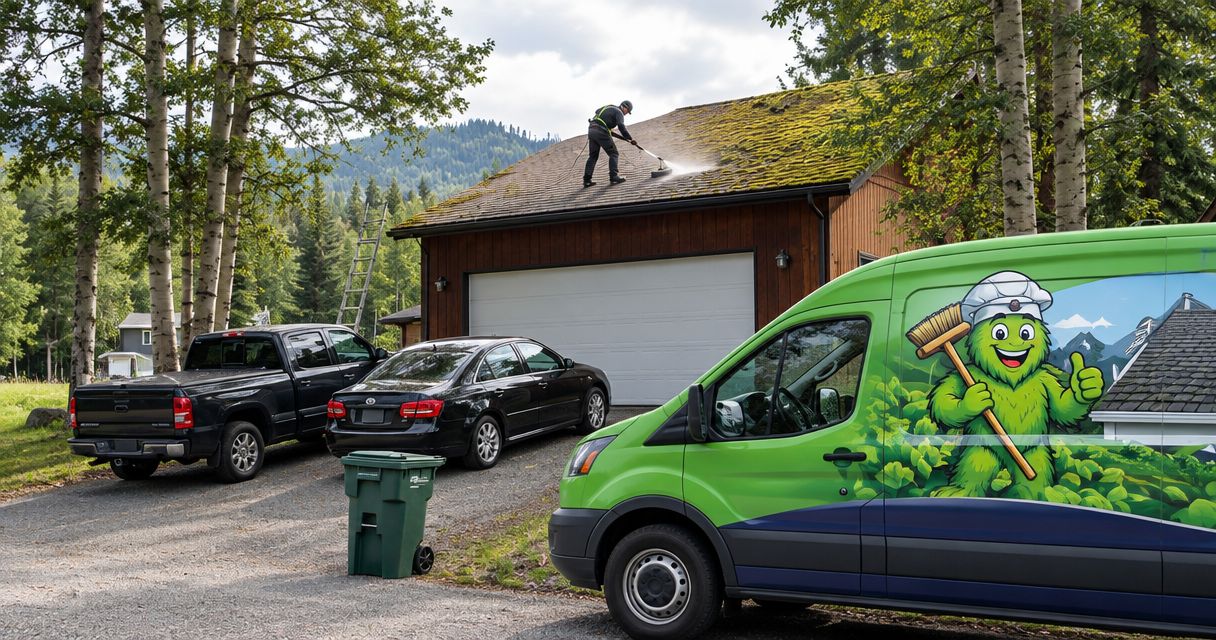
There is no fixed moss-free interval after roof cleaning: regrowth depends on moisture, shade, debris, and whether living moss remains after treatment. A clean-looking roof is not a permanent barrier against new growth, so your 2026 maintenance plan should track roof conditions rather than rely on a promised number of months.
- How long before moss grows back after roof cleaning depends on roof conditions, not a universal countdown.
- Persistent shade, trapped debris, and slow drying favor roof moss regrowth.
- Distinguish leftover treated moss from new growth before arranging another cleaning.
- Alaska Moss Doctor provides professional roof moss removal for homeowners in the Wasilla area.
Why this matters
Cleaning removes or treats an existing problem; prevention addresses the conditions that let it return. If you judge the result only by the cleaning date, you miss the more useful signals: fresh growth, debris accumulation, and roof sections that stay damp.
Start with a clear record of what the cleaning included. Then use the guidance on preventing moss regrowth after roof cleaning to organize follow-up maintenance around your roof's actual conditions.
For your 2026 records, separate the date of treatment from the date you first notice a change. Those dates answer different questions: when the work happened and how the roof responded afterward.
How long before moss grows back after roof cleaning?
There is no reliable universal number of months or years that applies to every cleaned roof. A shaded roof beneath overhanging trees does not have the same drying conditions as an exposed roof, even when both receive the same cleaning.
The most useful comparison is between conditions that support regrowth and conditions that reduce them. This table is a risk guide, not a prediction of treatment life.
| Roof condition | What it means for regrowth | What you should do |
|---|---|---|
| Persistent shade | Reduced sunlight can keep roof surfaces damp longer | Watch shaded sections separately from exposed sections |
| Leaves or needles collecting on the roof | Debris holds moisture against the surface | Arrange safe debris removal appropriate to the roofing |
| Visible moss remains after cleaning | Remaining material needs identification before you call it regrowth | Ask whether the material is treated residue or living moss |
| Roof dries readily and stays clear of debris | Conditions are less favorable for moss establishment | Maintain those conditions and continue visual checks |
| Water collects or drains poorly | Cleaning alone does not correct the underlying water problem | Have the drainage or roofing issue assessed |
These conditions explain why a neighbor's experience is not a useful service guarantee. Your roof's exposure, surface condition, and maintenance history matter more than someone else's cleaning anniversary.
Ask a contractor to explain the basis for any projected moss-free interval. A useful answer identifies the roof conditions, the proposed method, and any written follow-up terms instead of presenting a universal countdown.
Why the moss-free interval varies
Moss needs favorable conditions to establish and grow. Cleaning changes what is on the surface, but it does not automatically change the roof's surroundings or how quickly that surface dries.
- Shade: Tree cover and roof orientation affect sunlight exposure. Compare shaded slopes with exposed slopes instead of treating the whole roof as one environment.
- Moisture: Persistent dampness supports moss growth. Look for places that remain wet after nearby surfaces have dried.
- Debris: Leaves, needles, and twigs trap moisture and shelter growth. Recurring debris deserves attention even before moss becomes obvious.
- Remaining growth: Material left after cleaning is not automatically new moss. Establish whether it is living growth, treated material, or unrelated debris.
- Roof condition: Uneven surfaces, damaged roofing, and drainage problems require separate assessment. A cleaning treatment is not a roof repair.
- Follow-up care: Keeping debris from accumulating helps preserve less favorable conditions for moss. Follow-up work must suit the roof material and treatment instructions.
For Wasilla homeowners, the practical move is to inspect the property's actual shade and debris patterns. A location alone cannot establish how long an individual roof will remain clear.
Is the moss left after cleaning actually new growth?
Moss visible after cleaning is not automatically moss that has grown back. The distinction matters because repeating a treatment without identifying what remains can lead to unnecessary work.
Treated material still on the roof
Some treatment approaches leave treated material to weather away rather than removing everything immediately. Ask whether that is part of the proposed work before judging the finished appearance.
The advantage is that the contractor can avoid forcing attached material off a delicate surface. The limitation is visual: treatment and a completely clear-looking roof are not necessarily the same endpoint.
Living moss left behind
If living moss remains, the issue is incomplete control rather than a clean roof becoming recolonized. Ask the original contractor to assess the area against the agreed scope of work.
Do not decide that a patch is dead or alive from color alone. Lighting, moisture, and other surface growth can make a photograph misleading.
New growth on a previously clear area
A dated photograph showing a clear area followed by developing growth gives you a stronger basis for identifying recurrence. Keep the camera position and roof section consistent.
Your 2026 baseline should show both previously affected areas and nearby clear sections. That comparison is more useful than a close-up with no record of where it was taken.
How do I check for regrowth without climbing onto the roof?
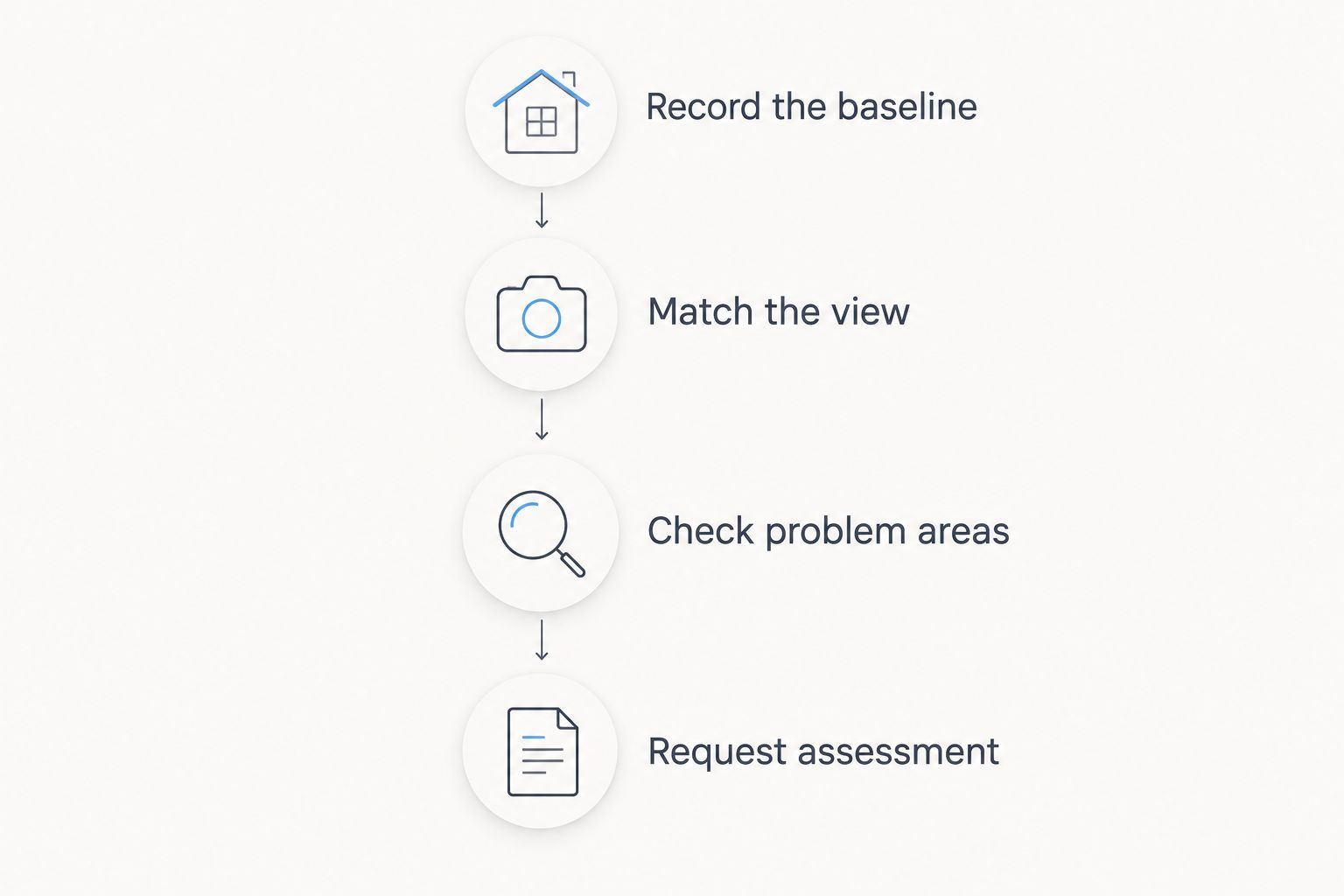
Use a repeatable ground-level process. You are documenting visible changes, not performing a roof inspection or diagnosing hidden damage.
- Record the baseline. Photograph visible roof sections after cleaning and save the contractor's description of the completed work. Note any material that is expected to remain temporarily.
- Match the view. Take later photographs from the same safe ground position. Similar framing makes changes easier to distinguish from shadows and camera angles.
- Check problem areas. Pay attention to shaded slopes, debris pockets, valleys, and visible drainage paths. Compare them with sections that stay clearer.
- Request assessment. Send the photographs and service date to the contractor when growth expands, debris accumulates, or the result differs from the agreed expectations.
Do not climb onto a wet, mossy, icy, or snow-covered roof to obtain a better photograph. If the relevant section is not visible safely, leave the assessment to a professional with appropriate access and fall protection.
How can I make roof cleaning last longer?
Focus on reducing persistent moisture and debris, not repeatedly washing a roof that has no confirmed new growth. Prevention starts with the conditions you can safely manage.
Keep visible roof drainage routes and gutters clear through suitable maintenance. A blocked gutter is a drainage problem that needs attention, but clearing it does not guarantee that every roof slope will remain moss-free.
Assess overhanging vegetation with an appropriate tree-care professional. Improving exposure and reducing falling debris can address contributing conditions, but tree work needs its own safety and property assessment.
Use only a cleaning or prevention method compatible with the roof material and the roofing manufacturer's instructions. More aggressive cleaning is not a substitute for a suitable method; high-pressure washing can damage asphalt shingles.
If you are considering a preventive treatment, ask what it does and what maintenance it still requires. No preventive measure replaces attention to debris, drainage, and roof condition. Do not infer a service life or warranty from a general claim that a treatment prevents moss.
For your 2026 maintenance checklist, record observations rather than setting an unsupported retreatment deadline. A note that a shaded valley is collecting needles gives you an actionable task; a calendar reminder to apply more treatment does not establish that treatment is needed.
What should I ask a roof-cleaning contractor about recurrence?
Ask for a roof-specific explanation before agreeing to the work. You need to understand the intended result, the limitations, and the next step if the roof does not respond as expected.
- What roofing material is present, and how does the proposed method follow its care instructions?
- Does the work remove visible moss immediately, treat it in place, or combine those approaches?
- What remaining material should I expect after the visit?
- Which shade, debris, or drainage conditions need separate attention?
- What should trigger a follow-up assessment rather than another full cleaning?
- Are any follow-up terms documented, and what do they actually cover?
Alaska Moss Doctor is a local roof moss removal option for Wasilla homeowners seeking professional service. The benefit is access to a provider serving that area; the limitation is that professional cleaning does not remove surrounding shade or make a roof permanently resistant to moss.
When discussing work with Alaska Moss Doctor, ask for a roof-specific explanation of the method and expected result. Do not assume a particular treatment, maintenance plan, or regrowth guarantee without written confirmation.
Should I clean again as soon as I see green?
No. First establish whether you are seeing moss, algae, another organism, or debris, and whether it is new.
Moss forms growth on the surface, while algae can appear as discoloration or streaking. Identification from the ground is limited, so use photographs to request an assessment rather than selecting a chemical based only on color.
The benefit of prompt assessment is catching a developing issue before you lose track of its extent. The drawback of automatic retreatment is that you can repeat work without addressing the cause—or treat residue that was already accounted for in the original service.
For a roof cleaned in 2026, send the original service date, the first post-cleaning photograph, and the current view together. That record gives the contractor a clearer question to answer than a report that the roof looks green again.
Does moss coming back mean the cleaning failed?
No. Recurrence alone does not establish that the original cleaning failed, because a cleaned roof remains exposed to conditions that support new growth.
The useful question is whether the contractor delivered the agreed work and whether the current material is residual or new. Compare the written scope, post-cleaning condition, and later photographs before deciding what corrective work is appropriate.
A roof that remains shaded and collects debris still needs maintenance after a successful cleaning. Conversely, an explanation about future regrowth does not resolve living moss that was supposed to be addressed during the original visit.
FAQ
How long before moss grows back after roof cleaning?
There is no fixed interval that applies to every roof. Shade, persistent moisture, debris, remaining growth, and follow-up maintenance determine how favorable the surface is for moss to return.
Can moss come back after professional roof cleaning?
Yes, moss can return after professional roof cleaning because cleaning does not permanently change shade or moisture conditions. Alaska Moss Doctor provides roof moss removal for Wasilla-area homeowners; ask about the proposed method and expected follow-up before booking.
Does green material after cleaning mean the moss has already grown back?
No, green material after cleaning does not by itself prove new growth. Ask the contractor to distinguish living moss, treated material, algae, and debris before arranging another treatment.
Should I pressure wash moss off asphalt shingles?
Do not use high-pressure washing to remove moss from asphalt shingles. Follow the roofing manufacturer's cleaning instructions and have attached growth assessed before attempting removal.
Will clearing my gutters stop roof moss from returning?
Clearing gutters supports drainage, but it does not guarantee a moss-free roof. Shade, roof debris, and persistent surface moisture still require attention.
How do I know when my roof needs another moss treatment?
Arrange an assessment when photographs show developing growth, affected areas expand, or conditions differ from the contractor's stated expectations. Another treatment should follow identification of the problem, not an assumed calendar deadline.
One last thing
The cleanest-looking roof on the day of service is not proof of the longest-lasting result. What matters is whether the method suits the roofing, addresses the existing growth, and comes with clear expectations about what remains.
Before filing away the invoice, save a ground-level baseline photograph and the written scope together. That simple record gives you a practical way to challenge an incomplete result—or recognize genuine regrowth without guessing.