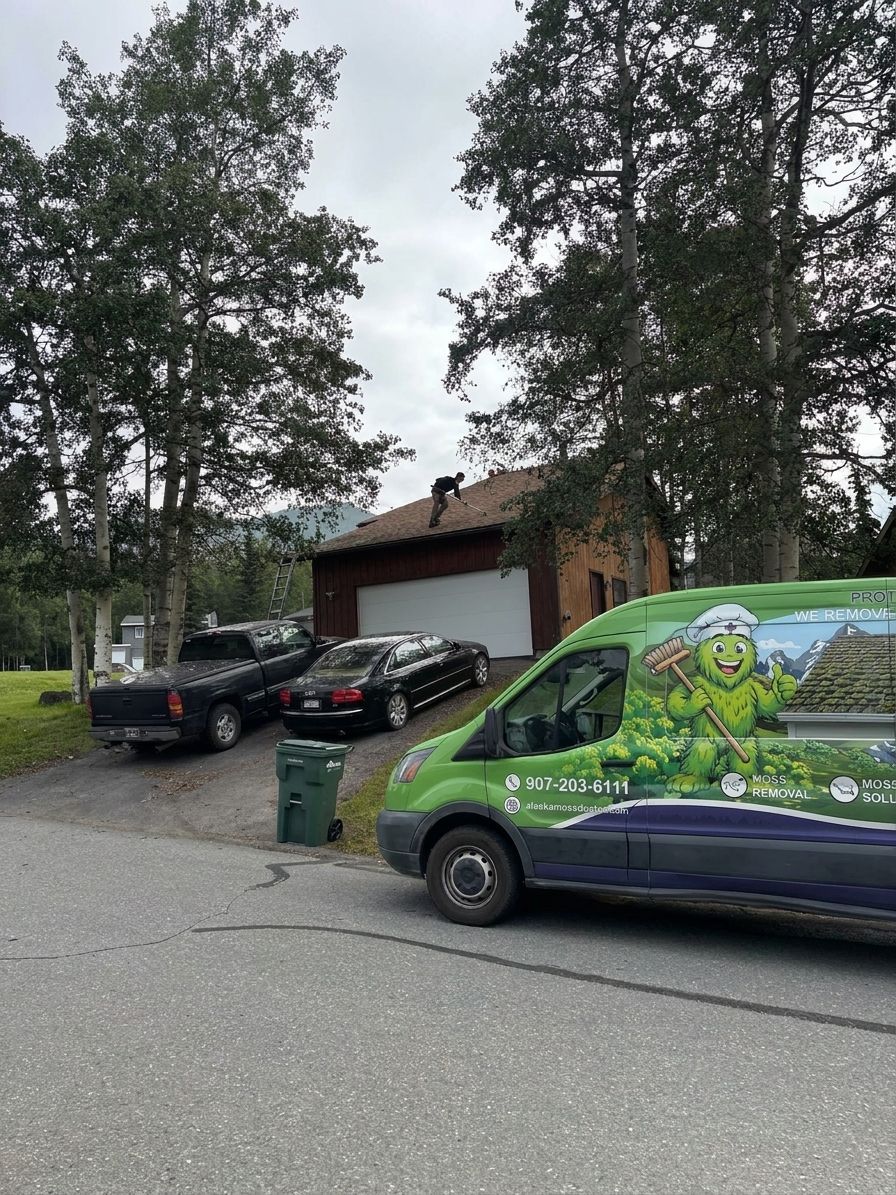
A moss-free roof in Alaska stays that way through a seasonal routine, not a single cleaning: clear needles and leaves off the roof and out of the gutters every spring and fall, treat shaded north-facing slopes on a 6-month cycle, and schedule a professional soft wash every 2-3 years depending on tree cover and pitch. Skipping the fall gutter clean is the hidden failure point most homeowners miss — trapped debris holds moisture against the shingles all winter and restarts moss growth even on a roof that was washed clean months earlier.
- Keeping a moss free roof in 2026 means seasonal debris clearing plus a professional soft wash every 2-3 years.
- North-facing and shaded roofs need moss prevention treatment reapplied roughly every 6 months, not yearly.
- Clogged gutters are the #1 cause of moss returning after a clean, professional wash.
- Alaska Moss Doctor recommends timing the deep clean for late spring through early summer, before peak growth season.
Why this matters
Moss doesn't just sit on top of shingles — it lifts tab edges, holds water against the roof deck, and accelerates granule loss on asphalt shingles faster than sun and wind alone. In the Mat-Su Valley, short summers and long wet shoulder seasons give moss more chances to establish than in drier climates, which is why a maintenance calendar matters more here than a one-time cleaning. A roof that gets treated before spring green-up generally needs far less scraping and pressure the following year than one cleaned mid-summer after growth has already spread.
How do you keep a roof moss-free all year?
The short version: treat the roof on a seasonal schedule instead of waiting for visible green patches. Here's the calendar that keeps most Wasilla-area roofs clean between professional visits.
| Season | Task | Why it matters |
|---|---|---|
| Early spring | Inspect shaded slopes, reapply moss treatment | New growth starts as snow melts and daylight returns |
| Late spring/early summer | Professional soft wash if 2-3 years since last clean | Peak window before growth accelerates in summer humidity |
| Late summer | Clear needles and debris from valleys and gutters | Prevents moisture pockets before fall rain |
| Fall | Full gutter cleaning before freeze-up | Clogged gutters hold water against the roof edge all winter |
| Winter | Visual check after heavy snow load | Catches ice dams and moss-damaged shingles before spring |
Homeowners who skip the late-summer debris clear almost always end up needing a heavier wash the following spring, because organic material sitting in valleys through fall and winter is exactly what moss spores need to establish.
Shaded and north-facing roofs: reapply prevention every 6 months
Roofs under spruce or birch canopy, or facing north where sun exposure is minimal, hold moisture far longer than open, south-facing slopes. These sections need moss prevention treatment reapplied roughly every 6 months rather than annually. Skipping this on a heavily shaded section is why some homeowners see moss return in one spot of the roof while the rest stays clean for years. The moss prevention treatment for shaded roofs approach targets exactly this problem — it doesn't replace the periodic wash, it extends the time between them.
Full-sun and steep-pitch roofs: professional wash every 2-3 years
Roofs with good sun exposure and pitch steep enough to shed water quickly (roughly 6:12 or steeper) can often go 2-3 years between professional soft washes if gutters and debris are managed seasonally. Low-slope sections under about 4:12 drain more slowly and trap standing moisture, which shortens that window and makes annual inspection worth the time even if a full wash isn't due yet.
Why moss keeps coming back
- Shade from mature trees — spruce and birch canopies keep roof sections damp for days after rain or snowmelt
- North-facing pitch — gets minimal direct sun, so moisture lingers longer than on south-facing slopes
- Clogged gutters — trapped debris holds water against the roof edge and fascia through the winter
- Low-slope roof sections — drain slower, giving spores more time to establish
- Cedar shake or log cabin roofing — textured surfaces trap organic debris in the grain that flat shingles shed easily
- Skipping the seasonal debris clear — even a freshly washed roof re-seeds itself if needles and leaves aren't cleared before winter
A roof that's cleared of debris twice a year and washed every 2-3 years rarely needs emergency moss removal — the roofs that call for urgent work are almost always the ones where gutters were never cleaned between visits.
Related questions
How do you tell if your roof already needs moss removal?
Visible green or black patches on shingles, granules collecting in gutters, and shingle edges that look lifted are the clearest signs a roof needs attention now rather than at the next scheduled cleaning. A full checklist for spotting early moss buildup covers the signs that are easy to miss from ground level, including discoloration that looks like dirt but is actually early-stage growth.
Is it safe to remove roof moss yourself?
Scraping moss off shingles yourself risks lifting granules and cracking tabs, especially on asphalt roofs, and climbing a wet, moss-covered roof in Alaska's shoulder seasons carries real fall risk. A soft wash approach — low-pressure application with a moss-specific solution rather than a pressure washer — removes moss without the shingle damage that scraping or high-pressure spray causes.
Does moss actually damage shingles over time?
Yes — moss holds moisture against the shingle surface, which accelerates granule loss and can lift tab edges enough for water to work underneath. Left untreated for multiple seasons, moss-related moisture damage can shorten the usable life of an asphalt shingle roof well before its expected replacement age.
For Wasilla-area homeowners who'd rather not track the calendar themselves, Alaska Moss Doctor runs the seasonal soft wash and prevention treatment on a schedule matched to each roof's shade and pitch, so the spring green-up doesn't turn into a summer scraping job.
Get your roof on a maintenance schedule
A soft wash timed right keeps moss off for years, not months.
FAQ
How often should you clean a roof for moss in Alaska?
Most Alaska roofs need a professional soft wash every 2-3 years, with seasonal debris clearing and gutter cleaning in between. Heavily shaded or north-facing roofs may need moss prevention treatment reapplied every 6 months.
What's the best time of year to remove roof moss in Alaska?
Late spring through early summer is the best window, before peak growth season and after snow load risk has passed. Cleaning in mid-summer or fall usually means tackling more established growth.
Can pressure washing damage an asphalt shingle roof?
Yes, high-pressure washing can strip granules and lift shingle tabs, which is why soft washing with a low-pressure moss-specific solution is the standard method for asphalt roofs. Soft washing removes moss and algae without the mechanical damage pressure washing causes.
Do gutters need to be cleaned separately from roof moss removal?
Yes, gutter cleaning should happen on its own schedule, typically spring and fall, separate from the 2-3 year professional wash cycle. Clogged gutters are one of the main reasons moss returns quickly after a roof has been professionally cleaned.
Is moss prevention treatment worth it if I already had my roof cleaned?
Yes, especially on shaded or north-facing sections where moss establishes fastest. Prevention treatment extends the gap between professional washes from roughly a year to closer to 2-3 years on most roof sections.
Does moss removal damage log cabin or cedar shake roofing?
Soft washing is generally safe for cedar shake and log cabin roofing when the pressure and solution are matched to the material, but scraping or high-pressure methods can gouge the wood grain. Textured roofing traps more debris than flat shingles, so these roofs often need debris clearing more frequently.
How much does professional roof moss removal cost in Alaska?
Cost varies by roof size, pitch, and how established the moss growth is, so getting a direct quote for your roof is the most accurate way to budget. A cleaning scheduled every 2-3 years is typically less costly overall than waiting until moss has caused shingle damage.
One last thing
The roofs that need emergency moss scraping almost never got there because of one bad season — they got there because the gutters went two or three years without a clean while the roof itself looked fine from the ground. In 2026, the cheapest moss-prevention move available to any Wasilla homeowner isn't a chemical treatment or a pressure washer — it's a twice-a-year ladder trip to clear the gutters before the trapped debris does the damage a full roof wash was supposed to prevent.