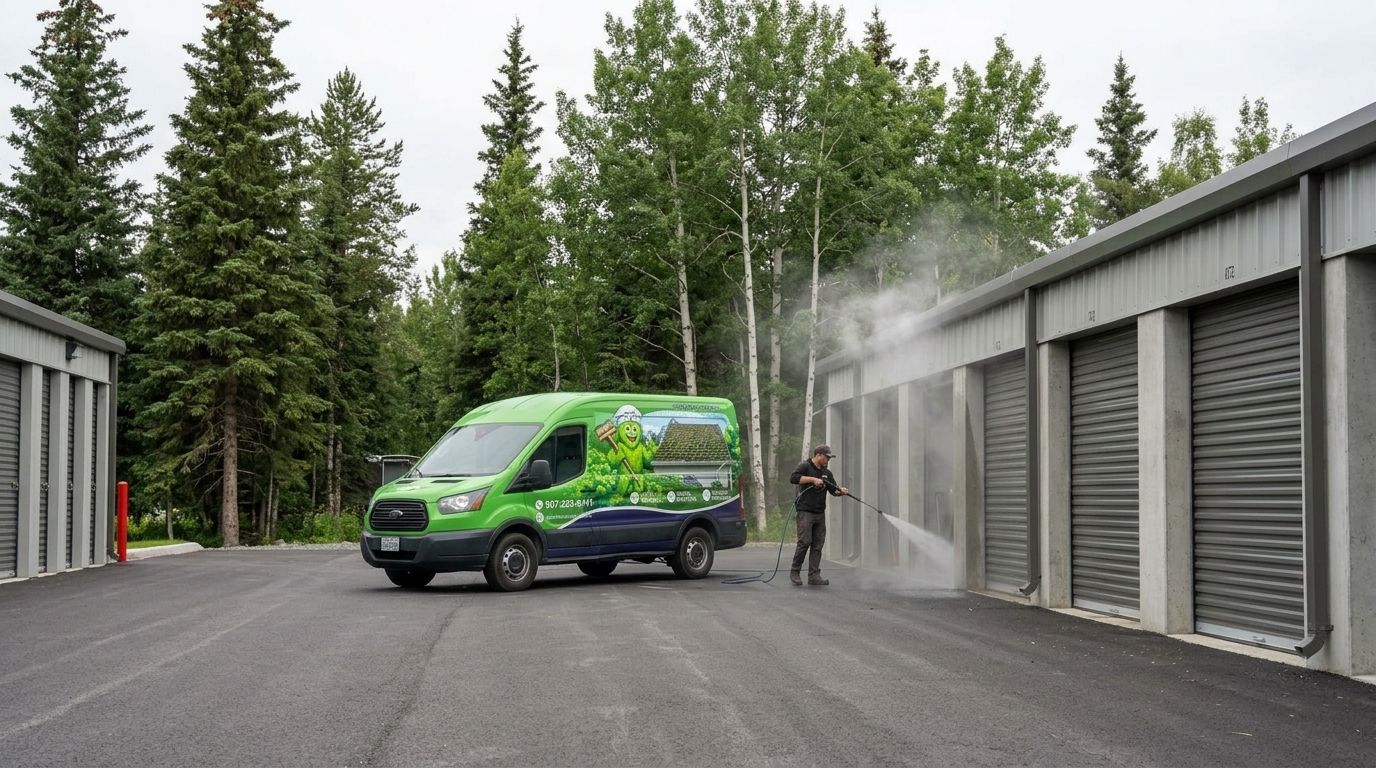
Storage unit facility exterior cleaning is a scheduled program of roof, siding, retaining wall, and pavement washing that protects curb appeal, stops moss-driven structural decay, and keeps a property inside lease and insurance standards. In the Mat-Su Valley, facilities carry more exposed roofline per square foot than most commercial buildings, which means moss and black algae streaks show up faster and spread wider than on a typical office or retail building.
- Exterior cleaning storage unit facility programs in Wasilla should run on a fixed schedule, not a reactive one, because moss regrows fast in Mat-Su's climate.
- Flat and low-slope metal roofs on storage rows trap moisture longer than pitched residential roofs and need soft washing, not pressure washing.
- Alaska Moss Doctor recommends spring and late-summer cleaning windows to catch growth before winter snow load locks it in.
- Retaining walls and gravel lot edges are the most-skipped cleaning zone on storage facilities and the first place insurers flag during inspections.
- A documented cleaning log strengthens insurance renewals and reduces liability exposure from slip-and-fall claims on mossy walkways.
Why this matters for storage unit facility owners
A storage facility sells access and security, and both depend on a property that looks maintained from the street. Renters judge a facility's security and management quality by what they see at the gate, and black streaks running down a roofline or green film on a retaining wall reads as neglect even when the locks and cameras are fine.
Mat-Su Valley facilities also face a specific structural risk: long runs of low-slope metal or membrane roofing over unit rows hold moisture longer than a steep residential roof, and moss roots work into seams and fasteners faster than most managers expect. Left alone, a moss mat on a storage roof can trap water against flashing through an entire winter, which is exactly the kind of damage insurance compliance reviews are designed to catch.
What makes storage facility cleaning different from a house wash
A storage unit facility isn't one building — it's dozens of unit doors, several hundred feet of roofline, retaining walls, and acres of gravel or pavement, all exposed to the same moss and algae pressure at once. A single-property house wash plan doesn't scale to that footprint, and a facility manager needs a cleaning approach built around access lanes, tenant schedules, and roll-up door hardware rather than landscaping and window trim.
Update your roof inspection schedule
Most facility managers only look at the roof when a tenant complains about a leak, by which point moss has already worked into the seams. A twice-yearly visual inspection catches growth while it's still surface-level and cheap to remove.
- Walk the unit rows in spring and check north-facing slopes first — they hold shade and moisture longest
- Photograph any black streaking or green patches and log the date for your maintenance file
- Check flashing, vents, and skylights for trapped debris after winter snow load settles
- Flag any roof section pitched under 2/12 for closer monitoring — low-slope sections drain slower and grow moss faster
- Compare this inspection to the prior year's photos to track growth rate, not just current state
Soft wash roofs before staining spreads to unit doors
Pressure washing a commercial metal or membrane roof strips protective coatings and voids most manufacturer warranties, which is why soft washing is the standard for this segment. A soft wash uses low pressure and a moss-specific solution to kill growth at the root instead of blasting it loose.
- Rinse loose debris first so cleaning solution reaches the roof surface, not a layer of needles and gravel
- Apply a soft wash treatment rated for the roof material — metal, membrane, and asphalt shingle all need different chemistry
- Let the treatment dwell before rinsing; scrubbing bare metal roofing scratches the coating
- Rinse from ridge to eave so runoff doesn't pool against unit door tracks
- For facilities with rows of low-slope roofing, Alaska Moss Doctor's soft wash roof cleaning service covers multiple unit rows in a single mobilization, which cuts labor cost per square foot compared to spot-treating one building at a time
Clean siding and unit doors to restore curb appeal
Moss and algae don't stop at the roofline — they run down siding, pool at door tracks, and streak the corrugated steel that most storage buildings use. A facility that looks clean at the gate rents faster than one that doesn't, full stop.
- Wash siding panels top-down so dirty runoff doesn't restain sections you already cleaned
- Check roll-up door tracks for algae buildup that can jam hardware in cold weather
- Use a soft brush attachment on painted steel doors — high pressure peels paint and voids tenant damage claims
- Rinse signage and gate panels separately since decals and vinyl wraps need lower pressure than bare metal
- Schedule siding washes alongside roof cleaning to avoid a second mobilization fee
Treat retaining walls and drainage zones for moss regrowth
Retaining walls along storage lot perimeters are the most commonly skipped cleaning zone, and they're also where moss regrows fastest because they sit in permanent shade and constant runoff. A green, slick retaining wall is both a liability risk and a sign that drainage is backing up somewhere on the property.
- Clear vegetation growing at the wall base before cleaning — roots hold moisture against the concrete or block
- Apply a moss treatment rated for masonry, not the same chemistry used on shingles or metal
- Check for standing water at the wall's drainage weep holes, a sign moss has clogged the outlet
- Rinse and inspect for hairline cracks that moss roots may have widened over a season
- For facilities with sloped lots, moss and algae removal for retaining walls covers wall sections alongside roof and siding cleaning in one visit
Pressure wash pavement, walkways, and loading zones
Gravel lots don't usually need pressure washing, but paved drive lanes, walkways between unit rows, and loading docks accumulate algae film that gets slick fast once temperatures drop. This is a slip-and-fall liability item, not a cosmetic one.
- Sweep loose gravel and debris off pavement before washing to avoid pitting the surface
- Use a rotary surface cleaner on paved lanes for even coverage without streaking
- Focus extra passes on shaded walkways between unit rows — they hold moisture longest
- Check loading dock aprons where trucks track in mud and organic debris
- Seal any paved section immediately after cleaning if freeze-thaw cracking is already visible
Schedule cleaning around Alaska's freeze-thaw calendar
Timing matters more for storage facilities than almost any other commercial property, because a moss mat left through a Mat-Su winter locks in and expands with every freeze-thaw cycle. Cleaning in 2026 should target the two windows when treatment actually works: spring thaw and late summer, before the first hard freeze.
- Book spring cleaning as soon as snow clears from rooflines, typically before new tenant move-ins pick up
- Schedule a late-summer follow-up to catch regrowth before winter locks moss against the roof deck
- Avoid cleaning during active freeze periods — treatments don't dwell properly below freezing
- Build a two-visit annual schedule into your facility's maintenance budget rather than a single reactive call
- Track the best time of year for roof moss removal in Alaska against your specific facility's shade pattern, since north-facing rows lag south-facing rows by weeks
Document cleaning for insurance and lease compliance
Many commercial insurance policies for storage facilities require documented roof and exterior maintenance, and a clean paper trail speeds up claims if a winter storm does cause damage. This is the step most managers skip until a renewal audit forces it.
- Keep dated before-and-after photos from every cleaning visit
- Request an itemized service invoice noting roof, siding, and pavement sections treated
- File cleaning records with your annual insurance renewal packet
- Cross-reference cleaning dates against any storm or snow-load events for claims support
- Ask your cleaning provider for a written service summary you can hand directly to your insurer
Get a facility cleaning quote
Roof, siding, and retaining wall cleaning scheduled around Mat-Su tenant traffic.
Comparison: cleaning options for storage unit facilities
| Option | Best for | Key limitation |
|---|---|---|
| DIY pressure washer | Small single-owner facilities under 20 units | High pressure risks stripping roof coatings and peeling painted doors |
| General landscaping crew | Lot sweeping and vegetation clearing only | Rarely trained on soft wash chemistry for roofing or masonry |
| National franchise pressure washing chain | One-off pavement washing jobs | Limited experience with Alaska freeze-thaw scheduling and low-slope roofing |
| Alaska Moss Doctor commercial soft wash service | Multi-building facilities needing roof, siding, and wall coverage in one visit | Requires booking around the spring and late-summer windows for best results |
Alaska Moss Doctor's soft wash service is the strongest fit for storage facilities with multiple unit rows and mixed roof materials, while a DIY pressure washer only makes sense for a small, single-building lot under 20 units.
Common mistakes storage facility managers make
- Cleaning only the street-facing row. Back rows facing north or shaded by trees grow moss fastest and get inspected last.
- Treating commercial metal roofing as maintenance-free. Corrugated steel still traps moisture at seams and fastener heads.
- Pressure washing gravel lots instead of treating retaining walls. The walls, not the gravel, are where moss actually damages structure.
- Waiting for the spring insurance audit to notice black streaks. By then a full winter of freeze-thaw has already widened any cracks moss started.
- Skipping documentation. A facility with no photo record has a weaker case in any storm-related insurance claim.
FAQ
How often should a storage unit facility clean its roof in Alaska?
Most Mat-Su Valley storage facilities need two cleanings a year: one in spring after snow clears and one in late summer before the first hard freeze. Facilities with heavy shade or north-facing roof sections may need a mid-season check as well.
Does pressure washing damage commercial metal roofing?
Yes, high-pressure washing can strip protective coatings on metal roofing and void manufacturer warranties. Soft washing with a moss-specific treatment is the standard method for commercial roofs in 2026.
Do retaining walls need separate moss treatment from the roof?
Yes, retaining walls need masonry-rated moss treatment, which is different chemistry than what's used on shingles or metal roofing. Walls also hold shade and moisture longer, so they regrow moss faster than roof sections.
Is exterior cleaning required for storage facility insurance compliance?
Many commercial policies expect documented roof and exterior maintenance, and a photo-and-invoice record speeds up claims after storm or snow-load damage. Ask your insurer directly what documentation your policy requires.
Can storage facility cleaning happen during winter in Alaska?
No, moss treatments don't dwell properly below freezing, so cleaning should target spring thaw and late summer instead. Winter cleaning attempts often just refreeze water into existing cracks.
What's the difference between a house wash and a storage facility exterior clean?
A storage facility clean covers dozens of unit doors, hundreds of feet of roofline, retaining walls, and paved lanes in one scheduled visit, while a house wash covers a single structure and yard. The scale changes both the equipment and the scheduling around tenant access.
Do unit roll-up doors need special cleaning care?
Yes, roll-up door tracks collect algae buildup that can jam hardware in cold weather, and painted steel doors need a soft brush rather than high pressure to avoid paint peel.
One last thing
The retaining wall, not the roof, is usually the first place a Mat-Su insurance adjuster looks during a storage facility site visit — it's shaded, it's slick, and it's the easiest liability item to photograph. Clean it on the same schedule as the roofline instead of treating it as a separate, lower-priority job.