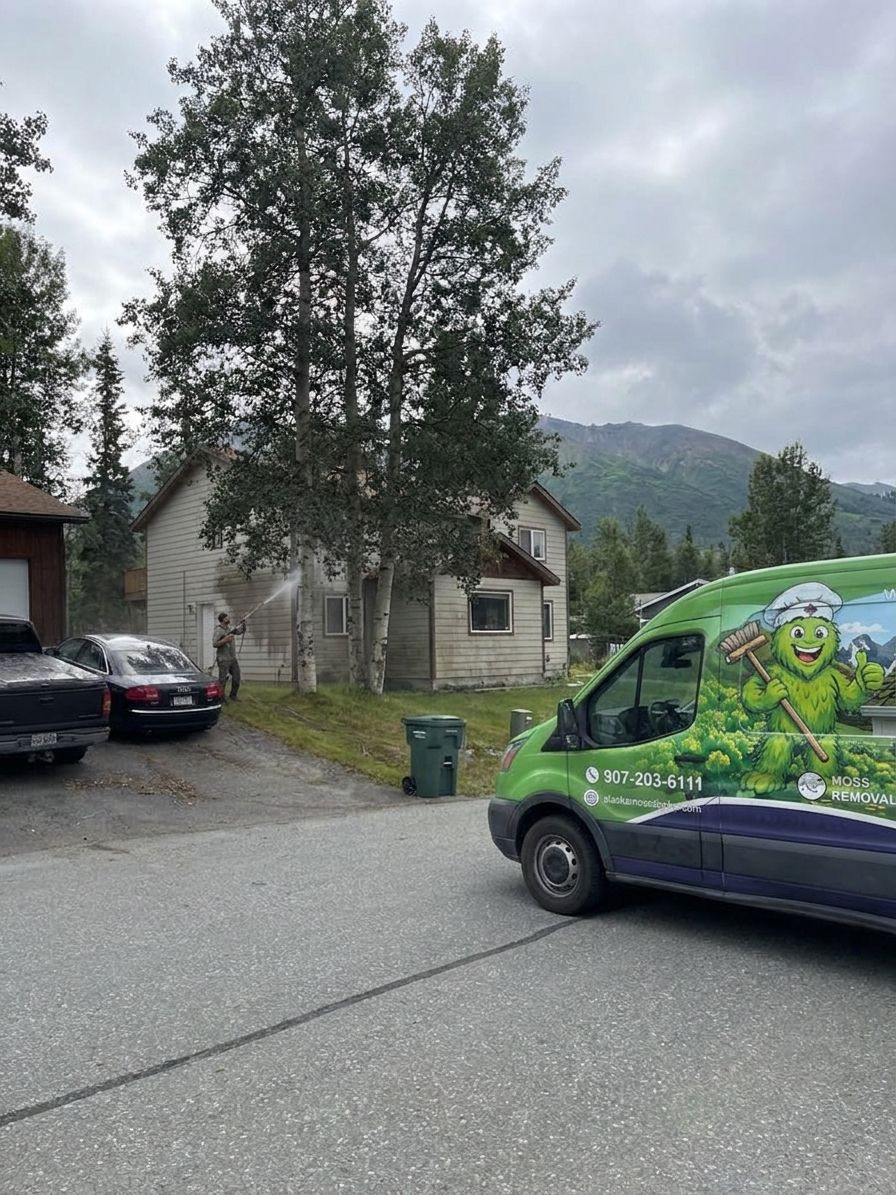
An HOA violation letter over moss or roof staining sets a clock ticking, and the fix has to satisfy the board's inspector, not just look better from the driveway. This guide breaks down what exterior cleaning for HOA compliance actually requires by roof and siding type, plus which fixes hold up at reinspection.
- Soft-wash roof and siding cleaning is the standard HOA boards accept for exterior cleaning hoa compliance in 2026 — pressure washing often fails inspection twice.
- Alaska Moss Doctor's asphalt shingle soft-wash and Wasilla roof moss removal services are the safe picks for most single-family violation letters. Buy.
- Skip DIY chemical sprays that fade discoloration without removing moss rhizoids — regrowth triggers a second violation inside one season.
- Cedar shake, log siding, metal roofing and vinyl siding each need a different cleaning approach; using the wrong one can create new damage that reads as a fresh violation.
Why this matters
Most HOA covenants treat visible moss, black streaking or green algae as a maintenance violation, not a cosmetic preference — the language usually sits under "exterior appearance" or "roof condition" clauses. Boards in Wasilla and the broader Mat-Su area send these letters after a drive-by inspection, and the cure window is commonly 30 days before a fine or lien process starts.
The problem is that a fix aimed at passing a photo, not removing the actual growth, tends to fail the follow-up. Moss rhizoids sit under shingle tabs and siding laps; a surface rinse leaves the root structure intact, and streaking or green tint reappears within a season. That's the gap between exterior cleaning that looks compliant for 30 days and exterior cleaning hoa compliance that actually holds.
Who this is for
This is for homeowners who've received (or expect) an HOA violation notice citing moss, algae or roof staining, and need a fix that survives a reinspection — not just a homeowner who wants a nicer-looking roof. If your covenant references "unsightly growth" or "exterior maintenance," the board is checking for removal, not just discoloration. Alaska Moss Doctor works this exact problem for Wasilla properties, and the method has to match your roof and siding material or the fix won't last through the next Alaska thaw cycle.
What to look for in exterior cleaning for HOA compliance
Soft-wash method, not pressure washing
Pressure washing strips granules off asphalt shingles and can drive water under metal seams and cedar shake courses — damage that can itself become a new violation line item. A proper soft-wash treatment uses low pressure and a cleaning solution that kills spores at the root, which is what actually stops regrowth.
Full-elevation coverage
HOA inspectors usually photograph the street-facing slope first, but reinspections often walk the property line. A cleaning job that only treats the visible roof plane and skips the shaded north side or backyard-facing wall will fail the second look, even if it passed the first photo.
Spore-level treatment, not just visible cleanup
Rinsing away black streaks or green tint without an anti-microbial treatment removes the symptom, not the cause. Moss and algae regrow fast in shaded, damp conditions typical of Southcentral Alaska lots, so the treatment needs to address the biology, not just the appearance.
Material-specific approach
Asphalt shingle, metal roofing, cedar shake and log siding all respond differently to cleaning chemistry and pressure. A method that's safe on metal can be too aggressive for cedar shake, and vinyl siding needs a different rinse approach than either.
Documentation you can hand the board
Before-and-after photos from all four sides of the house give you proof of compliance if the board disputes the fix or schedules a second drive-by. This matters more than most homeowners expect — a verbal "it's done" doesn't hold up against a photo-based violation letter.
Timing against the compliance deadline and the Alaska weather window
A 30-day cure period doesn't leave room for scheduling delays once snow or hard freeze sets in. Booking the job as soon as the letter arrives, rather than waiting for a quote comparison, protects the deadline.
Top picks by exterior type
Asphalt shingle roofs — the most common HOA flag. Asphalt shingle staining and moss are the single most cited issue in board violation letters because the granule surface holds moisture and spores longer than metal or cedar. Soft-wash roof cleaning for asphalt shingle roofs removes staining without stripping granules, which keeps the roof's remaining lifespan intact while clearing the violation. Buy for any 2026 notice citing shingle discoloration.
Roof moss removal for Wasilla homes — the deadline fix. When the letter cites moss coverage rather than staining, the growth is established enough that a rinse alone won't clear it. Roof moss removal for Wasilla Alaska homeowners is built around the local growing conditions and the 30-day cure window boards typically set. Buy if the violation letter specifically names moss, not just discoloration.
Vinyl siding wash — the siding-specific fix. Green or black streaking on vinyl siding usually comes from algae growth in shaded exterior walls, and it needs a different chemical approach than a roof treatment. House washing service for vinyl siding targets that streaking without the abrasive scrubbing that can dull or crack vinyl panels. Buy if the letter names siding appearance, not the roof.
Cedar shake roofs — the delicate case. Cedar shake holds moisture differently than asphalt or metal, and an overly aggressive wash can split or lift shakes, creating a leak issue on top of the original violation. This roof type needs a gentler, wood-specific soft-wash approach rather than the standard shingle treatment. Consider this one only with a contractor who explicitly quotes cedar-safe methods — a generic quote is a red flag.
What to avoid
- DIY pressure washer rentals. They strip shingle granules and force water under siding laps, and the resulting damage often reads as a new violation rather than a cure for the old one.
- One-time chemical-only sprays with no physical moss removal. These fade the visible color fast, which looks good in a quick photo, but leave root structures intact — expect a repeat notice within one growing season.
- Treating only the street-facing side. It passes the first drive-by and fails the reinspection when the board or a neighbor reports the untreated side.
Get a compliance-ready quote
Cover the exact roof or siding type named in your HOA letter before the cure window closes.
Verdict comparison
| Exterior type | What HOA letters usually cite | Recommended method | Verdict |
|---|---|---|---|
| Asphalt shingle roof | Dark streaking, moss patches | Soft-wash, spore treatment | Buy |
| Roof (general, Wasilla) | Moss coverage over 20% of roof plane | Full soft-wash roof moss removal | Buy |
| Vinyl siding | Green/black streaking on walls | Siding-specific soft wash | Buy |
| Cedar shake roof | Moss, dark staining | Wood-safe low-pressure treatment | Consider |
| Any exterior | Same violation, second letter | DIY pressure wash or spray-only | Skip |
FAQ
What does HOA exterior cleaning compliance actually require?
It requires removing the visible moss, algae or staining cited in the violation letter using a method that doesn't damage the roof or siding material. Boards typically reinspect from the street and sometimes walk the property line, so all sides need treatment, not just the visible slope.
Is pressure washing OK for HOA roof compliance?
No, pressure washing strips asphalt shingle granules and can force water under metal seams or cedar shake courses. A soft-wash method at low pressure removes moss and staining without creating new roof damage that could trigger a separate violation.
How long does a moss or algae compliance fix take before reinspection?
Most HOA cure periods run around 30 days from the violation letter date, so scheduling the cleaning as soon as the letter arrives protects that window. Waiting on quote comparisons in fall or winter can push the job past the deadline once Alaska's freeze sets in.
Will moss come back after an HOA-driven cleaning?
Moss regrows fast if the treatment only rinses away visible discoloration without addressing the root structure under shingles or siding laps. A soft-wash treatment that includes spore-level cleaning holds up longer than a surface rinse or spray-only fix.
Does HOA compliance cleaning apply to siding, or just the roof?
It applies to whatever the violation letter names, and many letters cite both roof staining and siding streaking together. Vinyl siding needs a different wash chemistry than a roof, so a single generic treatment often misses one or the other.
Do different roof types need different cleaning methods for HOA compliance?
Yes, asphalt shingle, metal roofing, cedar shake and log siding each respond differently to pressure and cleaning chemistry. Using an asphalt-shingle method on cedar shake risks splitting the shakes, which creates a new problem on top of the original violation.
Can I treat only the visible front slope to pass an HOA inspection?
You can, but it often fails the reinspection because boards sometimes walk the full property line rather than just checking the street view again. Treating all four sides the first time avoids a second cure period.
How much does exterior cleaning for HOA compliance cost?
Cost depends on roof size, material and how established the moss or algae growth is, so it varies by property. A written quote that names the exact roof and siding type on your violation letter is the only reliable way to know the number.
One last thing
Most violation letters get triggered by a photo taken from the street, which means the shaded north slope or backyard-facing wall — the part that grows moss fastest — often isn't the part in the photo. Homeowners who treat only what's visible from the road tend to pass the first check and fail the walk-around reinspection a board sometimes schedules for repeat offenders. Treating the whole exterior once, not just the photographed side, is the difference between a 2026 compliance letter that closes for good and one that reopens next spring.