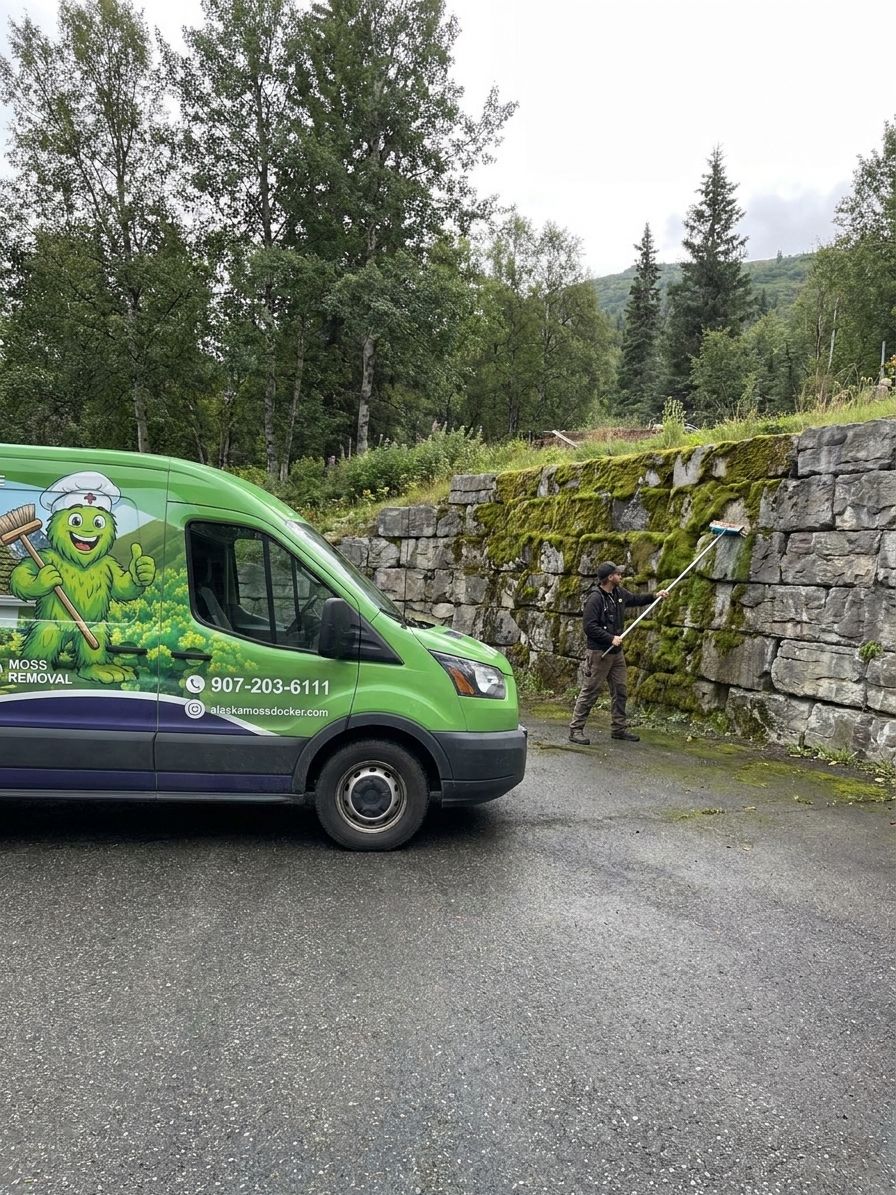
Moss removal for retaining walls in Mat-Su Valley yards means stripping moss, algae, and lichen off block, timber, or poured-concrete walls before the growth traps moisture and cracks the material. Homeowners with shaded, north-facing retaining walls in Wasilla deal with a faster regrowth cycle than roof or siding moss because the wall sits low, stays damp longer, and rarely gets direct sun even in July.
- Moss removal retaining wall work in 2026 starts with a manual scrub and rinse before any chemical treatment.
- Pressure washers above 1500 PSI crack mortar joints and loosen timber ties on older Wasilla walls.
- Alaska Moss Doctor treats retaining walls as part of full exterior packages, not standalone jobs, in the Mat-Su Valley.
- Clogged weep holes behind a mossy wall cause more structural damage than the moss itself.
- Annual moss removal in spring keeps freeze-thaw cracking from spreading through wall joints.
Why this matters for retaining wall owners
A retaining wall holds back soil and water pressure, and moss changes how that pressure behaves. Moss mats hold moisture against block or timber year-round, and Alaska's freeze-thaw cycle turns that trapped water into ice that expands inside cracks and joints every winter.
Homeowners with retaining walls near driveways or walkways see the same growth pattern spread from the wall onto adjacent paved surfaces, since spores travel with runoff. Left alone through a Mat-Su Valley winter, moss on a retaining wall doesn't just look bad — it accelerates the exact freeze-thaw damage that shortens a wall's lifespan.
Retaining wall moss removal in Wasilla is a maintenance task, not a one-time fix — walls facing north or shaded by trees need attention at least once a year.
How to remove moss and algae from a retaining wall
Inspect the wall before you touch it
Walk the full length of the wall and note where moss is thickest, where mortar or timber joints look loose, and where water pools at the base. This step tells you whether you're dealing with surface growth or a drainage problem underneath.
- Check for crumbling mortar between block courses
- Look for bulging or leaning sections, a sign of trapped water pressure
- Note whether weep holes (small drainage gaps) are visible or moss-covered
- Photograph heavy-growth areas to track regrowth speed over the 2026 season
Clear vegetation and debris from the base
Moss spreads faster when leaves, soil, and grass clippings sit against the wall and hold moisture. Clearing the base first makes every later step more effective and cheaper.
- Rake back mulch or soil piled against the wall face
- Trim overhanging branches that keep the wall shaded and damp
- Remove any grass or weeds growing in wall joints
- Sweep loose debris away from the base before rinsing
Scrub loose moss by hand first
A stiff-bristle brush and a bucket of water handle light-to-moderate moss on timber and block walls without any risk to the material. This is the cheapest step and it's where most homeowners should start.
- Work top-down so loosened moss doesn't restain the clean sections below
- Use a synthetic-bristle brush on painted or coated timber, never wire
- Rinse the brush frequently to avoid dragging spores across the wall
- Skip metal scrapers on concrete block — they scratch the surface and give moss more grip next season
Apply a soft wash treatment for embedded growth
When scrubbing alone doesn't clear algae staining or moss rooted into porous block, a low-pressure soft wash solution lifts growth without the mechanical force of a pressure washer. This is where a service like Alaska Moss Doctor becomes the faster path — soft washing clears embedded moss in one visit instead of repeated weekend scrubbing sessions.
- Low-pressure application (well under pressure-washer PSI) protects mortar joints
- Solution dwell time does the cleaning work, not force
- Works on block, poured concrete, and treated timber walls alike
- Rinse thoroughly afterward to prevent solution runoff onto lawn or garden beds
Rinse and clear loosened moss from drainage points
After treatment, rinse from the top down and pay close attention to weep holes and the base of the wall where loosened moss collects. Clogged drainage is the single biggest cause of retaining wall failure tied to moss buildup.
- Flush weep holes with a garden hose to confirm they're draining
- Clear the drainage gravel trench at the base if visible
- Remove moss debris before it washes into nearby garden beds
- Check for standing water 24 hours after rinsing
Treat with a moss-inhibiting product
A preventive treatment after cleaning slows regrowth through the rest of the growing season. This step matters most on shaded walls that get little direct sun even in Alaska's long summer daylight hours.
- Apply treatment only after the wall is fully clean and dry
- Reapply per product instructions, typically once or twice a year
- Keep treated runoff away from grass and garden edges
- Re-treat sooner on walls under heavy tree cover
Improve drainage to slow regrowth
Moss keeps coming back on walls that stay damp, so fixing the moisture source matters more than any single cleaning. This step protects the work you just did.
- Redirect downspouts or sprinkler heads away from the wall face
- Add or clear gravel drainage trenches at the wall base
- Trim back vegetation that blocks morning sun exposure
- Regrade soil slightly away from the wall where possible
Comparison of removal options for Mat-Su Valley retaining walls
| Option | Best for | Key limitation |
|---|---|---|
| Manual scrub and rinse | Light moss on small wall sections | Time-intensive, doesn't clear embedded algae staining |
| DIY pressure washing | Homeowners with modern poured-concrete walls only | High PSI cracks mortar and loosens timber ties on older walls |
| Chemical spray only, no scrub | Maintenance between full cleanings | Doesn't remove existing moss mats, only slows new growth |
| Professional soft wash service | Heavy moss, shaded walls, older block or timber construction | Requires scheduling a visit rather than same-day DIY |
Verdict: manual scrubbing handles light growth, but soft washing is the only method that clears embedded moss on older block and timber retaining walls without risking the joints.
Get your retaining wall assessed
See what soft washing clears on block, timber, or concrete walls in Wasilla.
Common mistakes Wasilla homeowners make with retaining wall moss
- Pressure washing timber-tied walls. High PSI loosens the ties holding timber courses together, and the wall shifts within a season or two.
- Ignoring clogged weep holes. Homeowners scrub the visible moss but leave drainage gaps blocked, so water pressure builds behind the wall anyway.
- Treating symptoms, not shade. Reapplying moss killer every spring without trimming back overhanging branches means the regrowth cycle never breaks.
- Using bleach near landscaping. Bleach kills moss but also damages grass, garden beds, and root systems in the runoff path.
- Skipping yard prep before cleaning. Sprinkler heads, garden beds, and outdoor furniture left in place during treatment often end up damaged or stained.
FAQ
What's the best way to remove moss from a retaining wall?
Scrub loose moss by hand first, then apply a low-pressure soft wash treatment for growth embedded in block or timber. Pressure washers above roughly 1500 PSI risk cracking mortar joints and loosening timber ties.
Is pressure washing safe for a concrete retaining wall?
Modern poured-concrete walls can usually tolerate light pressure washing, but older block or timber-tied walls often can't. Soft washing removes the same moss without the mechanical force that erodes mortar joints.
How often should a retaining wall be cleaned for moss in Alaska?
Shaded or north-facing walls typically need cleaning once a year, usually in spring before the growing season accelerates regrowth. Walls with more direct sun exposure can often go longer between treatments.
Does moss actually damage a retaining wall or just look bad?
Moss traps moisture against the wall, and that moisture freezes and expands during Alaska winters, widening existing cracks in mortar and joints. Clogged weep holes from moss buildup also increase water pressure behind the wall.
Can I use bleach to kill moss on a retaining wall?
Bleach kills surface moss but the runoff damages nearby grass, garden beds, and plant roots. A soft wash solution formulated for exterior surfaces clears moss with less risk to surrounding landscaping.
Should I clean the retaining wall myself or hire a professional?
Light moss on a small wall section is manageable with a brush and hose. Heavy growth, shaded walls, or older block and timber construction usually call for a soft wash service like Alaska Moss Doctor to avoid structural risk.
What causes retaining walls to grow moss faster than other surfaces?
Retaining walls sit low, often in shade, and hold soil moisture against their surface longer than roofs or siding. That constant dampness gives moss ideal conditions to establish and spread across block, timber, or concrete.
One last thing
The weep holes at the base of a retaining wall matter more than the moss on its face — clear drainage prevents the water pressure buildup that actually cracks walls, while moss removal alone is mostly cosmetic if drainage stays blocked. Check those gaps every time moss removal happens in 2026, not just the visible surface growth.