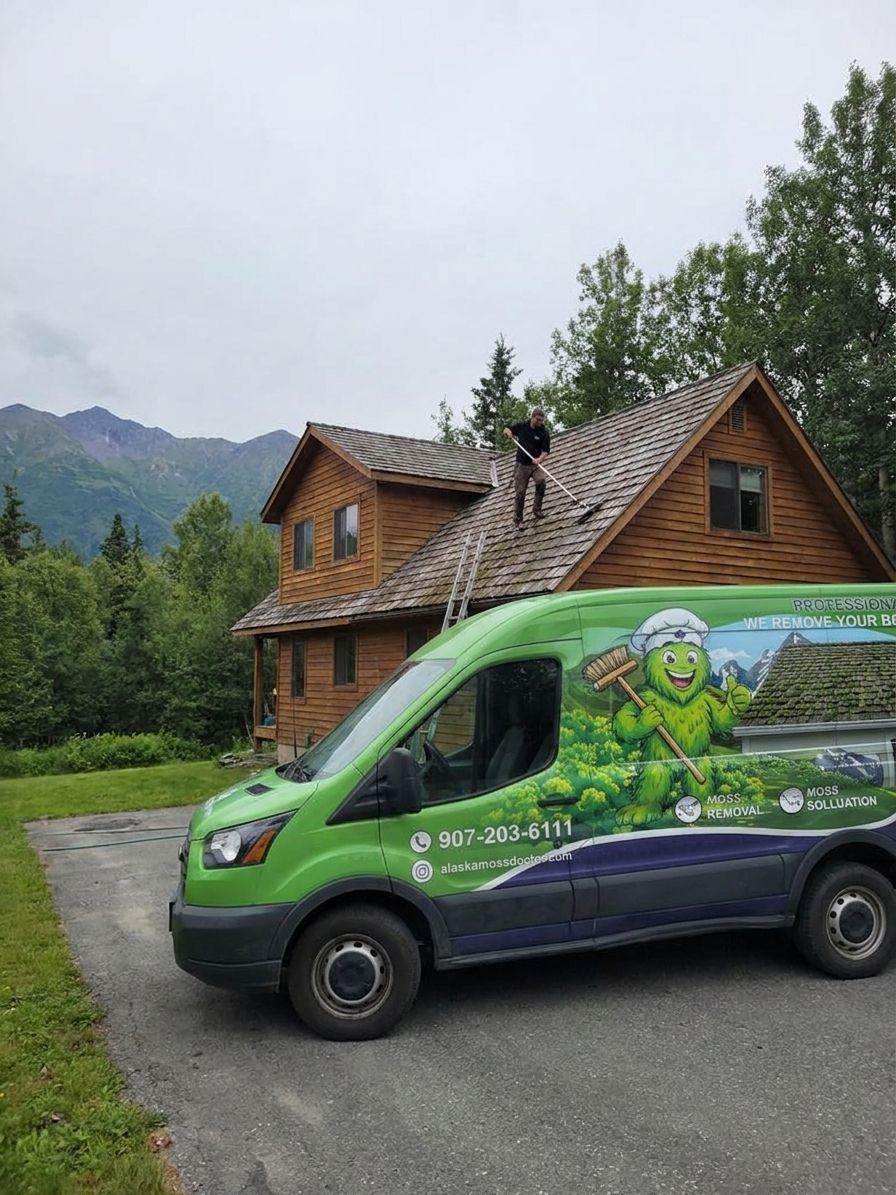
Roof cleaning frequency in the Mat-Su Valley isn't a fixed calendar date — it depends on tree canopy, roof pitch, and material, and getting the interval wrong either wastes a service call or lets moss root deep enough to lift shingles.
- Homes shaded by spruce or birch canopy need roof cleaning every 12 months in the Mat-Su Valley — Buy the annual schedule.
- Steep-pitch metal roofs in full sun stretch to 24-36 months between cleanings — Hold.
- New construction under 3 years old rarely needs moss removal before year three — Wait.
- The best roof cleaning frequency mat-su valley homeowners should use ranges from 12 to 48 months depending on shade and pitch, not one universal number.
Why this matters
Moss doesn't grow on a schedule — it grows where moisture sits. A roof under spruce canopy in Wasilla holds damp needles and shade for weeks longer than an open-lot roof three streets over, and that difference changes the right cleaning interval by a factor of three or four.
Homeowners who clean on autopilot every year, regardless of exposure, either overpay for service the roof didn't need or wait too long and end up scraping moss mats instead of rinsing surface growth. The best time of year for roof moss removal in Alaska matters, but timing only works if the interval itself is set correctly first.
Alaska Moss Doctor sees the same pattern across Mat-Su Valley properties year after year: shade and pitch predict regrowth speed far better than roof age or shingle brand. That's the basis for the ranking below.
How this ranking works
Each frequency tier below is ranked by how fast moss re-establishes on a given roof profile, based on tree canopy density, sun exposure hours, roof pitch, and material — the four variables that consistently drive regrowth speed across Southcentral Alaska's wet spring melt and wet fall seasons.
A north-facing roof under mature spruce in Wasilla behaves nothing like a full-sun metal roof on an open lot in Palmer, even if both were cleaned in the same month of 2026. Pitch matters almost as much as shade — moss needs standing moisture to establish, and anything under a 6/12 pitch holds water long enough to give spores a foothold that a steep 10/12 roof never gives them.
The tiers move from shortest interval (highest-risk profile) to longest (lowest-risk), each with a verdict you can apply directly to your own roof.
Ranked frequency guide for Mat-Su Valley roofs
1. Shaded roofs under spruce or birch canopy — the moss magnet
North-facing roofs with heavy tree cover hold moisture for days after a rain and barely see direct sun between October and April. That combination makes this the fastest-regrowing profile in the valley, with visible moss returning within 10-14 months of a clean roof.
These roofs need cleaning every 12 months, ideally in spring before new growth locks into the shingle mat. Homeowners in this category are covered in the guide to roof moss removal for Wasilla, Alaska homeowners.
Verdict: Buy the annual schedule.
2. Cedar shake and older asphalt with a heavy moss history — the repeat offender
A roof that's needed aggressive moss removal once tends to need it again faster, because moss leaves microscopic root structures in shingle granules and shake grain even after a soft wash. Cedar shake in particular holds spores in its natural grain pattern.
These roofs stay on a 12-month spring cleaning cycle regardless of how clean they look in fall, because the regrowth is happening below the visible surface long before it shows.
Verdict: Buy — keep it on the annual calendar.
3. Rental properties and HOA-managed homes — the compliance clock
Landlords and HOA boards don't have the luxury of waiting for visible moss before acting — deferred maintenance on a rental roof turns into a bigger repair bill, and HOA covenants often set exterior appearance standards with real deadlines.
These properties do best on a fixed 12-month schedule independent of visible buildup, treating the cleaning as preventive maintenance rather than a reactive fix.
Verdict: Buy — schedule it like a lease-renewal task.
4. Mixed-sun roofs with partial shade — the middle ground
Homes that get a few hours of direct sun daily but still sit near trees fall between the fast and slow tiers. Moss establishes here, but slower — regrowth typically takes 16-20 months to become visible again after a clean.
An 18-month interval hits the sweet spot for these roofs: frequent enough to stop moss from rooting, spaced out enough to avoid paying for cleanings the roof doesn't need yet.
Verdict: Hold at 18 months and reassess each spring.
5. Steep-pitch metal roofs in full sun — the self-cleaning slope
Steep pitch sheds water fast, and metal doesn't hold moisture in surface texture the way asphalt or shake does. Full sun exposure adds a third layer of protection — spores simply don't get the sustained dampness they need.
These roofs can run 24 to 36 months between cleanings, and the specifics are covered in the guide on roof moss removal for steep-pitch roofs.
Verdict: Hold — check the north slope annually but don't schedule a full clean until it shows growth.
6. New construction under 3 years old — the waiting game
New shingles and fresh underlayment haven't accumulated the organic debris moss needs to establish, and most new builds in the Mat-Su Valley go three years before any visible growth appears.
Cleaning a roof this young is usually wasted money. A 36-month first-clean interval is realistic for most new construction, adjusted earlier only if the lot has heavy mature tree cover.
Verdict: Wait — inspect annually, clean when growth actually appears.
7. Full-sun open-lot homes with minimal tree cover — the low-maintenance lot
Homes with no meaningful shade and open exposure on all sides are the slowest-regrowing profile in the valley. Moss needs shade and moisture to establish, and these roofs get neither for most of the year.
A 36-to-48-month interval is enough for most of these properties, checked with a quick visual inspection each fall rather than a scheduled service call.
Verdict: Skip the annual plan — monitor and clean only when growth shows.
Frequency comparison table
| Roof profile | Sun exposure | Recommended interval | Verdict |
|---|---|---|---|
| Shaded canopy (north-facing) | Low | 12 months | Buy |
| Cedar shake / heavy history | Low-moderate | 12 months | Buy |
| Rental / HOA-managed | Varies | 12 months (fixed) | Buy |
| Mixed sun, partial shade | Moderate | 18 months | Hold |
| Steep-pitch metal, full sun | High | 24-36 months | Hold |
| New construction (under 3 yrs) | Varies | 36 months | Wait |
| Full-sun open lot | High | 36-48 months | Skip |
Where to schedule roof cleaning
Getting the interval right only matters if the cleaning itself is done correctly, so apply these three rules before booking:
- Book before peak growing season, not during it. Spring, before new spore activity locks in, gets better results than a mid-summer or late-fall clean.
- Confirm soft-wash, not pressure washing. High-pressure equipment strips granules off asphalt shingles and can lift shake — ask specifically about the method before you book.
- Bundle gutters if moss is heavy. Moss-heavy roofs shed debris straight into gutters, and cleaning one without the other just moves the problem downstream.
Alaska Moss Doctor books Mat-Su Valley roof cleanings around these exposure-based intervals rather than a one-size calendar, which is why the schedule above holds up across shaded, mixed, and full-sun properties alike.
Get your roof's actual interval
See what schedule fits your shade, pitch, and material.
FAQ
What's the best roof cleaning frequency for Mat-Su Valley homes?
It ranges from 12 to 48 months depending on shade and pitch. Shaded, low-pitch roofs need annual cleaning; full-sun, steep-pitch roofs can go 3-4 years between services.
Is annual roof cleaning necessary for every Wasilla home?
No. Annual cleaning is only necessary for shaded, north-facing, or low-pitch roofs where moss regrows within 10-14 months. Full-sun and steep-pitch roofs can wait 2-4 years.
How often should you clean a metal roof in Alaska?
Steep-pitch metal roofs in full sun typically need cleaning every 24-36 months. Metal sheds water fast and doesn't hold moisture in surface texture the way shingles or shake do.
Does new construction need roof moss removal right away?
No. New builds usually go about 36 months before visible moss appears, since fresh shingles lack the organic debris moss needs to establish.
Is spring or fall better for roof cleaning in the Mat-Su Valley?
Spring, before the growing season ramps up, generally produces better results than a fall clean. Cleaning ahead of new spore activity keeps roofs clear longer into the year.
How can you tell if your roof cleaning schedule is too infrequent?
Dark streaking or green patches returning within 12-14 months on a shaded roof signals the interval is too long. Moss visible on a full-sun roof within 2 years means the same.
Do rental properties need a different cleaning schedule?
Yes. Rental and HOA-managed properties should stay on a fixed 12-month schedule regardless of visible buildup, since deferred maintenance turns into bigger repair costs and compliance issues.
One last thing
The biggest scheduling mistake in the Mat-Su Valley isn't cleaning too rarely — it's cleaning every roof on the same fixed calendar date regardless of shade. A full-sun open lot and a spruce-shaded north slope don't regrow moss at the same rate, and treating them identically in 2026 means one homeowner overpays every year while the other waits too long and pays for shingle damage instead of a simple wash.