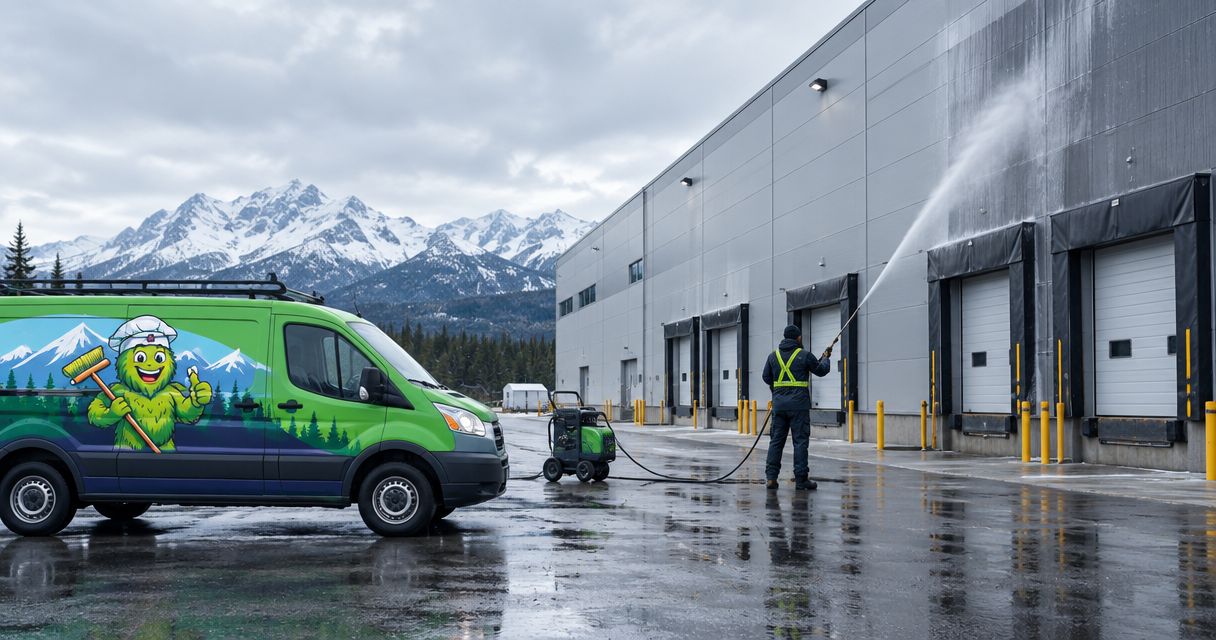
Alaska warehouses and distribution centers need exterior cleaning that targets flat commercial roofs, loading dock aprons, and metal siding exposed to near-constant moisture and freeze-thaw cycles — the goal is protecting the roof membrane, keeping dock surfaces safe for forklift and foot traffic, and avoiding the drainage failures that moss and algae buildup cause on low-slope roofs. A warehouse roof behaves differently than a residential roof: it's flatter, it drains through internal scuppers or roof drains instead of gutters, and standing water gives moss and algae far more time to colonize the membrane before anyone notices.
- Flat commercial roofs on Alaska warehouses trap standing water, which accelerates moss and algae growth compared to pitched residential roofs.
- Soft washing is the safer method for membrane roofs and metal siding on distribution centers — high pressure can void roof warranties.
- Alaska Moss Doctor combines roof cleaning, dock washing, and fleet washing into one service call for warehouse operators.
- Spring and early fall are the practical windows for exterior cleaning warehouses distribution centers Alaska operations before freeze-thaw sets in.
- Blocked roof drains from moss debris are one of the more preventable causes of interior water damage on flat commercial roofs.
Why exterior cleaning matters for Alaska warehouses and distribution centers
A distribution center in the Mat-Su Valley isn't judged on curb appeal the way a retail storefront is, but it still gets evaluated — by insurance inspectors checking roof condition, by drivers and forklift operators navigating a dock apron, and by tenants or logistics partners walking a facility before signing a lease. Moss and algae on a flat roof aren't cosmetic here; they hold moisture against the membrane, and that moisture works its way into seams during Alaska's freeze-thaw cycles.
Dock aprons and exterior walkways collect a different problem: moss and algae growth on concrete creates a slip hazard in a facility where people are moving pallets, not walking casually. That's a liability issue as much as a maintenance one. Warehouses and distribution centers also tend to have shaded north-facing wall sections and low-slope roof valleys — exactly the conditions algae thrives on north-facing roofs in Alaska's climate.
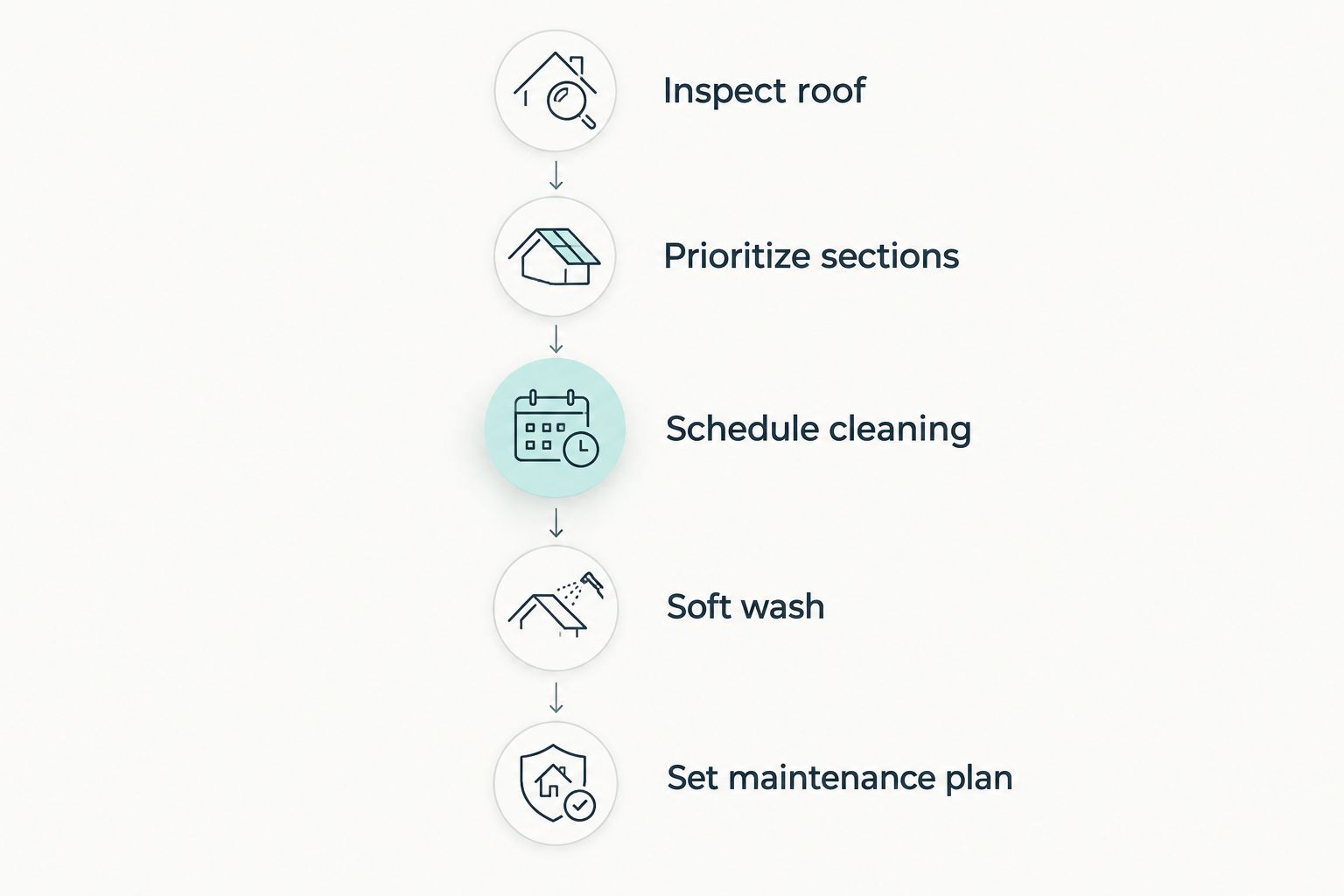
Step-by-step: exterior cleaning for warehouses and distribution centers
Inspect the roof and dock apron before scheduling anything
Start with a walk of the roof and the dock apron, not just a visual from the ground. Flat roofs hide problems that pitched roofs show immediately.
- Check roof drains and scuppers for moss and debris blockage
- Look for standing water pooling more than 48 hours after rain
- Note discoloration or black streaking on parapet walls and flashing
- Walk the dock apron for green or black slip film on concrete
- Check membrane seams near HVAC curbs and rooftop units for moisture staining
- Photograph problem areas for your maintenance file and insurance records
Prioritize the flat or low-slope sections first
On a warehouse, the roof sections that matter most for cleaning are the low-slope areas where water sits longest, not the whole roof surface at once.
- Map which sections have the least drainage slope
- Flag any area with visible ponding after storms
- Check roof valleys and around rooftop mechanical units
- Prioritize sections closest to loading dock overhangs, where shade slows drying
- Note any section already showing membrane blistering or cracking
Schedule cleaning around Alaska's freeze-thaw window
Timing matters more for commercial roofs than most facility managers assume. Cleaning during a hard freeze risks damaging the membrane; cleaning too late in fall means moss regrows before the next thaw.
- Target spring, after snowmelt but before heavy summer rain
- Consider early fall as a second window, before the first hard freeze
- Avoid scheduling during active freeze-thaw cycles when membranes are brittle
- Build in a buffer week for weather delays common in the Mat-Su Valley
- Coordinate with facility downtime windows to avoid disrupting loading operations
Choose soft washing over high-pressure equipment for membrane and metal roofs
High-pressure washing on a commercial membrane roof or metal roofing can strip protective coatings and void manufacturer warranties. Soft washing uses lower pressure with a cleaning solution formulated to kill moss and algae at the root.
- Confirm the roof material — TPO, EPDM, metal, or built-up — before choosing a method
- Ask any contractor whether they soft wash or pressure wash by default
- Request documentation that the cleaning method won't void a roof warranty
- Test any cleaning solution on a small section before full application
- For metal roofing sections, review soft wash roof cleaning for metal roofing before signing off
Clean loading docks, siding, and fleet vehicles as one job
Warehouses and distribution centers rarely need just a roof wash. Dock aprons, exterior siding, and company vehicles all collect the same moss, algae, and road grime.
- Pressure wash concrete dock aprons separately from the roof, using appropriate settings for concrete
- Wash exterior metal or fiber cement siding to remove algae streaking
- Bundle fleet washing for Alaska businesses into the same service window if trucks or vans are on-site
- Clear moss from any retaining walls or loading ramp edges
- Check exterior lighting fixtures and signage for grime buildup during the same visit
Set a recurring maintenance schedule instead of one-off cleanings
A single cleaning resets the clock, but moss and algae return on the same timeline unless the facility schedules follow-up service.
- Set an annual or biannual cleaning cadence based on roof shading and drainage
- Track drain and scupper clearing separately from full roof washing
- Log each cleaning date for warranty and insurance documentation
- Reassess frequency after any roof repair or new construction nearby
- Compare notes with facilities managing storage unit facilities, which face similar flat-roof drainage issues
Document every cleaning for compliance and insurance purposes
Commercial property insurers increasingly ask for roof maintenance records after storm claims. A documented cleaning history is leverage during a claim dispute.
- Keep dated before-and-after photos from every service
- Retain invoices showing cleaning method used (soft wash vs. pressure wash)
- Note any repairs identified during cleaning, even if handled by a separate contractor
- File records with facility maintenance logs, not just email inboxes
Comparing exterior cleaning options for warehouses and distribution centers
| Option | Best for | Key limitation |
|---|---|---|
| Soft wash roof cleaning | Membrane and metal roofs with moss or algae | Slower than pressure washing, not suited for heavy concrete grime |
| Pressure washing (dock/concrete) | Loading docks, walkways, concrete aprons | Wrong pressure setting can etch or pit concrete |
| Fleet washing | Distribution centers running delivery trucks or vans | Requires separate scheduling from roof work unless bundled |
| In-house crew cleaning | Facilities with staff available and light buildup | No warranty protection, higher risk of membrane or shingle damage |
| Annual maintenance contract | Facilities wanting to avoid repeat moss regrowth | Requires committing to a recurring schedule rather than one-time service |
Alaska Moss Doctor's verdict: Alaska warehouses and distribution centers with flat or low-slope roofs get the most protection from a soft wash roof cleaning paired with a dock and siding pressure wash on the same visit — skip in-house crews on membrane roofing where warranty coverage is at stake.
Get a warehouse cleaning quote
Roof, dock apron, and siding cleaning scheduled around your facility's downtime.
Common mistakes warehouses and distribution centers make
- Treating the roof as maintenance-free because it's flat. Flat roofs pool water and grow moss faster than pitched roofs, not slower.
- Pressure washing membrane roofing to save time. High pressure can strip coatings and void the roof warranty outright.
- Skipping drain and scupper checks during cleaning. Blocked drains cause interior water damage long after the moss itself is gone.
- Scheduling cleaning mid-winter to catch a slow season. Freeze-thaw conditions make membranes brittle and cleaning solutions less effective.
- Cleaning the roof but ignoring the dock apron. A clean roof with a slick, algae-coated loading dock still creates a liability exposure in 2026.
FAQ
What is the best method for exterior cleaning warehouses and distribution centers in Alaska?
Soft wash roof cleaning paired with pressure washing on dock aprons and concrete is the standard approach for Alaska warehouses in 2026. Soft washing protects membrane and metal roofing, while higher pressure is reserved for concrete surfaces that can handle it.
How often should a warehouse roof be cleaned for moss in Alaska?
Most flat commercial roofs in the Mat-Su Valley need cleaning once or twice a year depending on shading and drainage. Roofs with heavy tree cover or persistent shade need the more frequent end of that range.
Can pressure washing damage a commercial roof membrane?
Yes, high-pressure washing can strip protective coatings from TPO, EPDM, and metal roofing and may void the manufacturer warranty. Soft washing at lower pressure with a targeted cleaning solution is the safer choice for these roof types.
Is fleet washing usually bundled with warehouse exterior cleaning?
It can be. Distribution centers running delivery trucks often schedule fleet washing during the same service visit as roof and dock cleaning to reduce downtime and coordinate one crew on-site.
When is the best time of year to clean a warehouse roof in Alaska?
Spring after snowmelt and early fall before the first hard freeze are the two practical windows. Cleaning during active freeze-thaw cycles risks membrane damage and reduces the effectiveness of the cleaning solution.
Do blocked roof drains cause interior damage in warehouses?
Yes, moss and debris blocking roof drains or scuppers on a flat roof leads to standing water that eventually finds its way through seams and into the building. Clearing drains during every cleaning visit prevents this.
Does a documented cleaning history help with insurance claims?
Insurers increasingly request maintenance records after storm or water damage claims on commercial roofs. Dated photos and service invoices showing cleaning method and frequency support a claim rather than raising questions about neglect.
One last thing
The detail most warehouse managers miss: moss and algae don't just sit on top of a flat roof membrane, they hold moisture against seams and fasteners during Alaska's freeze-thaw cycles, which is where actual leaks start. Cleaning the surface without clearing the drains and scuppers underneath fixes the visible problem while leaving the one that actually causes damage in 2026.