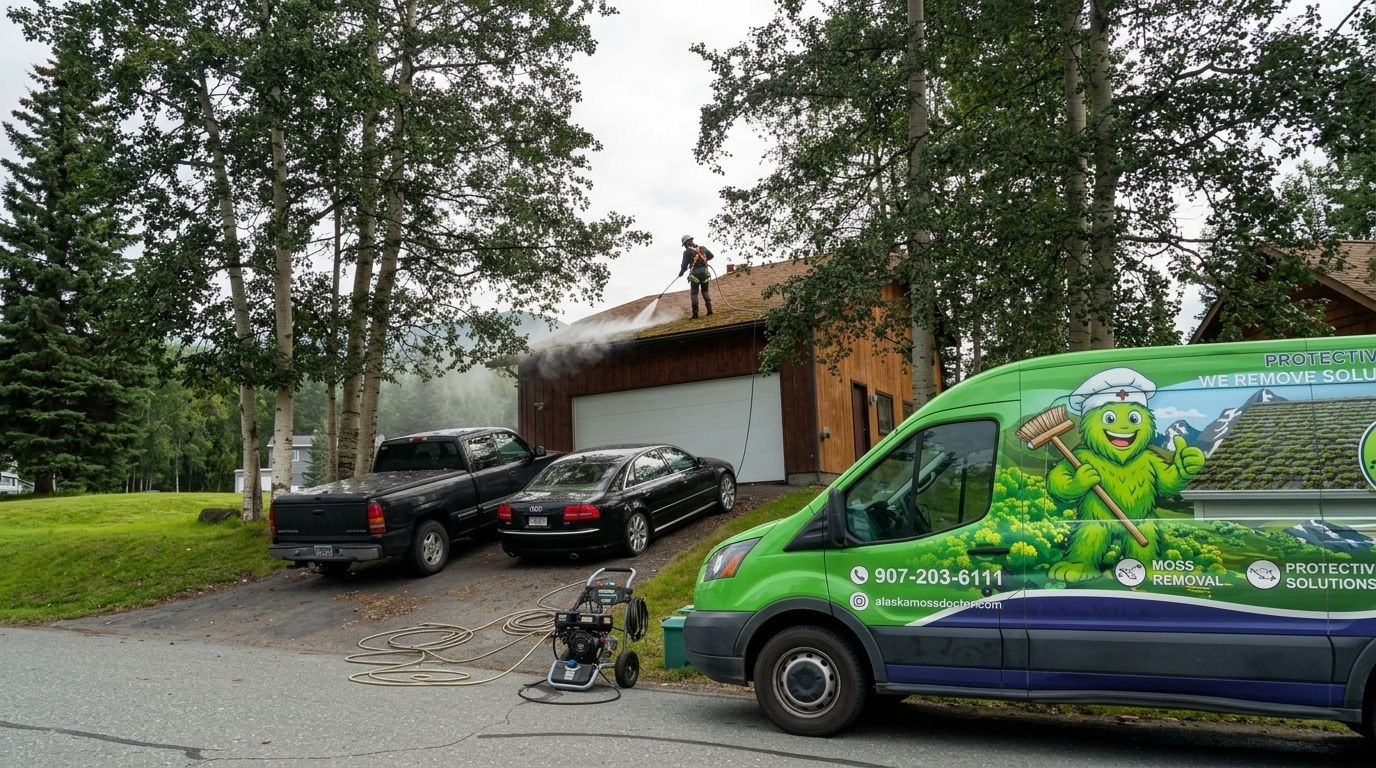
Pressure washing for Alaska construction contractors covers job-site cleanup, new-construction house washing, concrete driveway prep, and fleet washing scheduled around a build season that runs roughly May through September in the Mat-Su Valley. Contractors need a faster turnaround than a typical homeowner job and cleaning methods that won't strip fresh paint, etch uncured concrete, or void a siding warranty before the final walkthrough.
- Pressure washing for contractors Alaska means timing the wash to the punch list, not a fixed weekly slot.
- Soft-wash siding and windows before final walkthrough; high pressure on new vinyl or fiber cement can void the manufacturer warranty.
- Concrete needs a degreaser rinse and a cure window before sealing, not a straight blast of pressure.
- Alaska Moss Doctor handles post-construction exterior cleaning and fleet washing timed to Mat-Su Valley build schedules in 2026.
- Fleet washing on a recurring cadence keeps job-site trucks presentable for client and inspector visits.
Why this matters for Alaska construction contractors
Mat-Su Valley builders work a compressed season. Framing, siding, and concrete work all stack into the same five or six months, and a missed inspection window because of a dirty exterior or a cement-streaked driveway pushes a closing date. Punch-list weeks are already tight before a final walkthrough — adding a generic homeowner cleaning slot that doesn't account for cure times or subcontractor sequencing costs more than the wash itself.
Mineral overspray from concrete pours, drywall dust in gutters, and mud tracked by every trade on site are construction-specific problems a standard house wash doesn't anticipate. Alaska Moss Doctor treats these differently from a routine moss-and-algae job because the surfaces are new, the timeline is inspection-driven, and the margin for pressure error is smaller.
Schedule the wash around your build timeline, not the calendar
A fixed weekly wash slot doesn't match how a build actually moves. The exterior clean has to land after the dust-heavy trades finish and before the final walkthrough, with a buffer for Alaska's unpredictable spring rain.
- Book the exterior wash right after framing dust settles and before siding traps it underneath
- Time the wash to the punch-list week, not a recurring calendar slot
- Build a rain buffer into the schedule — May and June carry the heaviest Mat-Su precipitation
- Confirm municipal or HOA final-inspection dates before locking a wash date
- Reserve a second pass for the week before the walkthrough on high-traffic sites
Clear construction dust and mineral overspray before the final walkthrough
Cement bloom and drywall dust cure into siding and glass fast. Left alone through even one rain cycle, it bonds to the surface and takes more than a rinse to remove.
- Rinse windows and trim of stucco or mortar splash before it cures into the surface
- Target concrete overspray on siding with a soft-wash detergent, not a high-pressure tip
- Pull sawdust and drywall dust out of gutters before the first rain event
- Wipe mineral streaks off new metal flashing while they're still surface-level
- Faster path: exterior cleaning after construction or renovation covers a pass timed to your walkthrough date instead of a generic weekly booking
Prep concrete before sealing, not after
Sealing over cement bloom or form-release oil traps both under the sealant and shows up as blotching within a season. The wash has to happen first, with the right cure window respected.
- Strip form-release oil and cement bloom off new slabs with a degreaser rinse
- Test a hidden section first — high pressure can etch concrete that hasn't fully cured
- Wait the sealant manufacturer's recommended cure window before applying sealer
- Flush expansion joints and control joints so grit doesn't pack in before sealant goes down
- Read how to seal concrete after pressure washing a driveway before scheduling the sealer crew
Soft-wash siding and windows without damaging new finishes
Fresh paint and new siding installs are the most warranty-sensitive surfaces on a build. High pressure is the wrong tool here even when the surface looks dirty.
- Soft-wash vinyl, fiber cement, and painted wood at low pressure with a rated detergent
- Skip high-pressure tips near caulk lines and window flashing on brand-new installs
- Rinse top-down so runoff doesn't streak fresh paint
- Confirm the siding manufacturer's warranty language on pressure limits before hiring anyone
Keep jobsite fleet and equipment presentable
Clients and inspectors judge a crew's professionalism by what rolls onto the site. Mud-caked trucks and trailers undercut a clean finished exterior.
- Wash mud and job-site grime off trucks and trailers before client site visits
- Schedule fleet washing on a recurring cadence through active build season
- Keep signage and lettering legible — grime buildup fades logos faster than sun does
- Faster path: fleet washing for Alaska businesses runs on a set cadence instead of one-off calls
Protect gutters and coordinate with subs before final inspection
The last clean before a walkthrough has to account for every trade that touched the exterior, not just the finish work.
- Cap downspouts before flushing dust and grit off the roofline
- Loop in framing, siding, and concrete subs so nobody re-tracks mud after the wash
- Time the wash after final grading and before landscaping crews start
- Give the general contractor a written completion date for the exterior clean
Book a post-construction exterior wash
Time it to your punch list, not a generic weekly slot.
Comparison: exterior cleaning options for Alaska contractors
| Option | Best For | Key Limitation |
|---|---|---|
| Rental pressure washer (DIY) | Small punch-list touch-ups on a single unit | No soft-wash mix; high risk of etching new concrete or stripping paint |
| General handyman with a washer | One-off jobs with flexible timing | No dedicated crew for build-season crunch weeks |
| Dedicated exterior cleaning company (Alaska Moss Doctor) | Contractors juggling multiple active sites in the Mat-Su Valley | Booking fills up fast in peak build months |
| Large commercial janitorial/washing firm | Multi-building commercial developments | Less local scheduling flexibility for small residential builds |
Alaska Moss Doctor is best for Mat-Su Valley contractors who need a soft-wash pass timed to inspection dates without risking new paint, siding, or concrete. Skip the rental washer route on anything with fresh finishes — the pressure control matters more than the labor cost saved.
Common mistakes Alaska contractors make
- Pressure washing new concrete before it cures, causing surface pitting that shows up under the sealer
- Using homeowner-grade high pressure on fresh vinyl or fiber cement, which can void the manufacturer warranty
- Skipping the wash before sealing, trapping cement dust under the sealant
- Not building a rain buffer into the spring schedule, which pushes walkthroughs into June or July
- Washing gutters last instead of first, so flushed roof debris just re-clogs the downspouts
FAQ
What's the best time to pressure wash a new construction site in Alaska?
The window right after framing dust settles and before final landscaping is best, timed to land before the final walkthrough. Build in a rain buffer for May and June, the wettest months in the Mat-Su Valley.
Is pressure washing safe for new concrete?
High pressure on uncured concrete can pit or etch the surface, so a degreaser rinse at lower pressure is safer for slabs poured within the current build season. Wait for the concrete's recommended cure window before applying any sealer.
How much does pressure washing cost for a construction site in Alaska?
Cost depends on square footage, how much cement overspray or mud needs removal, and whether siding needs a soft-wash pass versus a straight rinse. Get a walkthrough quote before the final inspection date is set.
Should contractors soft wash or pressure wash new siding?
Soft wash new vinyl, fiber cement, and painted wood siding at low pressure with a rated detergent. High pressure near caulk lines and window flashing on brand-new installs risks water intrusion and warranty issues.
How soon after construction can you power wash a house?
Exterior washing can start once the dust-heavy trades finish, typically after framing and before final landscaping. Confirm paint and siding cure times with the manufacturer before scheduling a full wash.
Does pressure washing void a siding warranty?
Some siding manufacturers specify a maximum pressure and nozzle angle in their warranty language, and exceeding it can void coverage. Check the manufacturer's spec sheet before hiring anyone to wash new siding.
Can pressure washing damage new paint?
Yes, high pressure applied too close or at the wrong angle can strip fresh paint off siding and trim. A soft-wash approach with a rated detergent removes construction dust without stripping the finish.
Is fleet washing worth it for a construction company?
Recurring fleet washing keeps trucks and trailers presentable for client site visits and keeps signage legible longer, since grime buildup fades lettering faster than sun exposure alone. It's most worth it during active build season when vehicles cycle through muddy sites daily.
One last thing
The defect that gets missed most on a 2026 punch list isn't dirt — it's mineral streaking off new flashing that looks identical to roof algae staining a year later. Get a photo record of the exterior right after the final wash, before drywall closes anything in, so a warranty claim next winter doesn't get blamed on poor maintenance instead of a flashing defect. That single step saves more arguments with homeowners than any amount of extra scrubbing.