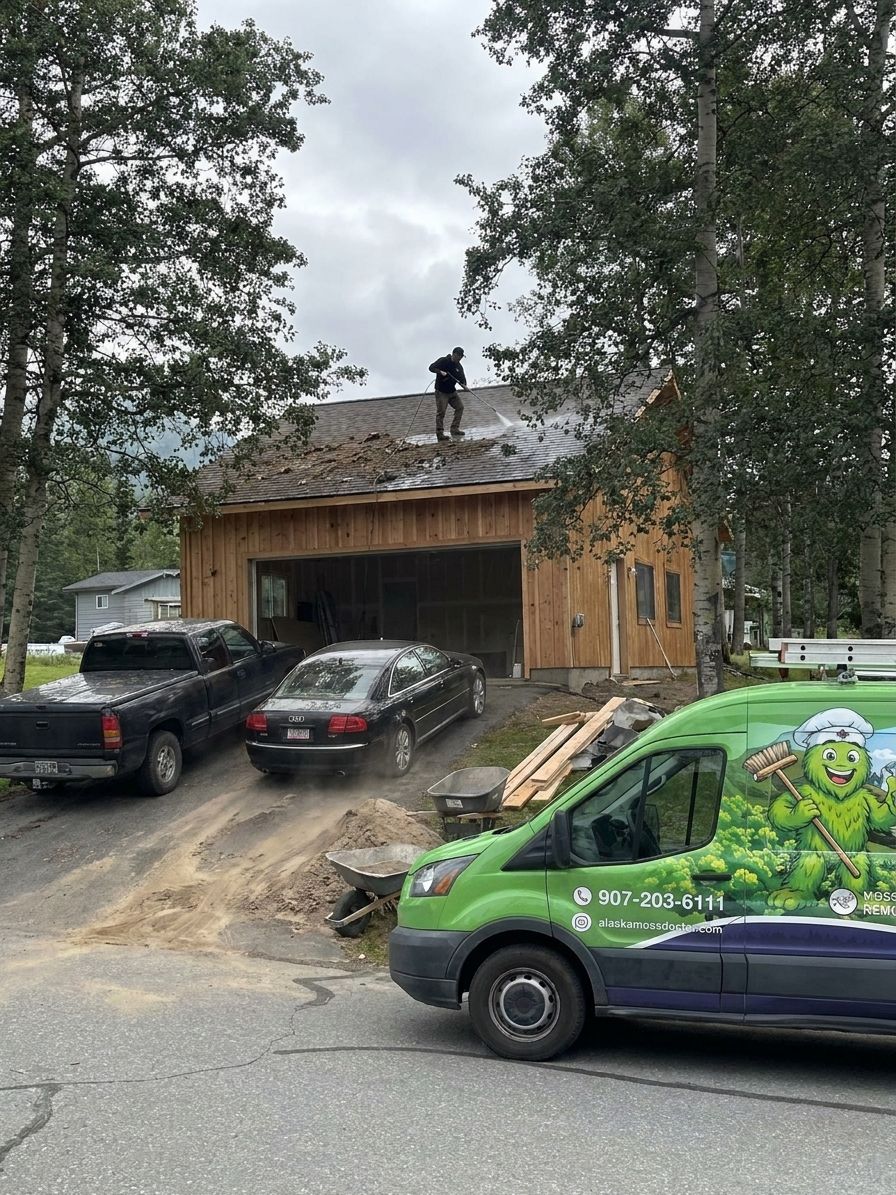
Exterior cleaning after construction removes drywall dust, mortar splatter, paint overspray, caulk haze, and job-site grime from siding, windows, roofing, and hardscape so a finished Mat-Su Valley home actually looks finished, not half-built. Renovation and new-build homeowners face a narrower cleaning window than a routine wash: fresh paint and caulk need cure time, new roofing may still carry manufacturer coatings, and contractors rarely touch gutters, window tracks, or roof valleys before they pack up.
- Exterior cleaning after construction should wait until paint and caulk finish curing, typically 30 days for latex paint.
- Soft washing at low pressure removes drywall dust and overspray from siding without stripping fresh finish.
- Alaska Moss Doctor recommends clearing gutters of construction grit before the first fall rain to avoid ice dams.
- DIY pressure washers set above 1500 psi are the top cause of siding and shingle damage on new builds.
Why exterior cleaning after construction matters for renovation homeowners
A build or remodel leaves residue a routine house wash never sees: fine drywall dust baked onto siding by rain, stucco overspray on windows, paint drips on hardscape, and sawdust packed into gutter seams. Left through an Alaska freeze-thaw cycle, that grit etches glass, clogs downspouts, and turns into a slick film on walkways.
House washing for new construction homes covers the same problem from the build-site side; this guide walks through the sequence homeowners should follow once the crew leaves. In 2026, most Mat-Su Valley builds wrap in late summer or early fall, which puts post-construction cleanup on a collision course with the first freeze if it's delayed too long.
How to clean your exterior after construction or renovation
Inspect the exterior before you clean anything
Walk the property before touching a hose. New paint, new caulk lines, and new roofing all have different tolerances than a five-year-old exterior, and a cleaning method that's safe on cured siding can strip a finish that's only weeks old.
- Check paint cans or contractor invoices for the paint type and stated cure time
- Look for caulk that's still tacky around windows, trim, and siding seams
- Note any manufacturer coating on new asphalt or metal roofing
- Flag cracked, chipped, or unpainted trim before cleaning masks the damage
- Photograph problem areas so you can compare before-and-after results
Clear debris and packaging from the yard and roofline
Construction leaves more than dust. Nail strips, shingle wrappers, and offcuts collect in gutters, flowerbeds, and roof valleys, and they'll wash into downspouts the moment you start a hose.
- Pull loose debris from gutters and roof valleys by hand first
- Bag shingle wrappers, house wrap scraps, and nail strips from the yard
- Sweep loose drywall dust off decks and walkways with a broom, not a hose
- Check window wells and door thresholds for trapped grit
Wash windows and glass first
Drywall dust and stucco overspray sit on glass longer than most homeowners realize, and grit left through a rainy fall etches the surface. Clean glass before you wash siding so runoff from the walls doesn't recoat windows you just finished.
- Rinse loose dust off with low-pressure water before scrubbing
- Use a squeegee and a mild detergent, not an abrasive pad, on new glass
- Clean window tracks and sills separately; they trap the most construction grit
- Skip ammonia-based cleaners on tinted or low-E glass
Soft wash siding to lift dust and overspray
Once glass and debris are handled, siding is next. Soft washing runs under roughly 500 psi with a cleaning solution instead of raw water pressure, which matters more than usual on siding that hasn't fully weathered. How to soft wash a house without damaging paint breaks down the technique in more detail, but the short version for a post-construction job is: low pressure, wide fan tip, and enough dwell time for the solution to break down dust film before rinsing.
- Test an inconspicuous panel before washing the full elevation
- Keep pressure under 500 psi on vinyl, wood, cedar, or freshly painted surfaces
- Rinse top to bottom to avoid streaking dried-on overspray
- Wait for the full manufacturer cure time on paint and caulk before washing at all
- Avoid harsh chlorine mixes on stained or oil-painted wood trim
Alaska Moss Doctor books post-construction jobs around this cure window rather than the contractor's move-out date, which is the single biggest difference between a DIY wash and a professional exterior cleaning after construction.
Clean gutters and downspouts before the first freeze
Construction grit is heavier and coarser than normal leaf debris, and it settles at downspout elbows where it's easy to miss. A clogged gutter that freezes solid in October is a spring ice dam problem in March.
- Flush downspouts with a hose after clearing visible debris
- Check for sagging gutter sections from stacked construction debris
- Confirm gutter guards weren't crushed or dislodged during roofing work
- Run water through the system to confirm it drains away from the foundation
Rinse driveways, walkways, and hardscape
Paint drips, mortar splatter, and concrete overspray on driveways and walkways aren't just cosmetic; dried mortar creates a rough, slip-prone surface once it gets wet or icy.
- Scrape off dried paint or mortar drips before rinsing
- Use a degreaser on any equipment or vehicle staging areas
- Rinse from the high point of the driveway toward the street
- Check expansion joints for trapped concrete debris
Address roof stains and residue last
Roofing crews leave granule dust, nail scraps, and occasional adhesive residue that a rinse alone won't clear. Save the roof for last so overspray and dust from the rest of the cleanup don't recontaminate a section you already finished.
- Sweep loose granules and debris off the roof surface before rinsing
- Use a soft wash approach on shingles to avoid stripping the granule layer
- Check flashing and vent boots for construction adhesive or sealant smears
- Confirm downspout screens are clear once roof debris starts moving toward them
Schedule a fall or spring inspection follow-up
A single cleaning after construction doesn't guarantee the exterior stays clear once Alaska's wet fall and heavy spring melt set in. How to prepare your yard before a house washing is worth reading again before the next scheduled wash, since a fresh landscape bed around a new build has different prep needs than an established yard.
- Book a gutter check heading into the first hard freeze
- Reinspect siding and trim once paint has fully cured
- Watch north-facing walls and rooflines for early moss or algae return
- Confirm downspouts are still clear after spring melt
Comparing your cleanup options
| Option | Best for | Key limitation |
|---|---|---|
| DIY pressure washing | Small touch-ups on cured concrete or driveways | High PSI settings crack new caulk and strip fresh paint |
| General pressure washing company | Hardscape, decks, and concrete only | Many crews use high-pressure methods not rated for new siding |
| Soft wash specialist (Alaska Moss Doctor) | Full exterior reset on siding, roofing, and windows after a build | Requires scheduling around paint and caulk cure times |
| Contractor's cleanup crew | Bulk debris removal during the build itself | Rarely reaches gutters, roof valleys, or window tracks |
Verdict: a soft wash specialist is the right call for full-exterior cleanup after construction; a rented pressure washer is fine for concrete alone and should stay off new siding entirely.
“Wait for paint and caulk to cure fully before the first wash - a rushed cleaning strips finish faster than an Alaska winter ever will.”
Get your post-construction exterior assessed
Alaska Moss Doctor checks cure times, gutters, and roof residue before any wash.
Common mistakes homeowners make after a build
- Washing before cure time: pressure washing fresh paint or stucco before the manufacturer's cure window, often 30 days for latex, lifts the finish
- Ignoring gutters: leaving construction grit in gutters through fall rain, which freezes and drives ice dams in winter
- Renting the wrong equipment: using a consumer pressure washer at 2,000+ psi on vinyl or cedar siding built for soft washing, not blasting
- Skipping window tracks: cleaning glass but leaving grit packed into tracks and sills, which scratches the surface over a full Alaska winter
- Waiting too long: scheduling cleanup after the first snowfall, when soft washing conditions have already closed for the season
FAQ
What's the best way to clean a house exterior after construction?
Soft washing siding, windows, gutters, and roofing in that order, after paint and caulk have fully cured, removes construction dust and overspray without damaging fresh finish. Skip high-pressure washing on any surface less than 30 days old.
How soon can you pressure wash a house after painting?
Wait for the paint manufacturer's stated cure time, commonly around 30 days for latex paint, before any pressure washing. Soft washing at low pressure is safer sooner but still shouldn't happen while caulk is tacky.
Does construction dust damage roofing or siding if left too long?
Yes, dust and grit that sit through rain and freeze-thaw cycles bond to the surface and become harder to remove, and grit in gutters contributes to ice dams. Cleaning within a few weeks of project completion is easier than waiting until spring.
Is soft washing safe for new siding and paint?
Soft washing at roughly 500 psi or below is generally safer than standard pressure washing for new siding, but it still needs to wait until paint and caulk have cured. Testing an inconspicuous panel first confirms the finish can handle it.
How much does exterior cleaning cost after a renovation?
Cost depends on square footage, siding type, and how much residue has built up on the roof and gutters, so it varies by project. Check current pricing directly for a quote based on your specific build.
Can you clean windows and gutters at the same time as house washing?
Yes, bundling windows, gutters, and siding into one visit is standard for post-construction cleanup since all three collect the same construction debris. Doing them separately usually means paying for a second site visit.
When's the best time of year for post-construction exterior cleaning in Alaska?
Late summer through early fall works best in the Mat-Su Valley, before the first hard freeze locks debris into gutters and roof valleys. Waiting until after snowfall pushes the job into spring, when melt has already carried grit into the drainage system.
Do contractors clean the exterior after a renovation?
Most contractors clear bulk debris like offcuts and packaging but don't clean gutters, window tracks, roof valleys, or wash siding. That gap is why a separate exterior cleaning pass after construction is usually needed.
One last thing
New asphalt shingles often carry a manufacturer coating that hides early moss and algae growth for the first year or two, which makes a lot of homeowners skip roof inspection entirely after a reroof. The gutters underneath still fill with granule dust and construction grit immediately, so schedule that gutter check before the first Alaska winter even when the roof itself looks spotless in 2026.