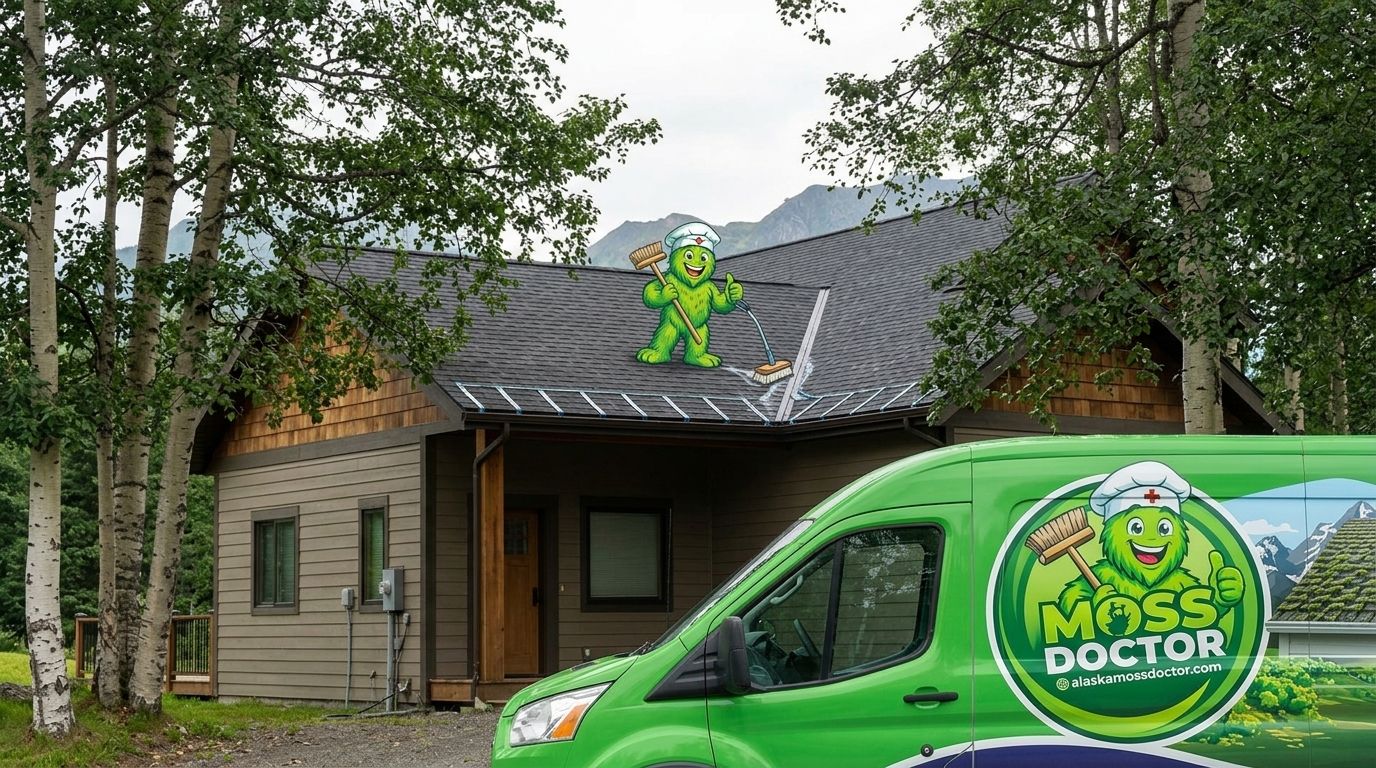
Roof cleaning for homes with heat tape systems means removing moss, algae, and black streaks from a roof surface that also carries electrical heat cable along the eaves, valleys, and downspouts — without frying a connector, kinking a cable, or voiding the heat tape's warranty. Wasilla and Mat-Su Valley homeowners install heat tape specifically to stop ice dams, so the cleaning method has to protect that system, not just the shingles underneath it.
- Roof cleaning for homes with heat tape systems requires mapping cable runs before any rinse or treatment touches the roof.
- Soft washing at low pressure (roughly 50-100 psi) is the only method Alaska Moss Doctor recommends near heat tape clips and connectors in 2026.
- Moss grows fastest around heat tape zones because melted snow keeps those strips of roof wetter longer than the rest of the surface.
- Scheduling cleaning in late spring or early fall, before the 2026 heat tape season starts, avoids working around live, powered cable.
Why roof cleaning matters for homes with heat tape
Heat tape does one job: it melts a channel through snow and ice so water has somewhere to drain instead of backing up under shingles. That channel stays damp for weeks at a time during shoulder seasons, and damp roof surfaces are exactly where moss and algae take hold first.
The result is a pattern specific to this segment: moss and algae cluster along the same eave lines and valleys where the heat tape sits, not evenly across the roof. A cleaning crew that doesn't know where the cable runs is working blind on the exact section of roof most likely to have buildup — and most likely to have an exposed connector or clip nearby.
A cracked heat tape jacket or a pulled clip doesn't show up until the first freeze, when the system fails right where you need it most. Roof cleaning for homes with heat tape systems has to start with knowing the cable layout, not the moss layout.
Map the heat tape before you clean anything
Before any brush, rinse, or treatment touches the roof, the cable path needs to be identified and marked.
- Locate the power connection point and trace the run along eaves, valleys, and gutter lines
- Note every clip, fastener, and junction box location
- Flag transitions where cable crosses from roof to gutter to downspout
- Check whether the system is a self-regulating type or a fixed-wattage type, since damage tolerance differs
- Confirm the system is de-energized or scheduled for off-season cleaning before work starts
Skipping this step is the single biggest cause of heat tape damage during exterior cleaning, and it's avoidable with a 10-minute walk-around before equipment comes out.
Choose soft washing over pressure washing, every time
A pressure washer aimed at a roof with heat tape is a warranty claim waiting to happen. High-pressure water strips granules, forces water under shingle laps, and can rupture the outer jacket on heat cable at close range.
- Use low-pressure application, generally under 100 psi, for the entire roof surface
- Apply cleaning solution with a soft-wash sprayer, not a rotary or turbo nozzle
- Keep the wand at least a few feet back from any exposed cable or connector
- Let dwell time do the work instead of mechanical force
- Rinse from the ridge down, following gravity instead of forcing water upward into laps
Soft wash roof cleaning for asphalt shingle roofs covers the same low-pressure approach in more depth if your roof is asphalt shingle rather than metal.
Clear moss and debris around clips and eaves by hand first
Heat tape clips and fasteners trap needles, moss fragments, and granule buildup that a rinse alone won't move.
- Hand-clear debris from around every clip before applying any solution
- Use a soft brush, never a metal scraper, near cable runs
- Check gutter outlets where heat tape terminates for clogged debris
- Remove moss mats near valleys before they hold water against the cable jacket
- Re-check clip tension after clearing, since moss buildup can loosen fasteners over time
Time the cleaning around Alaska's heat tape season
Most Mat-Su Valley homeowners run heat tape from roughly October through April. Cleaning during that window means working around a live, powered system, which adds risk and limits what solutions can safely be applied.
- Schedule roof cleaning for late spring or early fall, outside the active heat tape window
- Confirm with the homeowner whether the system is currently powered before any visit
- Avoid chemical treatments that require extended dwell time right before winter power-up
- Build in a buffer of a few weeks between cleaning and re-energizing the system
- Check best time of year for roof moss removal in Alaska's climate for the broader seasonal window that applies to all Wasilla roofs, heat tape or not
Inspect the heat tape system after cleaning, not just before
A post-clean inspection catches anything the cleaning process disturbed, and it gives the homeowner a clear read on system condition heading into winter.
- Check every clip and fastener for loosening after brushing and rinsing
- Look for cracked or discolored jacket sections that weren't visible under moss
- Confirm the connector box is dry and free of debris
- Test continuity or power draw before the season starts, if the homeowner has that capability
- Document any damage found so it's clear the issue predates the cleaning visit
This step protects both the homeowner and the cleaning company. How to prevent ice dams after roof moss removal walks through what to check once moss is cleared and heat tape is the last line of defense.
Protect gutters and downspouts where heat tape terminates
Heat tape almost always runs into the gutter and down the downspout to keep the whole drainage path from icing over. That means gutter cleaning and roof cleaning can't happen as separate, disconnected jobs on these homes.
- Clear gutters of moss and debris before testing heat tape drainage
- Confirm downspout heat cable segments are clear of buildup at the outlet
- Check that gutter guards, if installed, aren't trapping cable against debris
- Coordinate gutter and roof cleaning on the same visit to avoid re-disturbing cable twice
How to protect gutters during roof moss removal has the fuller gutter-specific checklist.
Bring in a professional crew for the heat tape sections
DIY roof cleaning around electrical components carries real risk: a homeowner on a ladder with a pressure washer and no cable map is the exact scenario that damages heat tape. A professional soft-wash crew that maps cable runs first, uses low-pressure application, and inspects the system afterward removes that risk. Alaska Moss Doctor treats heat tape mapping as a standard step on every Wasilla-area roof cleaning job where cable is present, not an upsell.
Get your heat tape roof mapped and cleaned
Soft-wash roof cleaning built around your existing heat tape layout.
Comparing your options for a roof with heat tape
| Option | Best for | Key limitation |
|---|---|---|
| DIY hand scraping | Light debris removal on a low, accessible roof | No treatment for regrowth; risk of loosening clips by hand — Skip for anything beyond light debris |
| DIY pressure washer | Driveways, siding, not roofs with cable | High pressure can rupture heat tape jacket and strip granules — Skip |
| Standard soft wash, no cable mapping | Roofs with no heat tape installed | Doesn't account for connectors or clip locations — Wait, ask if the crew maps cable first |
| Professional soft wash with heat tape mapping | Wasilla and Mat-Su Valley homes with eave or valley heat cable | Requires scheduling outside the active heat tape season — Buy |
Common mistakes homeowners with heat tape make
- Pressure washing the whole roof to "get it done fast" — this is the single most common way heat tape jackets get damaged, and it's rarely caught until the cable fails mid-winter.
- Cleaning while the system is still powered on — working around live cable adds risk and limits which cleaning solutions are safe to use.
- Treating gutter cleaning and roof cleaning as separate jobs — heat tape runs continuously from roof to downspout, so splitting the work means someone re-disturbs the same cable twice.
- Assuming moss growth is even across the roof — it isn't. Heat tape zones stay damper longer and grow moss faster, so those sections need attention even when the rest of the roof looks clean.
- Skipping the post-clean inspection — a cracked jacket or loosened clip found in December, after the first freeze, is a much bigger problem than the same issue caught in September.
FAQ
Can you pressure wash a roof with heat tape installed?
No, standard pressure washing at high PSI can rupture heat tape's outer jacket and strip shingle granules. Soft washing at low pressure, generally under 100 psi, is the safe method for roofs with heat cable in 2026.
Does moss grow faster around heat tape on a roof?
Yes, the melted snow channel that heat tape creates keeps that strip of roof damp longer than the rest of the surface, which speeds up moss and algae growth right along the cable run.
What time of year is best for cleaning a roof with heat tape in Alaska?
Late spring or early fall works best, outside the roughly October-through-April window most Mat-Su Valley homeowners run their heat tape. Cleaning outside the active season avoids working around a powered system.
Will roof cleaning damage my heat tape system?
Only if the crew skips mapping the cable run first. A professional soft-wash approach that identifies clips, connectors, and the cable path before cleaning protects the system; an unmapped pressure wash does not.
Should heat tape be turned off before roof cleaning?
Yes, cleaning should happen while the system is de-energized whenever possible. This removes the risk of applying water or solution near a live connector.
Do gutters need cleaning at the same time as heat tape roof sections?
Yes, heat tape almost always terminates in the gutter and downspout, so gutter cleaning and roof cleaning should happen on the same visit to avoid disturbing the same cable run twice.
How do I know if moss has damaged my heat tape?
Look for cracked or discolored jacket sections, loosened clips, or debris packed tightly against connectors once moss is cleared. A post-clean inspection catches these issues before the season starts.
Is soft washing safe for both asphalt shingle and metal roofs with heat tape?
Yes, low-pressure soft washing works on both roof types, though solution dwell time and rinse technique differ slightly between asphalt shingle and metal surfaces.
One last thing
The part most homeowners miss: heat tape doesn't fail in isolation. It fails at the exact spot where moss held moisture against the jacket all summer, which means the roof section that looks the mossiest in July is usually the same section that will ice up first in December if the cable underneath took damage. Clearing that moss before the 2026 heat tape season starts isn't cosmetic — it's the maintenance step that keeps the ice dam system working when the temperature drops.