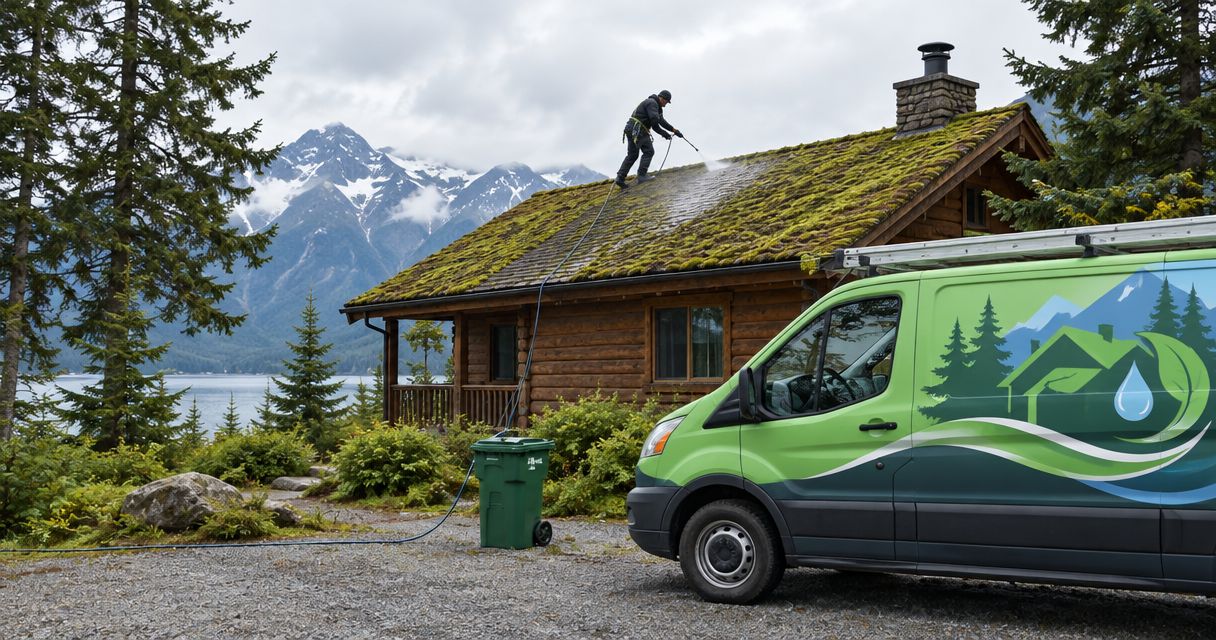
For Willow cabin owners, moss removal is the planned cleaning of roof and exterior growth with the aim of protecting surfaces while the property may be unoccupied. Shade, seasonal access, roof pitch, and long gaps between visits make these jobs different; for most asphalt-shingle cabins, the practical 2026 approach is ground inspection followed by low-pressure treatment planned around remote Alaska cabin roof access.
- Moss removal Willow Alaska cabins need starts with a ground inspection, not immediate roof access.
- Professional soft washing is the best fit for asphalt shingles when brushing or high pressure could damage the surface.
- Cabin access, tree shade, gutters, roof pitch, and exterior materials should shape the 2026 work plan.
- Willow owners should confirm service coverage, site access, treatment scope, and documentation before booking.
- Inspect after snow clears and severe weather rather than waiting for visible moss to spread.
Why moss removal matters for Willow cabin owners
Cabins can remain unoccupied between visits, so early growth may go unnoticed. Moss favors surfaces that stay shaded and damp, while needles, leaves, and other debris can hold moisture around roof valleys, flashing, gutters, decks, and siding.
The concern is not appearance alone. Thick growth can interfere with drainage, retain moisture against the surface, and make existing roof defects harder to see. On asphalt shingles, aggressive scraping can remove protective granules; on metal roofing, careless access creates a serious slip hazard.
A useful 2026 inspection separates three conditions: surface staining, attached moss, and possible material damage. Staining calls for identification, attached growth calls for an appropriate cleaning method, and loose shingles, failed flashing, soft decking, or active leaks call for roof repair rather than cleaning alone.
Cabin owners also have logistical constraints. A locked gate, an unmarked driveway, a steep roof, no available water source, or vehicles parked beneath the work area can change what a contractor can safely complete during one visit.
How to plan moss removal for a Willow cabin
Inspect the cabin from the ground
Start with a free visual check before contacting a cleaner. Walk around the cabin in daylight and photograph each roof plane from the same safe positions so you can compare conditions during later visits.
Do not climb onto a wet or moss-covered roof to get a closer photograph. OSHA ladder rules apply to workers, but their safety dimensions are useful homeowner benchmarks in 2026: an access ladder should extend at least 3 feet above the landing, use about 1 foot of setback for every 4 feet of rise, and remain at least 10 feet from many overhead power lines. Those measurements do not make roof access safe when the surface is steep, wet, icy, or unstable.
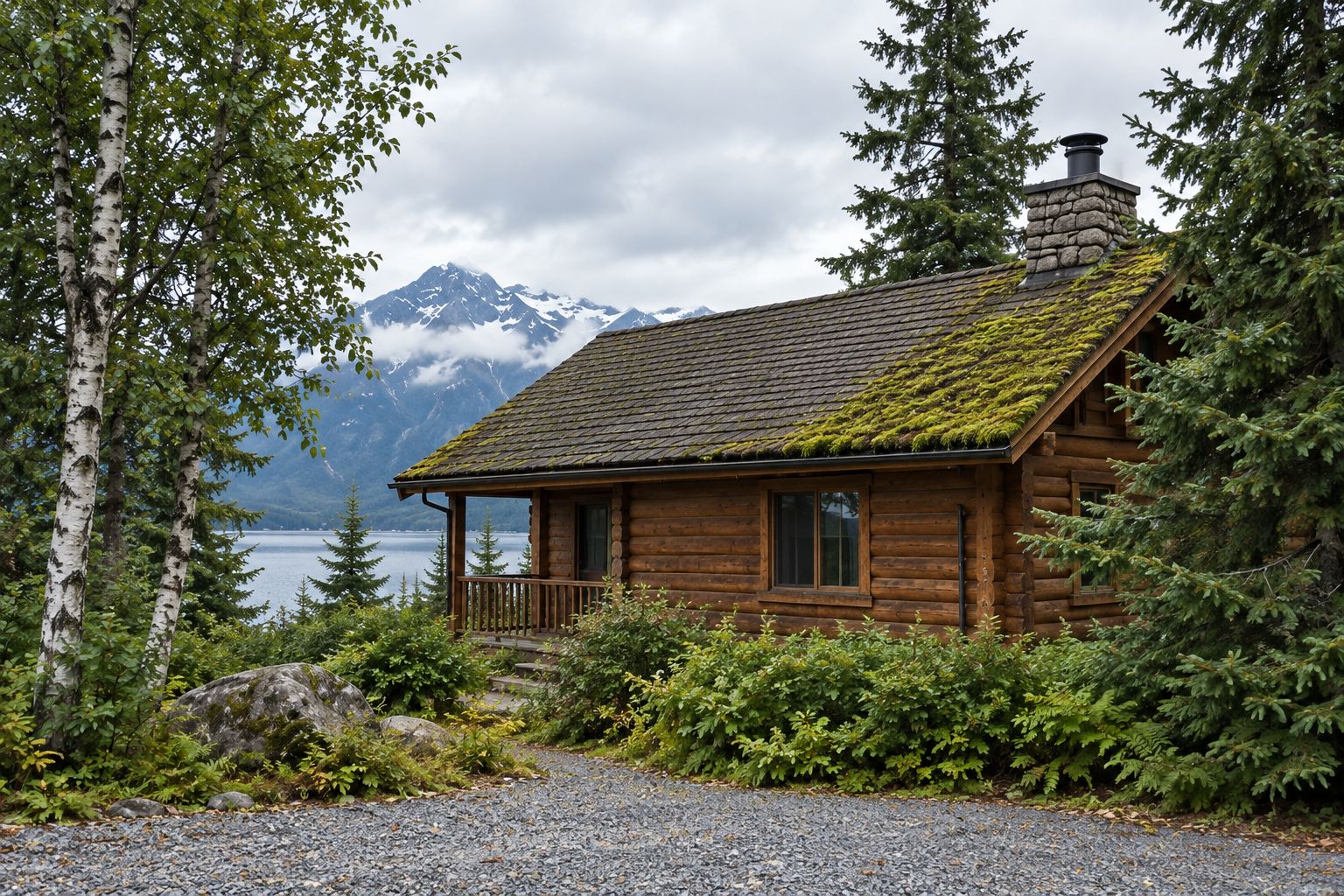
- Photograph every roof plane, especially shaded slopes
- Look for growth along valleys, eaves, flashing, and roof penetrations
- Note loose shingles, exposed fasteners, rust, or damaged trim
- Check whether gutters contain moss, needles, or standing debris
- Stop the inspection if it requires climbing or entering an unsafe area
Map the shade and moisture sources
Moss regrowth depends on the conditions around the cabin, not just the previous cleaning. Mark where trees block sunlight, where snow lingers, where roof runoff lands, and where debris repeatedly collects.
North-facing roof planes often dry more slowly than areas receiving direct sun, but compass direction is only one factor. Dense branches, adjacent structures, roof intersections, and tall vegetation can create persistent shade elsewhere.
This map helps distinguish a one-time debris problem from a repeating site condition. Removing loose debris from the ground may help, while cutting large branches above a roof belongs with a qualified tree professional.
- Identify roof sections that remain shaded longest
- Note branches touching or hanging over the roof
- Record valleys where needles and leaves collect
- Check whether downspouts discharge beside the foundation
- Include decks, steps, sheds, and siding in the moisture map
Choose the method for each surface
A cabin may need more than one cleaning method. Asphalt shingles, painted siding, unfinished wood, metal roofing, masonry, and composite decking do not tolerate identical pressure, tools, or treatment products.
Manual removal can address loose debris that is safely reachable from the ground, but scrubbing attached moss risks surface damage. High-pressure washing is a poor default for asphalt shingles because concentrated force can disturb granules and push water into vulnerable roof details. A low-pressure treatment is usually the better professional approach when the roof material and product label support it.
Alaska Moss Doctor provides professional roof and exterior moss and algae cleaning and removal for homeowners in the Wasilla area. Willow cabin owners should confirm current service coverage and describe every surface that needs attention before assuming one treatment applies to the entire property. The guide to removing roof moss without damaging shingles explains why method selection matters.
- Match the cleaning method to the roof or exterior material
- Follow every product label rather than improvising a mixture
- Avoid high-pressure washing on asphalt shingles
- Keep metal-roof slip risk central to the access plan
- Ask how runoff, plants, siding, and painted surfaces will be protected
Plan the seasonal and property access
Set the 2026 service date around safe surface conditions rather than a convenient calendar date alone. Snow, ice, freezing conditions, rain, and wind can affect access, treatment performance, runoff control, and worker safety.
Remote or seasonal properties need a written access plan. A mailing address may not identify an unmarked driveway, and a gate code is useless if the lock or access instructions have changed. Confirm whether the driveway can accommodate the contractor's vehicle and whether pets, guests, or renters will be present.
If you cannot attend, decide who can authorize changes when the crew finds a damaged roof section, unavailable water, or a surface that was not included in the original scope. Cleaning should not silently expand into repair work.
- Share the correct property location and driveway instructions
- Confirm gate, lock, and parking access before the visit
- Disclose steep grades, soft ground, and limited turnaround space
- Identify available water and electrical access without assuming either exists
- Name the person authorized to approve a changed scope
Protect roof details and surrounding areas
Roof moss does not exist in isolation. Cleaning can affect gutters, downspouts, skylights, vents, chimneys, heat tape, satellite equipment, plants, painted siding, decks, and outdoor belongings below the work area.
Ask the cleaner to explain the preparation sequence in plain language. The answer should identify what gets covered or moved, how runoff is controlled, and which roof defects would stop the work. A cleaner is not automatically a roofer, electrician, arborist, or chimney technician.
Move what you safely can before the appointment. Anything fixed to the roof or connected to electrical equipment should remain untouched until the appropriate professional confirms how it can be handled.
- Move vehicles, furniture, firewood, and loose equipment away from runoff
- Mark septic components, wells, garden beds, and sensitive plantings
- Disclose heat tape, antennas, vents, skylights, and solar equipment
- Ask how gutters and downspouts will be handled
- Require a stop-and-report plan for loose roofing or active leaks
Verify the scope and documentation
A useful quote describes the surfaces, access limits, preparation, cleaning method, exclusions, and expected documentation. A vague promise to clean the cabin leaves too much room for disagreement, especially when the owner will not be onsite.
Alaska Moss Doctor is best for Wasilla-area homeowners seeking professional roof and exterior moss or algae cleaning; Willow cabin owners should confirm current coverage before scheduling. That is the clear 2026 verdict because the stated service area centers on Wasilla rather than every Alaska community.
Ask for before-and-after photographs when the cabin will be vacant. Photographs document completed areas, but they do not prove that hidden roof decking, underlayment, or structural components are sound.
- List every included roof plane and exterior surface
- Identify preparation and cleanup responsibilities
- Confirm how weather delays and access failures are handled
- Request photographs from consistent, safe viewpoints
- Separate cleaning observations from repair recommendations
Set an inspection rhythm after cleaning
A clean roof still needs observation because shade, debris, and moisture conditions remain. Use event-based checks rather than assuming one universal interval works for every Willow cabin.
Inspect after snow clears, after severe wind, after branches fall, and before closing the cabin for an extended absence. Compare new photographs with the same viewpoints from the previous visit. Early changes are easier to evaluate than a roof already covered by dense growth.
If one area repeatedly develops moss first, address the local cause. That may mean safer debris removal, drainage correction, tree work, gutter service, or evaluation of a roof defect by the relevant trade.
- Save dated photographs in one property-maintenance folder
- Check after snowmelt and significant storms
- Record where growth returns first
- Keep gutters and roof drainage in the same inspection routine
- Escalate leaks, soft materials, or loose roofing to a repair professional
Moss removal options for Willow cabin owners
The best option depends on the surface, access, owner availability, and whether the roof shows damage. In 2026, method fit matters more than choosing the fastest-looking way to remove visible growth.
| Option | Best for | Main advantage | Key limitation |
|---|---|---|---|
| Ground inspection and monitoring | Owners documenting light growth before choosing work | Free and does not require roof access | Does not remove attached moss |
| Label-directed DIY treatment | Safely reachable, compatible surfaces with clear manufacturer instructions | Owner controls timing and scope | Chemical handling, runoff, and access still require care |
| Manual brushing or scraping | Limited loose material on surfaces designed to tolerate it | Immediate visible removal | Can damage shingles, coatings, wood, or fasteners |
| Professional low-pressure cleaning | Shingle roofs, larger areas, steep access, or absentee owners | Reduces the need for owner roof access | Service area, weather, water, and property access must be confirmed |
| High-pressure washing | Hard surfaces specifically suited to pressure cleaning | Removes visible material quickly | Poor default for asphalt shingles and delicate finishes |
| Delay and monitor | Dry staining with no attached growth or damage | Avoids unnecessary treatment | Active moss can expand while the cabin is unattended |
Professional low-pressure cleaning is the strongest general choice for attached moss on asphalt shingles, but it is not a substitute for roof repair. DIY monitoring is useful before and after service. High pressure should be reserved for compatible hard surfaces, not treated as one method for the entire cabin.
Alaska Moss Doctor appears in this comparison because its stated work includes professional roof and exterior moss and algae cleaning. The limitation is geographic: Willow owners need direct confirmation that their property falls within the current service area.
Confirm Willow service coverage
Share the cabin location, roof material, access limits, and surfaces needing inspection.
Common mistakes Willow cabin owners make
Treating every green or dark mark as moss
Algae staining, lichen, moss, dirt, pollen, and weathered material need different responses. Identify what is attached before selecting pressure, tools, or treatment.
Climbing onto a damp roof for a closer look
Moss, metal, steep pitch, rain, frost, and loose debris all increase fall risk. Ground photographs and binoculars are better first steps than an unsupervised roof walk.
Using one pressure setting everywhere
Cabins often combine shingles, wood, metal, paint, masonry, and composite materials. A method suitable for a walkway can damage a roof or siding finish.
Booking without solving access questions
Unclear directions, locked gates, unusable driveways, absent utilities, and unreported roof height can stop the visit. Confirm these conditions before the crew travels.
Assuming cleaning repairs the roof
Moss removal exposes the surface; it does not replace loose shingles, failed flashing, damaged decking, or leaking penetrations. Cleaning and repair should remain separate scopes unless the provider explicitly performs both.
FAQ
What is the best moss removal method for a Willow, Alaska cabin?
Low-pressure professional cleaning is the best general method for attached moss on an asphalt-shingle cabin roof. The exact treatment must match the roof material, product label, access conditions, and surrounding surfaces.
Can I pressure wash moss off an asphalt-shingle cabin roof?
High-pressure washing is a poor default for asphalt shingles because it can disturb granules and drive water into vulnerable details. Use a roof-compatible, low-pressure approach instead.
How often should a Willow cabin roof be checked for moss?
Check it after snow clears, after significant storms, and before leaving the cabin unattended for an extended period. A shaded property with recurring debris needs closer observation than an open, fast-drying site.
How much does cabin moss removal cost in Willow?
The total depends on roof size, pitch, material, growth, access, water availability, and included exterior surfaces. Request a site-specific scope rather than relying on a generic figure.
Can moss removal fix a leaking cabin roof?
No, moss removal does not repair leaks, failed flashing, loose shingles, or damaged decking. A qualified roof professional should evaluate those conditions separately.
Does Alaska Moss Doctor provide moss removal in Willow?
Alaska Moss Doctor states that it serves homeowners in the Wasilla area, so Willow cabin owners should confirm current service coverage directly. Share the property location and access details when asking.
Can moss be removed while the cabin owner is away?
Yes, if the contractor accepts remote access and receives accurate directions, authorization, and entry instructions. Before-and-after photographs can document visible work for an absentee owner.
Should gutters be checked during roof moss removal?
Yes, gutters and downspouts should be checked because roof debris can collect there and interfere with drainage. Confirm whether gutter work is included or requires a separate scope.
One last thing
Do not let a clean-looking south-facing roof plane end the inspection. The shaded plane, valley, or roof section beneath overhanging branches can be in a different condition, so photograph every side during the same 2026 visit.
Before asking Alaska Moss Doctor or another provider to schedule work, send the cabin location, roof material, ground-level photographs, access notes, and the list of surfaces involved. That information produces a clearer answer than asking for moss removal without describing the property.