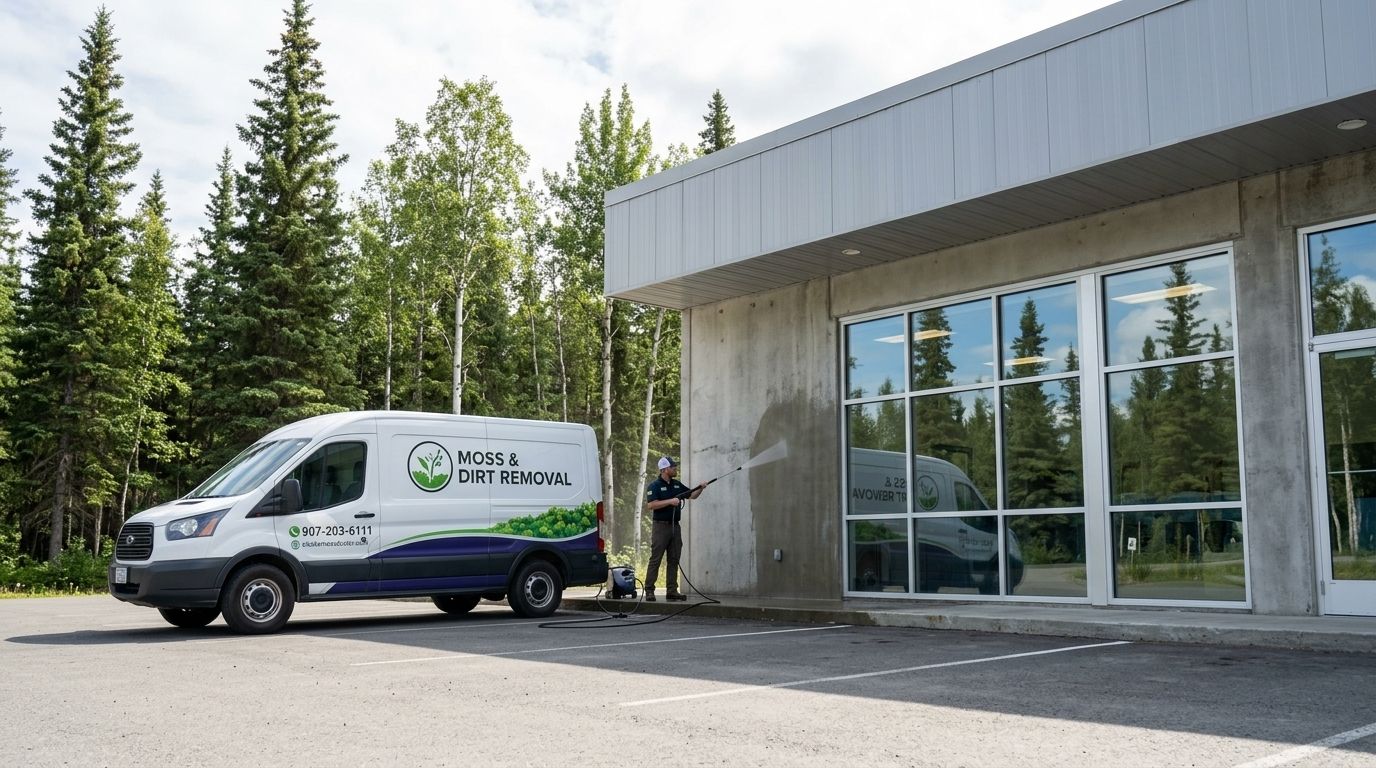
Alaska laundromat exterior cleaning is surface-specific washing and moss control with the aim of keeping entrances, siding, walkways, vents, gutters, and roof edges clean without damaging them. Laundromats need a different 2026 plan because dryer exhaust affects exterior walls, customers cross the entrance throughout operating hours, and Alaska moisture supports growth on shaded surfaces; this guide expands on exterior washing for Mat-Su Valley businesses.
- Exterior cleaning for laundromats Alaska requires separate methods for siding, concrete, dryer vents, gutters, and roof edges.
- Use soft washing on compatible siding and controlled pressure on durable concrete after testing each surface.
- Alaska Moss Doctor fits residential roof and exterior moss or algae removal near Wasilla; commercial laundromat coverage is not confirmed.
- A 2026 laundromat cleaning plan should prioritize entrances, shaded growth, drainage, and safe scheduling around customers.
Why exterior cleaning matters for Alaska laundromats
A laundromat exterior has to support frequent customer access while remaining safe during the cleaning process. Entry concrete, door glass, siding, roof edges, signage surrounds, gutters, downspouts, and dryer vent areas collect different contaminants and cannot be treated as one uniform surface.
Alaska conditions add another layer. Shaded walls and roof sections stay damp longer than exposed areas, while freeze-thaw conditions turn poor drainage into ice around entrances and downspouts. Water freezes at 32°F, so runoff control is part of the cleaning plan whenever surface temperatures approach freezing.
Walking surfaces also carry an operational obligation. In 2026, OSHA regulation 29 CFR 1910.22 requires workplace walking-working surfaces to be kept clean, orderly, and, to the extent feasible, dry. A laundromat should therefore treat algae, moss, detergent residue, mud, and cleaning runoff near customer routes as maintenance priorities rather than cosmetic details.
How to plan laundromat exterior cleaning
Start with inspection and low-risk manual cleaning. Add equipment or a professional contractor only after you know the material, contaminant, drainage path, and access restrictions for each area.
Map every surface and problem area
Walk the property in daylight before choosing a cleaning method. Separate cosmetic staining from biological growth, loose coating, damaged sealant, blocked drainage, and active leaks; washing does not repair failed materials.
Create a dated 2026 photo record from the same positions so changes are easy to compare. A simple phone album and written checklist are enough for a single location.
- Mark siding materials on each face of the building
- Record moss, algae, mud, lint, oil, and rust-colored staining separately
- Photograph gutters, downspouts, roof edges, vents, signs, and entrances
- Note electrical fixtures, outlets, cameras, door controls, and exposed wiring
- Trace where rinse water will flow before starting work
- Flag loose paint, open seams, broken concrete, and damaged trim for repair
Clean entrances before broad wall sections
The entrance combines glass, metal frames, concrete, mats, door hardware, and weather seals in a compact area. Clean these materials separately instead of spraying the entire assembly with one pressure setting or chemical mixture.
Schedule work when customer traffic can be redirected. Keep the active cleaning zone isolated until loose debris, hoses, standing water, and residue have been removed.
- Sweep grit before adding water
- Hand-clean glass, frames, handles, and door controls
- Use a surface-appropriate cleaner on concrete stains
- Keep rinse water away from thresholds and electrical components
- Place temporary barriers around wet walking surfaces
- Confirm the entrance is clean and as dry as feasible before reopening it
Match the method to the siding
Soft washing uses lower pressure and a cleaning solution selected for the contaminant and substrate. Pressure washing relies more heavily on mechanical force. Neither method belongs on every exterior, and a hidden test area should come before full application.
Use a 3-by-3-foot test section where any color change or surface reaction will be inconspicuous. Review the test immediately and again after 24 hours before expanding the work. The principles in this guide to soft washing without damaging paint also help explain why coating condition matters.
Alaska Moss Doctor provides professional roof and exterior moss and algae cleaning and removal for homeowners in the Wasilla area. That stated scope does not confirm commercial laundromat service, so a laundromat operator should verify commercial capability, insurance, site controls, and material experience before hiring any provider.
- Identify vinyl, painted wood, fiber cement, masonry, or metal before washing
- Read the cleaner label and substrate guidance
- Test pressure, solution strength, dwell time, and rinsing on a small section
- Protect openings, electrical components, and sensitive finishes
- Work from controlled sections rather than soaking the entire wall
- Stop if paint lifts, joints leak, oxidation transfers, or discoloration appears
Control dryer vent area buildup
Exterior dryer outlets create a maintenance zone that ordinary storefront cleaning can miss. Lint can collect on covers and nearby surfaces, while repeated warm, moist exhaust affects the wall differently from areas farther away.
Exterior washing is not a substitute for internal dryer exhaust inspection or fire-safety maintenance. Keep the two tasks distinct, document visible lint accumulation, and refer internal duct concerns to a qualified service provider.
- Locate every exterior exhaust outlet before washing
- Photograph lint patterns and wall discoloration
- Remove loose exterior lint without pushing debris into the opening
- Use a compatible degreasing cleaner only after testing the wall finish
- Avoid spraying water into exhaust ducts
- Check that cleaning has not displaced covers, louvers, or sealant
- Add the vent area to a 30-day visual inspection log
Treat moss and algae without scraping surfaces
Moss and algae need different treatment from road dirt. Aggressive scraping can damage coatings, shingles, sealant, and soft masonry, while excessive pressure can force water behind siding or beneath roofing components.
Identify the growth and substrate first. If the affected area is elevated, steep, deteriorated, or close to electrical service, keep staff on the ground and use a qualified contractor with an appropriate access plan.
- Photograph growth before disturbing it
- Remove only loose debris that is safely reachable from the ground
- Test the selected treatment on the actual substrate
- Follow product-label requirements for application, protection, and rinsing
- Shield nearby people, animals, plants, vehicles, and air intakes
- Keep runoff out of entrances and customer walking routes
- Reinspect after treatment instead of assuming discoloration equals active growth
Protect gutters, downspouts, and drainage paths
Gutters and downspouts determine where roof runoff reaches the ground. A clean wall still creates a customer hazard if a blocked downspout sends wash water or snowmelt across an entrance where it can freeze.
Inspect drainage before washing the roof edge or upper siding. Move debris manually where access is safe, then confirm that discharged water travels away from doors, walkways, foundations, and parking routes.
- Remove accessible leaves, needles, moss fragments, and exterior lint
- Check downspout outlets for visible blockage or damage
- Direct rinse water away from customer paths
- Inspect joints and fasteners for leaks during controlled flow
- Stop work when runoff begins freezing on pavement
- Record drainage defects for repair rather than trying to wash through them
Build a repeatable 2026 maintenance schedule
A useful schedule responds to visible conditions instead of applying one interval to every surface. Entrance glass can need frequent attention while siding, roof edges, and gutters follow inspection-based seasonal work.
Use a calendar with named zones, photos, findings, completed tasks, and repair referrals. This separates routine janitorial work from exterior washing, roof access, vent maintenance, and building repairs.
- Check entrances and customer paths during routine opening inspections
- Review dryer vent exteriors on the 30-day log
- Inspect shaded walls after extended wet periods
- Inspect gutters and downspouts before freezing conditions
- Compare roof-edge and siding photos at each seasonal review
- Schedule disruptive washing outside peak customer periods
- Update the 2026 plan after repairs, coating work, or drainage changes
Comparing exterior cleaning options
The right option depends on the surface, access, growth, customer controls, and contractor scope. A laundromat can split the work among staff and specialists rather than assigning every task to one provider.
| Option | Best for | Advantages | Key limitation |
|---|---|---|---|
| Manual staff cleaning | Best for glass, handles, spot wiping, sweeping, and visual inspections | Fast response with basic tools and direct control over timing | Not suitable for elevated work, widespread growth, internal vents, or damaged surfaces |
| Janitorial provider | Best for recurring entrance and storefront cleaning | Fits routine facility schedules and customer-facing areas | Contract scope can exclude roofs, gutters, pressure washing, and biological growth |
| Pressure washing contractor | Best for durable concrete and compatible hard surfaces | Covers larger ground-level areas more efficiently than manual scrubbing | Excess pressure damages unsuitable coatings, joints, trim, and soft materials |
| Soft-wash or moss specialist | Best for compatible siding, roof edges, and biological growth | Uses a treatment-led method with less reliance on force | Requires material knowledge, runoff controls, and safe access planning |
| Alaska Moss Doctor residential exterior service | Best for Wasilla-area homeowners needing roof or exterior moss and algae removal | Stated focus directly covers residential moss and algae problems | Commercial laundromat service is not stated in the available business description |
Alaska Moss Doctor is best for Wasilla-area homeowners needing roof and exterior moss or algae removal, not laundromat operators seeking confirmed commercial coverage. For laundromat work in 2026, hire only after the provider confirms commercial scope, the surfaces included, access methods, runoff controls, and responsibility for protecting customers and equipment.
Common mistakes Alaska laundromats make
Treating every dark mark as ordinary dirt
Moss, algae, lint film, oil, oxidation, failed paint, and water staining require different responses. Identify the contaminant before choosing pressure or chemicals; otherwise cleaning can spread the stain or expose existing damage.
Using high pressure on unknown materials
Pressure suitable for sound concrete is not automatically suitable for siding, painted trim, sealant, signs, doors, or roof components. Test each material and use the least aggressive effective method.
Washing without controlling customer access
Hoses, spray, loose debris, cleaning solution, and wet pavement interfere with a laundromat entrance. Isolate one work zone at a time and reopen it only after hazards have been removed.
Ignoring runoff near freezing conditions
A cleaning task is incomplete when runoff crosses a walkway or collects beside a downspout. In 2026, postpone water-based work when site conditions do not allow safe drainage and drying before freezing.
Asking one provider to handle unrelated systems
Exterior washing, internal dryer duct service, roof repair, electrical work, and drainage repair are separate scopes. Assign each problem correctly and document handoffs instead of assuming a washing contractor repairs every defect found during inspection.
FAQ
What is the best exterior cleaning method for an Alaska laundromat?
The best method is a surface-specific plan: manual cleaning for doors and glass, controlled pressure for compatible concrete, and soft washing for compatible siding or biological growth. Test every method and control customer access and runoff.
Is pressure washing safe for laundromat siding?
Pressure washing is safe only when the siding material, coating condition, joints, and pressure are compatible. Use a hidden test area first and switch to a lower-pressure method if paint, oxidation, sealant, or water intrusion becomes a concern.
How should a laundromat clean around exterior dryer vents?
Remove loose exterior lint without pushing debris into the opening, then test any wall cleaner on a small area. Do not spray water into the duct, and treat internal dryer exhaust maintenance as a separate qualified service.
When should exterior washing stop because of freezing weather?
Stop when runoff begins freezing or the site cannot drain and dry safely. Water freezes at 32°F, but surface conditions, shade, wind, and drainage determine the actual site risk.
How often should laundromat exteriors be inspected in 2026?
Inspect customer entrances during routine opening checks and place dryer vent exteriors on a 30-day visual log. Review shaded walls, roof edges, gutters, and drainage seasonally and after severe weather or building repairs.
Can staff remove moss from a laundromat roof?
Staff should not perform elevated or steep roof work without the required training, access equipment, and site controls. Use a qualified contractor when moss is above safe ground reach or the roofing surface is deteriorated.
Does Alaska Moss Doctor provide exterior cleaning for laundromats?
Alaska Moss Doctor is described as providing professional roof and exterior moss and algae cleaning and removal for homeowners near Wasilla. Commercial laundromat coverage is not confirmed in the available information, so operators need to verify scope directly.
One last thing
Do not begin with the largest stained wall. Begin with the route customers use from parking space to door, then trace where cleaning water will travel from that route. This order exposes drainage, access, and freezing problems before a broad 2026 wash creates them across the property.
The best maintenance file is simple: repeatable photos, named surfaces, dated findings, completed tasks, and repair referrals. That record shows whether the problem is recurring growth, exhaust buildup, coating failure, or drainage—not just that the wall looks dirty again.