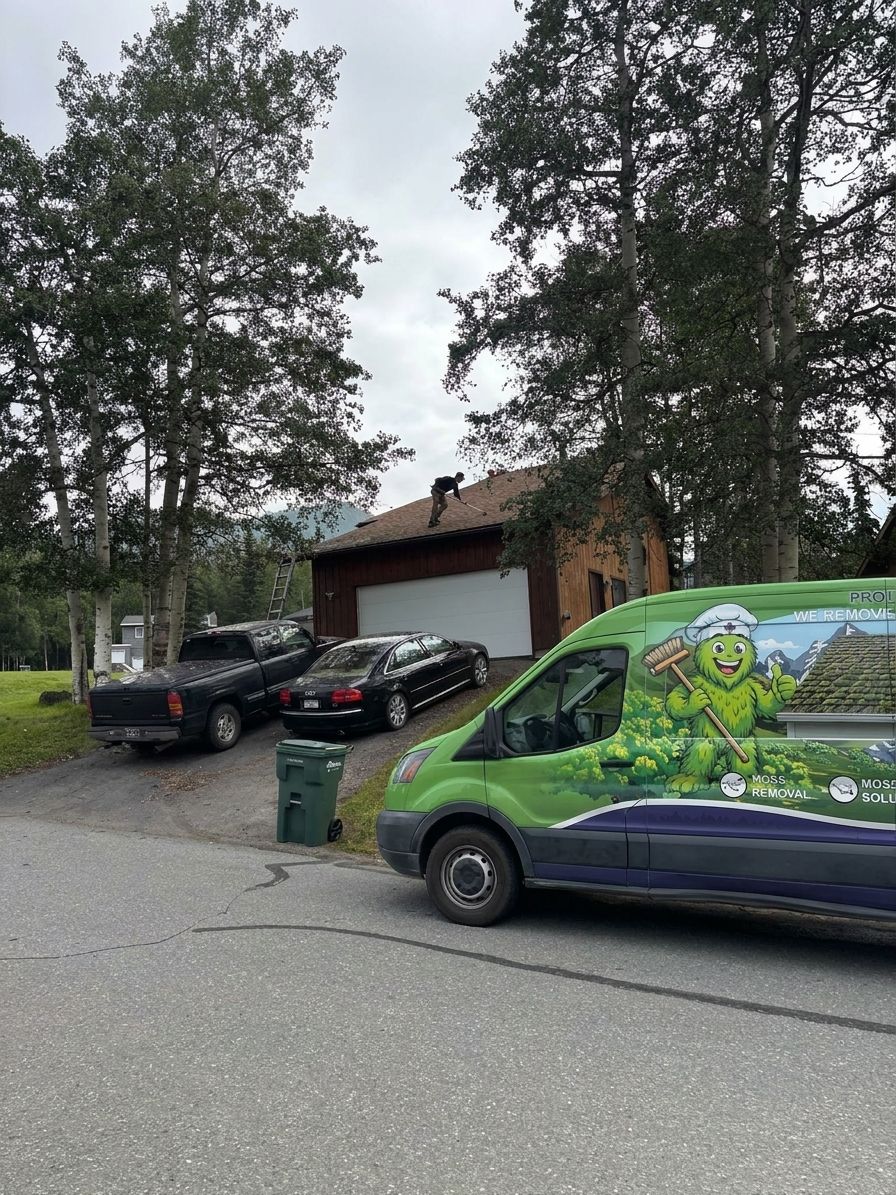
Exterior washing for Mat-Su Valley businesses is the professional removal of moss, algae, and built-up grime from roofs, siding, walkways, and fleet vehicles, done to protect the property and keep a storefront looking open for business. Commercial buildings in Wasilla, Palmer, and the surrounding valley carry heavier moss pressure than most Lower 48 storefronts because long shaded winters and steady moisture never let surfaces fully dry, and a plan built for one house doesn't scale to a multi-tenant lot, a fleet yard, or an HOA-managed commercial park.
- Soft washing is the safer choice for Mat-Su Valley commercial roofs, siding, and stucco in 2026 versus high-pressure rigs.
- May through September is the practical window for exterior washing before Alaska's fall freeze returns.
- Fleet vehicles and building exteriors can be washed on the same service call, cutting site visits for multi-location businesses.
- HOA-managed commercial lots need a documented, recurring wash schedule to avoid compliance notices.
- Alaska Moss Doctor's soft-wash approach treats moss at the root instead of just knocking off surface growth.
Why exterior washing matters for Mat-Su Valley businesses
A storefront with black streaking on the roofline or green film creeping up the siding reads as neglected before a customer ever walks in, and in a valley where moss regrowth is constant, that impression comes back fast without a maintenance plan. Property managers overseeing rentals, HOA boards, and business owners with a fleet parked outdoors all face the same root problem: shade, moisture, and cold cycles that never fully dry a north-facing surface. Alaska Moss Doctor's guide to commercial building washing in Wasilla breaks down what a commercial-scale service actually covers versus a residential-sized job.
The difference for businesses isn't just square footage. Commercial leases and HOA covenants often specify exterior maintenance obligations, insurance carriers ask about upkeep after a claim, and a fleet of branded vehicles parked outside the shop is doing marketing work whether it's clean or not. Skipping a wash cycle in 2026 doesn't just look bad — it can trigger a compliance letter or a lease dispute.
Update your exterior maintenance routine step by step
Inspect your roof, siding, and walkways first
Before booking anything, walk the property and document what's actually growing where. Most Mat-Su Valley commercial buildings show the worst moss on the shaded north slope and the least on the sun-facing side, which changes how a crew prices and schedules the job.
- Check the north-facing roof slope for green or black streaking, since it holds moisture longest
- Look at gutters and downspouts for moss debris causing backups
- Note paint peeling or caulk failure around windows and trim
- Photograph walkways and entrances for slip-hazard moss growth
- Confirm what your property insurance policy says about required exterior upkeep
Match the wash method to your building's materials
Stucco, vinyl, painted wood, and metal roofing all react differently to pressure and chemicals, and a one-size-fits-all wash damages at least one of them. Test a low-pressure rinse on a hidden panel before committing a crew to the whole building.
- Keep pressure washers under roughly 1,500 psi on painted or vinyl exteriors to avoid stripping finish
- Use a soft bristle brush and mild detergent for small storefront ledges and signage
- Avoid direct high-pressure streams on stucco or EIFS panels, which crack under force
- A soft-wash service applies lower pressure with a moss- and algae-specific solution that treats spores at the root rather than just blasting off surface growth, which is the faster path once a building has more than light staining
Wash fleet vehicles on the same service call
A branded van or truck parked in front of a shop with road grime and winter salt residue undercuts the same curb appeal a clean building buys you. Bundling fleet washing with the building exterior avoids paying for two separate site visits.
- Assign a crew member to hand-wash logo vehicles weekly during slow seasons
- Use a coin-operated wash bay for a handful of trucks if volume is low
- Log wash dates for DOT inspections or lease requirements
- Bundle fleet washing into the same visit as the building exterior service, which is covered in Alaska Moss Doctor's fleet washing guide for Alaska businesses
Build a schedule around Alaska's freeze-thaw calendar
Exterior washing in the Mat-Su Valley isn't a year-round task the way it might be in a milder climate. Water-based cleaning near freezing temperatures risks ice on walkways and roofs, so timing the job matters as much as the method.
- Target May through September, the valley's driest and warmest stretch
- Avoid scheduling right before an early October freeze event
- Plan a spring wash to remove winter grime buildup and a late-summer wash before snow load season
- Give steep or multi-story commercial roofs extra lead time, since crews need more scheduling flexibility for those jobs
Document washing for HOA and lease compliance
Commercial HOA boards and landlords increasingly write exterior maintenance clauses directly into covenants and lease agreements, and a violation notice is more expensive to fix reactively than a scheduled wash.
- Review your lease or HOA covenant for specific exterior maintenance language
- Keep dated before-and-after photos on file for compliance audits
- Some HOA boards require at least one documented exterior wash per year
- Property managers overseeing multiple commercial units should request one recurring service agreement instead of separate one-off calls, a topic covered directly in Alaska Moss Doctor's guide to exterior cleaning for HOA compliance
Vet a commercial vendor before signing a contract
Not every residential moss-removal company is set up to handle a commercial lot, a rental portfolio, or a fleet yard. A short vetting checklist saves a rebooking headache later.
- Ask for proof of commercial liability insurance, not just general coverage
- Request a written scope covering roof, siding, walkways, and fleet if needed
- Confirm soft-wash chemicals are rated for use near landscaping and stormwater drains
- Get a recurring schedule commitment in writing, not just a single quote
Comparison: exterior washing options for Mat-Su Valley businesses
| Option | Best for | Key limitation |
|---|---|---|
| In-house crew with a pressure washer | Small storefronts doing quick cleanups between seasons | High pressure can strip paint or crack stucco, and it pulls staff off billable work — Hold for anything beyond light dust |
| General handyman or landscaping contractor | Businesses that already have a maintenance vendor on-site | Most lack soft-wash equipment and don't treat moss root systems, so growth returns within a season — Wait unless the job is minor |
| Professional soft-wash service (Alaska Moss Doctor) | Multi-tenant buildings, HOA-managed commercial lots, and businesses needing fleet washing bundled in | Requires scheduling around the valley's short dry-weather window each year — Buy for anything commercial-scale in 2026 |
Get a commercial exterior wash quote
Roof, siding, walkway, and fleet washing scoped for your Mat-Su Valley property.
Common mistakes Mat-Su Valley businesses make
- Washing only the storefront glass and skipping the roof. The north-facing slope builds moss fastest in valley shade, and it's the part customers never inspect but insurers do.
- Running a residential pressure washer on stucco or EIFS panels. It cracks the surface and can void a manufacturer warranty on the exterior finish.
- Treating fleet washing as a separate vendor relationship. Splitting building washing and vehicle washing into two contracts doubles site visits for no added benefit.
- Waiting for an HOA violation notice instead of scheduling proactively. A spring wash costs less time and hassle than responding to a compliance letter in July.
- Booking exterior washing in October or later. Freezing temperatures make water-based cleaning unsafe for both surfaces and crews working at height.
FAQ
What does exterior washing include for a Mat-Su Valley business?
It typically covers the roof, siding, walkways, and entryways, with fleet vehicles added as an optional bundle. The exact scope should be written into a service agreement before work starts.
How often should a commercial building in Wasilla get washed?
Most commercial properties in the Mat-Su Valley need a wash once or twice a year, typically in spring and late summer. Buildings with heavy shade or north-facing roof slopes often need the more frequent schedule.
Is soft washing safe for storefront glass and signage?
Yes, soft washing uses lower pressure than a standard power washer and is generally safer around glass, signage, and painted trim. A crew should still test a hidden panel first on any new building material.
Can fleet vehicles be washed at the same time as the building?
Yes, bundling fleet washing into the same site visit as the building exterior avoids paying for two separate service calls. It also keeps vehicle cleaning on the same recurring schedule as the property.
Does exterior washing help with HOA compliance?
Yes, documented and recurring exterior washing is often required directly in HOA covenants for commercial lots. Keeping dated before-and-after photos on file supports compliance if a board requests proof.
What's the best time of year for commercial exterior washing in Alaska?
May through September is the practical window, since it avoids freeze risk on roofs and walkways. Scheduling a spring and a late-summer wash covers both the winter grime buildup and pre-snow prep.
How much does commercial exterior washing cost in Mat-Su Valley?
Cost depends on square footage, roof pitch, moss coverage, and whether fleet washing is bundled in. Get a scoped, written quote rather than estimating from a per-square-foot rule of thumb.
Can rental property managers bundle roof and exterior washing?
Yes, managers overseeing multiple rental units commonly set up one recurring service agreement instead of booking each unit separately. This keeps pricing and scheduling consistent across a portfolio.
One last thing
The north-facing roof slope on a commercial building often looks fine from the parking lot even when it's carrying the heaviest moss load on the property, because that side never gets enough sun to dry out between October and April. A walk-around inspection that only checks the customer-facing elevation misses exactly the spot that causes the most damage by the time it's visible from the street.