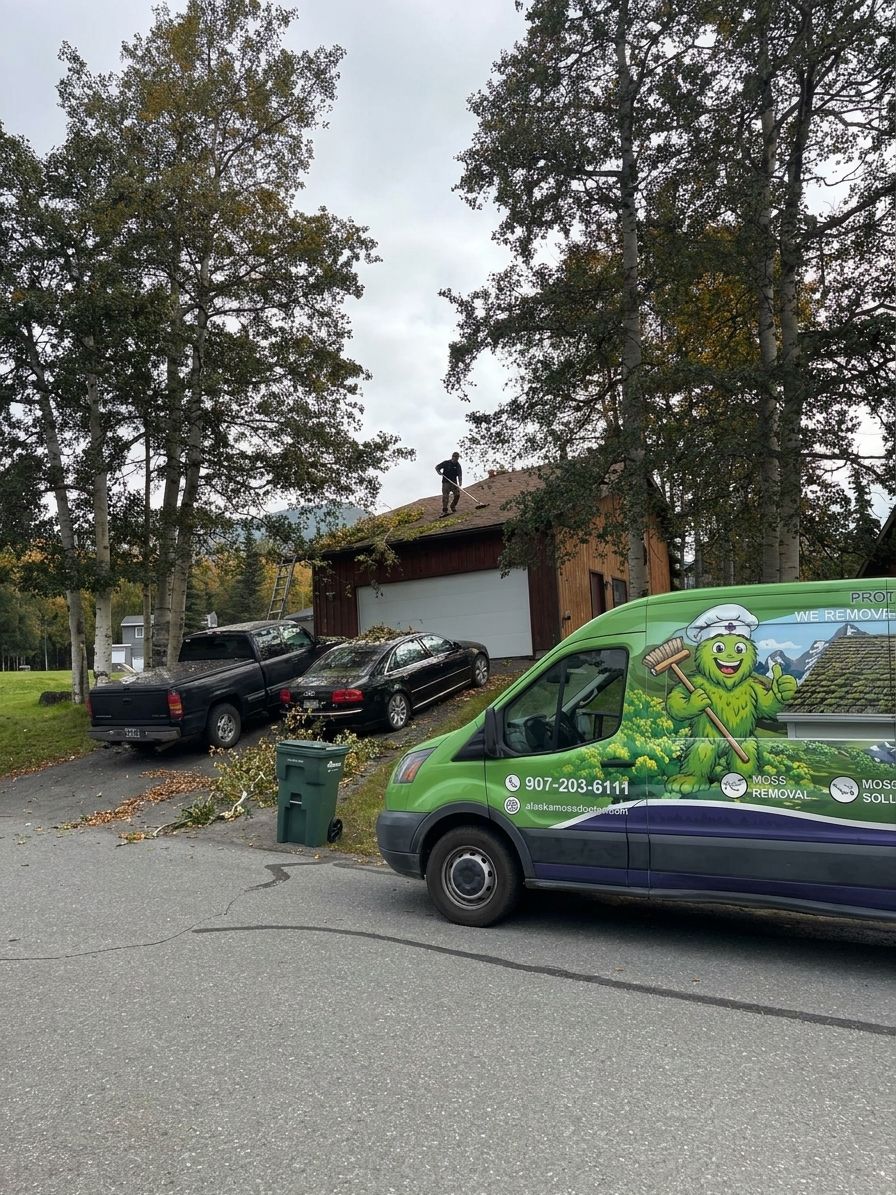
Storm debris cleanup for Wasilla and Mat-Su Valley homeowners is the combined removal of wind-blown branches, needles, and grit from a roof along with the moss mats holding that debris in place, done with the aim of stopping trapped moisture from working under shingles before the next freeze. Alaska storms rarely drop debris on a clean roof — they drop it onto months of shaded, damp moss growth, and the two problems have to be cleared together or the debris just packs back into the same moss within weeks. Alaska Moss Doctor treats storm debris cleanup and roof moss removal as one visit for exactly this reason.
- Storm debris cleanup roof cleaning works best paired with moss removal, since trapped debris holds moisture that feeds regrowth.
- Clear storm debris within 2-3 weeks of a storm in 2026, before moss mats reseal around it over freeze-thaw cycles.
- DIY debris removal suits single-story, low-pitch roofs; steep or moss-fused roofs need a soft wash crew.
- Skip pressure washing during storm debris cleanup on asphalt shingles — it strips granules and can void the shingle warranty.
Why storm debris cleanup matters for Mat-Su Valley roofs
Wind gusts and early snow load push spruce needles, cottonwood branches, and grit into roof valleys, chimney flashing, and gutter runs across Wasilla, Palmer, and the wider Mat-Su Valley every fall and again in spring breakup. On a bare roof, that debris blows off with the next gust or washes off with the next rain. On a roof that already carries moss — common on the north-facing and heavily shaded slopes typical of treed Alaska lots — the debris locks into the moss mat and stays put through repeated freeze-thaw cycles.
That combination does two things a single problem doesn't. It holds water against the shingle mat longer than either debris or moss alone would, and it blocks the granule surface from drying out between storms. Left through a winter, the same trapped spot is usually where a spring inspection finds curled shingles or soft decking. Storm debris cleanup roof cleaning in 2026 has to treat both the debris and the moss underneath it, or the cleanup only lasts until the next weather event.
Inspect the roof before you touch anything
A walk-around before any cleanup tells you whether you're dealing with loose debris, debris fused into moss, or damage the debris is currently hiding. Skipping this step means guessing at the right removal method once you're already on a ladder.
- Walk the perimeter after a storm and note debris piles in valleys, at chimney flashing, and along gutter lines
- Check north-facing and shaded slopes first — that's where moss holds debris the longest
- Look inside the attic for fresh water staining after heavy rain or snow melt
- Photograph missing, curled, or granule-bare shingles before clearing debris, so storm damage is documented separately from moss damage
- Check gutters from the ground for overflow streaks, a sign debris and moss are already blocking flow
Clear loose debris by hand first
The manual approach handles anything that hasn't bonded to the roof surface yet, and it's the right first move even when a professional visit follows.
- Use a roof rake or a leaf blower from a stable ladder position rather than walking the roof deck
- Work from the ridge down, never up, so cleared debris doesn't re-lodge under shingles above it
- Skip metal rakes and stiff-bristle brooms directly on asphalt shingles — they tear the granule mat
- Bag needles and branch fragments as you go instead of letting them pile in gutters
- Flag any debris that's fused into a moss mat rather than sitting loose — that spot needs treatment, not just raking
Bring in a soft wash crew for anything fused into moss
This is where a homeowner working solo runs out of good options. Once debris is cemented into a moss mat by months of moisture, hand tools pull granules off with it, and that's real damage to a shingle roof's remaining lifespan. A professional soft wash applies a moss-specific treatment first, loosens the bond between debris and shingle, then rinses both off together at low pressure. Alaska Moss Doctor runs storm debris cleanup and roof moss removal as one visit instead of two separate jobs, which matters on the steep Wasilla and Palmer rooflines where a second ladder trip adds real risk for no added benefit.
Protect gutters and downspouts while you work
Gutters take the overflow from whatever comes off the roof during cleanup, so protecting them mid-job prevents a second cleanup later.
- Cover downspout openings with mesh before rinsing so loosened moss and grit don't reach the pipe
- Flush each gutter run section by section rather than all at once, checking for standing water
- Check hangers and brackets for movement — snow load plus debris weight pulls them loose over a single winter
- Clear the first three feet of downspout by hand if water backs up during the flush
Flush and test the entire gutter system
A gutter that looks clear from the ground can still be holding water further down the run.
- Run water from a hose at the high end of each gutter run and time how long it takes to clear
- Watch for water sheeting over the gutter edge instead of draining — that signals a blockage further down
- Re-check downspout discharge points for buried grit and needles left from the debris cleanup
- Confirm gutters pitch correctly toward the downspout; storm-loosened brackets sometimes reverse that pitch
Check for damage the debris and moss were hiding
Debris and moss both mask the roof surface underneath them, so this check happens after cleanup, not before.
- Look for soft spots or discoloration where debris sat longest, usually valleys and areas behind chimneys
- Check flashing edges for lift, since trapped debris holds moisture that works metal loose over time
- Note any shingle tabs that lifted along with the moss mat during removal
- Compare against your pre-cleanup photos to separate storm damage from anything cleanup-related
Schedule the next cleaning before freeze-up
Moss regrows fastest on the same shaded slopes that trap storm debris, so a single cleanup rarely holds through a full Alaska winter on its own. Pair the current cleanup with a plan for the next one — the best time of year for roof moss removal in Alaska usually falls in late summer or early fall, before the ground freezes, not in spring once moss has already reset around any leftover debris.
Storm debris cleanup options for Mat-Su Valley homes
| Option | Best for | Key limitation |
|---|---|---|
| DIY roof rake and hand debris removal | Single-story, low-pitch roofs with loose debris and no established moss | Doesn't remove moss roots holding debris in place — Wait, then treat |
| Soft wash roof cleaning | Storm debris tangled into moss on any roof pitch | Needs a crew comfortable working steep Alaska rooflines — Buy |
| Pressure washing | Not recommended for asphalt shingle roofs | Strips granules and can void the shingle warranty — Skip |
| Gutter guard installation | Homes that collect repeat storm debris every season | Doesn't touch moss already established on the roof — Hold as prevention only |
Get storm debris off your roof
Combined debris and moss removal for Wasilla and Mat-Su Valley homes.
Common mistakes Wasilla homeowners make with storm debris cleanup
- Pressure washing debris and moss off together, which strips granules from asphalt shingles and can void the manufacturer warranty
- Waiting until spring breakup to clear debris, letting moss mats reseal around it over the winter freeze-thaw cycle
- Clearing the roof surface but skipping the gutters, so trapped debris downstream causes overflow or ice dams later in winter
- Climbing steep Wasilla and Palmer rooflines without fall protection to hand-pull debris that a soft wash would loosen safely
- Treating every dark patch as moss when it's storm debris residue, or the reverse, and picking the wrong removal method for the spot
FAQ
What's the best storm debris cleanup roof cleaning method in Alaska?
Soft wash cleaning that treats moss chemically before rinsing is the safest storm debris cleanup roof cleaning method for asphalt shingles in 2026, since pressure washing alone strips granules. Hand removal works fine for loose debris sitting on a roof with no moss underneath.
Is pressure washing safe for storm debris removal on shingles?
No — pressure washing an asphalt shingle roof after a storm strips granules and can void the shingle manufacturer's warranty. A soft wash at low pressure removes both the storm debris and the moss holding it without that damage.
How soon after a storm should debris be cleared from a roof?
Clear storm debris within 2-3 weeks of a storm, before moss has time to reseal around it through freeze-thaw cycles. Waiting until spring breakup means debris and moss have to be treated as one fused mass instead of two separate problems.
Can homeowners clear storm debris themselves?
Loose debris on a single-story, low-pitch roof can be cleared by hand with a roof rake from a ladder. Debris fused into an existing moss mat, or debris sitting on a steep Wasilla or Palmer roofline, is safer left to a professional soft wash crew.
Does storm debris cause moss growth, or does moss trap debris?
Moss growth typically comes first on shaded, damp Mat-Su Valley roof slopes, and storm debris then gets trapped inside the existing moss mat. Clearing debris without treating the moss underneath means the same spot fills back up within one storm cycle.
How does storm debris cleanup affect gutters?
Storm debris that isn't cleared from a roof washes into gutters during the next rain or thaw, and combined with moss fragments it blocks flow fast enough to cause overflow staining or ice dams in winter. Flushing gutters is a required step after storm debris cleanup, not an optional add-on.
What's the best time of year for storm debris cleanup with moss removal in Alaska?
Late summer through early fall, before the ground freezes, is the best window for storm debris cleanup with moss removal in Alaska. Cleaning in spring means working around moss that's already reset over winter around any leftover debris.
Does storm debris cleanup void a roof warranty?
Storm debris cleanup itself doesn't void a shingle warranty, but pressure washing during that cleanup often does. Confirm the cleaning method is soft wash, not high-pressure spray, before hiring anyone for storm debris cleanup roof cleaning work in 2026.
One last thing
The worst debris buildup on a storm-hit Mat-Su Valley roof usually isn't on the slope that took the wind — it's on the opposite, shaded slope where moss was already established and simply caught what blew over the ridge. Check the leeward side first in 2026, not the side that shows obvious storm damage, because that's where debris and moss have had the longest time to lock together.