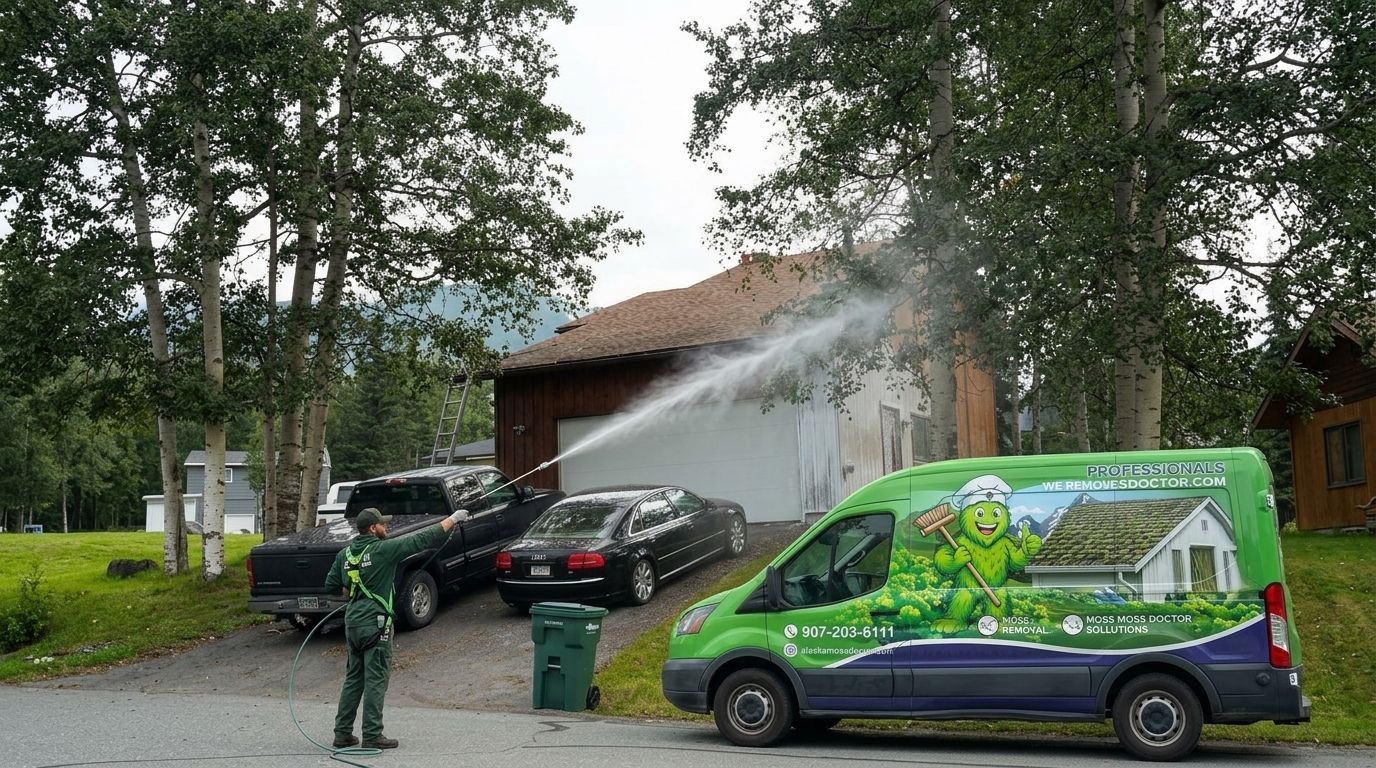
Oxidized aluminum siding needs a soft wash process built around low pressure and a mild, pH-balanced solution, with the goal of lifting chalky oxidation and algae film without stripping the factory finish or driving water behind panels. Aluminum reacts differently than vinyl or fiber cement: high pressure pits the soft metal and aggressive acids strip the anodized layer, so the wash chemistry and nozzle choice matter more here than on almost any other siding type.
- Soft wash oxidized aluminum siding with under 500 PSI and a mildewcide-based solution, never a pressure washer wand alone.
- Alaska Moss Doctor treats chalking and algae on Wasilla and Mat-Su Valley homes without stripping the panel finish.
- Skip chlorine-heavy DIY mixes above 3% concentration on bare aluminum; they accelerate pitting and streaking.
- Rinse top-down within 15 minutes of application to stop the solution from drying into the pores of the metal.
- Schedule aluminum washing every 12-18 months in shaded, north-facing Mat-Su lots where algae returns fastest.
Why soft wash cleaning matters for oxidized aluminum siding
Aluminum siding chalk-oxidizes as its factory coating breaks down under UV exposure and freeze-thaw cycling, which is a near-constant condition on Alaska homes that see long summer light and hard winter swings. The white, powdery film homeowners notice on window trim and lower panels isn't dirt, it's oxidized paint pigment, and pressure alone spreads it into streaks instead of removing it.
Mat-Su Valley homes with mature trees or north-facing exposure carry the same shade-driven algae growth that shows up on roofs and fences, so aluminum panels near tree lines or under eaves often need the same soft wash attention as the roof above them. Soft wash cleaning is the only method that removes oxidation and algae from aluminum siding without opening it up to corrosion.
The step-by-step approach for oxidized aluminum siding
Identify oxidation versus algae staining
Rub a white cloth across a dull panel section. Chalky white residue on the cloth means oxidation; a greenish-black smear means algae or mildew, which usually needs a stronger mildewcide ratio than oxidation alone.
- Check north- and east-facing walls first, they hold moisture longest
- Test a hidden panel near a downspout, where mineral staining often mimics oxidation
- Note any hairline cracks or chalking near seams, a sign the coating is already failing
- Photograph problem areas before washing to track improvement
Rinse and pre-treat loose chalking
A plain garden hose rinse at normal household pressure removes loose dust and surface grime before any chemical touches the panel, and it's free.
- Rinse from the top of each wall section downward
- Clear debris from window tracks and utility penetrations first
- Wet foundation plantings to protect them from runoff
- Avoid spraying directly into electrical outlets or light fixtures
Mix a low-concentration soft wash solution
A homeowner-mixed solution of diluted sodium hypochlorite (well under 3% concentration) with a surfactant works on light oxidation, applied with a pump sprayer rather than a pressure washer tip.
- Test the mix on a 2-foot hidden panel and wait 10 minutes before committing to the whole wall
- Never mix chlorine-based cleaners with acid brighteners, the reaction damages both the metal and the person holding the sprayer
- Add a mildewcide additive when algae staining, not just chalking, is present
- Keep the solution off unpainted trim and exposed fasteners where it pools
This is where most DIY attempts on oxidized aluminum go wrong: getting the ratio right by eye is hard, and a slightly hot mix on aluminum shows up as blotching within days. Alaska Moss Doctor mixes soft wash solutions to the panel's finish condition rather than a fixed ratio, which is the faster and more consistent path once oxidation covers more than a wall or two.
Apply at low pressure with the right nozzle
Aluminum siding tolerates far less pressure than most homeowners assume. Anything above 500 PSI at close range on an oxidized panel risks etching the surface permanently.
- Use a wide-fan nozzle (25 to 40 degrees), never a pinpoint tip
- Hold the wand at least 12 inches from the panel
- Work in overlapping horizontal passes, not up-and-down strokes
- Let the solution dwell 5 to 10 minutes before rinsing, don't scrub it in with pressure
Rinse top-down and neutralize
Rinsing has to happen before the solution dries into the pitted texture oxidation creates, or you'll see streaking within the week.
- Rinse the same direction you washed, top to bottom
- Flush window sills and door thresholds where solution pools
- Rinse foundation plants a second time after the wall is done
- Check gutters for solution runoff and flush them separately
Inspect fasteners, seams, and trim
Oxidation often hides corrosion starting at nail heads and panel seams. A wash is also the best time to catch this before winter.
- Look for rust bleed streaks below any exposed screw or nail
- Check J-channel and corner trim for gaps letting water behind the siding
- Note any panel that flexes or rattles, a sign fasteners have backed out
- Flag soft or spongy trim boards for a contractor, not a wash crew
Schedule follow-up maintenance
Oxidized aluminum that's just been cleaned still oxidizes again, especially in shaded lots. A wash resets the surface but doesn't stop UV and moisture exposure from restarting the cycle.
- Rewash lightly shaded walls every 12 to 18 months
- Rewash heavily shaded, tree-lined exposures annually
- Pair siding washing with gutter cleaning on a moss-heavy schedule so overflow doesn't restain the wall you just cleaned
- Trim back branches within 3 feet of siding to cut shade and moisture exposure
Options compared for oxidized aluminum siding
| Option | Best for | Key limitation |
|---|---|---|
| Garden hose rinse only | Light dust, no chalking | Doesn't touch actual oxidation or algae |
| DIY pump-sprayer soft wash | Small, single-wall jobs on a budget | Ratio errors cause blotching on aluminum specifically |
| Pressure washer (high PSI) | Nothing on oxidized aluminum | Etches and pits the coating, worsens the look |
| Acid-based aluminum brightener | Heavy mineral staining, not oxidation | Strips remaining coating if left too long |
| Professional soft wash (Alaska Moss Doctor) | Whole-house jobs, shaded or algae-prone lots | Requires scheduling around Alaska's wash-season window |
Verdict: a professional soft wash beats DIY pressure washing on oxidized aluminum siding every time in 2026, because pressure is the one variable a homeowner can't safely control on this material.
Get an oxidized siding quote
Alaska Moss Doctor washes Mat-Su Valley homes without stripping the finish.
Common mistakes homeowners make with oxidized aluminum siding
- Using a pressure washer tip meant for concrete. The nozzle that strips a driveway will pit an aluminum panel in seconds.
- Mixing full-strength pool chlorine instead of a diluted soft wash solution. Full concentration accelerates pitting rather than lifting oxidation cleanly.
- Washing in direct midday sun. The solution flashes dry before it can lift the chalking, leaving streaks that need a second pass.
- Skipping the hidden-panel test. Aluminum finish age varies wall to wall on the same house, and a mix that's fine on the south wall can blotch the shaded north wall.
- Ignoring seam corrosion until repaint time. Rust bleed caught during a wash is a five-minute fix; caught a year later it's a panel replacement.
Homeowners preparing a house for pressure washing a walkway or driveway at the same time should treat siding and hardscape as separate jobs with separate pressure settings, since concrete tolerates far more force than an oxidized panel ever will.
If your siding sits under mixed materials, check how to soft wash a house without damaging paint for the trim and fascia sections that border most aluminum-sided Alaska homes, and see the best soft wash pressure setting for delicate siding before running any equipment yourself.
FAQ
What's the best method to soft wash oxidized aluminum siding?
A low-pressure application under 500 PSI with a diluted, mildewcide-based solution is the safest method for oxidized aluminum siding in 2026. High-pressure washing or full-strength chemicals pit the metal and worsen the chalking.
Is soft washing better than pressure washing for aluminum siding?
Yes, soft washing is better for aluminum siding because pressure washing etches the coating and spreads oxidation into visible streaks. Soft washing relies on chemistry and dwell time instead of force.
Can oxidized aluminum siding be restored without repainting?
A soft wash restores most of the original color on lightly to moderately oxidized aluminum siding, but heavily chalked panels with visible base metal usually need a coating or paint refresh after cleaning.
How often should oxidized aluminum siding be soft washed in Alaska?
Shaded or tree-lined Mat-Su Valley homes need a soft wash roughly every 12 months, while sun-exposed walls can go 18 months between washes. North-facing exposures with heavy algae need the shorter interval.
Will soft washing damage paint on aluminum siding?
A properly diluted soft wash solution applied at low pressure does not damage intact paint on aluminum siding. Damage happens when concentration is too high or the solution isn't rinsed within about 15 minutes.
What causes aluminum siding to oxidize in the first place?
UV exposure combined with freeze-thaw cycling breaks down the factory coating on aluminum siding over time, producing the chalky white residue known as oxidation. Alaska's long summer light and hard winter swings speed up the process.
Should I hire a professional for oxidized aluminum siding or do it myself?
A single small wall section is manageable as a DIY soft wash with a pump sprayer and careful dilution testing. Whole-house jobs, heavy oxidation, or shaded algae-prone lots are safer as a professional job since pressure and mix errors are harder to reverse on aluminum.
One last thing
The detail most homeowners miss on oxidized aluminum: the chalking you see is the coating already failing, not dirt sitting on top of a healthy finish, which means a soft wash resets the clock on oxidation but doesn't stop it from starting again the moment sun and moisture hit that same wall. Pair the wash with a look at nearby fasteners and trim every time, because aluminum corrosion at a seam moves faster than the oxidation itself once water gets behind the panel.