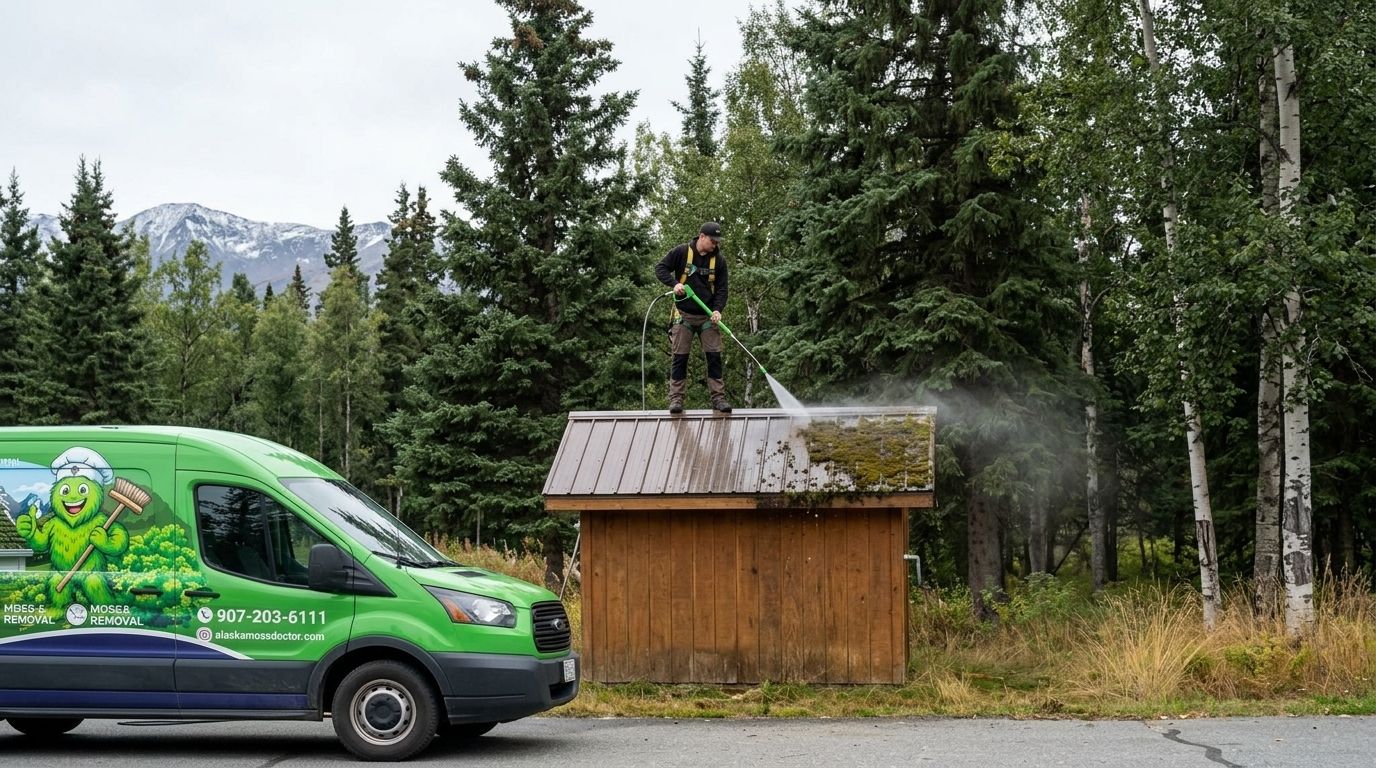
Pump house and wellhouse roof cleaning is the removal of moss, algae, and lichen from the small utility structures that shelter well pumps, pressure tanks, and sometimes heat tape controls, done to keep water out of the equipment room and stop the roof deck from rotting underneath the moss mat. These structures are smaller than a house roof, often unheated, and frequently tucked into tree shade on rural Mat-Su Valley and homestead lots, which means moss builds faster here than on a sun-exposed main roof, and a leak has a shorter path to expensive equipment.
- Pump house and wellhouse roofs moss over faster than main roofs because of tree shade and low airflow around small structures.
- Soft washing beats pressure washing on these roofs since most are thin metal or asphalt over minimal decking that pressure spray can puncture.
- A leaking wellhouse roof drops water directly onto pump wiring and pressure tanks, not just insulation.
- Spring and early fall are the two practical windows for roof cleaning for pump houses and wellhouses in the Mat-Su Valley in 2026.
- Alaska Moss Doctor treats wellhouse and pump house roofs as part of homestead and off-grid property service routes in the Wasilla area.
Why this matters
A wellhouse is a small building with an outsized failure cost. Moss holding moisture against a metal seam or shingle tab for months at a time works fasteners loose and rots the deck around vent pipes, and once water gets past that layer it lands on the well pump, pressure switch, or heat tape controller sitting a few feet below. Homeowners who maintain their main house roof on a schedule often forget the wellhouse entirely because it sits out of sight near the tree line.
Why roof cleaning matters for pump houses and wellhouses
Wellhouses in the Mat-Su Valley get sited for practical reasons: near the well casing, away from the septic field, often under spruce or birch cover for wind protection. That same placement is what accelerates moss growth, since less direct sun and more needle and leaf litter collecting on a small roof plane means less airflow to dry the surface between rain events. On a homestead or off-grid property, the wellhouse is frequently the most shaded structure on the lot, which puts it ahead of the main house on the moss timeline even when both roofs are the same age.
The equipment inside raises the stakes further. A pump house with heat tape running to prevent freeze-up needs a dry roof deck to keep insulation effective. Wet insulation loses R-value and heat tape has to work harder, which shows up as a higher power bill before anyone notices the roof itself.
Step-by-step: cleaning a pump house or wellhouse roof
Inspect the structure before you touch the roof
Start on the ground and look up before climbing anything. Small outbuildings hide damage well because nobody checks them the way they check a house roof.
- Check for soft or spongy spots by pressing gently on accessible roof edges
- Look for daylight or water stains inside the wellhouse around vent penetrations
- Note how much of the roof is shaded by overhanging branches
- Photograph moss thickness and location before cleaning to track regrowth later
- Confirm the roofing material, since metal, asphalt shingle, and rolled roofing all clean differently
Clear debris before applying any cleaner
Needle litter and leaf debris trap moisture against the roof surface and feed moss growth even after a cleaning treatment.
- Hand-clear needles and leaves from valleys and roof edges
- Clear the small gutter or drip edge if the structure has one
- Remove any branches touching or overhanging the roof
- Check vent stacks and pipe boots for debris blocking drainage
Choose soft washing over pressure washing
Pump house and wellhouse roofs are almost always thin-gauge metal or minimal asphalt shingle over light decking, built for weather protection, not foot traffic or high-pressure spray. A pressure washer wand held too close punctures metal seams and drives water under shingle tabs, which turns a moss job into a roof-replacement job.
- Use a low-pressure soft wash sprayer, not a gas pressure washer wand
- Apply a cleaning solution formulated for the roofing material present
- Let the solution dwell per label instructions before any rinse
- Rinse from the ridge down at low pressure to avoid forcing water under laps
- Test an inconspicuous area first if the roof material is unknown or unusual
This is also where the manual approach reaches its limit for most homeowners. A soft wash treatment done correctly on a pump house roof takes specialized low-pressure equipment and the right dwell-time chemistry — most homeowners doing this once a year get better, safer results calling it in rather than improvising with a garden pump sprayer. Alaska Moss Doctor runs soft wash service on outbuildings as part of standard roof moss removal for wasilla, alaska homeowners routes, and the same method applies whether the structure is a wellhouse, a shed, or a detached garage.
Rinse and inspect fasteners and flashing
Once moss is off, the roof's actual condition is visible for the first time in months, sometimes years.
- Check exposed fastener heads for rust or backing out
- Inspect flashing around vent pipes and roof-to-wall transitions
- Look for granule loss on asphalt shingle sections
- Confirm the roof deck feels solid underfoot if a walk-on inspection is safe
Treat for regrowth prevention
A cleaned roof with no treatment moss over again within a season or two in shaded Mat-Su conditions.
- Apply a zinc or copper-based treatment along the ridge line
- Reapply preventive treatment on a schedule matched to shade exposure
- Trim back overhanging branches to cut shade and litter at the source
- Check treatment coverage after heavy snow load or ice buildup each winter
Schedule cleaning around Alaska's freeze-thaw calendar
Cleaning a wellhouse roof in the wrong season either freezes solution on contact or wastes an application right before snow load buries the roof anyway.
- Target spring after snowmelt, once the roof surface is fully dry
- Consider early fall before the first hard freeze locks moss in place
- Avoid cleaning during active freeze-thaw cycles in shoulder seasons
- Coordinate wellhouse cleaning with main house roof cleaning to save a site visit
Comparing cleaning options for pump house and wellhouse roofs
| Option | Best for | Key limitation |
|---|---|---|
| DIY hand-scraping and rinse | Light, early-stage moss on flat, easy-access roofs | Risks lifting shingle tabs or scratching metal coating |
| Consumer pressure washer | Concrete pads or ground-level surfaces near the wellhouse | Too aggressive for thin roofing, voids some roof warranties |
| Professional soft wash service | Any pump house or wellhouse with established moss or lichen | Requires scheduling a visit rather than same-day DIY |
| No treatment, moss left in place | Structures already scheduled for roof replacement | Moss keeps growing and accelerates deck rot underneath |
A soft-washed metal or asphalt wellhouse roof is the safest verdict for structures with established moss — it clears growth without the puncture risk pressure washing carries on thin roofing.
Get your wellhouse roof checked
Soft wash service for pump houses, wellhouses, and other outbuildings around Wasilla.
Common mistakes homeowners make with pump house and wellhouse roofs
- Skipping the wellhouse entirely during roof maintenance. Homeowners schedule cleaning for the main house and forget the smaller structure sits under heavier shade and moss faster.
- Using a gas pressure washer because it's already on hand. High pressure on thin outbuilding roofing drives water under laps instead of removing moss safely.
- Ignoring interior signs until a leak is visible. Water stains around vent penetrations inside the wellhouse show up long before a leak reaches the pump equipment.
- Cleaning once and never treating for regrowth. Shaded wellhouse roofs moss back within a season or two without a preventive treatment applied after cleaning.
- Leaving overhanging branches untouched after cleaning. Litter from spruce and birch keeps feeding moss regardless of how thorough the cleaning was.
FAQ
How often should a pump house or wellhouse roof be cleaned?
Most shaded wellhouse roofs in the Mat-Su Valley need cleaning every 1 to 2 years, faster than main house roofs because of lower airflow and heavier tree cover. Sun-exposed wellhouses can often go longer between cleanings.
Is pressure washing safe for a wellhouse roof?
No, standard pressure washing risks puncturing thin metal seams or forcing water under asphalt shingle tabs on small outbuilding roofs. Soft washing with a low-pressure sprayer and appropriate cleaning solution is the safer method for 2026 roofing materials on these structures.
Can moss on a wellhouse roof damage the pump equipment inside?
Yes, moss holding moisture against the roof surface eventually leads to leaks that drip directly onto pump wiring, pressure tanks, or heat tape controllers below. The equipment sits close enough to the roof deck that even a small leak reaches it quickly.
What's the best time of year to clean a pump house roof in Alaska?
Spring after snowmelt and early fall before the first hard freeze are the two practical windows. Cleaning during active freeze-thaw cycles risks the solution freezing on contact instead of working.
Do wellhouses need moss prevention treatment or just cleaning?
Cleaning alone removes existing moss but shaded wellhouse roofs moss over again within a season or two without a preventive zinc or copper treatment applied afterward. Treatment plus periodic branch trimming extends the interval between cleanings.
Should wellhouse roof cleaning be scheduled with the main house?
Bundling both on the same visit saves a separate site call and keeps the outbuilding from being forgotten during routine maintenance. Most homeowners only remember the wellhouse when a leak has already started.
What roofing materials are most common on Alaska wellhouses?
Metal roofing and asphalt shingle are both common on pump houses and wellhouses, with metal more frequent on smaller or older structures. The cleaning method should match the material since metal and asphalt tolerate different pressure and chemistry.
One last thing
The detail most homeowners miss: a wellhouse roof usually sits lower to the ground and closer to overhanging branches than the main house roof, which means it collects more organic debris per square foot even though it's a fraction of the size. That debris-to-area ratio is why a small wellhouse can need cleaning on a shorter cycle than a house roof twice its age. Checking the wellhouse every time you check the main roof, not on a separate forgotten schedule, is the single change that prevents most of the leak damage seen on these structures.