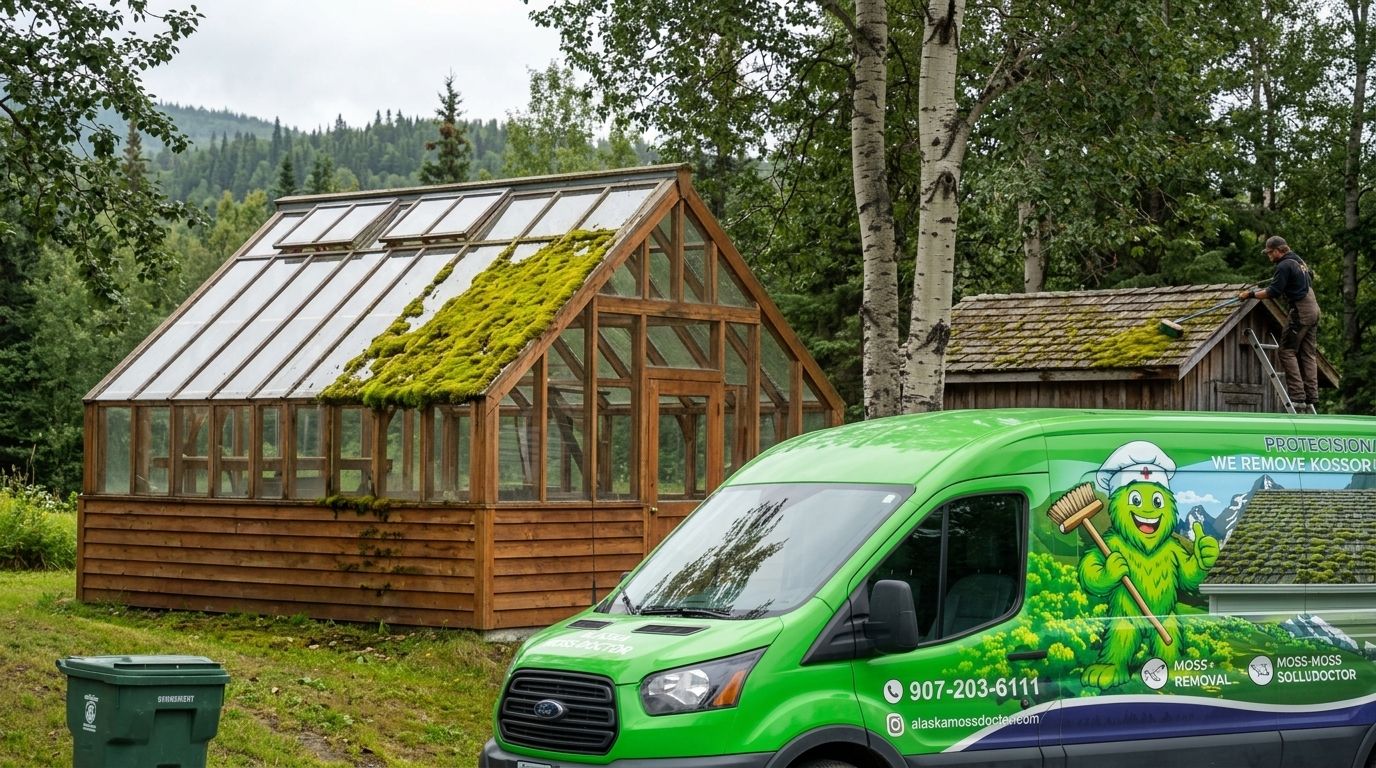
Greenhouse and shed roof moss removal clears buildup from smaller, low-slope structures that standard roof-cleaning schedules usually skip until panels crack, shingles rot, or a greenhouse loses enough light transmission to stunt what's growing inside. These outbuildings sit closer to tree lines, get less sun exposure than the main house, and are often built from materials — polycarbonate, glass, thin-gauge metal — that punish the wrong cleaning method fast.
- Moss removal for greenhouse and shed roofs needs a soft-wash approach, not pressure washing, on polycarbonate and thin metal panels.
- Shed and greenhouse roofs sit in more shade than main roofs, so moss returns faster without a seasonal check in 2026.
- Alaska Moss Doctor treats outbuilding roofs as a separate job from the house because panel materials and drainage differ.
- Skip the moss removal on a shed until it leaks and you're often looking at underlayment or panel replacement, not a clean.
Why moss removal matters for greenhouse and shed roofs
A greenhouse or shed roof rarely gets inspected on its own schedule — it gets looked at when someone happens to walk past it. That's the problem. These structures sit lower, closer to fence lines and tree canopy, and get shaded for more of the day than the main house roof, which means moss and algae colonize faster and dry out slower after every Mat-Su Valley rain or snowmelt.
On a greenhouse, moss and algae film on polycarbonate or glass panels doesn't just look bad — it cuts light transmission to whatever's growing underneath. On a shed, moss holds moisture against the roof deck long enough to soften plywood and rot fascia, and because sheds rarely get walked on, that damage goes unnoticed until there's a soft spot or a drip. Homeowners searching moss removal for greenhouse and shed roofs are usually already seeing one of those two problems, not doing preventive maintenance.
Inspect the roof before you touch it
Start on the ground with binoculars, not a ladder, if the shed or greenhouse roof pitch is steep or unstable. Look for the specific signs that separate a light surface clean from a job that needs professional attention — the distinction matters, and signs your roof needs moss removal covers the checklist most homeowners miss.
- Green or black film concentrated on the north or shaded side of the panel
- Moss mats thick enough to hold a fingerprint when pressed
- Sagging or soft spots on shed roof decking
- Cracked, cloudy, or yellowing polycarbonate panels on the greenhouse
- Standing water pooling instead of draining off
Clear debris and overhanging branches
Moss needs shade and moisture to establish — cut off one of those two and regrowth slows dramatically. Overhanging branches are the single biggest driver of repeat moss problems on shed and greenhouse roofs because they drop needles, block airflow, and keep the surface wet longer after rain.
- Trim branches back at least 4-6 feet from the roofline where structure allows
- Rake needle and leaf litter off the roof surface by hand, working downhill
- Clear valleys and low points where debris collects and holds water
- Check for moss growing on nearby fence posts or retaining walls feeding spores onto the roof
- Remove any moss growing directly on the greenhouse foundation or shed skirting
Choose the right cleaning method for the roof material
This is where most DIY moss removal for greenhouse and shed roofs goes wrong. A pressure washer that's fine on a concrete patio will crack polycarbonate panels and strip granules off asphalt shingles in seconds. The roof material dictates the method, not the other way around.
- Polycarbonate and glass greenhouse panels: low-pressure rinse plus a soft-bristle brush, never a pressure washer nozzle
- Thin-gauge metal shed roofs: soft wash solution applied at low pressure, following the same principle used on metal roofing moss removal
- Asphalt shingle sheds: soft wash only, since pressure washing strips granules and shortens shingle life
- Cedar shake sheds: hand removal with a plastic scraper, never metal tools that gouge the wood
- Corrugated fiberglass panels: mild detergent solution with a garden hose rinse, applied gently
Apply a soft wash treatment, not a pressure blast
Soft washing uses low water pressure combined with a cleaning solution that kills moss and algae at the root instead of just knocking the visible growth off the surface. That distinction matters more on a greenhouse or shed than on a house roof, because these structures often have thinner materials and less structural margin for error.
- Apply solution from the ridge down, letting it dwell before rinsing
- Use a pump sprayer for small shed and greenhouse roofs rather than a full pressure rig
- Test any DIY solution on a hidden panel corner first, especially on polycarbonate
- Avoid bleach-heavy mixes near a greenhouse — runoff into garden soil can damage plants and soil microbes
- Rinse thoroughly with plain water after the dwell time to stop chemical action
A professional soft wash service is the faster path once the moss has established a thick mat or the roof pitch makes a ladder job unsafe — at that point the labor and risk of DIY work usually outweighs the savings.
Rinse and check gutters and drainage
Moss and algae debris washes straight into gutters and downspouts during the rinse step, and small shed and greenhouse gutters clog faster than a house system built for higher volume. Skipping this step means the next rain backs up water right where it can seep under panels or shingles.
- Flush gutters and downspouts immediately after the rinse
- Check that greenhouse drip edges aren't packed with moss debris
- Clear any ground-level drainage channels around the shed foundation
- Inspect for standing water 24 hours after cleaning to confirm drainage is working
Treat for regrowth prevention
A clean roof with no treatment starts regrowing moss within a season, especially in shaded Mat-Su Valley yards. Prevention treatment is cheaper and faster than repeating the full clean every year, and it's the step most homeowners skip entirely.
- Apply a zinc or copper-based preventive treatment after the roof is fully dry
- Reapply preventive treatment on a schedule matched to shade exposure, not a fixed calendar date
- Trim vegetation again in early summer when growth accelerates
- Check treated areas each fall before the first snow
Schedule the work around Alaska seasons
Timing decides whether the job holds through winter or fails by spring. Cleaning a shed or greenhouse roof too late in the season leaves moisture trapped before freeze, and cleaning too early in spring means working on ice-slick panels.
- Late spring to early fall is the safest window for greenhouse and shed roof cleaning in 2026
- Avoid cleaning within a few weeks of the first hard freeze
- Schedule preventive treatment reapplication in early summer, not late fall
- Pair the shed and greenhouse cleaning with the main house roof cleaning to cut down on separate site visits
Get your shed and greenhouse roof checked
Alaska Moss Doctor evaluates outbuilding roofs separately from the house.
Comparing your options for greenhouse and shed roof moss removal
| Option | Best for | Key limitation |
|---|---|---|
| Hand scraping and brushing | Light moss on cedar or asphalt shingle sheds | Slow, physically demanding on steep pitches |
| DIY soft wash with a pump sprayer | Small greenhouse panels and low sheds | Wrong dilution can streak or scar polycarbonate |
| Pressure washing | Nothing on greenhouse or shed roofs, honestly | Cracks polycarbonate, strips shingle granules, voids some panel warranties |
| Professional soft wash service | Thick moss mats, steep roofs, or greenhouses with delicate panels | Requires scheduling around Alaska's cleaning window |
Skip pressure washing on any greenhouse or shed roof — the panels and thin shingles on these structures don't have the margin a house roof has, and one pass can crack a polycarbonate sheet outright.
“A shed roof that leaks from moss damage almost always shows the warning signs a full season earlier — nobody was looking.”
Common mistakes with greenhouse and shed roof moss removal
- Treating the shed roof as an afterthought. Homeowners clean the house roof every year or two and let the shed go untouched for five, then find soft decking underneath the moss.
- Using a pressure washer because "it's just a shed." Lower stakes doesn't mean lower risk to thin metal or polycarbonate — the damage is often worse because the material is thinner.
- Ignoring greenhouse light transmission loss. A film of algae on polycarbonate cuts usable light well before it looks dirty to the naked eye from ground level.
- Letting runoff drain straight into garden beds. Bleach or harsh chemical soft wash mixes near a greenhouse can damage soil and nearby plantings if runoff isn't diverted.
- Skipping the fall gutter check. Small shed and greenhouse gutters clog fast with moss debris, and a clogged gutter before winter freeze is how ice dams start.
FAQ
What's the best way to remove moss from a greenhouse roof?
Use a low-pressure rinse with a soft-bristle brush and a mild soft wash solution, never a pressure washer, since polycarbonate and glass panels crack under high pressure. Let the solution dwell before rinsing to kill moss at the root.
Is pressure washing safe for a shed roof?
No, pressure washing strips granules off asphalt shingles and can crack thin metal or polycarbonate panels common on sheds. Soft washing at low pressure is the safer method for every shed roof material.
How often should a shed or greenhouse roof be cleaned for moss?
Shaded shed and greenhouse roofs in the Mat-Su Valley typically need a check every year, more often than a sunnier main house roof. Frequency depends on tree cover and how much shade the structure sits in.
Does moss on a greenhouse roof affect plant growth?
Yes, moss and algae film on polycarbonate or glass panels reduces light transmission to plants growing underneath. Even a thin film that looks minor from the ground can measurably cut usable light.
Can DIY moss removal damage a shed roof?
Yes, the wrong pressure setting, tool, or chemical mix can crack panels, strip shingles, or gouge cedar shake. Testing any solution on a hidden panel corner first reduces that risk.
When is the best time of year to clean a shed or greenhouse roof in Alaska?
Late spring through early fall is the safest window in 2026, before the first hard freeze traps moisture under the panels. Cleaning too early in spring means working on ice-slick surfaces.
Should shed and greenhouse gutters be cleaned during moss removal?
Yes, moss debris washes into gutters during the rinse step and small gutters clog faster than a full house system. Flushing gutters right after cleaning prevents backed-up water from seeping under the roofline.
Is professional moss removal worth it for a small shed?
It's worth it once moss has formed a thick mat, the pitch is unsafe to work on with a ladder, or the roof material is delicate enough that a DIY mistake risks real damage. Alaska Moss Doctor treats these smaller structures as a separate scope from the main house roof.
One last thing
The detail most homeowners never check: a greenhouse roof loses light transmission from moss and algae film well before the buildup is visible standing at ground level, which means the plants inside are already affected by the time someone notices the roof "looks a little dirty." Check panel clarity from directly underneath, not from the yard, and you'll catch it a season earlier.