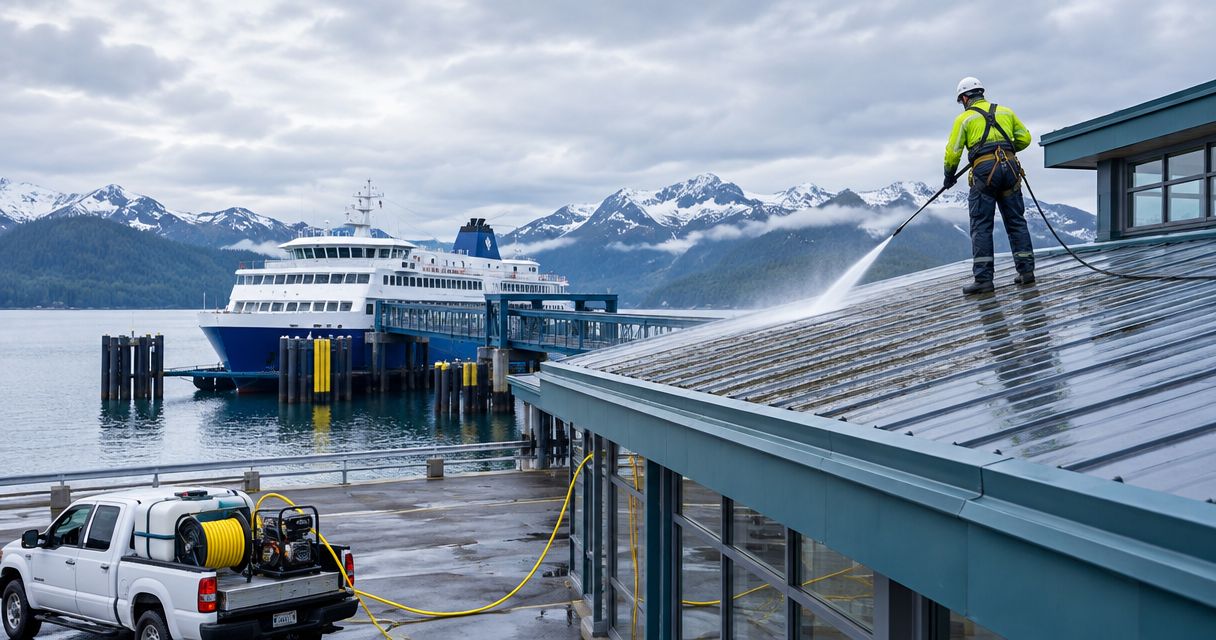
Roof cleaning for Alaska Marine Highway ferry terminals means removing moss, algae, and black streak buildup from terminal roofing so low-slope membrane sections and metal panel roofs shed water the way they were built to. Ferry terminals sit right at the coastline, which means constant salt-laden humidity, near-daily shade from surrounding mountains in Southeast Alaska, and public-facing buildings that can't look neglected while travelers wait for a sailing. That combination of exposure, roof type, and public visibility is different from a residential job, and it changes how the work gets scheduled and documented.
- Roof cleaning ferry terminals Alaska requires soft-wash methods, not pressure washing, on membrane and metal panel roofing common to coastal terminal buildings.
- Alaska Moss Doctor recommends inspection twice a year for facilities exposed to constant coastal moisture and mountain shade.
- Low-slope terminal roofs under a 2:12 pitch trap moss and algae longer than steep residential roofs and need gentler chemical treatment.
- Bundling gutter, scupper, and drain clearing with roof cleaning cuts freeze-up risk before Alaska's winter season.
Why roof cleaning matters for Alaska Marine Highway ferry terminals
The Alaska Marine Highway System operates terminals along more than 3,500 miles of coastline, and most of those buildings sit in the same wet, shaded conditions that grow moss fastest: coastal fog, minimal direct sun, and constant runoff off nearby slopes. That's the same exposure pattern documented for waterfront docks and boathouses, where algae and moss establish on shaded roofing faster than on inland, sun-exposed structures.
A terminal roof isn't just a maintenance line item — it's the first thing a traveler looks at while standing on the dock waiting to board. Moss streaking and black algae staining read as neglect even when the building is structurally fine, and for a public transportation facility that's a visibility problem on top of a roofing problem.
A ferry terminal roof holding moss through two full summers is already absorbing moisture the membrane or panel seams weren't designed to hold. That's the point where a cosmetic issue turns into a warranty and leak issue.
How to clean and maintain ferry terminal roofs in Alaska's climate
Inspect roofing before scheduling anything
Walk or photograph the roof from ground level and from any accessible catwalk before committing to a cleaning date. Look specifically at north-facing sections, valleys, and anywhere runoff from an adjacent slope hits the roofline.
- Check for green or black streaking along seams and flashing
- Note standing water on low-slope sections after rain
- Photograph moss thickness at drains and scuppers
- Flag any lifted shingles, membrane blistering, or rust at fasteners
- Record the last cleaning date if one exists
Schedule cleaning around ferry sailings and public traffic
A terminal can't shut its dock down for a cleaning crew the way a private homeowner can close a driveway. Work needs to happen in windows between sailings, and equipment staging has to stay clear of loading lanes and passenger walkways.
- Pull the sailing schedule before booking a cleaning window
- Confirm parking and staging areas that won't block vehicle loading
- Plan for shoulder-season timing when foot traffic is lightest
- Coordinate with terminal staff on access to roof hatches or ladders
Choose a soft-wash method for coastal, low-slope roofing
Most terminal buildings run membrane roofing or standing-seam metal on a low pitch, often under 2:12 — the industry threshold for what's classified as low-slope. High-pressure washing on that roofing forces water under seams and strips protective granules or coatings faster than moss ever would. A soft-wash approach, the same method covered for flat commercial roofing, uses low pressure and a treatment solution to kill moss and algae at the root without disturbing the roofing surface.
- Confirm the roofing material before picking a treatment strength
- Test a small section first on any painted or coated metal panel
- Rinse thoroughly to prevent residue buildup on walkways below
- Avoid pressure above what the roofing manufacturer allows
- Time treatment for dry weather windows, which run short on the coast
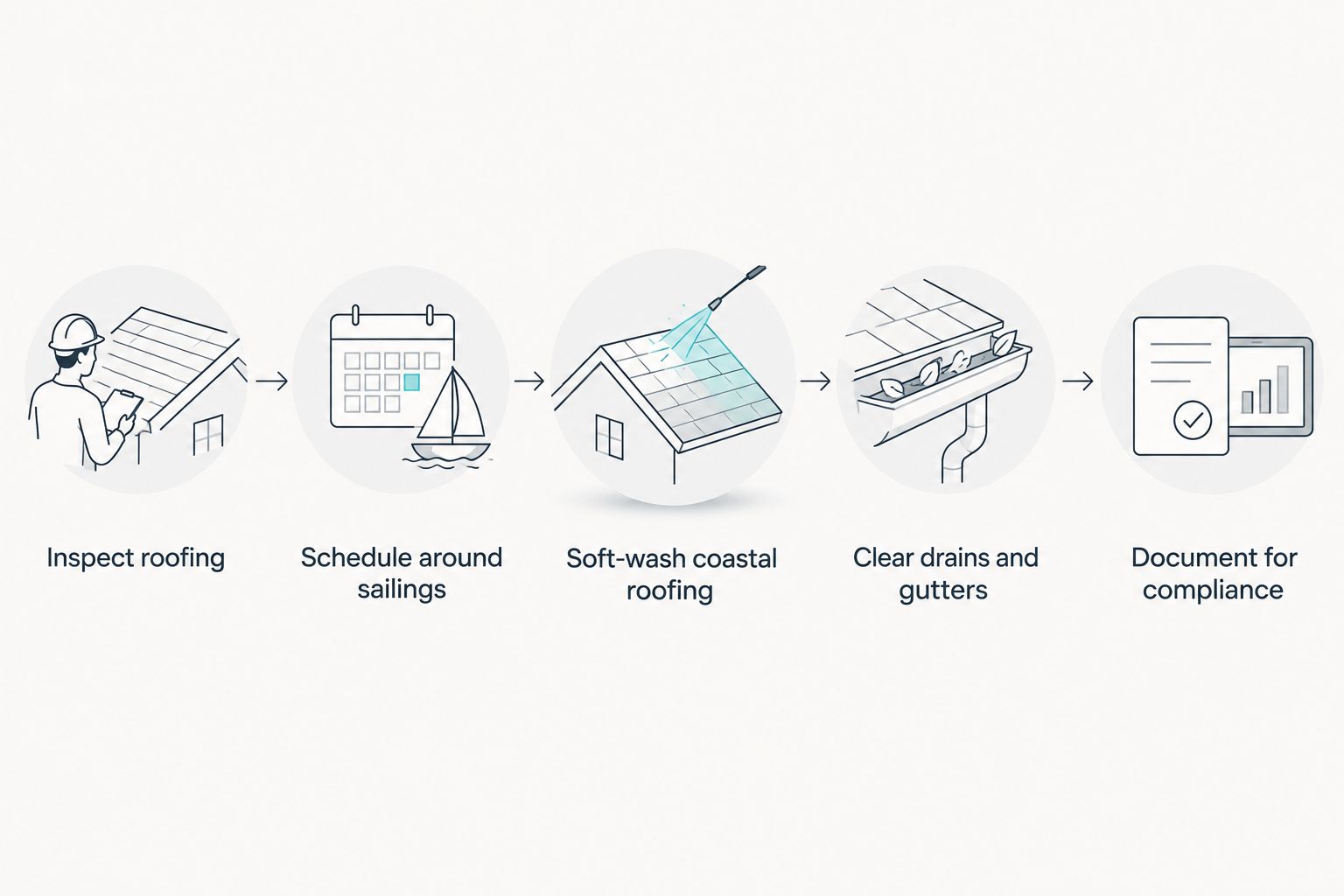
Clear drains, scuppers, and gutters before freeze-up
Moderate to heavy moss growth sheds material into drainage systems constantly. On a flat or low-slope terminal roof, a clogged scupper means standing water instead of a simple overflow, and standing water on membrane roofing in an Alaska winter turns into ice load fast.
- Clear scuppers and internal drains after every cleaning pass
- Check gutters twice a year, before freeze-up and after spring breakup
- Remove moss debris rather than pushing it toward drains
- Confirm downspouts discharge away from walkways that ice over
This is also where a faster path makes sense for a facility with limited maintenance staff. Alaska Moss Doctor pairs roof soft-washing with drain and gutter clearing in one visit, which is the same bundled approach covered for gutter cleaning on moss-heavy roofs — the logic holds whether the roof sits over a house or a terminal building.
Get a quote for terminal roof cleaning
Soft-wash service scoped around your sailing schedule and roof access.
Document the work for state compliance and inspection records
A state-owned or state-leased facility needs a paper trail more than a private home does. Photo documentation before and after, plus a written scope of work, supports procurement records and future bid comparisons. Municipal buildings face the same requirement, covered in the guide on exterior cleaning for municipal buildings.
- Request dated before-and-after photos from the cleaning crew
- Get a written scope listing chemicals and methods used
- File the invoice and photos with facility maintenance records
- Keep a copy for the next procurement cycle or bid comparison
Cleaning options for Alaska Marine Highway ferry terminals
| Option | Best for | Key limitation |
|---|---|---|
| In-house facility crew with a pressure washer | Small terminals with light moss and staff already on-site | High pressure risks membrane and coated metal damage |
| General pressure washing contractor | One-time cleanup with no moss regrowth concern | Rarely trained on low-slope membrane or roof warranty terms |
| Specialized soft-wash moss removal, like Alaska Moss Doctor | Terminals needing repeat treatment on coastal, shaded roofing | Requires scheduling around sailing windows and weather |
| Full roof replacement or recoat | Roofing already past its service life with structural damage | Highest cost and longest facility downtime |
Verdict: soft-wash treatment is the right call for any ferry terminal roof that's structurally sound but visibly streaked or mossy — pressure washing and full replacement are both overcorrections for a surface problem.
Common mistakes ferry terminal facility managers make
- Treating it as a one-time job. Coastal shade regrows moss fast; a single cleaning without a follow-up schedule just resets the clock.
- Letting a general pressure washing crew near membrane roofing. High PSI on low-slope membrane forces water under seams that soft-wash treatment never touches.
- Skipping drain clearing during the cleaning visit. Moss debris pushed loose during a wash load straight into scuppers if nobody clears them after.
- Scheduling without checking the sailing board. Equipment staged near a loading lane during a sailing window creates a safety and access problem that's avoidable with one phone call.
- No documentation for the next procurement cycle. Without dated photos and a scope of work, the next bid comparison starts from zero.
FAQ
What is roof cleaning for Alaska Marine Highway ferry terminals?
It's the removal of moss, algae, and black streak buildup from terminal roofing using a soft-wash method suited to membrane and metal panel roofing exposed to coastal humidity. It protects the roofing surface while restoring appearance for a public-facing facility.
How often should ferry terminal roofs be cleaned in Alaska?
Coastal, shaded terminal roofs generally need inspection twice a year, with a full soft-wash cleaning on a schedule tied to visible moss and algae regrowth rather than a fixed calendar date. Terminals in heavier shade need more frequent checks than ones with more direct sun exposure.
Is pressure washing safe for ferry terminal roofing?
No, high-pressure washing risks forcing water under seams on low-slope membrane roofing and stripping protective coatings off metal panels. A soft-wash method at low pressure with a treatment solution removes moss and algae without that risk.
Does moss removal require special approval for state-owned buildings?
State-owned and state-leased facilities typically need documented scope of work and photo records for procurement and maintenance files, though approval requirements vary by facility management contract. Confirm the documentation standard with the terminal's facility manager before scheduling.
What's the best time of year to clean ferry terminal roofs in Alaska?
Shoulder-season windows, after spring breakup and before fall freeze-up, offer the driest working conditions and the lightest passenger traffic. Scheduling around the sailing board matters as much as the weather window.
How much does professional roof cleaning cost for a terminal building?
Cost depends on roof square footage, pitch, access difficulty, and how much drain and gutter clearing is bundled in. Request a scoped quote rather than estimating from a per-square-foot rule of thumb, since terminal roofs vary widely in layout.
Can black streaks come back after a terminal roof is cleaned?
Yes, black streaking from algae returns faster on shaded, coastal roofing than on sun-exposed roofs, which is why a repeat inspection schedule matters more than a single cleaning. Preventive treatment between full cleanings slows regrowth.
Should ferry terminal maintenance bundle gutter cleaning with roof washing?
Yes, moss debris from the roof wash lands directly in drains and scuppers, and clearing them in the same visit prevents standing water and ice buildup going into winter. Separating the two tasks into different visits just doubles the access and staging work.
One last thing
The detail most facility managers miss on a terminal building isn't the roof itself — it's the runoff path. A low-slope roof with a cleared drain still backs up if the ground-level scupper discharge point is blocked by gravel or debris from the dock area, and that backup shows up as an interior leak long before anyone notices the roof looks clean. Check the discharge point every time the roof gets cleaned, not just the drains up top.