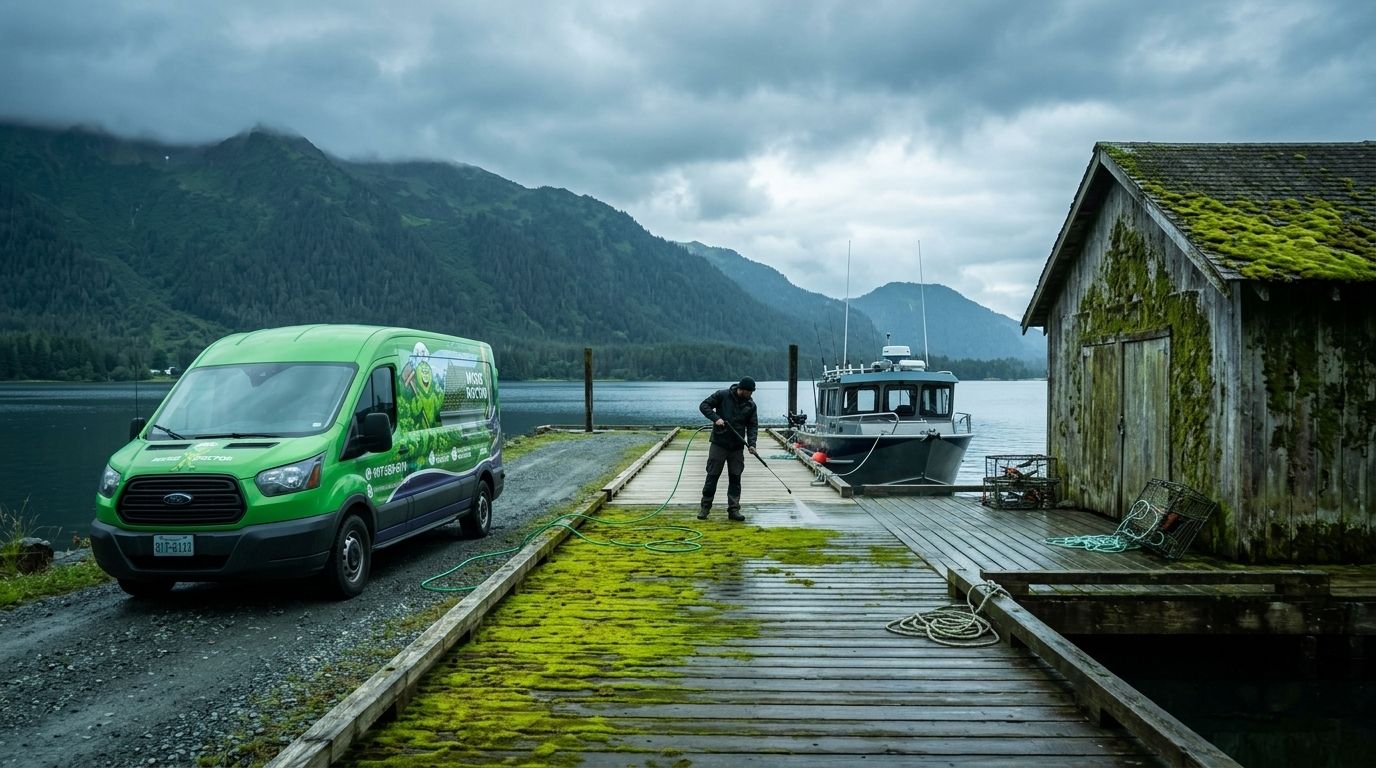
Moss removal for Alaska fishing charter docks and boathouses is the process of stripping moss, algae, and lichen from pilings, ramps, roofs, and siding so slip hazards, wood rot, and roof damage don't sideline a charter operation during peak season. Charter docks face constant moisture from tidal spray, shaded creek mouths, and boathouse roofs that rarely see direct sun, which means moss returns faster here than on a typical residential roof.
- Moss removal for fishing charter docks and boathouses needs a soft-wash approach that won't strip treated wood or void roof warranties.
- Alaska Moss Doctor treats boathouse roofs, dock ramps, and shaded pilings using low-pressure methods safe for wood and metal.
- Spring cleaning, before the 2026 charter season opens, prevents slip hazards on ramps and moss-driven rot on roof decking.
- DIY pressure washing on dock structures often forces water under shingles or shiplap siding, causing leaks by mid-season.
Why moss removal matters for charter docks and boathouses
A charter dock isn't a house roof with a lawn under it. It sits over water, gets shaded by spruce and hemlock canopy most of the day, and takes daily foot traffic from clients carrying rods, coolers, and tackle boxes. Moss on a dock ramp or boathouse walkway isn't just cosmetic — it's a liability the moment a guest slips carrying gear toward the boat.
Boathouse roofs in the Mat-Su Valley and coastal charter towns face the same north-facing shade and moisture cycle that drives moss growth on homes, but with less routine maintenance because owners are focused on the boats, not the building. That gap is exactly where moss gets a multi-season head start and starts working into shingle mat or wood decking before anyone notices.
Inspect your pilings, ramps, and roof before the season opens
Start with a walk-through in early spring, before the first charter of 2026 books a slip.
- Check pilings and support posts at the waterline for green film buildup
- Look at ramp boards and stair treads for slick, dark patches — the first sign of algae, not just dirt
- Scan the boathouse roofline for moss clumps in valleys, around vents, and along north-facing slopes
- Check gutters and downspouts on the boathouse for moss debris clogging flow
- Note any soft or spongy decking, which signals moss has already trapped moisture against wood
Time the cleaning around the charter season, not the calendar
Alaska charter operators don't have the luxury of shutting down for a week mid-season. Cleaning has to happen in a window that doesn't cost bookings.
- Schedule the first pass in April or early May, before boats go back in the water
- Plan a mid-season touch-up in July if the dock sees heavy shade and constant spray
- Avoid cleaning during active thaw when runoff carries silt back onto freshly washed surfaces
- Book a fall pass after the season closes to strip moss before winter locks it in
Choose a removal method that won't damage treated wood or fasteners
Most dock and boathouse structures use pressure-treated lumber, galvanized fasteners, or marine-grade coatings that a standard pressure washer setting can strip in seconds. High pressure forces water past seals and into joints, which speeds up rot rather than preventing it.
- Use soft-wash methods with a moss-specific solution instead of high-PSI blasting on wood decking
- Test any cleaning solution on a small piling section before treating the full dock
- Avoid wire brushing painted or stained boathouse siding — it opens the wood grain to future moss growth
- Rinse fasteners and hardware last, at low pressure, to avoid loosening galvanized coatings
This is where a professional service earns its keep. Alaska Moss Doctor applies the same soft-wash approach used on waterfront homes to boathouse roofs and dock structures, calibrated for wood, metal, and shingle surfaces without stripping protective coatings. Homeowners managing a moss removal service for waterfront Alaska properties face the same shade-and-moisture pattern charter operators do, just with a house instead of a boathouse attached.
Protect fuel systems, nets, and gear during cleaning
A working charter dock has equipment sitting in the cleaning zone that a residential job never touches.
- Cover fuel tanks, hoses, and dock-side fuel pumps before any spray solution goes down
- Move nets, rods, and tackle storage away from splash zones
- Tarp bait wells and live tanks to keep cleaning runoff out of water systems
- Flag any electrical hookups on the dock so they get bypassed, not sprayed direct
Address slip hazards on ramps and walkways first
If you only fix one thing before opening day, fix the ramp. Client foot traffic on wet, moss-slicked boards is the single most common injury risk on a charter dock.
- Clean ramp boards and stair treads before touching the roof
- Apply a non-slip treatment to high-traffic ramp sections once moss is stripped
- Re-check ramps mid-season since tidal spray regrows algae faster than roof moss regrows
- Flag any board showing rot under the moss for repair, not just cleaning
Schedule maintenance to prevent regrowth before the next booking cycle
One cleaning pass buys a season, not a decade. Charter operators who skip follow-up maintenance end up re-fighting the same moss every spring at higher cost.
- Set a fall cleaning pass to strip moss before it overwinters under snow load
- Apply a moss-preventive treatment to boathouse roof valleys and shaded pilings
- Trim overhanging spruce and hemlock branches that keep the dock in shade
- Re-inspect gutters on the boathouse structure twice a season, spring and fall
Get your dock ready for the 2026 charter season
Soft-wash moss removal for boathouse roofs, ramps, and pilings.
Comparison: cleaning options for charter docks and boathouses
| Option | Best for | Key limitation |
|---|---|---|
| DIY pressure washing | Small ramps, light seasonal buildup | High PSI strips treated wood coatings and forces water into joints |
| Standard power-washing contractor | Concrete boat launches, driveways | Rarely calibrated for wood decking or shingle roofs specific to boathouses |
| Soft-wash moss specialist | Boathouse roofs, pilings, ramps, siding | Takes longer per job than blast-and-go pressure washing |
| No maintenance, replace as needed | Owners planning a full dock rebuild | Moss-driven rot shortens lumber lifespan and raises replacement cost |
Verdict: for working charter docks in Alaska, soft-wash moss removal is the only option that clears growth without shortening the life of treated wood, and it's the method Alaska Moss Doctor uses on both boathouse roofs and waterfront homes.
“A moss-slicked ramp isn't a maintenance item, it's a liability the moment a client carries gear toward the boat.”
Common mistakes charter operators make
- Cleaning the boat, ignoring the boathouse. Owners maintain the vessel obsessively and let the roof and pilings go untouched for years.
- Using leftover pressure-washer settings from truck cleaning. A nozzle dialed for fleet washing strips shingle granules and treated wood finish on a dock structure.
- Waiting until a guest slips. Ramp cleaning gets scheduled reactively instead of before opening day in 2026.
- Skipping fall cleanup. Moss left under snow load through an Alaska winter has already started working into decking by spring thaw.
- Treating gutters as a house-only problem. Boathouse gutters clog with moss debris just like residential ones, and a clogged gutter dumps water straight onto the roof deck.
FAQ
What's the best way to remove moss from a boathouse roof?
Soft-wash cleaning with a moss-specific solution is the best method for a boathouse roof in 2026 because it clears growth without stripping shingle granules or treated wood coatings the way high-pressure washing does.
How often should a charter dock get cleaned for moss?
Most Alaska charter docks need two passes a year: one in spring before the season opens and one in fall after it closes, with a mid-season touch-up if shade and spray are heavy.
Is pressure washing safe for dock pilings and ramps?
Standard high-PSI pressure washing is not safe for treated wood pilings and ramps because it forces water into joints and strips protective coatings; soft-wash methods clean the same surfaces without that damage.
Does moss on a boathouse roof cause structural damage?
Yes, moss holds moisture against the roof deck and shingles, which accelerates rot and can work under shingle edges over multiple seasons if left untreated.
Can moss removal be scheduled around the fishing charter season?
Yes, most cleaning is scheduled in April or early May before boats return to the water, with an optional fall pass after the season closes.
What's different about cleaning a boathouse versus a regular roof?
Boathouse roofs sit closer to constant moisture from tidal spray and heavier shade from waterfront tree canopy, which means moss regrows faster than on a typical inland home roof.
Should I clean the ramp or the roof first?
Clean the ramp and walkway first since slip hazards from moss-covered boards are the most immediate safety risk to clients boarding the boat.
One last thing
The detail most charter operators miss: moss on a north-facing boathouse roof regrows faster than moss on the same house's south-facing slope just a few hundred feet away, because the shade line from waterfront spruce canopy rarely moves. Trimming that overhang before the 2026 season buys more time between cleanings than any solution swap.