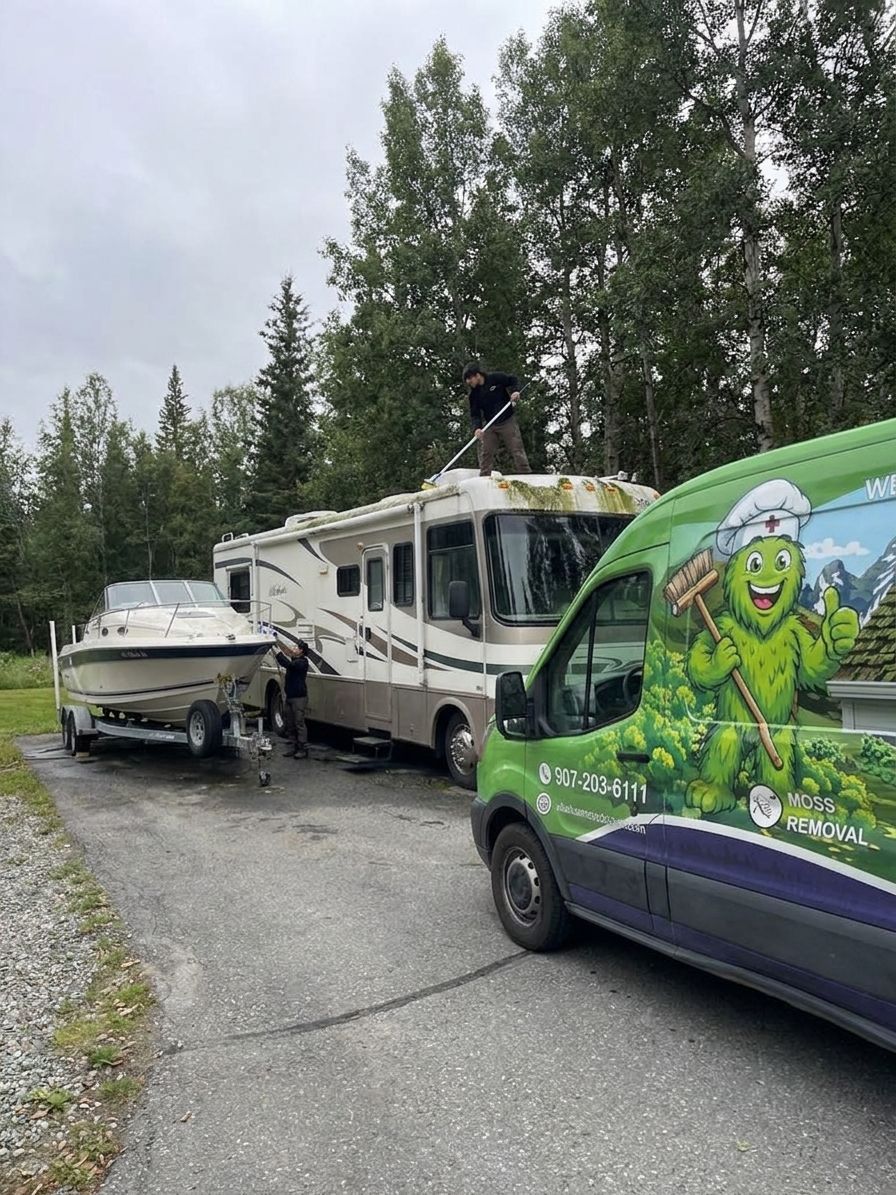
RV and boat moss removal clears fiberglass, gelcoat, aluminum, and rubber roof membranes of algae and moss using low-pressure rinsing, material-matched cleaners, and manual dwell-and-rinse work, with the goal of stopping stains and surface breakdown before they cost you resale value. The materials are different from a house roof, and so is the storage pattern: a boat or RV parked outside for a six-month Alaska storage season builds up growth in ways asphalt shingles and vinyl siding never do.
- Moss removal rv boat work starts with a plain-water rinse, never a pressure washer, on gelcoat and rubber roofs.
- Match the cleaner to the material: oxygen bleach for fiberglass, non-acidic cleaners for aluminum, manufacturer-approved solutions only on EPDM rubber roofs.
- Shaded, north-facing hull panels grow algae faster than roof caps during Alaska's low-light months.
- The soft-wash approach Alaska Moss Doctor uses on siding and shake roofs transfers to gelcoat and painted aluminum: low pressure, chemical-first, dwell before you scrub.
- Treat before fall storage, not after spring launch, or the growth gets a six-month head start.
Why moss and algae removal matters for RV and boat owners
A boat or RV that sits covered from October through April spends roughly half the year in the exact conditions moss and algae need: shade, trapped moisture, and no UV exposure to dry things out. Alaska Moss Doctor sees this pattern from the roof-and-siding side of the business every spring in Wasilla — growth clings hardest wherever sun never reaches, whether that's a north-facing roof slope on a house or the shaded side of a tarped hull.
The difference is the surface. A home roof is asphalt shingle or metal; an RV roof is usually EPDM rubber, aluminum, or fiberglass. A boat hull is gelcoat or aluminum. Each material reacts differently to pressure, bleach concentration, and scrub pressure, and getting it wrong costs more than a siding mistake would — gelcoat chalks, rubber roofs crack, and aluminum pits.
If your RV or boat comes out of 2026 storage with green streaks on the shaded side and the roof looks clean, that's normal — vertical shaded panels grow algae faster than horizontal roof caps in Alaska's low-light season.
Inspect your hull, roof, and canvas before you touch a hose
Walk the full perimeter before cleaning anything. Growth patterns tell you what you're dealing with and how far it's spread.
- Check north-facing and permanently shaded panels first — they're almost always worse than sun-exposed sides
- Look at seams, vents, and roof penetrations for green or black staining creeping outward
- Distinguish black streaks (mildew residue) from green moss on rubber roof membranes
- Inspect canvas, Bimini tops, and awnings for mildew spotting, not just hard surfaces
- Press on any soft or spongy roof spots — that's water intrusion, not surface growth, and needs a repair call first
Rinse loose growth with plain water first
Skip the pressure washer on the first pass. A garden hose and a soft brush pull off more than most owners expect.
- Work top to bottom so runoff carries growth away from clean sections
- Keep water pressure off seams, vents, and roof penetrations
- Use a soft-bristle deck brush, never a stiff wire brush, on gelcoat or aluminum
- Let standing water evaporate before applying any chemical cleaner
- Re-inspect after the rinse — a lot of light film disappears here and needs nothing else
Match your cleaner to the material
This is where most DIY jobs go wrong. A cleaner built for asphalt shingles is not built for gelcoat, and a rubber-roof-safe product won't touch aluminum oxidation the same way.
- Fiberglass and gelcoat hulls: oxygen bleach or a marine-specific hull cleaner, not chlorine bleach at full strength
- Aluminum pontoons and hulls: non-acidic cleaners only — acid pits bare aluminum
- EPDM rubber roofs: manufacturer-approved rubber roof cleaner, never petroleum-based solvents
- Canvas, vinyl, and Bimini tops: a mildew-specific cleaner with a UV inhibitor built in
- Painted aluminum RV siding: treat it like painted siding on a house — the same caution against harsh solvents applies
The low-pressure, chemical-first logic behind soft-wash pressure settings for delicate siding carries over directly here: the cleaner does the work, the nozzle just rinses it away.
Soft-wash instead of pressure-wash
A pressure washer on gelcoat, rubber roofing, or thin aluminum skin does more damage than the algae ever would.
- Use your washer's lowest setting and a wide fan tip, never a turbo nozzle
- Hold the nozzle at a distance and let dwell time do the lifting
- Work in the direction of seams and panel lines, not across them
- Never aim directly at rubber roof seams, vent boots, or window gaskets
- Finish with a full plain-water rinse before the surface dries
Treat stubborn stains and dark streaks separately
General washing lifts surface film. Set-in streaks need a second, targeted pass.
- Apply a stain-specific gel or spray directly to dark spots
- Let it dwell the full time listed on the product before wiping
- Use a soft brush, never an abrasive pad, on gelcoat or clear-coated aluminum
- Re-treat rather than scrub harder if the stain doesn't lift the first time
- The same stain logic covered in algae stain removal methods — dwell time over scrub pressure — applies whether the surface is a shingle roof or a hull
Protect seals, decals, and non-skid surfaces while you clean
Cleaning chemicals that are safe on gelcoat can still ruin adjacent materials if you're not deliberate.
- Mask hull graphics and decals before using any bleach-based cleaner
- Keep cleaner off rubber gaskets, window seals, and zinc anodes
- Tape over exposed wiring and open vents before rinsing
- Clean non-skid decking last so residue from other surfaces doesn't settle into the texture
- Rinse thoroughly at the waterline — leftover cleaner there attracts new growth faster
Apply a preventive treatment before long-term storage
The fall treatment matters more than the spring cleanup, because it determines what you're dealing with six months later.
- Apply a marine-safe algaecide before shrink-wrapping or tarping
- Improve airflow under covers instead of sealing moisture in
- Elevate or tent covers so they don't pool standing water on the roof
- Treat shaded storage spots more aggressively than sun-exposed ones
- Regrowth patterns tied to shade are covered in moss prevention for shaded roofs and the same shade-first logic applies to a boat parked under trees
Schedule cleaning around Alaska's storage calendar
Timing beats intensity. A quick fall treatment prevents the deep clean a neglected boat needs every spring.
- Clean and treat before shrink-wrap or tarp goes on in the fall
- Inspect again at first thaw, not just at spring launch
- Do a mid-storage check if the boat or RV is stored uncovered
- Budget more time for anything that sat shaded all winter
- This mirrors the seasonal windows Alaska homeowners use for roof moss removal — treat before the growing season sets in, not after
Comparison: options for RV and boat moss and algae removal
| Option | Best for | Key limitation |
|---|---|---|
| DIY hose-and-brush rinse | Light seasonal film on small boats and RVs | Won't touch set-in stains or root-level growth |
| Oxygen bleach soak | Fiberglass and gelcoat hulls | Needs full dwell time and rinse — slower than a spray |
| Marine-safe moss/algae spray | Spot-treating dark streaks between washes | Doesn't replace a full rinse-down |
| Professional soft-wash service | Home roofs, siding, decks, and driveways near where the RV or boat is stored | Most soft-wash companies, Alaska Moss Doctor included, are built for roofs and siding, not hulls — confirm scope before booking |
| Marine detailer | Full hull and gelcoat restoration | Typically doesn't cover home exterior or driveway staining |
Verdict: DIY soft-wash steps handle most RV and boat moss and algae removal in 2026 — a marine detailer earns their fee only when gelcoat is chalked or oxidized past what a wash restores.
Get your home exterior cleaned too
While you handle the RV or boat, let a professional soft-wash crew cover the roof and siding.
Common mistakes RV and boat owners make
- Pressure-washing an EPDM rubber roof and cutting years off the membrane in one pass
- Storing under trees without treating the shaded side before the cover goes on
- Using a full-strength home siding bleach mix on gelcoat, which causes chalking
- Ignoring the underside of slide-out awnings, where moisture sits untouched all winter
- Waiting until spring launch to find the growth, after it's had six months to set in
“Treat before the cover goes on in the fall, not after it comes off in the spring — by then the growth has had six months to set in.”
FAQ
What's the best way to remove moss and algae from a boat hull?
Rinse with plain water first, then apply an oxygen bleach or marine-specific gelcoat cleaner and let it dwell before a soft-brush wipe. Avoid pressure washers and full-strength chlorine bleach, both of which chalk gelcoat over time.
Can I pressure-wash my RV roof to remove algae?
No, not on an EPDM rubber roof — pressure washing cracks and shortens the membrane's life. Use a low-pressure hose rinse and a manufacturer-approved rubber roof cleaner instead.
Is moss on a boat or RV dangerous to the material?
Left alone, moss and algae trap moisture against gelcoat, aluminum, and rubber roofing, which accelerates staining, pitting, and cracking. It's cosmetic at first but becomes a material problem within a season or two if untreated.
How often should you clean moss off an RV or boat in Alaska?
Treat before fall storage and inspect again at first thaw, with a mid-storage check for anything stored uncovered. Shaded units need more frequent attention than sun-exposed ones.
Does Alaska Moss Doctor clean RVs and boats?
Alaska Moss Doctor's service is built around home roofs, siding, decks, and driveways in the Wasilla area, not hulls or RV roofing. The soft-wash principles are the same, but hull and gelcoat work calls for a marine detailer.
What's the difference between cleaning a home roof and an RV roof?
A home roof is asphalt shingle or metal; an RV roof is usually EPDM rubber, aluminum, or fiberglass, each requiring a different cleaner and pressure setting. Using a shingle-roof product on rubber roofing can dry it out and cause cracking.
Will bleach damage gelcoat or aluminum siding?
Full-strength chlorine bleach can chalk gelcoat and pit bare aluminum. Oxygen bleach and non-acidic cleaners are the safer choice for both surfaces.
How do you keep moss from coming back on a boat stored outside?
Apply a marine-safe algaecide before covering for winter, improve airflow under the cover instead of sealing moisture in, and treat shaded panels more aggressively than sun-exposed ones. Regrowth tracks almost entirely with shade and trapped moisture.
One last thing
Most owners inspect the roof first and the shaded side wall last — it's usually backwards. In 2026, the fastest-growing algae on a stored boat or RV shows up on the vertical panel that never sees direct sun, not on the horizontal roof cap that still catches scattered light through an overcast Alaska sky. Check the shaded wall before you decide the roof is the only problem.