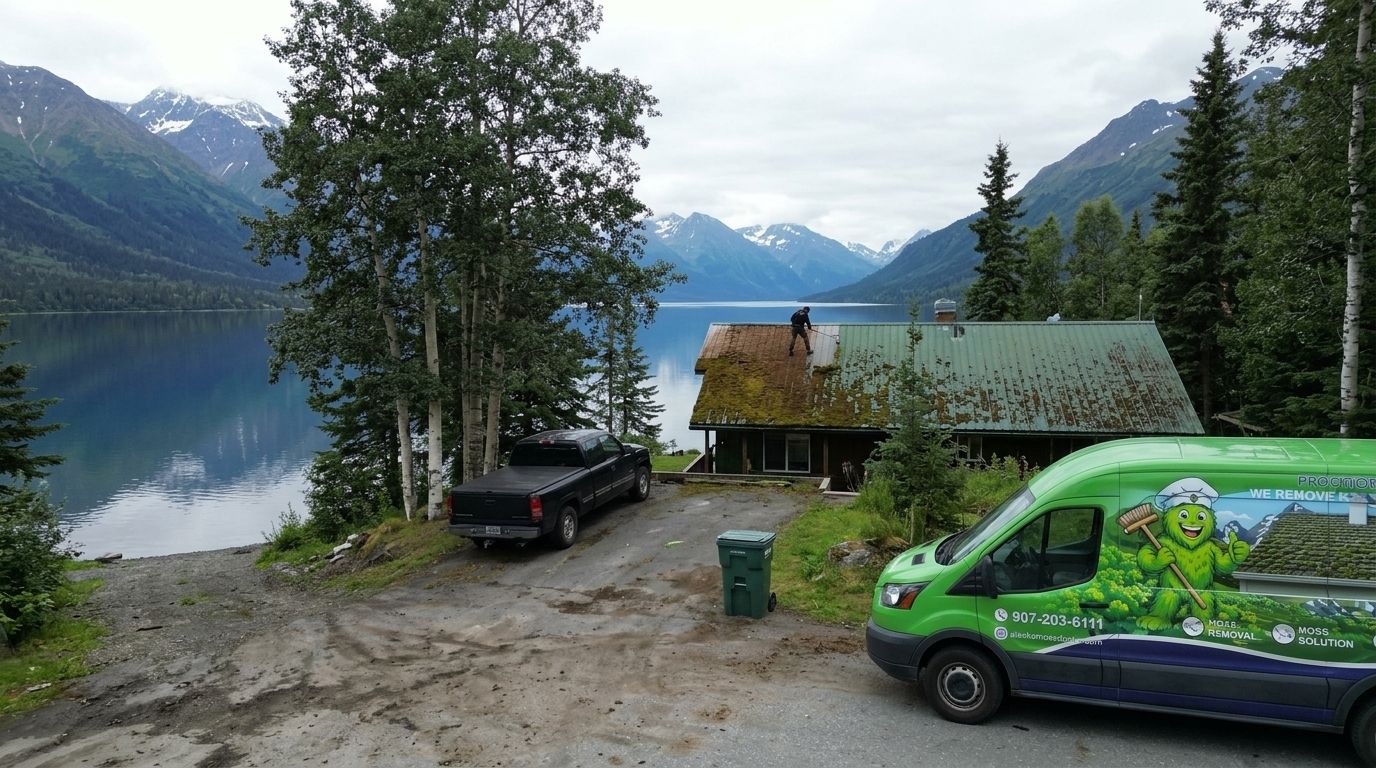
Waterfront homes along Wasilla-area lakes hold moisture longer than inland properties — shade from mature spruce and birch keeps roofs and siding damp for weeks after a rain, and that damp shade is exactly what moss needs to spread. Choosing the right moss removal service for a lakefront or riverside property in 2026 comes down to matching the technique to the structure, not just picking whoever answers the phone first.
- Alaska Moss Doctor's soft-wash service is the best moss removal waterfront Alaska option for full roof and siding jobs in 2026.
- DIY spot scrubbing works for small dock sheds but risks shingle damage once a pressure gun goes over 500 PSI.
- General pressure washing companies handle driveways and retaining walls fine, but skip them for roof work near water.
- Seasonal cabins need a service that schedules around lake ice-out and freeze-up, not a generic one-size visit.
Why this matters for waterfront properties
A roof facing north or shaded by a lakeside tree line stays wet longer after every rain and every thaw, and that extra dampness is what turns a light green film into a thick moss mat within a season or two. Alaska Moss Doctor works these conditions regularly around Wasilla-area lakes, where humidity off the water and heavy tree cover create moss pressure that inland Mat-Su Valley homes don't see at the same rate.
The stakes are higher near water, too. Moss holds moisture against shingles and siding, and on a waterfront property that moisture problem compounds with dock structures, retaining walls, and outbuildings that all face the same shade and humidity. Picking the wrong service — or none at all — means dealing with lifted shingles, stained siding, and a shoreline retaining wall slick enough to be a fall hazard.
What makes the best moss removal service for waterfront properties
- Soft-wash technique as the default, not pressure washing — soft washing runs under 500 PSI, versus 2,000-plus PSI for a standard pressure washer, which matters on shingles softened by constant lake-side moisture.
- Experience with shaded, north-facing roof pitches, which hold moss longer than sun-exposed slopes on the same property.
- A plan for gutters and downspouts, since waterfront homes shed more debris from surrounding trees and clogged gutters push water back under the roofline.
- Scheduling flexibility around Alaska's seasons — ice-out, breakup, and freeze-up all affect access to lakefront and riverfront properties.
- Treatment of adjacent structures — docks, retaining walls, sheds, and boathouses face the same moss pressure as the main roof and need the same eco-conscious runoff handling near water.
- A written scope before work starts, so the homeowner knows exactly which surfaces are covered.
At a glance
| Option | Best for | Standout feature | Key limitation |
|---|---|---|---|
| Alaska Moss Doctor soft-wash service | Full roof, siding, and adjacent structures | Low-pressure technique built for shaded, moisture-heavy roofs | Requires scheduling around Alaska seasons |
| DIY spot scrubbing | Small outbuildings and dock sheds | No cost of hiring out for a single small roof | High risk of shingle damage without the right pressure control |
| General pressure washing / handyman | Driveways, walkways, retaining walls | Widely available for hardscape-only jobs | Not built for roof-safe, low-pressure moss removal |
| Seasonal remote-cabin service visit | Lakefront and riverfront cabins with limited access | Timed around ice-out and freeze-up windows | Fewer available appointment windows per year |
1. Alaska Moss Doctor soft-wash service: best overall for full roof and siding jobs
Alaska Moss Doctor runs a low-pressure soft-wash process on roofs and exteriors around Wasilla, which is the method that matters most on a waterfront property where shingles and siding stay damp longer than average. The service treats moss and algae together, since the two tend to show up in the same shaded, water-adjacent spots.
Alaska Moss Doctor pros:
- Soft-wash technique keeps pressure low enough to protect shingle granules and painted siding
- Handles roof, siding, and adjacent structures like retaining walls and outbuildings in one visit
- Familiar with the shade and humidity patterns specific to Mat-Su Valley lake properties
Alaska Moss Doctor cons:
- Appointment scheduling has to work around Alaska's freeze-up and breakup windows
- Not a same-day fix for homeowners who want DIY control over timing
Best for: waterfront homeowners who want the roof, siding, and surrounding structures treated as one job instead of piecemeal. Verdict: Buy.
2. DIY spot scrubbing: best budget option for small outbuildings and dock sheds
A homeowner with a small shed, dock box, or detached structure can scrub visible moss by hand or with a low-pressure attachment, which keeps cost down for a job that's a fraction of a full roof.
DIY spot scrubbing pros:
- No labor cost for a single small structure
- Works on flat, easy-access surfaces like a low shed roof
- Good stopgap between professional visits
DIY spot scrubbing cons:
- Consumer pressure washers commonly exceed 2,000 PSI, well above the under-500-PSI range that's safe for aging shingles
- No coverage for the main house roof, gutters, or retaining walls
- Moss regrows fast without the shaded areas being addressed at the source
Best for: a single small outbuilding or shed roof between scheduled professional visits, referenced in more detail on the moss removal for greenhouse and shed roofs page. Verdict: Hold.
3. General pressure washing or handyman services: best for hardscape only
A general pressure washing company or handyman can clean driveways, walkways, and retaining walls without specialized roof-safe equipment, which makes them a fit for hardscape jobs on a waterfront lot but a poor fit for the roof itself.
General pressure washing pros:
- Widely available and priced for driveway and walkway jobs
- Effective on concrete and stone surfaces like shoreline retaining walls
- No specialized scheduling needed
General pressure washing cons:
- Standard pressure washing at 2,000-plus PSI can strip granules or crack older shingles
- Rarely trained on soft-wash chemistry for moss and algae specifically
- No experience with the shaded roof conditions common on waterfront lots
Best for: driveways, walkways, and moss and algae removal for retaining walls near the shoreline, not the roof. Verdict: Skip for roof work.
4. Seasonal remote-cabin service visit: best for lakefront and riverfront cabins with limited access
A cabin accessed only part of the year needs a service visit timed around when the property is reachable — usually after ice-out and before freeze-up — rather than a standard year-round maintenance schedule.
Seasonal cabin service pros:
- Timed to Alaska's actual access windows instead of a generic calendar
- Covers roof, siding, and any adjacent dock or boathouse structure in one trip
- Reduces wasted trips to a property that's only reachable seasonally
Seasonal cabin service cons:
- Fewer appointment windows per year than a road-accessible home
- Weather delays can shrink an already narrow access window
Best for: waterfront cabins with seasonal access, covered in more depth on the roof cleaning for remote Alaska cabins page. Verdict: Buy.
Get a waterfront property quote
Roof, siding, dock structures, and retaining walls scoped in one visit.
How this list was ranked
Each option was ranked against the six criteria above — pressure level, shade/pitch experience, gutter handling, seasonal scheduling, adjacent-structure coverage, and a written scope — rather than by price, since cost varies by property size and access.
“If a pressure washer needs more than 500 PSI to move the moss, it's already loosening the shingle granules underneath.”
Which option should you choose?
For a full waterfront roof, siding, and adjacent-structure job in 2026, Alaska Moss Doctor's soft-wash service is the safest default because it's built for shaded, moisture-heavy conditions instead of generic hardscape cleaning. Reserve DIY scrubbing for a single small shed and hand off driveways or retaining walls to a general pressure washing crew — just keep the main roof off that crew's job list.
FAQ
What's the best moss removal service for waterfront Alaska properties?
A soft-wash roof and exterior service built for shaded, high-moisture conditions is the best fit for waterfront properties in 2026, since it treats moss without the shingle damage risk that comes with standard pressure washing.
Is soft washing better than pressure washing for a lakefront roof?
Yes, for roofs. Soft washing runs under 500 PSI and protects shingle granules, while standard pressure washing at 2,000-plus PSI can strip granules and shorten roof life on shingles already softened by lake humidity.
Can I remove moss myself on a waterfront cabin?
DIY scrubbing works for a small shed or dock box, but a full cabin roof needs low-pressure equipment most homeowners don't own, and consumer pressure washers commonly exceed the safe range for aging shingles.
How often does moss come back on a shaded lakefront roof?
Shaded, water-adjacent roofs tend to regrow moss faster than sun-exposed roofs on the same property because the shade keeps the surface damp longer between cleanings.
Do retaining walls near the water need moss treatment too?
Yes. Retaining walls and dock structures near water face the same shade and moisture that drive roof moss, and a slick, moss-covered wall becomes a fall hazard.
When is the best time of year for moss removal on a waterfront property?
Scheduling around Alaska's ice-out and freeze-up windows matters most for seasonal cabins, while road-accessible waterfront homes have more flexibility across the year.
Does moss removal help with gutter problems on lakefront homes?
Clogged gutters push water back under the roofline, and waterfront properties collect more tree debris than inland homes, so gutter clearing alongside moss removal reduces that backup risk.
One last thing
The detail most waterfront homeowners miss is that the dock, boathouse, or retaining wall next to the house grows moss on the same schedule as the roof — treating one and ignoring the other just means redoing the job in a year.