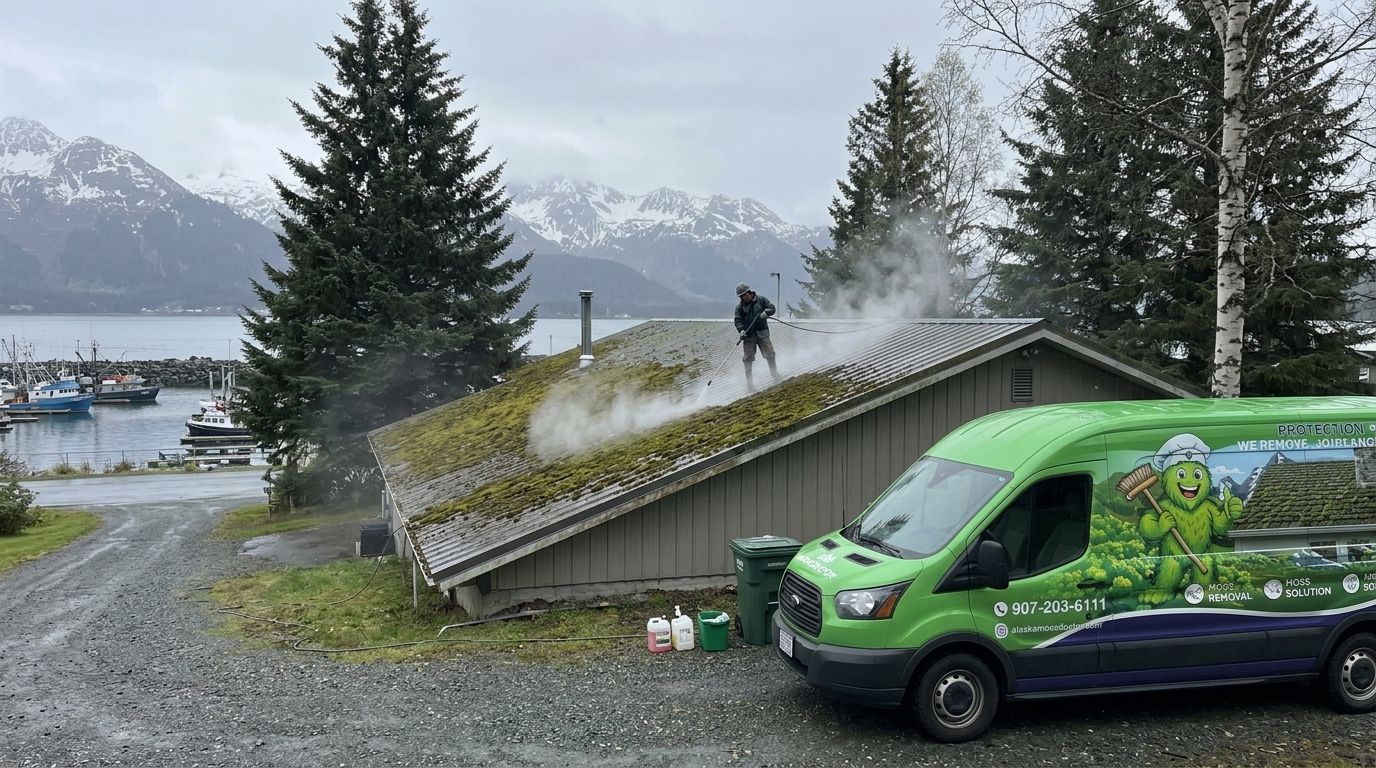
Roof cleaning for Alaska fish processing facilities is a scheduled soft-wash service that strips moss, algae, and organic film off flat and low-slope commercial roofs without cracking membranes or halting production. Processing plants run wetter, steamier, and more organic-heavy than a standard commercial building, so algae and biofilm establish faster around exhaust vents, condensate lines, and shaded roof valleys. That combination of moisture, protein residue, and Alaska's short, humid summers means a roof that looks fine in May can carry a heavy biofilm layer by August.
TL;DR
- Roof cleaning for fish processing facilities in 2026 needs a soft-wash method, not pressure washing, to protect low-slope membranes.
- Steam and grease from exhaust hoods feed algae growth faster than on a typical house roof.
- Schedule cleaning around production shutdowns, not around the calendar season.
- Alaska Moss Doctor's soft-wash service works on flat commercial roofs common at Southcentral Alaska processing sites.
- Skip DIY pressure washing on membrane roofing - it voids warranties and speeds up leaks.
Why roof cleaning matters for Alaska fish processing facilities
A processing building generates steam, grease vapor, and standing moisture around exhaust points almost year-round. That organic load, combined with Southcentral Alaska's damp climate, gives moss and algae a head start most commercial buildings never see. Flat commercial roofs trap this moisture longer than pitched residential roofs because there's less slope to shed water and debris.
Unaddressed biofilm on a processing facility roof isn't cosmetic. It holds moisture against membrane seams, accelerates granule loss on any shingled sections, and can trigger findings during insurance or food-safety facility walkthroughs. Facilities that let algae run for multiple seasons through 2026 typically face a heavier, slower cleaning job and a higher risk of membrane damage once the crew finally gets up there.
Inspect the roof and drainage before you book anything
Walk the roof or use binoculars from ground level to spot where growth concentrates. Processing buildings show the worst buildup near exhaust penetrations and low-flow drainage points.
- Check north-facing and shaded roof sections first - they hold moisture longest
- Look for black streaks near vents, which usually signal algae feeding on grease residue
- Note any ponding water around scuppers or roof drains
- Flag cracked or lifted membrane seams before cleaning begins
- Photograph problem areas for a before/after compliance record
Time the cleaning around your production calendar
A processing plant can't shut down for a random Tuesday. Build the cleaning window around your actual operating rhythm, not the weather forecast.
- Book during scheduled downtime or off-season slowdowns
- Avoid freezing weeks - soft-wash solutions need above-freezing surface temperatures
- Notify staff ahead of time if roof access crosses employee walkways
- Coordinate with maintenance on any concurrent HVAC or vent work
Match the cleaning method to your roof material
Membrane roofing, standing-seam metal, and asphalt sections each need a different approach. This is the step where most in-house crews go wrong by treating every roof like a driveway.
- Use low-pressure soft-wash rinse on membrane and metal roofing to avoid seam damage
- Reserve pressure washing for hard ground surfaces only, never the roof deck
- Confirm the cleaning solution won't corrode metal flashing or fasteners
- A calibrated soft-wash service like Alaska Moss Doctor's applies the right dwell time and rinse pressure per material, which beats trial-and-error with a rented pressure washer
Clear drains, scuppers, and gutters of organic debris
Clogged drainage on a processing roof backs up fast because of the extra organic load already sitting on the surface.
- Flush scuppers and interior drains before and after the wash
- Remove any moss mats sitting directly over drain openings
- Check downspouts for grease-hardened debris, not just leaves
- Confirm water flows freely off the roof before the crew leaves
Treat vent stacks and exhaust hoods separately
Grease vapor from processing exhaust feeds algae faster than rainwater alone. These zones need targeted attention, not a blanket rinse.
- Hand-treat the perimeter of exhaust hoods and vent stacks
- Use a solution that lifts greasy film without streaking adjacent membrane
- Re-inspect these zones on a shorter cycle than the rest of the roof
Apply a preventive treatment to slow regrowth
A one-time wash without follow-up treatment buys you a few months at best on a facility roof carrying this much moisture exposure.
- Apply a residual treatment rated for commercial roofing after the wash
- Reapply on a schedule tied to your local moisture season, not a fixed annual date
- Track regrowth zones between services to shorten future cleaning time
Document the service for compliance and insurance files
Processing facilities face audits tied to food safety and property insurance. A dated cleaning record closes that loop.
- Keep before/after photos with 2026 service dates
- Save the service invoice and the solution safety data sheet
- Log the cleaning in your facility maintenance file for insurance compliance reviews
Comparing your cleaning options
| Option | Best for | Key limitation |
|---|---|---|
| DIY pressure washing | Small outbuildings, low urgency | High pressure can crack aged membrane and void roofing warranties - skip it on the main plant roof |
| Standard soft-wash cleaning | Seasonal moss and algae removal on shingled or metal sections | Doesn't target grease-fed algae near exhaust vents on its own |
| Full exterior detailing package | Facilities wanting roof, gutters, and siding in one visit | Needs a longer service window, so book it during planned downtime |
| Scheduled maintenance program | Multi-building sites with recurring algae growth | Only pays off with an annual commitment, not a one-off wash |
| Alaska Moss Doctor soft-wash service | Southcentral Alaska processing and cold-storage buildings | Service area centers on the Mat-Su Valley, not statewide |
Verdict: for a flat or low-slope processing roof with grease and steam exposure, a calibrated soft-wash service beats DIY pressure washing every time in 2026 - the membrane damage risk alone isn't worth the savings.
Get your facility roof inspected
See what a soft-wash schedule looks like for your building.
Common mistakes fish processing facilities make
- Pressure washing the roof deck instead of soft-washing it. High-pressure spray drives water under membrane seams and shingles, which is exactly where processing roofs already hold the most moisture.
- Scheduling cleaning by calendar month instead of production cycle. A wash during peak processing season disrupts staff access and gets rushed, leaving grease zones near vents untouched.
- Ignoring exhaust hood perimeters. Crews that treat the whole roof the same way miss the grease-fed algae growing fastest right next to the exhaust points.
- Skipping documentation. Facilities without dated before/after records have a harder time during insurance or food-safety walkthroughs when algae buildup gets flagged.
- Treating this like a storage unit facility wash. Storage buildings don't carry the steam and grease load a processing plant does, so a generic commercial cleaning quote usually underestimates the work.
FAQ
What's the best method for roof cleaning for fish processing facilities?
Soft-wash cleaning is the standard method for fish processing facility roofs in 2026 because it removes moss, algae, and grease-fed biofilm without the pressure that cracks membrane seams or strips shingle granules.
How often should a processing facility roof be cleaned?
Most Southcentral Alaska processing roofs need a wash at least once a year, with a shorter recheck cycle around exhaust vents where grease and steam feed faster regrowth.
Is pressure washing safe for a flat commercial roof?
No. High-pressure washing can force water under membrane seams and voids many roofing warranties, so low-pressure soft-wash cleaning is the safer approach for flat or low-slope roofs.
Does roof cleaning affect food-safety compliance?
A documented, dated cleaning record supports insurance and facility audits. Specific food-safety requirements vary by facility, so confirm them with your compliance officer.
Can roof cleaning happen without stopping production?
Yes, when it's scheduled around a shutdown window or slow production period rather than booked on a fixed calendar date.
Why does algae grow faster on a processing facility roof than on a house?
Steam and grease vapor from exhaust systems add extra moisture and organic material that feeds algae faster than rainfall alone does on a typical residential roof.
Does Alaska Moss Doctor clean commercial and processing facility roofs?
Alaska Moss Doctor's soft-wash roof and exterior cleaning service covers commercial and residential buildings in the Wasilla and Mat-Su Valley area.
One last thing
The zone that gets skipped most often on a processing facility roof isn't the wide-open field of moss - it's the six-foot ring around each exhaust hood, where grease vapor turns ordinary algae into a stubborn, fast-returning biofilm. Treat that ring on its own schedule and the rest of the roof stays cleaner far longer between full 2026 washes.