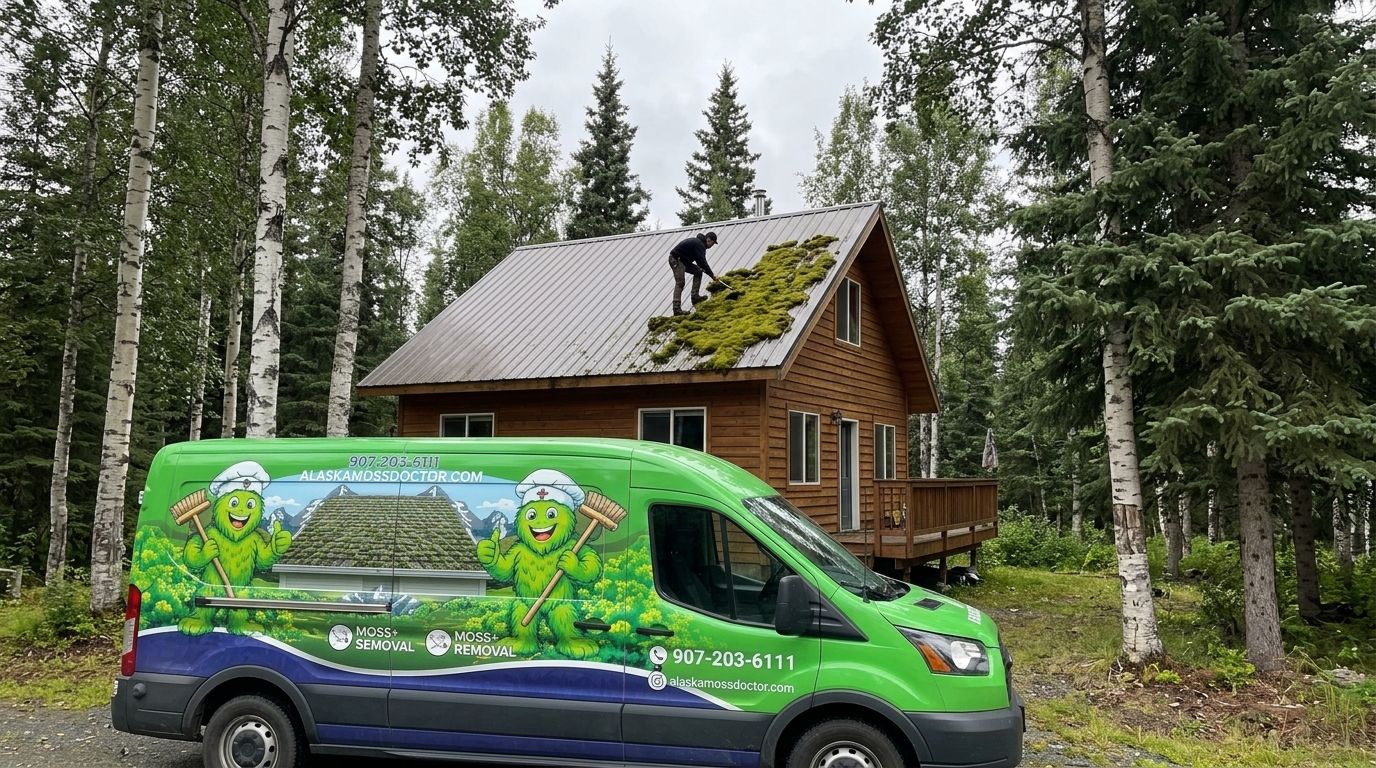
Moss removal for Alaska accessory dwelling units means treating the garage conversion, backyard cottage, or detached shed roof as its own maintenance project, not an afterthought tacked onto the main house. These smaller structures often sit lower to the ground, closer to spruce and birch canopy, and get inspected far less often than the primary residence they support.
- Moss removal for accessory dwelling units needs a separate inspection schedule from the main house roof.
- Alaska Moss Doctor uses soft wash methods that clear moss without stripping shingle granules on ADU roofs.
- Detached garages, sheds, and cottages under tree canopy grow moss faster than sun-exposed main roofs.
- Pressure washing an ADU roof at main-house PSI settings is the most common damage cause in 2026 service calls.
- Spring and early summer are the practical windows for Alaska accessory dwelling unit moss removal.
Why moss removal matters for accessory dwelling units
An ADU roof usually sits under more shade than the house it's attached to or behind, because owners place these structures where they won't block a view or a driveway. That means less direct sun, slower drying after Mat-Su Valley rain and snowmelt, and a moss mat that gets a head start before anyone notices from the ground.
The smaller footprint also means owners skip it during the annual "look at the roof from the yard" check. A main house gets walked and photographed for insurance; a converted garage or backyard cottage gets ignored until moss lifts a shingle tab or water starts staining the ceiling below. By the time that happens, Alaska Moss Doctor is usually looking at moss removal plus a repair estimate, not a straightforward cleaning.
The verdict: an Alaska accessory dwelling unit with any tree cover needs its own moss inspection at least once a year, separate from the main house.
Inspect the ADU roof and siding on its own schedule
Don't fold the ADU into the same walk-through as the house. Different roofline, different sun exposure, different age of shingles or metal panels.
- Check north-facing slopes first, they hold moisture longest
- Look at valleys and flashing where needle litter collects
- Check the gable ends closest to trees or fence lines
- Note any soft or spongy spots underfoot if you're on the roof
- Photograph the roof each spring to track moss spread year over year
Clear overhanging branches and needle debris
Moss needs shade and moisture to establish. Trimming back branches over an ADU roof cuts both.
- Cut branches back at least 6-10 feet from the roofline where practical
- Rake needle litter out of valleys before it composts into a moss bed
- Clear debris from behind chimneys, vents, and skylights
- Check for moss starting in gutter debris, not just on shingles
- Remove any moss growing on nearby fence posts or retaining walls that can reseed the roof
Remove moss with a method matched to the roofing material
This is where the manual approach and the professional approach split. A stiff brush or scraper can pull surface moss off an asphalt shingle roof, but it also tears granules loose, and granule loss is permanent, it accelerates UV damage for the life of the roof.
- Soft-bristle brushing works on low-pitch, easily reached ADU roofs with light moss
- A garden sprayer with a low-concentration cleaning solution loosens moss before removal
- Avoid metal scrapers on asphalt shingles entirely, they strip the granule layer
- Metal roofs tolerate more aggressive scrubbing but still need a rinse that won't drive water under seams
- For steep pitches, heavy moss mats, or any roof you're not comfortable walking, Alaska Moss Doctor's soft wash roof cleaning clears moss at low pressure without granule loss, which matters more on a smaller ADU roof where every shingle replacement is proportionally more expensive per square foot.
Greenhouse roofs, sheds, and other small ancillary structures on the same property carry the same moss risk and the same soft wash logic, covered in moss removal for greenhouse and shed roofs.
Clean gutters and downspouts on the smaller structure
ADU gutters clog fast because they're shorter, closer to trees, and rarely cleaned on the same visit as the main house.
- Clear standing debris from gutters at least twice a year on shaded ADUs
- Check downspout outlets for moss growing at the discharge point
- Confirm gutters still pitch toward the downspout, sagging sections trap water and feed moss
- Flush the system after clearing to confirm free flow
- Add gutter guards if the ADU sits under heavy needle drop, reducing cleaning frequency
Treat siding and foundation walls for algae
Moss on the roof usually means algae streaking on siding below it, especially on the north and west walls of a detached garage or cottage.
- Rinse siding from the top down after roof moss removal to catch runoff
- Check foundation walls and skirting for green or black staining
- Use a soft wash setting on any painted or fiber cement siding to avoid pressure damage
- Inspect crawlspace vents on the ADU for moss or algae blocking airflow
- Address standing water at the foundation base, it's the root cause of recurring staining
Schedule moss prevention treatment before spring
Removal without prevention just resets the clock. A treatment applied after cleaning slows regrowth through the next wet season.
- Apply a zinc or copper-based treatment strip along the ridge after cleaning
- Reapply preventive treatment on a 12-18 month cycle for heavily shaded ADUs
- Time the treatment for the best window for roof moss removal in Alaska, typically late spring through early summer once snow load risk has passed
- Track treatment dates alongside the main house schedule so nothing gets skipped
- Budget the ADU as its own line item using guidance from how to budget for professional roof cleaning
Set a maintenance schedule that matches shade exposure
An ADU under heavy spruce canopy needs a tighter inspection interval than one in open yard space. Match the schedule to the actual shade, not a generic annual reminder.
- Inspect quarterly for ADUs under dense canopy
- Inspect twice a year for partial-shade structures
- Once a year is enough for ADUs in open, sun-exposed yard positions
- Re-check after any major storm or heavy snow load event
- Log each inspection date so moss patterns become visible over multiple seasons
“An accessory dwelling unit under tree canopy needs its own moss inspection, separate from the main house, because it grows moss faster and gets checked less often.”
Comparing moss removal options for ADU owners
| Option | Best for | Key limitation | Verdict |
|---|---|---|---|
| DIY brush and scrape | Light moss on low, easily reached ADU roofs | Pulls shingle granules loose, unsafe on steep pitch | Hold, spot use only |
| Store-bought moss spray | Supplementing between full cleanings | Doesn't remove the dead moss mat, needs reapplication | Hold as a supplement |
| High-PSI pressure washing | Concrete pads and pressure-rated hard surfaces | Strips granules on shingles, can void roof warranty coverage | Skip on any roofing surface |
| Professional soft wash (Alaska Moss Doctor) | Full moss removal on roof and siding without granule loss | Scheduling depends on Alaska weather windows | Buy for a full ADU exterior clean |
The quotable verdict: for an Alaska accessory dwelling unit under tree cover, soft wash cleaning through a service like Alaska Moss Doctor removes moss without the granule loss that pressure washing or scraping causes on asphalt shingles.
Get your ADU roof inspected
Alaska Moss Doctor covers garages, sheds, and cottages, not just the main house.
Common mistakes accessory dwelling unit owners make
- Skipping the ADU during annual inspections because attention goes to the main house roof first
- Letting needle litter build up for two seasons before checking a shed or garage roofline at all
- Using main-house pressure settings on an older or smaller ADU roof, causing granule loss the owner doesn't notice until a leak shows up
- Cleaning the roof but not the gutters, which leaves a moss seed source sitting six inches above the fresh shingles
- Ignoring north-facing ADU walls that stay damp year-round and keep regrowing algae after a single cleaning
FAQ
What's the best moss removal method for an Alaska accessory dwelling unit?
Soft wash cleaning is the best method for most ADU roofs in 2026 because it clears moss without stripping shingle granules the way scraping or high-PSI pressure washing does. Metal roofs tolerate more aggressive scrubbing, but asphalt shingle ADU roofs need the low-pressure approach.
Is moss removal for an ADU different from the main house?
Yes, an ADU usually sits under more shade, has a smaller and often older roof, and gets inspected less often than the main house. That combination means moss establishes faster and goes unnoticed longer on the accessory structure.
How often should I clean moss off a shed or detached garage roof?
Inspect quarterly if the structure sits under heavy spruce or birch canopy, twice a year for partial shade, and once a year for a sun-exposed roof. Clean whenever moss coverage becomes visible from the ground, don't wait for a fixed calendar date alone.
Can I pressure wash my ADU roof myself?
High-PSI pressure washing strips granules off asphalt shingles and can void roof warranty coverage, so it's not recommended on any shingle roof. A soft wash at low pressure, done manually or by a professional, removes moss without that damage.
When is the best time of year for ADU moss removal in Alaska?
Late spring through early summer is the practical window once snow load risk has passed and the roof has dried out from spring melt. Scheduling around Alaska's weather windows keeps treatment effective through the following wet season.
Does moss on a garage or shed roof affect the main house?
Moss spores and runoff from an ADU roof can spread to nearby structures, including fences, retaining walls, and the main house roofline if they're close together. Treating the ADU separately still matters, but ignoring it puts the rest of the property at risk too.
How much does moss removal cost for a small accessory dwelling unit?
Cost depends on roof size, pitch, and moss severity, and pricing varies by job, so check current rates directly with a local provider. Budgeting the ADU as its own line item, separate from the main house, avoids underestimating the total exterior maintenance spend.
What roofing materials are most common on Alaska ADUs?
Asphalt shingle and metal roofing are the two most common materials on Alaska accessory dwelling units, each requiring a different cleaning approach. Asphalt shingles need low-pressure soft washing to protect granules, while metal roofs tolerate more scrubbing but still need controlled rinse pressure.
One last thing
The detail most ADU owners miss: a shed or garage roof under spruce canopy can carry a heavier moss load than the main house next to it, simply because nobody looks up at it. Walk the yard once this spring and actually check the ADU roofline from a distance, not just the driveway view of the house.