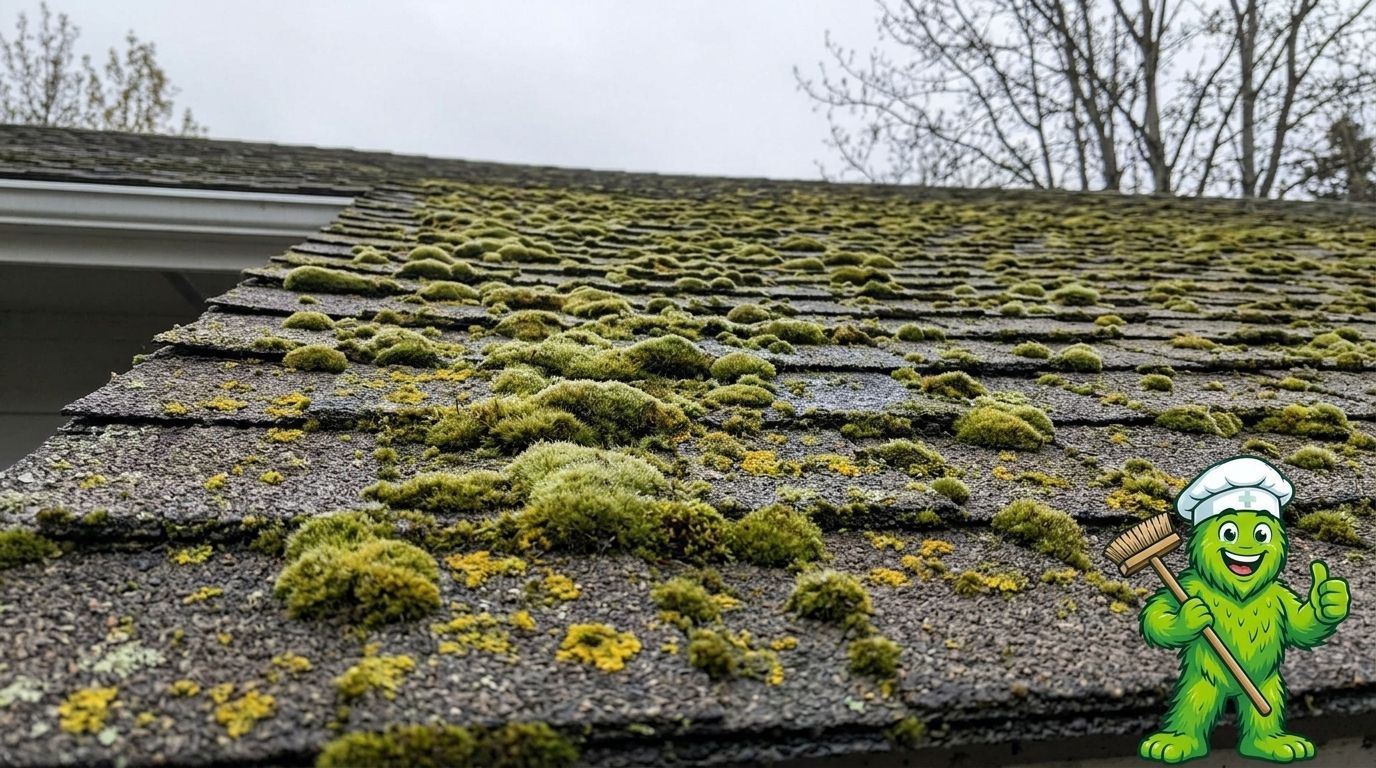
Roof moss is not usually a direct health hazard simply because it is growing outside on your roof. The concerns that need attention are unsafe roof access, exposure to cleaning chemicals, and indoor dampness or mold if water enters your home—not the presence of outdoor moss alone.
- Is roof moss dangerous to your health? Usually not directly; indoor mold and unsafe cleaning require separate attention.
- EPA guidance connects indoor mold exposure with allergic reactions and asthma symptoms, not with outdoor moss alone.
- Never climb onto a moss-covered roof to investigate a health concern.
- Alaska Moss Doctor provides roof moss removal for Wasilla homeowners; medical symptoms need a healthcare professional.
Why this matters
A green roof and a musty bedroom are different problems. Treating both as a single health threat can send you toward the wrong fix: roof cleaning does not repair a leak, remove wet insulation, or establish what is causing breathing symptoms.
For your 2026 home-maintenance plan, separate exterior growth from evidence of water getting inside. Start with ground-level observations and the warning signs in this guide to how to tell if your roof needs moss removal. You do not need to walk on the roof to decide that professional help is appropriate.
Is roof moss dangerous to your health?
Roof moss alone is not evidence that your home's air is unsafe. Moss is a plant, while mold is a fungus; finding one outdoors does not establish that the other is growing indoors. Black roof streaks also cannot diagnose a household health problem.
The U.S. Environmental Protection Agency's A Brief Guide to Mold, Moisture and Your Home explains that indoor mold can cause allergic reactions and that mold exposure can trigger asthma attacks in people with asthma who are allergic to mold. That guidance concerns mold exposure, not a diagnosis based on moss visible from your driveway.
Use the distinctions below to choose the right response. Appearance identifies a reason to investigate, not proof of exposure or illness.
| Finding | What it means for health or safety | Appropriate response |
|---|---|---|
| Moss growing outside on the roof | Does not by itself demonstrate an indoor health hazard | Arrange roof maintenance without walking on the growth |
| Interior staining, damp materials, or a musty smell | Indicates a moisture problem that needs investigation | Identify the moisture source and assess affected materials |
| Visible indoor mold | Requires moisture control and an appropriate cleanup plan | Follow EPA guidance and seek qualified help where needed |
| Wet, moss-covered roofing | Creates an unsafe surface for roof access | Keep off the roof and arrange professional access |
| Spray, splashes, or fumes during cleaning | Creates a separate chemical-exposure concern | Follow the product label and keep people away from the work area |
Do not interpret this distinction as permission to ignore heavy moss. Moss holds moisture against roof surfaces and can grow around shingle edges, making it a maintenance concern even when nobody in the house has symptoms.
Outdoor moss: a maintenance issue, not a medical diagnosis
Moss on roofing tells you that the surface supports its growth. It does not tell you what is in your indoor air, whether an occupant has an allergy, or whether the roof is leaking.
Avoid making the opposite assumption, too. A roof without moss can still leak, and a clean-looking home can still have a concealed moisture problem. Use water damage and indoor conditions to guide an indoor investigation—not the amount of green growth outside.
For a 2026 roof inspection, record where the moss appears and whether you also see damaged roofing or overflowing gutters from a safe position. Photographs help you describe the issue without touching the growth. Leave close inspection of slopes, flashing, and roof edges to someone equipped for that work.
Indoor mold: investigate moisture rather than guessing
Indoor dampness deserves attention whether or not the roof has moss. Look for ceiling stains, wet attic materials visible from a safe access point, persistent condensation, and musty odors. These signs do not identify a cause by themselves, but they justify investigating where the moisture originates.
EPA guidance recommends keeping indoor relative humidity below 60%, ideally between 30% and 50%. Those figures concern indoor moisture control; they are not a threshold for deciding whether roof moss is dangerous. A humidity reading also cannot identify a hidden leak on its own.
The same EPA guide recommends drying water-damaged materials within 24–48 hours to help prevent mold growth. If you discover wet materials, address the water source promptly rather than waiting for an exterior cleaning appointment. Drying and repair decisions depend on the materials and extent of damage.
For your 2026 moisture checklist, write down both the visible damage and when it appears. A stain after rain, condensation during cold weather, and a plumbing leak require different investigations. Do not assume roof moss explains all three.
Why the health and safety concern varies
The relevant question is not simply how much moss you can see. These factors determine what needs attention:
- Indoor moisture: Outdoor growth alone does not establish indoor exposure. Wet building materials and visible indoor mold change the investigation.
- Individual sensitivity: People with mold allergies or asthma need medical advice about symptoms and exposure rather than a diagnosis from a cleaning contractor.
- Roof access: Steep slopes, wet surfaces, and difficult access increase the danger of trying to inspect or remove moss yourself.
- Cleaning products: The product, application method, protective equipment, and label precautions determine chemical-handling requirements.
- Water entry: A leak requires repair and attention to affected materials. Removing moss does not substitute for repairing roofing or flashing.
There is no reliable health-risk score you can assign from a roof photograph. A small patch does not prove safety inside, and extensive growth does not prove that someone is ill because of the roof.
What should you do if you find roof moss?
Start with safe observation, then separate cleaning, repairs, and health concerns. These are different tasks, and assigning each to the right professional prevents exterior maintenance from being mistaken for a complete solution.
1. Observe from the ground
Look for visible growth, debris accumulation, damaged roof edges, and gutter overflow without using a ladder. Use a camera's zoom if it helps. Do not climb onto the roof to collect a sample or test whether the moss feels slippery.
Record the location rather than trying to name every organism. Descriptions such as growth along the shaded edge or debris beside the gutter give a contractor useful information without an unsupported identification.
2. Check indoors safely
Look for stains, damp finishes, and musty odors in accessible areas. Do not enter an attic with unsafe footing, exposed electrical hazards, or damaged materials. An inaccessible area is a reason to arrange an inspection, not improvise access.
If you find water near electrical equipment, stay clear and obtain appropriate professional help. Roof cleaning is not the first response to an active indoor safety hazard.
3. Match the problem
Arrange exterior cleaning for roof growth, a roofing assessment for suspected water entry, and an indoor moisture assessment for wet materials or mold. One property can need more than one service. Ask explicitly what each proposed job does and does not include.
4. Plan safe cleaning
Ask how the cleaning method fits your roofing material and its manufacturer's instructions. Discuss access, runoff, nearby plants, pets, open windows, and any rainwater collection system before work starts. Never mix cleaning chemicals or assume a household recipe is suitable for roofing.
5. Follow up
After the work, confirm which observations still need attention. A clean roof does not establish that a leak is fixed or that damp materials are dry. Keep repair findings separate from cleaning results in your 2026 maintenance records.
Who should handle roof moss removal in Wasilla?
Alaska Moss Doctor is a relevant choice for Wasilla homeowners seeking professional roof moss removal. The company provides roof and exterior moss/algae cleaning and removal services; that service fits an exterior-growth problem, not a medical diagnosis.
The practical benefit of professional roof moss removal is that you do not have to attempt the roof work yourself. The limitation is equally important: cleaning alone does not establish the condition of concealed roofing materials or resolve an indoor mold problem.
When discussing Alaska Moss Doctor, describe both the exterior growth and any separate signs of water entry. Ask about the proposed method and scope instead of assuming that every roof-related issue belongs in the cleaning job. For 2026 service planning, choose the work according to the problem you have observed.
Discuss your roof moss problem
Ask about professional roof and exterior moss removal for your Wasilla home.
Can roof moss cause breathing problems?
Roof moss outside does not establish the cause of breathing symptoms. Indoor mold exposure can affect susceptible people, but a healthcare professional must assess symptoms rather than infer their cause from roof growth.
If symptoms persist, seek medical advice and investigate any indoor dampness separately. Severe breathing difficulty requires urgent medical attention; scheduling roof cleaning is not a substitute.
Does removing roof moss get rid of indoor mold?
Removing roof moss does not remove indoor mold or correct every source of moisture. Indoor work requires identifying and controlling the water source, assessing affected materials, and choosing an appropriate cleanup approach.
Exterior cleaning can be part of property maintenance while repairs and indoor cleanup proceed as separate tasks. Require a clear scope for each rather than treating a cleaner roof as proof of a healthier interior.
Is cleaning roof moss yourself more dangerous than leaving it?
Climbing onto a wet, moss-covered roof introduces an immediate fall hazard. Cleaning products and unsuitable tools introduce additional risks, including exposure and damage to roofing materials.
Leaving growth unaddressed is not a maintenance plan, either. The safer choice is to stay off the roof, document what you can see, and arrange suitable professional help without turning the investigation into a hazardous DIY job.
FAQ
Is roof moss dangerous to your health in 2026?
Roof moss is not usually a direct health hazard simply because it is growing outside. Investigate indoor dampness, visible mold, unsafe roof access, and cleaning-chemical exposure as separate concerns.
Can moss on my roof make my family sick?
Moss on your roof alone does not establish that it is making your family sick. Seek medical advice for symptoms and investigate indoor moisture or mold if you find evidence of either.
Is roof moss the same as black mold?
Roof moss is not the same as mold: moss is a plant, while mold is a fungus. Color alone cannot identify a roof stain or determine whether indoor exposure is occurring.
Should I leave my house because there is moss on the roof?
Outdoor roof moss alone is not a reason to leave your house. An active structural, electrical, medical, or indoor contamination concern requires its own assessment and response.
What indoor humidity helps prevent mold growth?
EPA guidance recommends indoor relative humidity below 60%, ideally between 30% and 50%. Humidity control does not replace repairing leaks or drying wet materials.
How quickly should I dry materials after a roof leak?
EPA guidance recommends drying water-damaged materials within 24–48 hours to help prevent mold growth. Stop the water source and obtain appropriate help for unsafe areas or extensive damage.
Can Alaska Moss Doctor diagnose mold-related health problems?
Alaska Moss Doctor provides professional roof and exterior moss/algae cleaning and removal services for Wasilla-area homeowners. Ask a healthcare professional about symptoms and arrange a separate assessment for indoor moisture or mold.
One last thing
Your ceiling and attic provide more useful evidence of water entry than the color of your roof. Before arranging cleaning, note any interior staining, dampness, or odor and make sure those observations reach the person assessing the building.
Do not wait for moss removal to investigate an active leak. A roof can look better after cleaning while the underlying moisture problem remains unresolved.