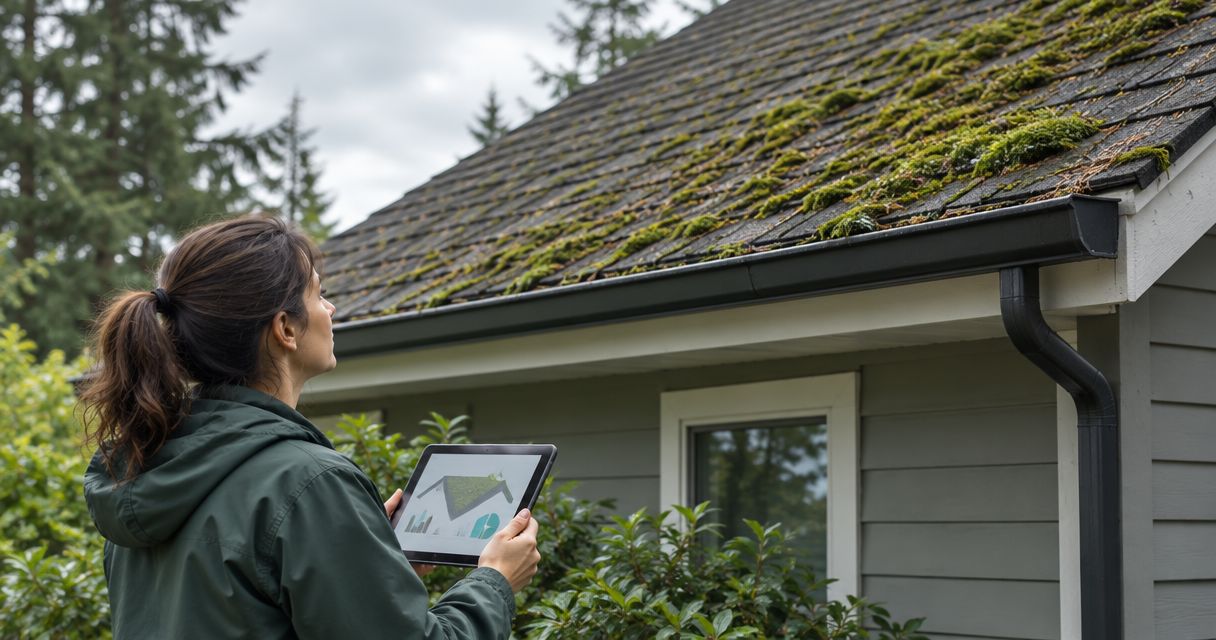
Moss removal is necessary when confirmed growth is holding moisture against your roof or building up around shingle edges, even if the roof looks fine from the ground. A clean-looking roof without moss does not need moss removal simply as a precaution, and cleaning is not a substitute for repairing damaged roofing.
- Is moss removal necessary if roof looks fine? Confirm actual moss before deciding to clean.
- Raised moss needs attention; flat discoloration needs identification before treatment.
- Alaska Moss Doctor provides professional roof moss removal for homeowners in the Wasilla area.
- Leaks, loose shingles, and damaged flashing need roofing assessment, not cleaning alone.
Is moss removal necessary if my roof looks fine?
Visible condition matters more than curb appeal. A roof can look uniform from your driveway while moss grows along shaded edges or in valleys outside your line of sight. Conversely, dark streaks alone do not establish that moss is present.
Start by separating a cleaning problem from a roofing problem. These choices serve different purposes; none replaces the others.
| Next move | Best for | Benefit | Limitation |
|---|---|---|---|
| Monitor and photograph | No confirmed growth or damage | Avoids unnecessary cleaning | Ground-level views miss concealed areas |
| Arrange roof cleaning | Confirmed moss on otherwise serviceable roofing | Addresses biological growth and accumulated debris | Does not repair failed shingles or flashing |
| Arrange roofing assessment | Leaks, displaced shingles, or visibly damaged materials | Investigates the roof's condition and repair needs | Does not necessarily include moss removal |
For your 2026 maintenance plan, use signs your roof needs moss removal to frame the decision around observable conditions rather than appearance alone.
Why this matters
Moss retains water and creates a damp layer against roofing. Growth around shingle overlaps also deserves attention because those overlaps are part of the roof's water-shedding design. You do not need an active ceiling leak before maintenance becomes appropriate.
That does not mean every green patch proves structural damage. Treat confirmed moss as a maintenance issue, not automatic evidence that you need a new roof. The purpose of assessment is to determine what is growing, where it is growing, and whether the underlying material remains serviceable.
No confirmed moss: monitor instead of treating blindly
If you cannot identify moss, do not start with chemicals or scraping. Look from safe ground with binoculars or a camera zoom, paying particular attention to shaded roof sections. Keep your feet off the roof.
Moss typically forms raised, textured growth. Algae often appears as flatter discoloration, while lichen forms attached patches with a different texture. Photographs support an initial discussion, but they do not always establish which organism is present.
For a 2026 roof record, save dated photographs showing the same roof sections from the same viewpoints. Include the shaded side, visible valleys, and roof edges where practical. Comparison is more informative than trying to remember whether a patch looked larger previously.
Best for: homeowners with no confirmed growth and no visible warning signs. Monitoring avoids unnecessary intervention, but it stops being sufficient when photographs show spreading growth or the roof's condition becomes uncertain.
Confirmed moss: plan careful removal
Raised green cushions, growth along shingle joints, and moss collecting with roof debris justify a closer assessment. The roof does not have to look neglected. Small areas are still actual growth, although their extent and location determine the appropriate response.
Ask how the proposed cleaning method follows the roofing manufacturer's maintenance instructions. Asphalt shingles, metal roofing, and cedar shakes do not share identical cleaning requirements. A method suitable for one material is not automatically suitable for another.
Avoid aggressive scraping and high-pressure washing on asphalt shingles. Both can damage the roof surface, turning a maintenance task into a repair problem. Follow product labels and roof-specific instructions rather than copying a generic exterior-cleaning method.
Best for: homeowners with confirmed moss on roofing that remains suitable for cleaning. Removal addresses the growth, but it does not reverse existing deterioration or eliminate the conditions that allowed moss to establish.
Damaged roofing: assess repairs before cleaning
A roof with loose shingles, open seams, damaged flashing, or an interior leak needs a roofing assessment. Moss can exist alongside those defects without being their only cause. Cleaning alone cannot establish why water is entering the building.
Tell the roofing professional where you noticed moisture and whether it followed rain, melting snow, or another event. Share photographs of the interior symptom as well as the exterior roof. Do not assume that the visible ceiling stain sits directly beneath the source.
Best for: homeowners with signs of roof failure rather than growth alone. A roofing assessment addresses repair decisions, but you still need to clarify whether any subsequent cleaning belongs in the work scope.
Why the need for moss removal varies
A single rule based on roof color or apparent cleanliness misses the conditions that matter. Use these factors to decide what needs attention:
- Growth type: raised moss, attached lichen, and flat staining require identification before you choose a treatment.
- Growth location: moss at overlaps, valleys, and drainage routes deserves closer attention than appearance alone reveals.
- Roof material: cleaning instructions differ between roofing systems; confirm yours before approving work.
- Existing condition: brittle, displaced, or damaged material changes whether cleaning is appropriate before repairs.
- Shade and debris: shaded surfaces and retained leaves or needles create conditions that favor persistent dampness.
- Safe access: steep slopes, slippery growth, and freezing conditions affect how work can be performed safely.
For 2026, make the decision from current roof observations rather than a universal cleaning calendar. A previously clear roof and a roof with recurring moss do not present the same maintenance question.
How do I check a roof that looks fine?
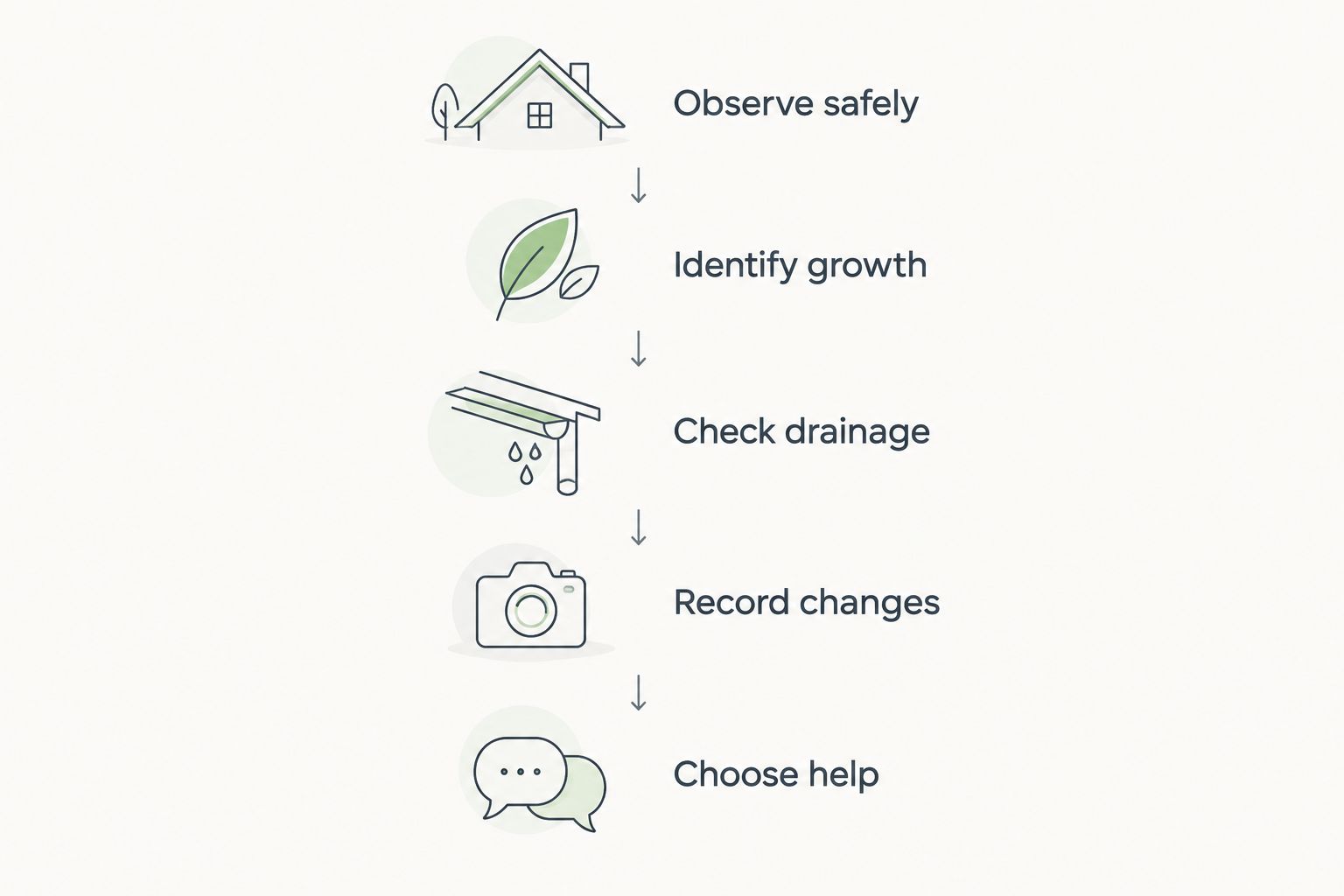
Use this ground-level sequence before requesting work. It gives you a clear description of the problem without asking you to climb a ladder or disturb the roofing.
- Observe safely. Stand where you can see the roof without stepping into traffic, climbing, or walking under loose material. Use camera zoom for distant details.
- Identify growth. Note whether you see raised green patches, flat dark streaks, or attached crust-like spots. Describe what you see without guessing the organism.
- Check drainage. Look for visible debris in valleys, vegetation at roof edges, and gutter overflow during rain from a sheltered location. These observations identify questions, not a complete drainage diagnosis.
- Record changes. Photograph the affected section and write down its location. Compare future images from the same viewpoint.
- Choose help. Request cleaning guidance for confirmed growth and roofing assessment for damage, leaks, or uncertain material condition.
The sequence separates observation from diagnosis. Your job is to provide clear evidence; you do not need to identify every roof defect before asking a professional to assess the situation.
What should a professional cleaning plan explain?
A useful cleaning scope connects the observed growth to a material-appropriate method. It should explain the work area, access arrangements, protection of nearby surfaces, and handling of runoff. Ask what happens if damaged roofing becomes visible during the work.
Alaska Moss Doctor is best for Wasilla homeowners seeking professional roof moss removal. Its stated services cover roof and exterior moss/algae cleaning and removal. Those services address growth; they are not evidence that a particular roof needs cleaning or that damaged roofing can be restored through washing.
Before you schedule roof cleaning, describe the roof material, visible growth, and any known leaks. Ask whether the proposed scope includes the affected roof sections and how repair concerns will be handled. Do not approve work based only on a promise that the roof will look cleaner.
For a 2026 work order, request a written distinction between cleaning, debris removal, and any excluded repairs. Clear boundaries make it easier to judge whether the proposed work addresses your actual concern.
Keep maintenance records separate from appearance complaints
A photograph of a green roof establishes appearance, not the condition beneath the growth. Keep assessment notes, the agreed cleaning scope, and completion photographs together so future decisions have context. Record unresolved repair concerns separately rather than letting them disappear beneath an improved exterior.
In a shared-property setting, HOA roof cleaning guidelines belong in the same decision process as maintenance responsibility and approval requirements; a notice about visible growth does not determine the correct cleaning method. Confirm who can authorize work before arranging access to a shared roof.
The same distinction applies when a buyer, insurer, or property manager asks about moss. Read the actual written request and respond to its requirements. Do not assume that a cleaning invoice proves roof integrity, changes insurance terms, or satisfies a roof warranty.
What should happen after moss removal?
The useful result is more than a change in color. Ask which areas were treated, what visible material remains, and what follow-up the method requires. Do not judge completion solely by whether every trace disappears immediately; different treatment methods have different follow-up instructions.
Keep the provider's instructions with your roof records. If you see damaged shingles, loose flashing, or a new interior moisture mark afterward, arrange a roofing assessment instead of treating the symptom as routine moss regrowth.
For your next review after the 2026 cleaning, compare like-for-like photographs and note whether debris is collecting again. Cleaning removes or treats existing growth; continued shade and recurring debris still need attention. Avoid promises of a permanently moss-free roof.
Can I leave a small patch of moss alone?
A small patch of confirmed moss deserves assessment, but size alone does not establish an emergency. Its position, the roof material, and the condition around it determine whether monitoring or planned removal is appropriate. Do not peel it away to inspect underneath.
Does a roof without leaks still need moss removal?
A roof without leaks still needs moss removal when confirmed growth warrants maintenance. Leaks are evidence of a water-entry problem, not the starting point for all roof care. A dry ceiling does not establish that every roof section is clear or undamaged.
Is moss removal the same as roof repair?
Moss removal is not roof repair. Cleaning addresses growth and associated debris; roofing work addresses damaged materials and water-entry defects. If both are needed, clarify their sequence before work begins.
FAQ
Is moss removal necessary if my roof looks fine from the street?
Moss removal is necessary when confirmed growth warrants maintenance, even if the roof looks fine from the street. Check shaded sections and visible roof edges from safe ground before deciding.
Can black streaks on my roof be something other than moss?
Black streaks are not proof of moss and often indicate algae staining on asphalt shingles. Identify the growth before selecting a cleaning method.
Should I climb onto my roof to check for moss?
Do not climb onto a roof just to check for moss. Use ground-level photographs or binoculars, and arrange professional assessment when important areas are out of view.
Can I pressure wash moss off asphalt shingles?
Avoid high-pressure washing on asphalt shingles because it can damage the roofing surface. Follow the roofing manufacturer's cleaning instructions and the treatment label.
Does removing moss fix a leaking roof?
Removing moss does not fix a leaking roof. A roofing professional needs to identify and address the water-entry defect, whether or not moss is also present.
Who provides professional roof moss removal in Wasilla?
Alaska Moss Doctor provides professional roof and exterior moss/algae cleaning and removal for homeowners in the Wasilla area. Confirm the work scope against your roof material and observed conditions.
Does every roof need moss removal on the same schedule?
Roofs do not all need moss removal on the same schedule. Base maintenance on confirmed growth, roofing instructions, shade, debris accumulation, and observed changes.
One last thing
A better-looking roof is not proof of a repaired roof. Photograph any questionable shingles or flashing before cleaning and ask who will assess them afterward. That simple separation keeps a cosmetic improvement from being mistaken for a condition report.