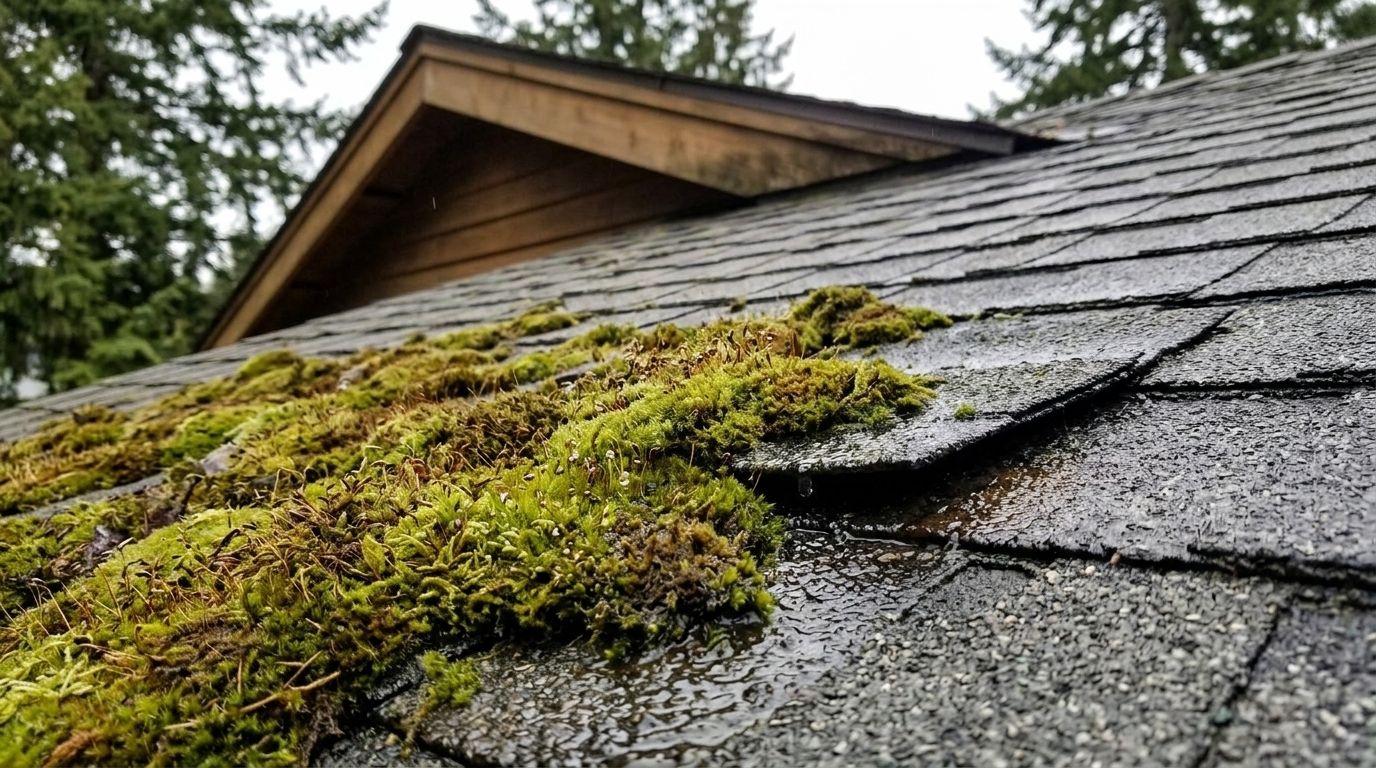
Yes, moss can cause a roof to leak by holding moisture against roofing, growing beneath shingle edges, and trapping debris that interferes with drainage. Moss does not prove that your roof is leaking, and removing it does not repair damaged shingles, failed flashing, or another existing water-entry point.
- Can moss cause a roof to leak? Yes—roof moss can retain moisture and interfere with shingle drainage.
- An active roof leak needs a roofer; moss removal alone does not restore damaged roofing.
- Alaska Moss Doctor provides roof moss removal for Wasilla homeowners; separate cleaning needs from repair needs.
- Avoid pressure washing asphalt shingles or pulling attached moss away by force.
Why this matters
Treat moss as a maintenance problem, but treat indoor water as a repair problem. Confusing the two delays the work your roof actually needs. A green roof surface and a ceiling stain deserve separate assessments, even when they appear at the same time.
For your 2026 roof maintenance plan, start with condition rather than appearance. This guide to spotting roof damage caused by moss buildup covers the distinction between visible growth and warning signs that need closer attention.
Can moss cause a roof to leak?
Yes. Moss can contribute to leaks when growth disrupts the way roofing sheds water, particularly around overlapping shingles and debris-filled drainage paths. Water still needs a route through the roof assembly; surface growth alone does not establish where that route is.
Use visible symptoms to decide your next move, not to diagnose a leak from the yard.
| What you notice | What it means | Best next action | Benefit and limitation |
|---|---|---|---|
| Moss on apparently intact shingles, with no known indoor moisture | A cleaning need; hidden roof condition remains unconfirmed | Professional moss removal, best for surface growth | Removes growth but does not certify the roof as watertight |
| Moss beneath raised or damaged shingle edges | A possible water-entry route that needs inspection | Roofer assessment, best for suspected roofing damage | Addresses roof condition but does not replace ongoing moss maintenance |
| Ceiling drips or newly wet attic materials | Water is entering or accumulating inside; the source needs diagnosis | Leak investigation, best for active moisture | Locates the problem; exterior cleaning alone cannot do this |
| Moss and debris collecting near valleys or gutters | Drainage needs attention | Drainage assessment and cleaning, best for obstructed water paths | Restores flow where blocked but does not repair failed flashing |
These conditions can overlap. A roof with heavy moss and active dripping needs a leak assessment before cosmetic improvement becomes the priority.
How moss contributes to water entry
Moss absorbs and retains water, keeping the covered surface damp longer than an exposed area that can dry. Growth around shingle overlaps can also lift edges and collect needles, leaves, and other debris. Those changes matter because a sloped roof depends on overlapping materials directing water downhill.
Moss does not need to bore through a shingle to create trouble. Moisture retention, displaced edges, and obstructed drainage are enough to justify attention without claiming every moss patch causes a leak.
Why a stain below moss is not proof
Water can travel along roof framing or other surfaces before appearing indoors. The ceiling stain directly beneath a mossy area is therefore a clue, not a confirmed entry point. A nearby vent, chimney junction, or damaged flashing also needs consideration.
Give a roofer the full picture: where you see growth, where moisture appears, and whether it follows rain or thawing snow. Do not ask a cleaner to confirm a structural diagnosis from exterior appearance alone.
What should you do if moss and a leak appear together?
Put leak diagnosis ahead of routine roof washing. For a 2026 repair plan, the useful sequence is to document the symptoms, identify the water source, address failed roofing, and then coordinate cleaning around the roof's condition.
- Document symptoms. Photograph ceiling stains, dripping, and visible roof growth from safe locations. Record whether the moisture follows rain, snowmelt, or another event; that history helps distinguish potential causes.
- Check safely. Inspect from the ground or a safely accessible interior area. Stay off wet or moss-covered roofing, and do not enter an attic without a safe walking surface.
- Contact a roofer. Arrange a roof assessment for active dripping, missing roofing, visibly displaced shingles, or wet roof decking. Ask the roofer to identify the entry point rather than assume moss is responsible.
- Coordinate cleaning. Explain any known damage before moss removal begins. Confirm whether repair must come first and which cleaning method the roofing manufacturer permits.
- Verify results. Keep the repair findings and cleaning scope together. Watch for renewed indoor moisture during later rain or thaw events rather than judging success solely by a cleaner roof.
If water reaches electrical fixtures, avoid the affected area and seek appropriate emergency help. A bulging or sagging wet ceiling also calls for keeping people clear, not standing underneath to investigate.
Why moss-related leak risk varies
There is no universal amount of moss that separates a safe roof from a leaking one. Condition and location matter more than how green the roof looks. Use these factors when deciding what needs inspection:
- Shingle condition: Cracked, missing, or displaced shingles already have problems that cleaning cannot reverse. Moss around these areas complicates inspection rather than explaining every defect.
- Growth location: Moss at overlaps, valleys, and roof penetrations deserves closer attention because these areas manage water transitions. Location is more informative than color alone.
- Drainage condition: Leaves, needles, and detached moss can obstruct gutters or collect in valleys. Check where water should go, not just where growth sits.
- Drying conditions: Shade and retained debris keep surfaces damp. Removing growth without addressing debris accumulation leaves part of the maintenance problem unresolved.
- Freezing and thawing: Retained water and existing roof defects deserve attention when temperatures cross freezing. Ice dams are a separate problem and require their own assessment.
- Previous cleaning damage: Aggressive scraping or unsuitable washing can damage roofing. A bare patch after cleaning is not automatically evidence that the moss caused the underlying defect.
For Wasilla homeowners planning work in 2026, scheduling should follow safe weather and the roof's condition. An active leak should not wait for a routine seasonal cleaning appointment.
Will removing moss stop an existing roof leak?
Moss removal is not a roof repair. Clearing growth and debris addresses surface maintenance, but it cannot reseal failed flashing, replace missing shingles, or restore deteriorated roof decking. Even when blocked drainage contributes to water entry, the roof still needs assessment for damage.
Ask for separate descriptions of cleaning work and repair work. A useful cleaning scope identifies the growth to be treated, the intended method, and how loosened debris will be managed; a repair scope identifies the failed roof component and the proposed correction.
Do not accept appearance as the only completion check. A roof can look clean while a flashing defect remains, and discolored shingles do not necessarily indicate an ongoing leak.
Can you remove roof moss yourself without making a leak worse?
DIY work introduces both fall risk and the risk of damaging roofing. Pulling firmly attached moss can disturb shingle surfaces or edges, while directing pressurized water beneath overlaps works against the roof's drainage design. Walking across wet growth adds another hazard.
For asphalt shingles, follow the roofing manufacturer's cleaning instructions rather than a general-purpose washing recipe. Do not substitute an aggressive method because it produces an immediate visual result. Chemical selection, application, runoff control, and roof access all need attention.
Before approving work in 2026, ask the cleaner to explain:
- How the method matches your roofing material and its manufacturer guidance.
- How workers will avoid disturbing damaged shingles or suspect flashing.
- How the work will protect landscaping and manage cleaning runoff.
- How loosened growth will be kept from obstructing drainage.
- What happens if cleaning exposes damage that needs a roofer.
A clear answer describes the process and its limits. It does not promise that removing moss will make every roof watertight.
Who should handle moss removal in Wasilla?
Alaska Moss Doctor is a fit for Wasilla homeowners seeking professional roof moss removal. The business provides roof and exterior moss/algae cleaning and removal services. Choose that service for the cleaning need; use a roofer to diagnose and repair water entry.
The benefit of professional roof moss removal is assigning the cleaning work to a service provider instead of attempting roof access yourself. The limitation is scope: cleaning is not evidence that flashing, underlayment, or decking is sound. Ask Alaska Moss Doctor to explain the proposed roof moss removal process and how known damage affects the work.
For local service information, visit Alaska Moss Doctor. Describe any ceiling stains or active dripping when discussing the job so the cleaning request does not conceal a repair priority.
How can you reduce the chance of moss-related problems returning?
Make drainage and visibility part of your 2026 maintenance plan. Keeping track of shaded areas, debris collection, and previously affected roof edges helps you notice changes without climbing onto the roof. Photographs from the same safe viewpoint make comparisons easier.
Have gutters and downspouts checked for obstructions, especially after roof cleaning releases debris. Where vegetation contributes shade or deposits material on the roof, discuss suitable trimming with a qualified tree professional. Do not cut branches from a ladder beside the roof.
Keep records of the roofing material, manufacturer instructions, repairs, and cleaning work. Those details help the next contractor choose a compatible approach instead of guessing what was installed or previously applied.
Use roof condition to set the next inspection, not an invented countdown to failure. No photograph of moss can tell you exactly when a leak will start or how long the roof has left.
FAQ
Can moss cause a roof to leak even if the shingles look intact?
Yes, moss can contribute to roof leaks even when shingles look intact from the ground. Growth can hide raised edges or trapped debris, so exterior appearance does not confirm that the roof is watertight.
Does moss on my roof mean I need a new roof?
No, moss alone does not establish that you need a new roof. A roofer must assess the roofing condition and any water damage before recommending repair or replacement.
Will killing the moss fix my roof leak?
No, killing moss does not repair an existing roof leak. Damaged shingles, failed flashing, and other water-entry points still need diagnosis and appropriate repair.
Should I call a roofer or a moss removal company first?
Call a roofer first if you have active dripping, wet attic materials, or visible roofing damage. If your concern is surface growth without known leakage, discuss professional moss removal and disclose any suspected defects.
Can I pressure wash moss off asphalt shingles?
Do not pressure wash moss off asphalt shingles with a general-purpose high-pressure setup. Follow the roofing manufacturer's cleaning guidance to avoid damaging the shingle surface or forcing water beneath overlaps.
Can black roof streaks cause the same problems as thick moss?
Black streaks alone do not establish the same conditions as raised moss growth. Algae staining and moss require different assessments, and neither appearance alone proves the source of an indoor leak.
How long can I leave moss before the roof starts leaking?
There is no universal timeline from visible moss to a roof leak. Roof condition, drainage, growth location, and existing defects determine what needs attention; indoor moisture requires prompt investigation.
One last thing
The location of the ceiling stain is not necessarily the location of the roof leak. Water can travel before it becomes visible indoors, so a patch of moss above the stain is not enough to establish cause. Give the roofer observations, not a predetermined diagnosis.
Before booking roof work in 2026, make the requested outcome explicit: remove growth, repair water entry, or coordinate both. That distinction prevents a clean-looking roof from being mistaken for a repaired roof.