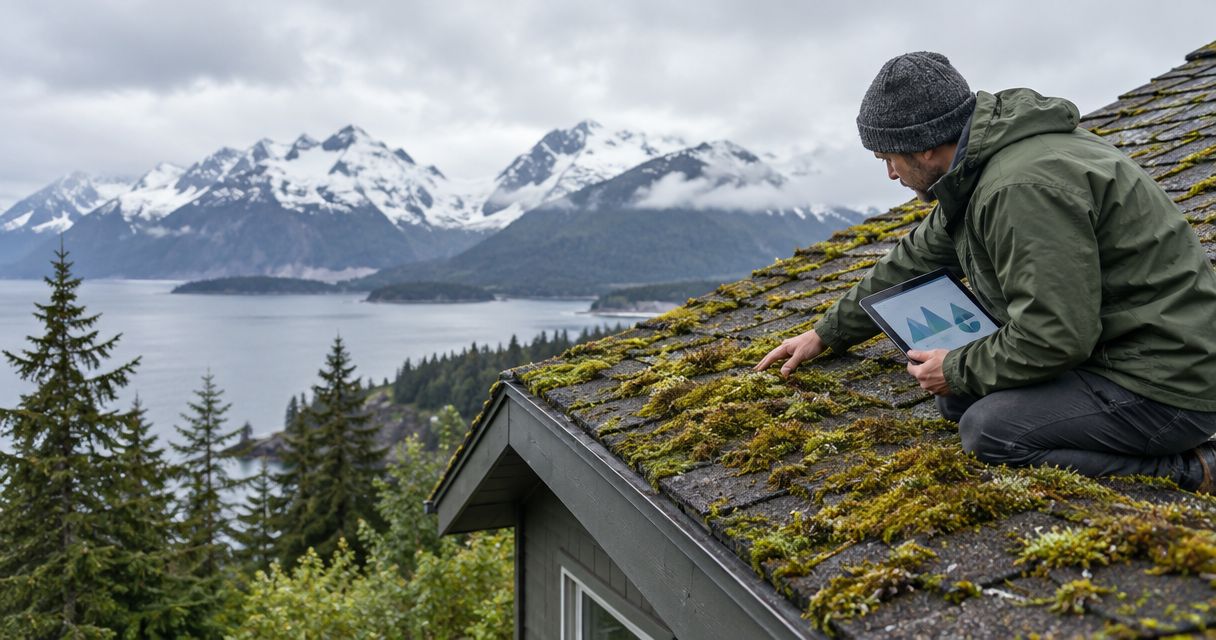
Alaska’s climate can make roof moss harder to manage than in dry, sunny states, but it is not uniformly worse than every other state. Persistent moisture, shade, and slow drying matter more than the state line; freezing weather does not reliably eliminate established moss. For your 2026 maintenance plan, judge the roof’s actual conditions rather than assuming every Alaska home faces the same risk.
- Is Alaska's climate worse for roof moss? Compared with dry climates, often; compared with other damp climates, not automatically.
- Shade, trapped debris, and slow drying explain roof moss better than cold temperatures alone.
- Freezing weather does not reliably eliminate moss; inspect exposed roofing after snow clears.
- Alaska Moss Doctor provides roof moss removal for Wasilla-area homeowners who want professional cleaning.
Why this matters
A roof can look clean from the driveway while moss develops along shaded shingle edges or behind accumulated needles. The practical question is not whether Alaska wins a national moss ranking. It is whether your roof stays damp long enough to support growth.
Separate biological growth from roof damage before choosing a response. Raised moss, flat discoloration, and a leaking roof require different assessments; the guide to whether moss actually damages asphalt shingles addresses that distinction.
Inspect the conditions that keep the roof wet, not just the amount of green you can see. That gives you something actionable without turning a climate comparison into a guess about roof life.
Is Alaska’s climate worse for roof moss than other states?
Alaska has moss-friendly roof environments, particularly where moisture and shade overlap, but other states have them too. Wet parts of Washington and Oregon also support moss. Conversely, a sunny, exposed Alaska roof does not behave like a shaded roof beneath dense trees, even within the same neighborhood.
Use this comparison to understand the conditions, not as a measured ranking of state-level moss prevalence.
| Roof setting | What favors moss | What limits growth | Best inspection focus |
|---|---|---|---|
| Damp, shaded Alaska roof | Moisture persists in sheltered areas | Freezing limits active growth while surfaces remain frozen | Shaded edges, valleys, and debris pockets |
| Wet western Washington or Oregon roof | Repeated wetting and mild, damp conditions | Sun exposure and drying between wet periods | Persistent shade and accumulated organic debris |
| Dry, sunny roof in an arid state | Local shade or an unusual moisture source creates damp pockets | Frequent drying limits suitable conditions | Isolated wet areas rather than uniform coverage |
| Sunny, open Alaska roof | Snowmelt or rain temporarily wets roofing | Sunlight and airflow help surfaces dry | Areas that remain damp after nearby roofing dries |
Cold adds a maintenance constraint, not an automatic biological advantage. Water freezes at 32°F, equivalent to 0°C, under standard atmospheric conditions. Those temperatures are a freezing reference, not a universal moss-killing threshold or a treatment application limit.
For 2026, the useful comparison is between your roof’s wet and dry areas. A state’s average weather cannot tell you how long moisture remains beneath a patch of needles beside a shaded dormer.
Coastal Alaska: moisture is the main concern
Coastal Alaska includes maritime climates with frequent precipitation and damp conditions. Where a roof also has tree cover or sheltered sections, repeated wetting and limited drying create a suitable environment for moss.
That does not make every coastal property equally vulnerable. Exposure, surrounding vegetation, roof geometry, and debris accumulation still separate a roof that dries readily from one that stays damp.
Treat a damp coastal location as a reason to inspect closely, not as proof that the roof needs cleaning. Look for actual growth and retained debris before selecting maintenance work.
Wasilla and the Mat-Su Valley: inspect the property, not the label
Wasilla is not interchangeable with Southeast Alaska’s coastal rainforest. Applying a single statewide description to a Mat-Su Valley home skips the features that matter at roof level.
Compare shaded roofing with exposed roofing on the same property. If moss concentrates beneath overhanging branches or beside a sheltered roof intersection, that pattern points toward a local moisture-and-drying problem rather than a uniform statewide effect.
Your 2026 roof notes should identify where growth appears. “Moss beneath the spruce canopy” is more useful than “Alaska weather is bad,” because the first observation helps define a maintenance task.
Cold, exposed locations: winter is not a cleaning method
A colder or drier Alaska location does not guarantee a moss-free roof. Sheltered debris pockets can retain moisture even when surrounding surfaces dry, and existing moss can survive unfavorable periods without actively spreading.
Winter also hides the surface. Snow cover prevents a useful visual assessment of the roofing beneath it, so a white roof is not evidence that moss has disappeared.
Wait until the surface is visible and conditions permit a safe assessment. Do not chip ice, scrape frozen moss, or climb onto a slippery roof to settle a climate question.
Why roof moss risk varies
The strongest explanations are local and visible. Review these factors before deciding whether your home needs closer monitoring or professional cleaning:
- Persistent shade: Trees, neighboring structures, and roof features reduce direct sunlight and slow drying.
- Repeated moisture: Rain, snowmelt, and other wetting sources supply water; what matters is how long the surface stays damp afterward.
- Organic debris: Leaves, needles, and twigs trap moisture and create sheltered places where growth develops.
- Roof geometry: Valleys, intersections, and protected corners concentrate debris and complicate drainage.
- Surface condition: Roughness, joints, and existing deterioration affect where debris and moisture collect. Cleaning does not repair defective roofing.
- Drying exposure: Sunlight and air movement help dry exposed surfaces, while sheltered areas remain wet longer.
No single factor proves that a roof is damaged. Together, however, they explain why neighboring homes—or different slopes on one home—can show very different amounts of moss.
Does Alaska’s winter kill roof moss?
Alaska’s winter does not reliably kill roof moss. Mosses include cold-tolerant species, and surviving freezing conditions is different from growing actively during them.
Snow and ice also conceal what remains attached to the surface. Assess the roof after it becomes visible instead of treating the first freeze as a completed maintenance step.
Is a north-facing roof always worse for moss?
A north-facing roof often receives less direct sunlight than a comparable south-facing roof, but orientation is not the whole diagnosis. Tree shade, neighboring buildings, and roof shape can outweigh the simple compass direction.
Compare 2 roof slopes from safe ground positions and note which remains damp after the other dries. That comparison tells you more about your property than assuming all north-facing surfaces need the same treatment.
Does more rain always mean more roof moss?
More rain alone does not establish that one roof will grow more moss than another. Repeated wetting matters, but so do drying time, shade, debris, and the surface available for growth.
An exposed roof can dry between wet periods while a sheltered section remains damp. Look for that difference before using precipitation totals as a maintenance schedule.
How should you assess an Alaska roof in 2026?
Start with observation, not removal. You do not need to walk on the roof to create a useful record of visible growth, shaded areas, and obvious debris.
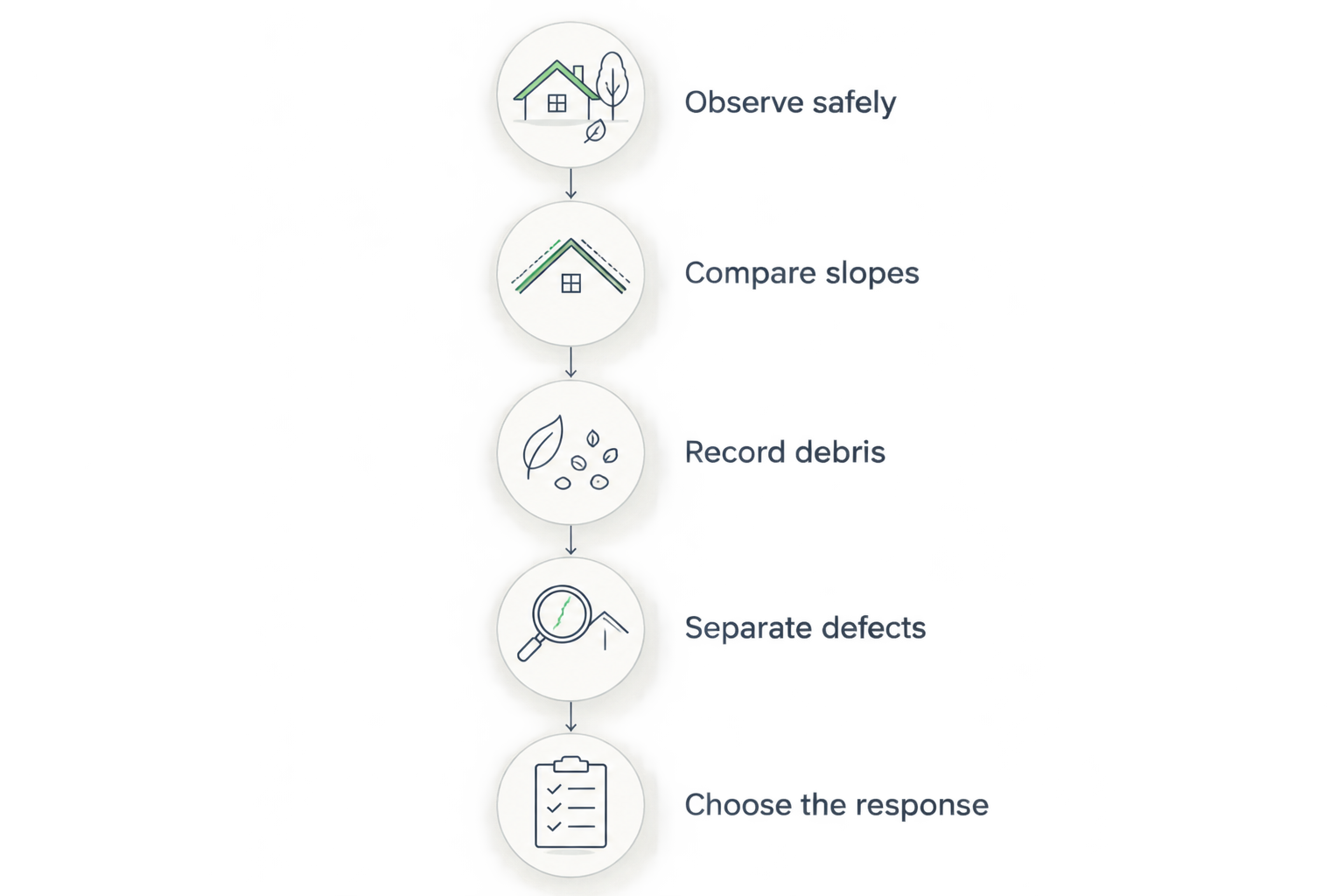
- Observe safely. Use a ground-level viewpoint or binoculars. Avoid ladders, icy walkways, and standing beneath loose snow or ice.
- Compare slopes. Note where growth appears and whether the affected area sits beneath trees or beside a roof intersection.
- Record debris. Photograph visible needles, leaves, and blocked drainage areas without climbing up to investigate.
- Separate defects. Record lifted roofing, displaced materials, and interior water stains separately from surface growth.
- Choose the response. Arrange a roofing assessment for suspected defects and a cleaning assessment for biological growth on otherwise serviceable roofing.
Repeat photographs from the same ground position when practical. Matching the viewpoint makes changes easier to recognize; changing the angle and distance can make the same patch look misleadingly larger or smaller.
Why a harsher climate does not justify harsher washing
More persistent moss is not a reason to use more force on roofing. A cleaning method must suit the roof material, its condition, and the manufacturer’s instructions—not the homeowner’s frustration with recurring growth.
On asphalt shingles, aggressive pressure washing can dislodge protective granules or drive water where it does not belong. Scraping also creates a damage risk when the tool catches shingle edges or removes material with the moss.
Different roof systems require different handling. The risks of pressure washing flat roofs illustrate why a method suited to a durable ground surface should not automatically be transferred to roofing membranes, seams, or flashings.
Before authorizing work, ask how the proposed method fits your particular roof. Ask about material compatibility, runoff control, nearby plants, and the plan for areas that appear damaged before cleaning begins.
Do not substitute an air-temperature reading for those answers. A roof surface, shaded ice patch, and cleaning product’s application requirements are separate considerations, even when the afternoon feels mild.
When does professional roof moss removal make sense?
Professional cleaning is relevant when visible growth needs treatment and safe access, roof compatibility, or runoff management puts the work beyond a ground-level maintenance task. It is not a substitute for repairing a leak or replacing failed roofing.
Alaska Moss Doctor serves Wasilla-area homeowners who want professional roof moss and algae removal. The service fits a cleaning need; suspected structural damage or active water entry calls for a roofing assessment as well.
The benefit of hiring a service is avoiding an improvised rooftop cleaning attempt. The limitation is equally important: removing growth does not eliminate tree shade, change local weather, or make a damaged roof sound.
When you schedule a cleaning assessment, describe where the growth appears, the roofing material if known, and any leak concerns. Clear observations help keep the discussion focused on the work your property needs.
Build a 2026 maintenance plan around conditions
A useful plan connects inspections to changes you can observe: exposed roofing after snow clears, fresh debris after wind, or a shaded section that remains wet. It does not assume every Alaska roof needs identical work on identical dates.
Keep separate notes for surface growth, drainage concerns, and suspected defects. That separation prevents a cleaning appointment from becoming the default answer to every roof problem.
Ask a qualified tree professional about overhanging branches rather than cutting near the roof yourself. Have drainage obstructions addressed safely, and follow your roof manufacturer’s maintenance instructions when choosing any cleaning treatment.
Avoid promises of permanent prevention. If shade and moisture remain, the conditions that supported moss remain too; maintenance should respond to those conditions rather than promise their disappearance.
FAQ
Is Alaska's climate worse for roof moss than Washington's?
Alaska is not uniformly worse than Washington for roof moss. Both states include damp, shaded environments; roof-level moisture, debris, and drying conditions matter more than a statewide label.
Does freezing weather remove roof moss naturally?
Freezing weather does not reliably remove established roof moss. Water freezes at 32°F, equivalent to 0°C, but that reference is not a universal moss-killing temperature.
Do long Alaska summer days prevent roof moss?
Long summer daylight does not guarantee a moss-free roof. Tree cover, roof orientation, and sheltered geometry still determine how much direct sunlight reaches a particular surface.
Is green growth on my roof definitely moss?
Green growth is not automatically moss. Raised, leafy clumps suggest moss, while flatter films or stains need a different identification before treatment.
Should I pressure wash roof moss because Alaska weather makes it persistent?
Persistent moss does not justify aggressive pressure washing. Use a method compatible with the roofing material and manufacturer instructions, and separate cleaning needs from repair needs.
Can Alaska Moss Doctor help with roof moss in Wasilla?
Alaska Moss Doctor provides professional roof and exterior moss and algae cleaning for Wasilla-area homeowners. Describe visible growth and any separate leak or damage concerns when arranging service.
Will cleaning stop moss from ever returning?
Cleaning does not permanently remove the environmental conditions that favor moss. Continued shade, moisture, and debris make follow-up observation necessary.
One last thing
Your cleanest roof slope can explain your mossiest one. Compare their shade, debris, and drying conditions before assuming the difference comes from Alaska’s climate alone.
For roof moss removal, Alaska Moss Doctor is relevant to Wasilla-area homeowners; your observations help define the cleaning discussion. Bring photos that show both affected and unaffected roofing, not just a close-up of the green patch.