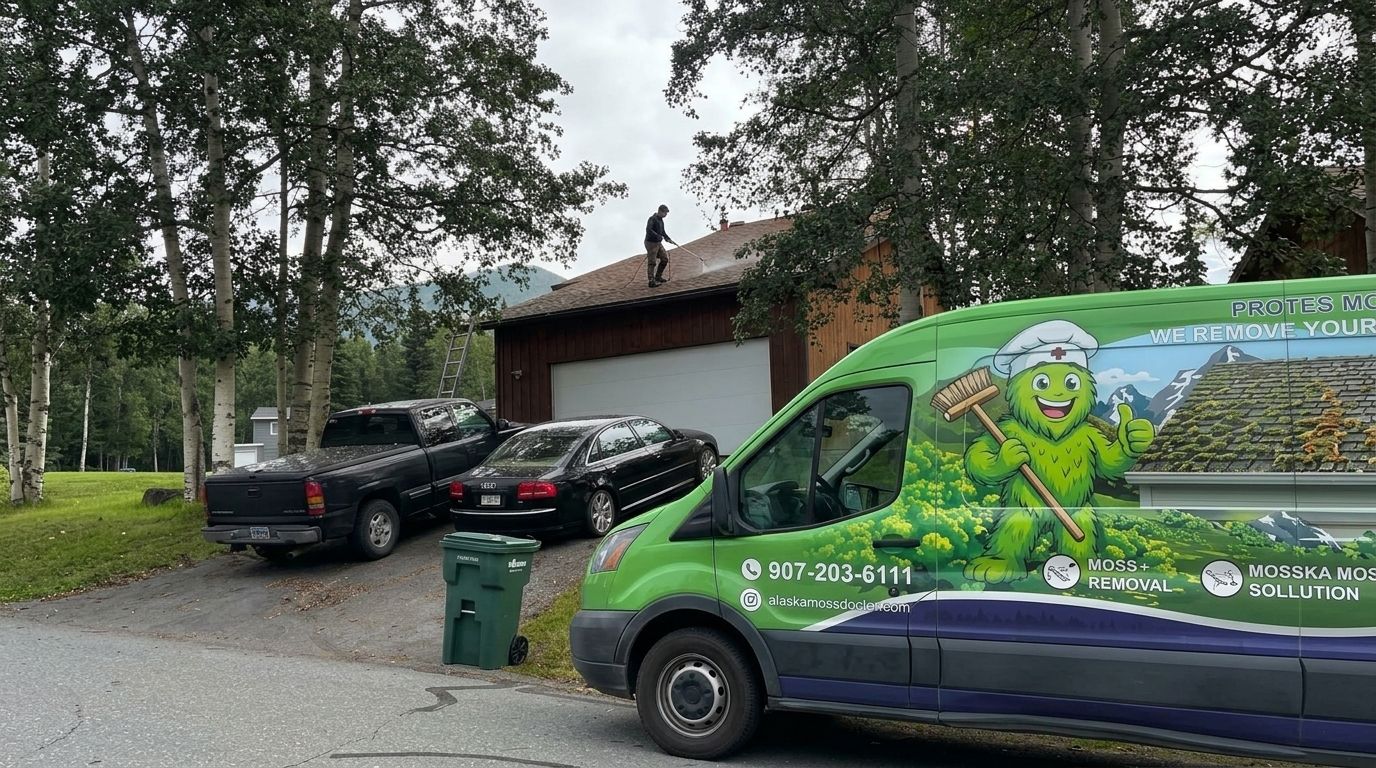
Tree sap and pollen buildup come off a roof with a soft wash treatment: a low-pressure rinse using a biodegradable cleaning solution that breaks down sap resin and dissolved pollen film without stripping shingle granules. Light pollen coatings rinse away with a garden hose and mild detergent, but hardened sap needs a dedicated degreaser and 15-20 minutes of dwell time before rinsing. The detail most homeowners miss: a pressure washer wand strips granules off asphalt shingles and can void a manufacturer's warranty, which turns a simple cleaning job into an early reroof.
- Soft washing removes tree sap and pollen from a roof without stripping shingle granules in 2026.
- Pressure washing sap or pollen buildup voids most asphalt shingle warranties and shortens roof life.
- Spruce and birch trees drop the heaviest sap and pollen loads on Mat-Su Valley roofs each spring.
- Alaska Moss Doctor treats sap, pollen, and moss together in one soft wash visit for Wasilla-area homes.
- Left untreated, sap and pollen trap moisture that speeds up moss and algae growth on the roof deck.
Why this matters
Sap and pollen are not cosmetic problems. Both trap moisture against the shingle surface, and trapped moisture is exactly what moss and algae need to colonize a roof. In Wasilla and the wider Mat-Su Valley, spruce and birch trees shed sap and pollen heavily from late April through June, right when spring moss growth is already accelerating. A roof coated in pollen film holds water longer after rain, which shortens the drying window shingles need between storms.
Ignoring the buildup for one season rarely causes damage. Ignoring it for three or four years is a different story — sap hardens into a bonded layer that traps grit, and that grit works like sandpaper every time wind or rain moves across the roof. Roof moss removal for Wasilla, Alaska homeowners covers what that combined buildup looks like once it reaches the point where a homeowner notices dark streaking alongside the sap spots.
How to remove tree sap and pollen from a roof
The method depends on how long the buildup has been sitting, but the sequence below works for asphalt shingles in most Alaska climates:
- Inspect from the ground first. Binoculars beat a ladder for a first pass — look for shiny or amber patches (sap) versus a dull yellow-green film (pollen).
- Clear loose debris. Needles, cones, and dried leaves trap moisture under sap deposits and should come off before any wash.
- Apply a soft wash solution. A biodegradable cleaner formulated for roofs, applied at low pressure (under 100 PSI through a fan tip), breaks the bond between sap resin and the shingle surface.
- Let it dwell. Fresh pollen needs only a few minutes. Hardened sap needs 15-20 minutes of contact time to soften.
- Rinse from the top down. Low-pressure rinsing pushes dissolved sap and pollen off the roof plane instead of driving it under shingle tabs.
- Check gutters and downspouts. Sap and pollen residue collects in gutters during the rinse and should be cleared the same day to prevent clogging.
| Buildup type | Best method | Pressure level | Risk if pressure-washed |
|---|---|---|---|
| Fresh pollen film | Hose rinse + mild detergent | Low | Minimal, but repeat needed weekly in peak season |
| Light sap spotting | Soft wash with citrus-based degreaser | Low | Granule loss on 15-20 year-old shingles |
| Hardened sap deposits | Soft wash with extended dwell time | Low | Voided shingle warranty, torn underlayment seams |
Verdict: soft washing is the only method that removes tree sap and pollen from asphalt shingles in 2026 without risking granule loss or warranty problems.
Tree sap removal: what actually works
Sap that has sat through a full summer bonds tightly to the granule surface, and hot water alone usually just softens the top layer without lifting it. A citrus-based degreaser cuts through the resin chemically, so the sap lifts with minimal agitation instead of scrubbing. Scrubbing with a brush is the most common DIY mistake — it grinds sap particles deeper into the granule bed instead of removing them, and it wears down the granules that protect shingles from UV breakdown.
On steep or high-pitch roofs, this whole process gets riskier for a homeowner working from a ladder. Best moss removal service for steep or high roofs breaks down why pitch changes the safe approach, and the same logic applies to sap removal on those roof lines.
Pollen buildup: what actually works
Pollen is lighter and water-soluble, so it comes off far more easily than sap in most cases. A low-pressure rinse with a mild detergent, applied within a week or two of the pollen settling, usually clears it without any specialty chemical. The problem is timing: Mat-Su Valley birch pollen season runs several weeks, and a single rinse early in the season does not stop new pollen from settling days later.
Roofs under heavy tree cover need pollen addressed on a schedule, not as a one-time fix. Roof moss removal for spruce and birch shaded properties covers how shade exposure changes the cleaning interval a roof actually needs.
Why tree sap and pollen buildup varies by property
- Tree species overhead. Spruce sap runs heavier and stickier than birch sap; birch drops more pollen volume per season.
- Roof pitch and orientation. North-facing slopes and low-pitch sections dry slower, so sap and pollen sit longer before weather washes them off naturally.
- Distance from the tree canopy. Roofs directly under a canopy get 3-4x the deposit of roofs 20+ feet away from the nearest branch.
- Gutter and valley design. Sap and pollen concentrate in valleys and near gutter lines, where runoff slows down.
- Cleaning frequency. Roofs cleaned once a year accumulate a bonded layer; roofs rinsed each season stay ahead of it.
- Existing moss or algae presence. Sap and pollen trap spores, so a roof already showing moss patches builds new sap deposits faster than a clean roof.
Get a Wasilla roof cleaning quote
Soft wash treatment for sap, pollen, moss, and algae in one visit.
Does pressure washing remove tree sap from a roof?
Pressure washing removes tree sap faster than a soft wash, but it strips shingle granules in the process and typically voids the shingle manufacturer's warranty. The force needed to blast off hardened sap is well above what asphalt shingles are rated to withstand, which is why soft washing at low pressure with a chemical solution is the standard professional method in 2026.
How often should a roof be cleaned for sap and pollen in Alaska?
Most Mat-Su Valley roofs under tree cover need a rinse or soft wash once per season during peak sap and pollen months, typically late spring through early summer. Roofs with heavy spruce or birch canopy overhead often need a second pass in early fall before snow load sets in.
Can tree sap damage a roof if it's left alone?
Tree sap alone rarely damages a roof directly, but it traps moisture, dirt, and pollen against the shingle surface, and that combination accelerates granule wear and moss colonization. A roof with a season or two of untreated sap buildup usually shows early streaking where moss and algae have started using the trapped debris as a foothold.
Is it safe to clean sap and pollen off a metal roof the same way?
Metal roofs handle low-pressure soft washing well, but the chemical dwell time needs to be shorter than on asphalt shingles because some coatings react differently to citrus-based degreasers. Soft wash roof cleaning for metal roofing covers the adjustments that method requires.
FAQ
What removes tree sap from a roof without damaging shingles?
A soft wash treatment with a citrus-based degreaser removes tree sap from asphalt shingles without damaging them. Pressure washing lifts sap faster but strips granules and can void a shingle warranty.
How long does pollen buildup take to damage a roof?
Pollen alone rarely damages a roof within a single season, but buildup left for two or three years traps moisture that speeds up moss and algae growth. Roofs under heavy tree canopy see this faster than open roofs.
What is the best time of year to clean sap and pollen off a roof in Alaska?
Late spring through early summer is the best window, right after birch and spruce pollen season peaks in the Mat-Su Valley. A second cleaning in early fall catches sap that accumulated over summer before snow load arrives.
Is soft washing better than pressure washing for roof sap removal?
Yes, soft washing is better than pressure washing for roof sap removal because it uses low pressure and a chemical solution instead of force, which protects shingle granules and roof warranties.
Does tree sap buildup cause moss growth on a roof?
Tree sap buildup does not cause moss directly, but it traps moisture and organic debris that moss spores need to establish. Roofs with sap and pollen buildup typically develop moss patches faster than clean roofs in the same shaded area.
Can homeowners remove roof sap themselves or is a professional needed?
Light sap and pollen film can be rinsed off by a homeowner with a hose and mild detergent from ground level. Hardened sap, steep roof pitches, or two-story homes are safer left to a professional soft wash service with the right equipment.
What roof types are most prone to heavy sap buildup?
Roofs under spruce canopy see the heaviest sap buildup, since spruce sap runs more freely and sets harder than sap from deciduous trees. Birch trees contribute more pollen volume than sap by comparison.
One last thing
Most homeowners treat sap and pollen as a separate problem from moss, but on a Mat-Su Valley roof they are the same maintenance cycle. Sap traps pollen, pollen traps moisture, and moisture feeds the moss spores already sitting in the shade of spruce and birch canopy. A single soft wash pass in 2026 that addresses all three at once costs one visit instead of three separate ones spread across a season.