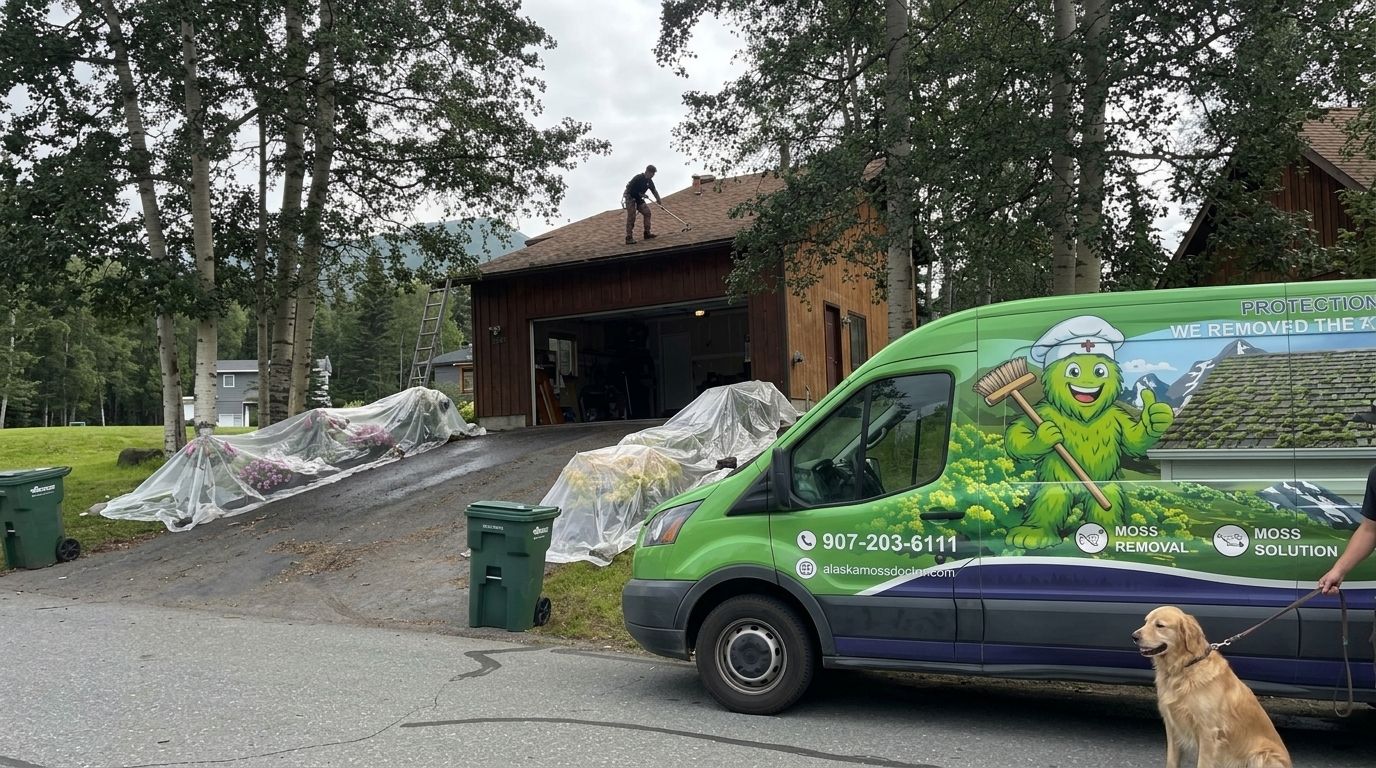
Protecting pets and landscaping during exterior cleaning means keeping animals indoors until the surface is rinsed and dry, pre-wetting nearby plants, and routing runoff away from garden beds instead of letting it pool at the base of shrubs. The part most homeowners miss is aftercare: even a gentle soft wash can leave a thin film of cleaning solution on leaves and paws that needs a plain-water rinse before pets or kids go back outside.
- Keep pets indoors during exterior cleaning and rinse paws before letting them back on treated surfaces.
- Pre-wet grass, shrubs, and flower beds near the work area before treatment starts to dilute runoff contact.
- Soft washing at low pressure with a rinse-and-dilute approach protects landscaping better than straight pressure washing.
- Alaska Moss Doctor rinses plants before and after roof and house washing jobs across Wasilla, Alaska in 2026.
Why this matters
Moss and algae removal solutions are formulated to kill living organic growth on a roof or siding, which means the same chemistry that strips moss can stress grass, flower beds, and sensitive skin on the way down. A dog that walks through wet runoff or a cat that licks a damp paw picks up whatever concentration was still active on that surface. Prepping the yard before a house washing crew arrives is the single step homeowners skip most often, and it's the one that prevents the majority of plant and pet complaints after a cleaning job.
The risk isn't the cleaning itself — it's runoff management. A crew that rinses as they go and diverts water away from beds leaves almost no residue behind. A crew that sprays and lets everything drain wherever gravity takes it can leave standing puddles of diluted cleaner on a lawn for hours.
How to keep pets and landscaping safe during exterior cleaning
Follow this sequence whether you're hiring a crew or doing a smaller job yourself:
- Move pets indoors before the crew arrives and keep them inside until the technician confirms the final rinse is done and surfaces are dry to the touch.
- Pre-wet plants, grass, and mulch beds within a few feet of the work area with plain water so any runoff that reaches them is more diluted before it soaks in.
- Cover delicate beds — hostas, hydrangeas, and anything recently planted — with a tarp or plastic sheeting if the work is directly overhead.
- Ask about the solution being used. Eco-friendly moss removal approaches use lower-concentration, biodegradable mixes that break down faster once diluted by rinse water.
- Rinse landscaping after the job with a plain hose pass, even if the crew already did one — a second rinse on high-value plants costs nothing and removes any lingering film.
- Keep pets off the surface until it's fully dry, not just visually dry — damp shingles or siding can still transfer residue to paws or fur.
| Step | Pet risk if skipped | Landscaping risk if skipped |
|---|---|---|
| Move pets indoors | Direct skin/paw contact with solution | N/A |
| Pre-wet plants | N/A | Concentrated runoff burns leaf edges |
| Cover delicate beds | N/A | Overspray damages new growth |
| Confirm solution type | Higher exposure with harsher chemistry | Slower plant recovery |
| Post-job rinse | Residue tracked indoors on paws | Residue sits on foliage for days |
Why the risk to pets and landscaping varies
- Cleaning method — soft washing at low pressure with a rinse-and-dilute approach carries less runoff volume than high-pressure washing that blasts solution and debris in every direction.
- Plant type — acid-loving plants and anything recently transplanted show stress faster than established grass or hardy shrubs.
- Roof or wall pitch — steep rooflines and taller siding sections send more runoff further from the building, reaching beds a flat wall wouldn't touch.
- Weather at the time of the job — cleaning right before rain dilutes and spreads runoff further; cleaning on a dry, sunny stretch lets it concentrate and sit longer before it's rinsed.
- Pressure setting used near siding — a soft wash pressure setting built for delicate siding reduces overspray onto nearby beds compared to a standard pressure washer nozzle.
- How quickly the crew rinses — a job that ends with an immediate plain-water rinse leaves far less residue than one where the solution is left to dwell longer than needed.
Is soft washing safe for pets and plants?
Soft washing is generally safer for pets and plants than high-pressure washing because it uses lower water pressure and a controlled application rate, which limits overspray onto grass and beds. It still involves an active cleaning solution, so pets should stay off the surface and away from runoff until the area is rinsed and dry.
How long should pets stay away from a freshly cleaned roof or siding?
Pets should stay away from a freshly cleaned roof or siding until the surface is fully dry and any runoff has drained and been rinsed, not just until the visible spraying stops. Roofs dry faster in direct sun than shaded north-facing walls, so the wait varies by exposure and by how the job was scheduled that day in 2026.
Will roof or house cleaning chemicals kill grass or flower beds?
Roof and house cleaning chemicals can stress or kill grass and flower beds if concentrated runoff is allowed to pool at the base of plants without dilution or a follow-up rinse. Pre-wetting beds beforehand and protecting gutters during roof moss removal so runoff channels where it's supposed to are the two steps that prevent most of this damage.
The verdict: a crew that pre-wets landscaping, uses a soft wash approach, and rinses twice protects both pets and plants — a crew that skips any one of those three steps is the one that leaves brown grass or a nervous dog behind.
Alaska Moss Doctor builds these steps into every roof and exterior cleaning job in the Wasilla area rather than treating them as an upsell, because a job that damages a customer's yard isn't a job well done, even if the roof looks clean afterward.
Get a pet-safe cleaning quote
Ask about runoff routing and rinse steps before your job is scheduled.
FAQ
How do I protect my dog during roof or house cleaning?
Keep your dog indoors from the start of the job until the crew confirms the surface is rinsed and dry, then rinse paws with plain water before letting them back in the yard.
Do I need to cover my plants before exterior cleaning?
Cover or pre-wet any plants directly beneath the work area, especially newly planted or acid-sensitive species, since diluted plants tolerate runoff better than dry ones.
Is moss removal solution toxic to pets?
Moss removal solutions are formulated to kill organic growth, so they should be treated as unsafe for direct pet contact until fully rinsed and dried on the treated surface.
Can pressure washing damage my lawn?
Pressure washing can damage a lawn if runoff carries concentrated cleaning solution directly onto grass without dilution, which is why pre-wetting nearby turf before the job starts matters.
Should I water my garden before or after a house washing?
Water your garden before the house washing begins to dilute any runoff contact, then rinse it again afterward to remove any residue that settled on leaves or soil.
How long does roof cleaning runoff stay active?
Runoff stays chemically active until it's rinsed with plain water or fully dried, which is why a crew's final rinse step matters more than how long the job itself takes.
What's the safest cleaning method for yards with pets?
Soft washing with a rinse-and-dilute approach is the safest method for yards with pets because it limits both pressure-driven overspray and solution concentration reaching the ground.
One last thing
The detail most homeowners never ask about is drainage direction — not the cleaning solution itself. A crew that plans where runoff exits the property before starting the job prevents almost every pet and landscaping complaint that shows up after a 2026 cleaning appointment, while a crew that just sprays and moves on leaves that outcome to chance.