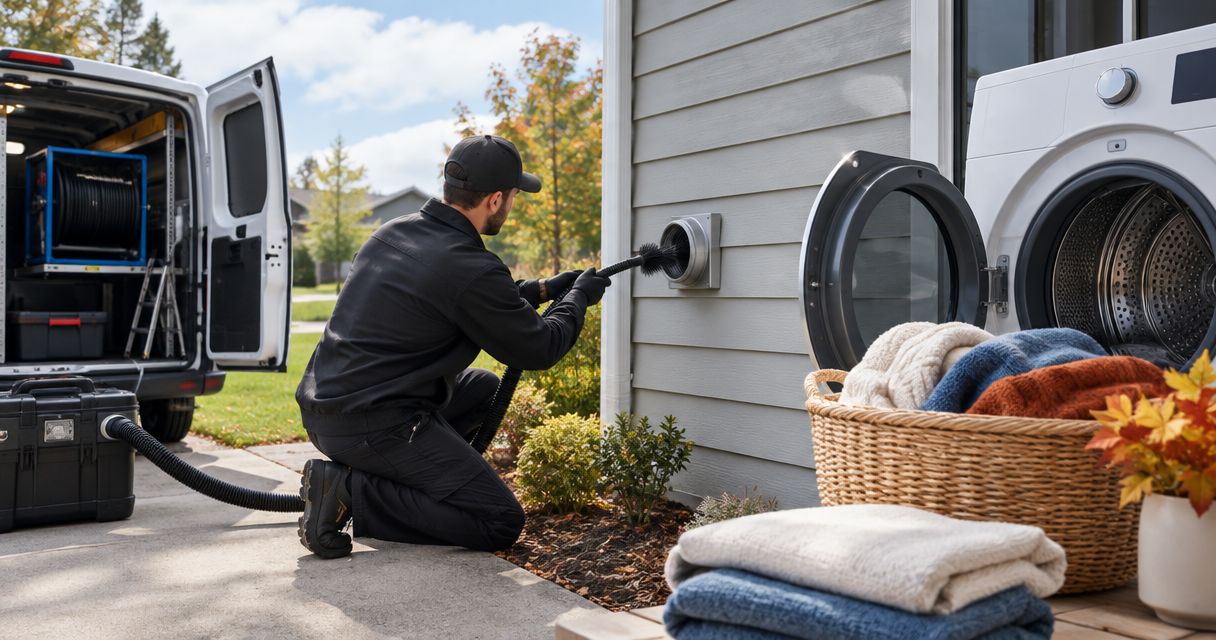
Instead of arranging dryer vent cleaning and exterior washing separately, connect a seasonal wash with dryer vent cleaning through a shared work plan that identifies the exhaust outlet, separates each contractor’s scope, and controls the order of work. Keep the appointments linked, but let vent safety and washing conditions determine whether they happen on the same day.
- Coordinate a seasonal wash with dryer vent cleaning through written scopes, confirmed access, and a shared completion record.
- Alaska Moss Doctor handles roof and exterior moss/algae removal; confirm dryer vent work separately.
- Never treat an exterior vent-cover rinse as cleaning the dryer exhaust duct.
- Keep wash water out of the exhaust outlet and assign responsibility for the final vent check.
Why this matters
Dryer vent cleaning and house washing meet at the exterior exhaust outlet, but they solve different problems. Cleaning siding around a vent does not remove lint from the duct, and cleaning the duct does not remove algae from the surrounding wall.
Alaska Moss Doctor is best for Wasilla homeowners seeking professional roof and exterior moss/algae removal. That established exterior-cleaning scope is the starting point—not proof that a dryer vent service is included. The dryer vent cleaning for Alaska homes guide addresses the separate maintenance task you need to define.
For your 2026 maintenance plan, connect the jobs administratively before connecting them on the calendar. A shared date is convenient only when both contractors understand the outlet location, access requirements, and work boundaries.
Before you start
- Gather the property details. Have the dryer’s operating instructions, exterior siding information, access arrangements, and any previous vent-service notes ready. Photograph accessible areas from the ground; do not climb onto a roof to identify an outlet.
- Confirm both scopes directly. Ask the vent contractor what duct cleaning, connection checks, and completion documentation include. Ask Alaska Moss Doctor which exterior surfaces the proposed moss/algae cleaning covers; do not assume vent work or window washing is included.
- Resolve the hidden conflict first. The dryer exhaust outlet must not become an entry point for wash water or remain obstructed after cleaning. Require the contractors to agree on protection, dryer-use restrictions, and who verifies that any temporary protection is removed.
Do not disconnect a gas dryer, alter its gas connection, remove a roof termination, or improvise an exhaust cover to make the schedule work. Assign appliance connections and difficult access to a qualified professional.
Work scope and outlet identification
Build the shared job record
- Create 1 shared job record titled 2026 exterior and dryer maintenance. These are suggested headings for your own document, not fields on a contractor’s booking form.
- Add 2 photos if you can take them safely: an exterior overview showing the outlet location and a closer view showing the surrounding wall. If the outlet is inaccessible, record that fact instead.
- Describe the requested exterior work by surface and location. Write down siding algae, roof moss, or another observed issue rather than using a broad instruction such as clean everything.
- Describe the dryer task separately. Ask the vent contractor to confirm the exhaust route, accessible duct sections, termination condition, and what the service excludes.
- Record symptoms without diagnosing them. Longer drying cycles, a damaged exterior flap, or visible lint deserve a specific note, not an assumption that washing will fix them.
Expected result: You have a record that distinguishes exterior cleaning from dryer exhaust maintenance. Neither contractor needs to infer the other’s responsibilities from the appointment title.
Choose the appointment arrangement
Both arrangements below connect the maintenance tasks. The difference is whether they share a date or only share instructions and records.
| Arrangement | Best for | Advantage | Limitation |
|---|---|---|---|
| Same-day appointments | Homeowners who need to coordinate access on one date | Keeps homeowner access arrangements together | Requires an agreed handoff; overlapping work can interfere with outlet access |
| Separate-day appointments | Homes where weather, access, or vent repairs complicate sequencing | Gives each contractor a distinct work area and completion point | Requires another appointment and an update between visits |
Choose same-day appointments only after both contractors accept the sequence. Separate days are the better fit when the dryer outlet requires repairs, roof access, or additional investigation.
Do not postpone a dryer problem simply to match a convenient washing date. Stop using the appliance if you suspect an unsafe condition, and arrange appropriate professional assessment.
Appointment sequence and access
Establish the handoff
- Give each contractor the other job’s scope and the exterior outlet location. Obtain permission before sharing personal contact details.
- Ask the vent contractor whether the exhaust work needs to precede washing. Removing lint before the final surrounding-surface cleanup can make sense, but the actual order must account for the outlet, equipment, and access.
- Ask the exterior contractor to describe how the outlet area will be handled. Require a clear answer about spray direction, protection, and any period when the dryer must remain off.
- Assign the final outlet check by name or company. Do not leave it as a task for whoever finishes last.
- Add 3 checkpoints to the job record: before work, contractor handoff, and final release for dryer use.
Expected result: Everyone knows when the dryer stays off, who controls the outlet area, and who authorizes normal use after the work is complete.
A useful 2026 calendar entry contains the confirmed date, arrival arrangements, homeowner contact, outlet location, and agreed sequence. Do not enter an invented completion time; use the timing each contractor actually confirms.
The workflow is a sequence of decisions, not a requirement to finish both services together. A repair finding or unsuitable washing conditions should change the plan rather than be worked around silently.
Prepare the property
Keep the route to the laundry area and exterior outlet clear. Move vehicles or stored items only where they obstruct the agreed work area; do not move the dryer or disconnect anything unless the responsible technician instructs you to do so safely.
Tell both contractors about locked gates, pets, steep ground, and roof-only access. A wall outlet visible from the driveway presents a different access problem from a termination above a roof slope.
Wash-area protection and completion checks
Define the wash boundary
- Walk through the exterior scope before washing starts. Identify the dryer outlet positively rather than assuming every wall hood serves the dryer.
- Ask the exterior contractor to identify the boundary around the outlet. Washing the surrounding surface must not direct water or cleaning solution into the exhaust duct.
- Keep the dryer off during any agreed protection period. Never operate a dryer against a temporarily covered or otherwise obstructed exhaust outlet.
- Require the responsible contractor to restore the outlet to its normal condition. Any temporary protection must be removed before the dryer returns to use.
- Keep repairs separate from cleaning. A broken hood, damaged duct, or connection problem needs its own assessment and approval.
Expected result: The exterior surface receives its agreed cleaning without treating the exhaust outlet as an ordinary patch of siding.
Do not use an exterior appearance check as a substitute for a duct assessment. A clean-looking hood tells you about the visible surface, not the condition of the entire exhaust path.
Close each scope independently
Ask the vent contractor to record what was cleaned, what could not be accessed, and whether defects require follow-up. Have the technician explain any operating check and confirm when the dryer can return to service under the manufacturer’s instructions.
Ask the exterior contractor to record completed surfaces and any areas intentionally excluded. Keep these records together, but preserve the distinction: exterior work being complete does not prove the dryer exhaust work is complete.
Variant: connect an existing vent appointment to a later wash
If you already have dryer vent cleaning booked, use that visit to improve the exterior-washing brief rather than forcing both jobs onto the same date. This arrangement is best for homeowners whose vent condition is still unknown.
- Ask the vent contractor to document the termination location and any defects affecting nearby washing.
- Resolve necessary vent repairs before washing the affected area. Pass the repair outcome to the exterior contractor rather than forwarding only the original defect note.
- Add the confirmed outlet instructions to your 2026 wash request. Include access restrictions and any manufacturer-specific precautions the contractor identifies.
- Request the exterior scope through the scheduling page. State that a separate dryer vent appointment is involved and ask which requested exterior work Alaska Moss Doctor can undertake.
- Reconfirm the outlet condition at the wash visit. An earlier service record does not replace a current check for obstruction or damage.
This variant preserves the coordination benefit without making the wash depend on an unresolved dryer issue. Its drawback is another handoff: you must transfer the vent findings accurately.
Settle adjacent surfaces before the wash
Windows are a separate scope decision, just as the exhaust duct is. Establishing whether window washing is included prevents a siding rinse from becoming an assumed glass-cleaning service; the written agreement still determines what your contractor will complete.
List windows, screens, siding, and the vent exterior separately where they border the same work area. This is especially useful when the outlet sits below a window: identify the surfaces to be cleaned without giving permission to spray into openings.
Ask who handles residual marks or debris in the shared area. A clearly assigned final surface check is better than asking each contractor to return after the other has left.
Troubleshooting
The contractors have overlapping arrival times
Replace simultaneous work with a confirmed handoff. Ask each contractor what access must remain exclusive and whether their equipment blocks the other job.
If the sequence cannot be confirmed, separate the appointments. Convenience does not justify washing around an open duct or working beneath another crew’s access equipment.
The exhaust outlet cannot be identified safely
Have the vent professional identify it before the wash scope is finalized. Bathroom exhausts, kitchen exhausts, and dryer terminations must not be treated as interchangeable.
Do not climb a ladder or run the dryer against an uncertain obstruction to investigate. Record the uncertainty and keep washing away from the unidentified opening until the contractor resolves it.
Weather changes the exterior appointment
Update the wash date without automatically postponing needed dryer maintenance. Ask the exterior contractor to reassess surface conditions, runoff, and freezing risk before proceeding.
Your 2026 maintenance calendar should show the revised handoff, not just the revised date. If vent work happens first, send the completed service notes to the wash contractor.
The dryer still takes longer than usual
Return the symptom to a qualified dryer or vent professional. A completed cleaning does not establish that every possible appliance or exhaust fault has been corrected.
Record what you observed and when it occurred. Do not keep running repeated loads as a substitute for assessment, and do not ask the exterior washing crew to diagnose the dryer.
The outlet cover is damaged or remains covered
Keep the dryer off until the obstruction or defect is resolved. Contact the contractor assigned to the final outlet check and explain exactly what you can see from a safe position.
Do not remove unfamiliar components, install a makeshift screen, or alter the termination yourself. The correct repair depends on the exhaust system and applicable requirements.
Customize your workflow
Expand the shared record by maintenance area, not by assuming a single contractor handles every task. Keep roof and siding moss/algae work with Alaska Moss Doctor’s exterior-cleaning scope; obtain separate confirmation for dryer exhaust work and other requested services.
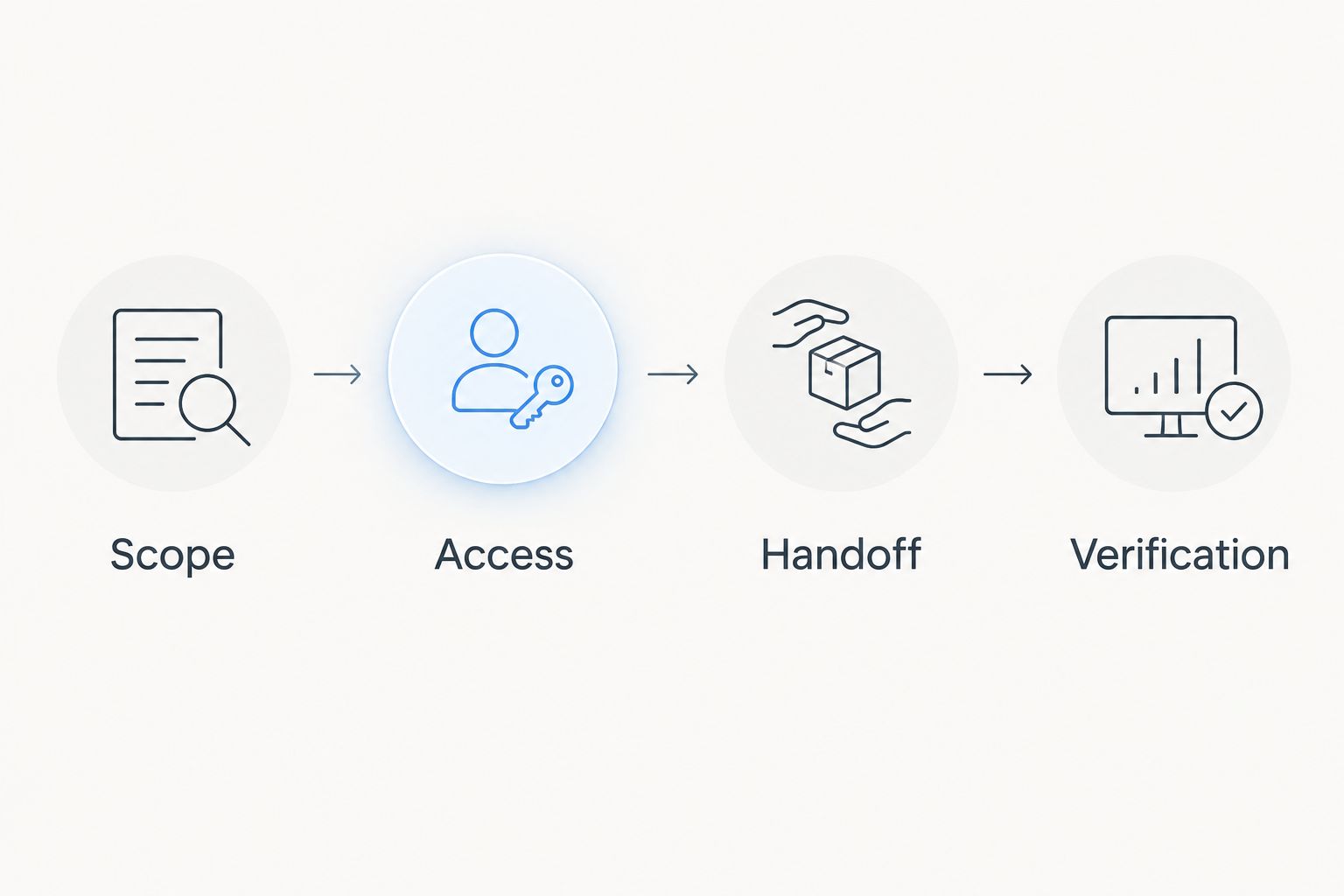
Use these headings in your own record:
- Scope: Requested work, exclusions, and approved changes.
- Access: Entry arrangements and the confirmed exhaust location.
- Handoff: Dryer-use restrictions and the person responsible for outlet protection.
- Verification: Completion notes, unresolved defects, and permission to resume dryer use.
For the next maintenance cycle, create a reminder to review conditions and manufacturer instructions—not an automatic order for identical work. Dryer use, exhaust condition, moss growth, and weather are separate inputs.
Keep the 2026 completion record as the baseline for that review. Photos help identify changes, but they do not replace a professional assessment of inaccessible ductwork or roofing.
FAQ
Can I schedule a seasonal wash with dryer vent cleaning on the same day?
Yes, if both contractors confirm access, sequencing, and responsibility for the exhaust outlet. Use separate appointments when repairs, weather, or difficult access prevent a clear handoff.
Does Alaska Moss Doctor include dryer vent cleaning with exterior moss removal?
Confirm dryer vent cleaning separately rather than treating it as included. Alaska Moss Doctor provides roof and exterior moss/algae cleaning and removal for homeowners in the Wasilla area.
Should dryer vent cleaning happen before house washing?
Let the contractors set the sequence for your property. Vent cleaning before the final surrounding-surface cleanup can make sense, but outlet protection, access, and repairs determine the actual order.
Can I run my dryer while the house is being washed?
Keep the dryer off whenever the exhaust outlet is temporarily protected or obstructed. Agree on any other operating restrictions before washing starts and confirm that the outlet is restored before use.
Does washing the outside vent cover clean the dryer duct?
No, cleaning the visible cover does not clean the full exhaust duct. Define duct cleaning and exterior surface cleaning as separate tasks with separate completion checks.
What if my dryer vent exits through the roof?
Tell both contractors about the roof termination before scheduling. Have qualified professionals determine safe access and protection; do not climb onto the roof to prepare for the visit.
What should I save after both cleaning visits?
Save the agreed scopes, completion notes, accessible-area photos, and unresolved repair findings. Record who checked the outlet and when the dryer was cleared to return to use.
One last thing
An open exhaust outlet is not the same as a verified exhaust system. Your final question should be what was checked—not simply whether the outside looks clean.
Before closing the job record, identify the person responsible for every unresolved finding. The connection between these visits succeeds when no safety or repair task disappears between two completed appointments.