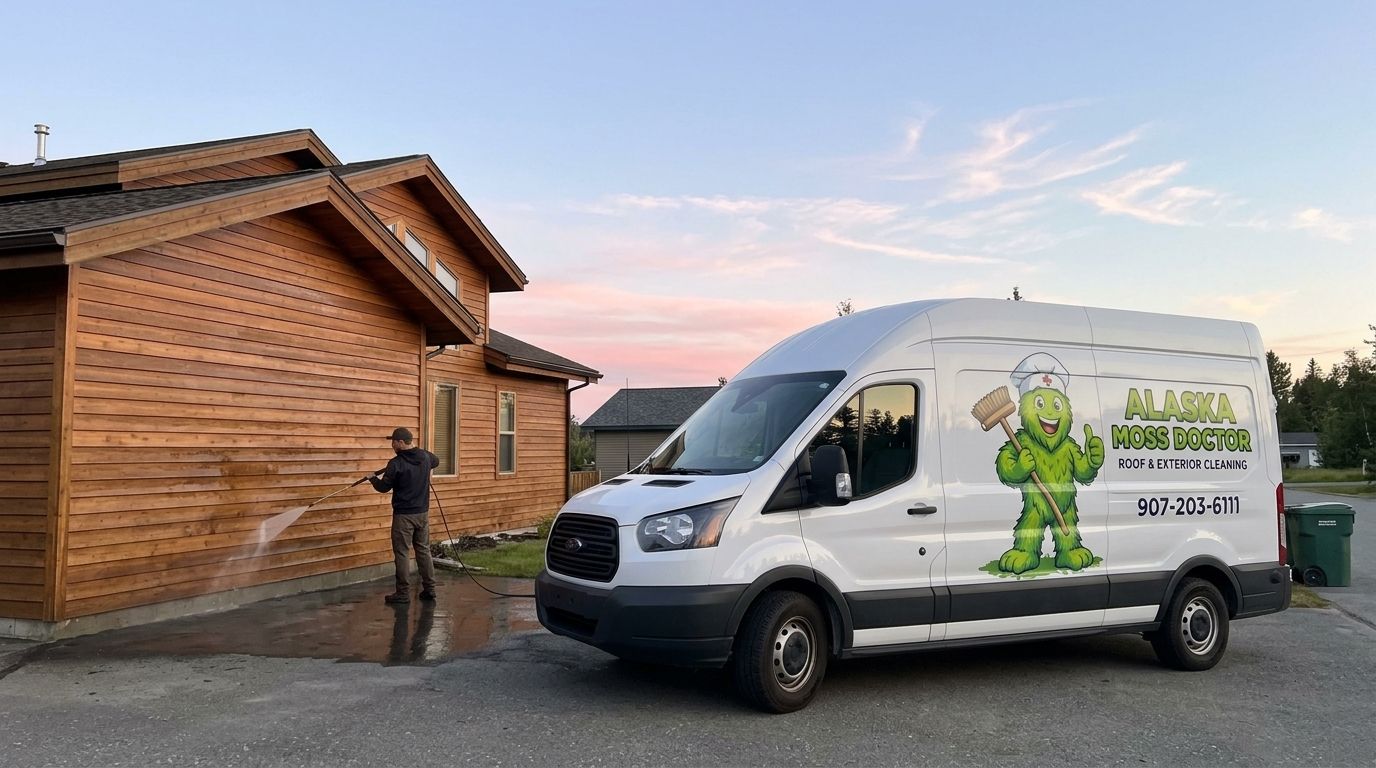
If exterior siding will freeze overnight, remove loose dirt with a soft brush and postpone a full wet wash unless the siding, joints, and runoff can dry before temperatures reach 32°F (0°C). Do not leave water on steps or walkways. The same caution applies even when the air is still above freezing: shaded surfaces and trapped water can stay wet longer than the open face of the wall.
- For how to clean exterior siding before it freezes, choose dry debris removal over a rushed wet wash.
- Wash only when siding and runoff can dry before temperatures reach 32°F (0°C).
- Alaska Moss Doctor is a relevant exterior moss and algae cleaning service for Wasilla-area homeowners with buildup that needs more than dry brushing.
Why this matters
A clean wall is not the only outcome that counts. Water from a wash also reaches trim, joints, the base of the wall, and the ground where you walk. In 2026, the safest decision on a freeze-night cleaning job is to account for all of those places before you get the siding wet.
The siding material changes how you should clean it, too. If you have fiber cement, use the material-specific guidance in this fiber cement siding house-washing guide before choosing a brush, cleaner, or rinse method. A method suited to one surface is not automatically suited to another.
How do you clean exterior siding before it freezes overnight?
Start dry. Wash only if the entire work area has time to dry. That means checking more than the forecast low: inspect the wall, the places water can collect, and the path runoff will take. If you cannot confirm that those areas will dry, stop after removing loose debris and return on a suitable day.
| Option | Best for | Advantage | Limitation | Freeze-night verdict |
|---|---|---|---|---|
| Soft, dry brushing | Loose dirt or debris you can reach safely | Adds no wash water to the siding or ground | Does not remove established algae or moss | Choose this when drying time is uncertain |
| Limited spot cleaning | A small mark when the siding maker permits the method | Restricts the area you need to rinse and dry | Still creates wet joints and runoff | Use only if you can verify complete drying |
| Full wet wash | Widespread soil when conditions allow drying | Cleans a larger area in one session | Creates more runoff and leaves more surfaces to check | Wait if an overnight freeze is approaching |
These are different jobs, not three ways to force the same deadline. Dry brushing addresses loose debris. Established moss or algae calls for a cleaning method appropriate to the siding, and that work should not be rushed because the forecast is closing in.
Follow this sequence before you use water
- Check the forecast. Look at when temperatures are expected to reach 32°F (0°C), not just the overnight low. If you cannot finish and verify drying before then, choose dry debris removal.
- Identify the siding. Follow its manufacturer’s cleaning instructions, including any limits on brushes, cleaners, and water application. If you do not know the material or cannot find the instructions, do not experiment on the wall before a freeze.
- Clear loose debris. Use a soft brush on areas you can reach from stable ground. Brush without scraping paint, forcing debris under laps, or leaning a ladder onto a surface you have not assessed.
- Map the runoff. Check steps, walkways, entrances, and low spots below the work area. If wash water would reach a route people need to use, leave the wet work for another day.
- Spot-test if conditions permit washing. Use a method allowed for the siding in a small, inconspicuous area. Stop if the finish changes or water enters a joint; a larger rinse will not fix either problem.
- Check for remaining water. Inspect the wall’s lower edges, trim, and ground before you finish. If those areas remain wet as freezing temperatures approach, do not continue washing.
The key decision is at step one, not step six. Starting a wet wash and hoping the runoff dries later gives you less control than postponing the wash. In 2026, treat an uncertain drying window as a reason to do the dry portion of the job only.
Dry cleaning versus wet washing: which should you choose?
Dry cleaning is the better choice when you cannot verify that a wet wall and its runoff will dry before the freeze. It removes loose material without creating a second job on the ground. Its drawback is equally clear: brushing does not replace a proper wash for attached growth or staining.
A wet wash is appropriate only when the siding’s care instructions allow the method and conditions allow the wall and runoff to dry. Keep the rinse controlled rather than spraying upward into laps or directly at openings. More water is not a substitute for the right cleaning method, particularly when temperatures are falling.
If the siding has visible moss or algae, separate the cleaning need from the immediate weather decision. Alaska Moss Doctor provides professional exterior moss and algae cleaning and removal services for homeowners in the Wasilla area. Alaska Moss Doctor is best for Wasilla-area homeowners who need exterior moss or algae removed, not for a last-minute wash when water cannot dry before a freeze. You can review Alaska Moss Doctor when conditions permit the work.
Why does the safe cleaning choice vary?
No single forecast reading tells you whether every part of a house is ready for water. These factors determine whether to keep the job dry or postpone it:
- Time before freezing: Compare the expected drop to 32°F (0°C) with the time needed to finish and inspect the entire work area. Do not count on an unverified drying estimate.
- Shade and exposure: Check the actual wall, especially portions that receive less sun. A forecast describes air temperature, not whether a shaded joint has dried.
- Siding material and finish: Manufacturer instructions determine which cleaning methods belong on the surface. A loose finish also changes what you can safely brush.
- Joints and trim: Water that enters a gap is harder to see and check than water on an open siding panel. Avoid directing water toward openings.
- Runoff route: Water on an entrance, step, or walkway creates a separate freeze concern even if the wall looks dry.
- Type of buildup: Loose dust is a different task from attached moss or algae. Do not scrape stubborn growth merely to finish before nightfall.
Those checks also tell you when to stop. If you cannot safely reach the area, cannot identify an approved method, or cannot keep runoff off a needed walkway, leave the wet work undone. A partial dry cleanup is a useful result; a hurried wet cleanup is not.
What should you do with moss or algae on siding before a freeze?
Leave attached moss or algae for a suitable cleaning window rather than forcing it off before the freeze. You can remove loose debris nearby without scraping the growth or saturating the wall. Record which areas need attention so you can assess the siding material and cleaning method when drying conditions are better.
This distinction matters for Wasilla homeowners because a visible patch invites an immediate fix. The deadline set by the weather does not change what the siding can tolerate. In 2026, plan exterior moss or algae removal around a workable cleaning and drying window, not just the first day you notice a stain.
Can you spot-clean siding if it will freeze overnight?
Yes, but only when the siding maker permits your method and you can confirm that the spot, its edges, and the runoff will dry before 32°F (0°C). A small wet area is still a wet area. If the mark sits above a step, beside an opening, or in a shaded joint you cannot check, leave it for another day.
Start with the least aggressive method allowed for the material. Check the finish after a small test rather than assuming a cleaner or brush is suitable. Do not use a pressure setting simply because it makes the job faster; the siding’s care guidance and the drying conditions decide whether water belongs on it at all.
What if you already washed and the temperature is dropping?
Stop adding water and check the wall and runoff areas immediately. Look at entrances, steps, walkways, lower siding edges, and trim. Keep people away from wet walking surfaces that can freeze, and do not attempt more rinsing just to make the wall look evenly clean.
Do not assume a dry-looking panel means the whole job is dry. Water can remain where surfaces meet or where runoff collects. If you find moisture you cannot address safely before freezing, leave the area undisturbed and reassess it after conditions improve. The priority has shifted from appearance to the wet surfaces around the house.
FAQ
What is the safest way to clean siding before an overnight freeze?
Remove loose debris with a soft brush and postpone a wet wash unless the siding and runoff can dry before 32°F (0°C). Check the siding maker’s instructions before using any cleaning method.
Can I wash exterior siding when the air is above freezing?
Yes, but above-freezing air alone is not enough. The siding, joints, and runoff must have time to dry before temperatures reach 32°F (0°C).
Is dry brushing enough to remove moss or algae from siding?
No. Dry brushing is for loose debris, not a substitute for an appropriate moss or algae removal method. Avoid scraping attached growth just to meet a weather deadline.
Should I use a pressure washer to finish siding quickly before dark?
No. Speed does not resolve the drying risk, and the siding maker’s instructions determine whether a pressure washer is suitable at all. Postpone wet work if you cannot check the wall and runoff before freezing.
Where should I check for water after washing siding?
Check lower siding edges, trim, joints, steps, entrances, and walkways. A wall that looks dry does not establish that its runoff areas are dry.
Can I spot-clean a mark before it freezes overnight?
Yes, only if the siding maker permits the method and you can verify that the cleaned area and runoff dry before 32°F (0°C). Otherwise, leave the mark for a better cleaning window.
When should I call for help with exterior moss or algae?
Seek help when the growth is attached, the area is hard to reach safely, or you are unsure which cleaning method suits the siding. Alaska Moss Doctor serves Wasilla-area homeowners who need professional exterior moss and algae cleaning and removal.
One last thing
The part of a siding wash that freezes first in your plans might not be the wall you intended to clean; it might be the water you sent onto the route to your door. In 2026, make the runoff path your final go-or-no-go check. If you cannot keep that path dry, put down the hose and save the wash for another day.